What Is a Torpedo Level? Uses, Vials, Accuracy, and Common Layout Errors
A torpedo level is a short, roughly 9-inch spirit level shaped to taper at both ends (like a torpedo), designed for checking level and plumb in tight spaces where a standard 24- or 48-inch level won’t fit, such as inside cabinets, on pipe fittings, or between studs. This guide covers what its vials actually measure, how accurate a torpedo level really is compared to longer levels, and the layout mistakes that come from relying on one for jobs it isn’t suited to.
What the Vials Actually Measure
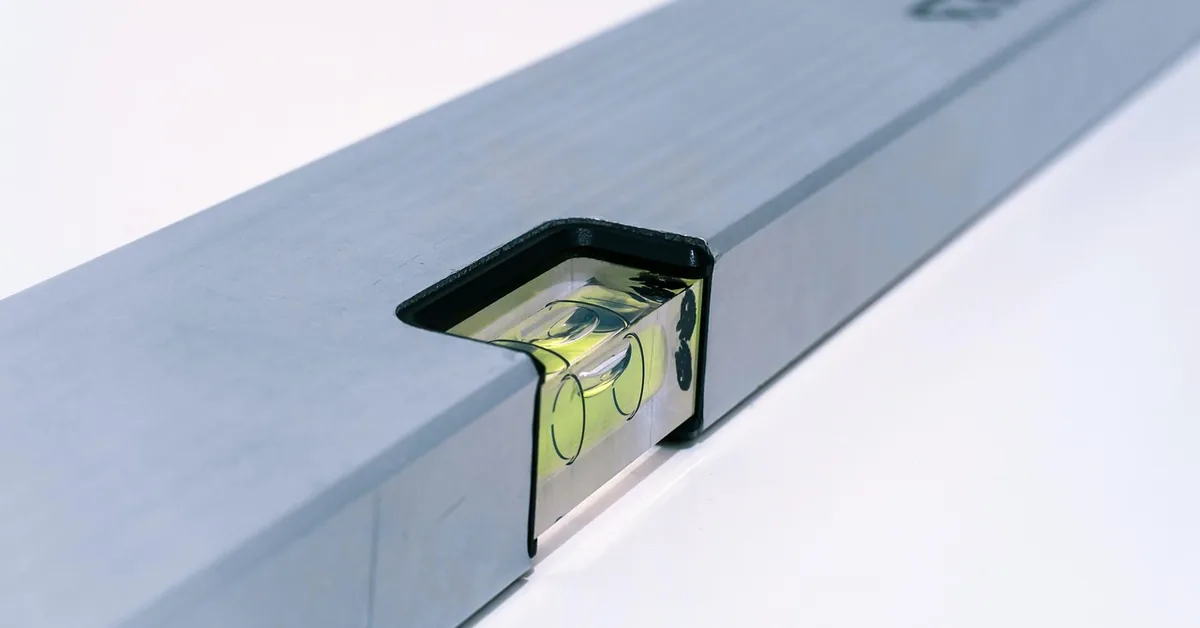
Most torpedo levels have three vials: a horizontal one for level, a vertical one for plumb, and a 45-degree vial for diagonal work like stair stringers or angled bracing. Each vial is a slightly curved glass or acrylic tube filled with liquid and an air bubble; when the bubble sits centered between the two marked lines, the tool is reading level, plumb, or 45 degrees depending on which vial you’re using. Some models add magnets along one edge, which let the level clip onto a steel pipe, conduit, or metal stud and stay in place hands-free while you read it.
Where a Torpedo Level Is the Right Tool
Its short length is an advantage inside cabinets, on individual pipe fittings, small appliance installs, between framing studs, or anywhere a full-size level physically can’t reach or rest flat. Plumbers commonly use the magnetic version to level pipe runs against a joist or wall stud, and electricians use it for setting outlet boxes and small conduit runs level or plumb in confined spots.
Why Accuracy Degrades Over a Long Span
Level accuracy is a matter of angular sensitivity, not absolute precision, and any small reading error gets multiplied by the distance you project it across. A torpedo level that reads level across its own 9-inch base can still represent a real-world slope of a fraction of a degree; over a 9-inch countertop that error is invisible, but if you use the same level as a straightedge reference across a 6-foot span, that same small angular error translates into a much larger vertical difference at the far end. For anything longer than about 2 feet, a longer level (24 inches or more) or a laser level gives a far more reliable result.
Common Layout Errors From Misusing a Torpedo Level
The most frequent mistake is using a torpedo level to set a long run, deck ledger boards, cabinet runs, or fence lines, by “leapfrogging” it along the length and hoping small errors cancel out; in practice, they usually compound in one direction instead. Another common error is not checking the level itself for calibration: flip the level end-for-end on the same surface, if the bubble reads differently in each direction, the vial is out of calibration and needs adjustment (some models have a calibration screw) or replacement, since a miscalibrated level will confidently give a wrong reading every time.
Choosing a Torpedo Level
Look for a milled aluminum or cast body over a plastic one for long-term accuracy, since plastic bodies can warp slightly with temperature and handling over time. If you’ll use it on steel framing, conduit, or appliances, get a magnetic model; if it needs to survive job-site drops, a rubber-padded or shock-resistant edge matters more than an extra vial. Digital torpedo levels that display a numeric angle add precision for tasks like setting a specific slope, but the accuracy limits from a short base length still apply the same way as a spirit-vial model.
Frequently Asked Questions
Can a torpedo level replace a full-size 4-foot level?
Not for long spans. It’s accurate at its own short length, but small reading errors become much larger over a long run when you project a torpedo level’s reading across several feet. Keep both tools for their respective jobs.
How do I check if my torpedo level is accurate?
Set it on a flat surface and note the bubble position, then flip the level end-for-end in the same spot. If the bubble centers identically both times, it’s accurate; if it shifts, the vial is out of calibration.
What is the 45-degree vial actually used for?
It’s used for checking diagonal angles like stair stringers, angled braces, and handrail slopes, confirming the piece sits at a true 45-degree angle rather than level or plumb.
Sponsored / affiliate links. As an Amazon Associate I earn from qualifying purchases. I may earn additional commission from eligible campaigns.