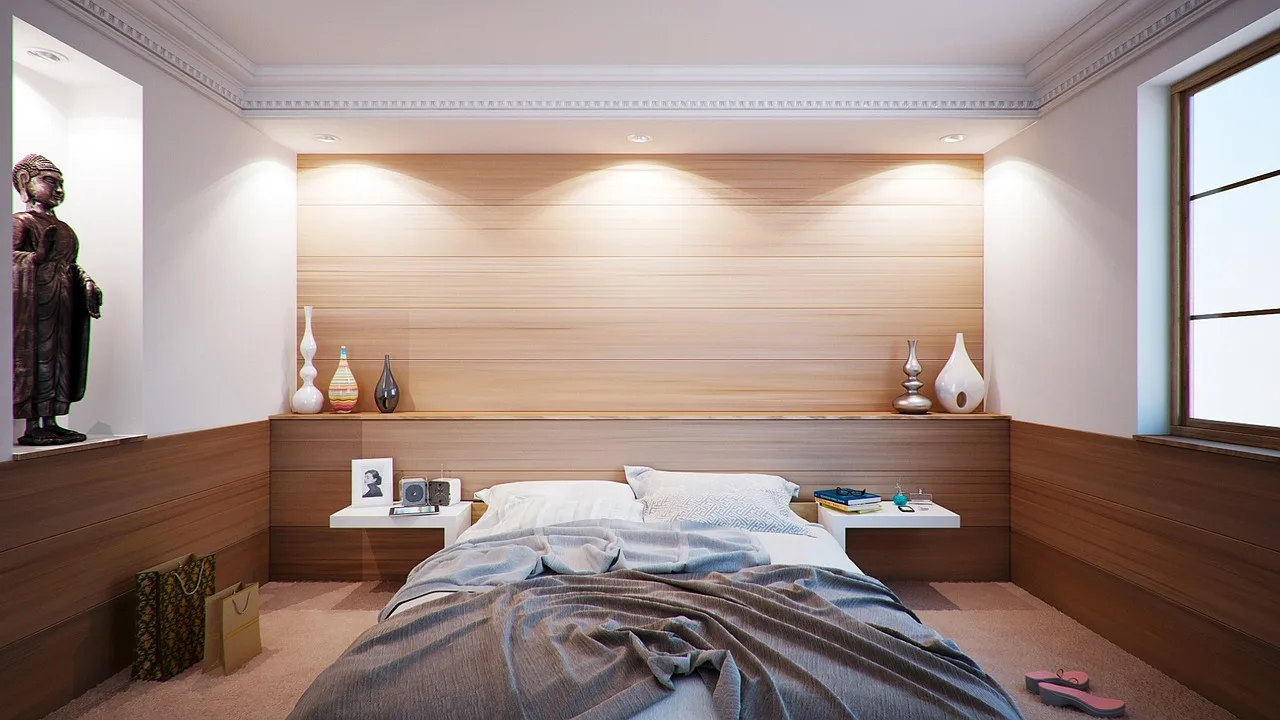
What Color Temperature Is Best for Bedrooms? Guide
For bedrooms, a practical starting point is 2700K to 3000K for general lighting, then 2200K to 2700K for bedtime reading and sconces; higher temperatures are usually better reserved for task lighting. Wrong color temperature can make a room feel harsher at night and may make it harder to wind down. This guide explains bedroom lighting by bedtime habits and fixture type, including master bedrooms, guest rooms, and kids’ rooms.
What color temperature is best for bedrooms?
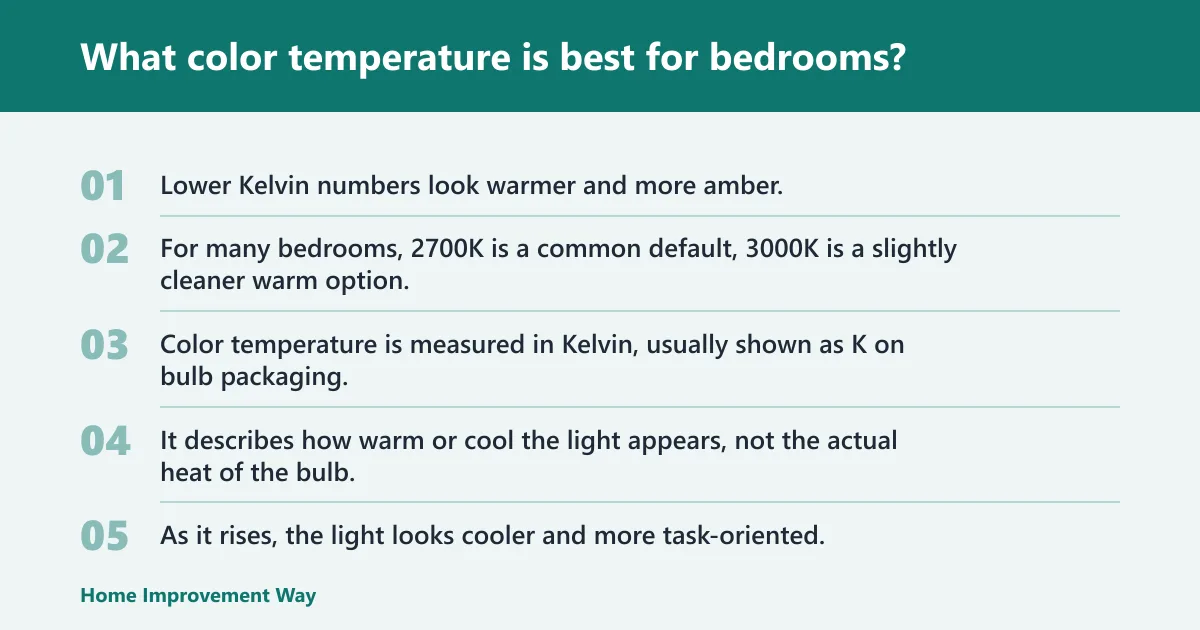
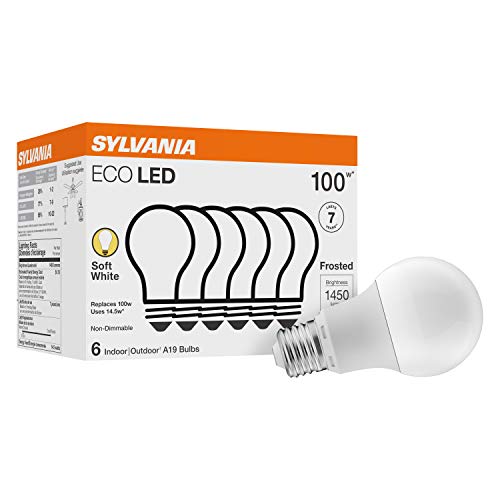


Most bedrooms work best with warmer light. Lower Kelvin numbers look warmer and more amber, while higher numbers look cooler and crisper. For many bedrooms, 2700K is a common default, 3000K is a slightly cleaner warm option, and 3500K or 4000K may suit specific tasks or brighter rooms.
What color temperature means in Kelvin
Color temperature is measured in Kelvin, usually shown as K on bulb packaging. It describes how warm or cool the light appears, not the actual heat of the bulb. As the number drops, the light looks warmer. As it rises, the light looks cooler and more task-oriented.
Where 2700K, 3000K, 3500K, and 4000K fit
2700K is warm, soft, and relaxed. 3000K is warm but cleaner and slightly brighter-looking. 3500K is a balanced neutral white that can work in secondary task zones. 4000K is cool neutral, crisp, and task-friendly, but it can feel clinical in decorative settings.
For a bedroom, that usually means one temperature for relaxation and a different one for visibility. A master bedroom often works better with a warmer ambient layer. A guest room can stay simple with 2700K or 3000K. A kids’ room may need a warmer ceiling light and a brighter reading lamp at the desk or bed.
📊 Many homeowners use 2700K or 3000K as the base temperature for decorative lighting. Source: Best Color Temperature for Every Room.
Is 2700K or 3000K better for a bedroom?
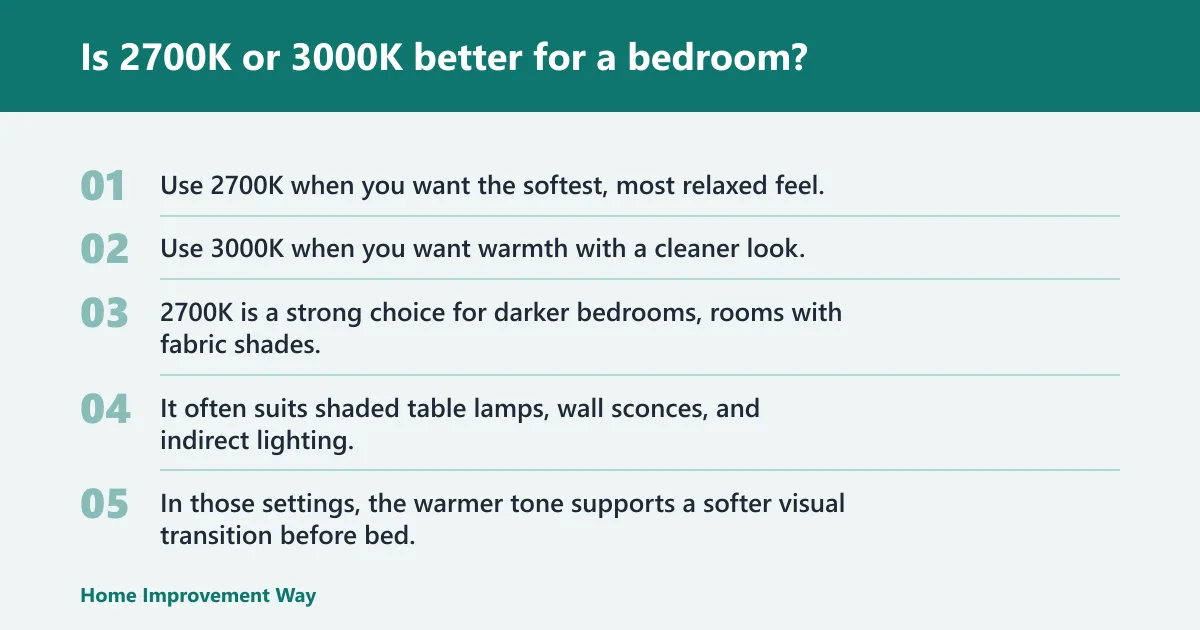
Neither is always better. Use 2700K when you want the softest, most relaxed feel, especially in a bedroom used mainly for sleep. Use 3000K when you want warmth with a cleaner look, or when the room has layered lighting and you want fixtures to read a little brighter.
When 2700K is the better default
2700K is a strong choice for darker bedrooms, rooms with fabric shades, and spaces where the main goal is winding down. It often suits shaded table lamps, wall sconces, and indirect lighting. In those settings, the warmer tone supports a softer visual transition before bed.
When 3000K looks cleaner without feeling harsh
3000K often fits bedrooms that double as dressing areas, reading spots, or guest rooms that need a more versatile feel. It is still warm, but it looks a little clearer than 2700K. A shaded table lamp at 3000K often feels softer than a bare recessed downlight at the same Kelvin.
How dimming changes the result
Dimming matters as much as Kelvin. A 3000K bulb on a dimmer can behave more like a relaxed evening light, while a 2700K bulb at full brightness can still feel too intense if the fixture is bare. Dimmers or tunable white lighting let you adjust the level as bedtime approaches.
Say your bedroom has three recessed lights over a dresser and one lamp by the bed. A 3000K lamp with a fabric shade may feel calm enough for evenings, while 3500K at the dresser helps with getting dressed without making the whole room feel bright all night.
What color light is best for bedroom reading lamps?
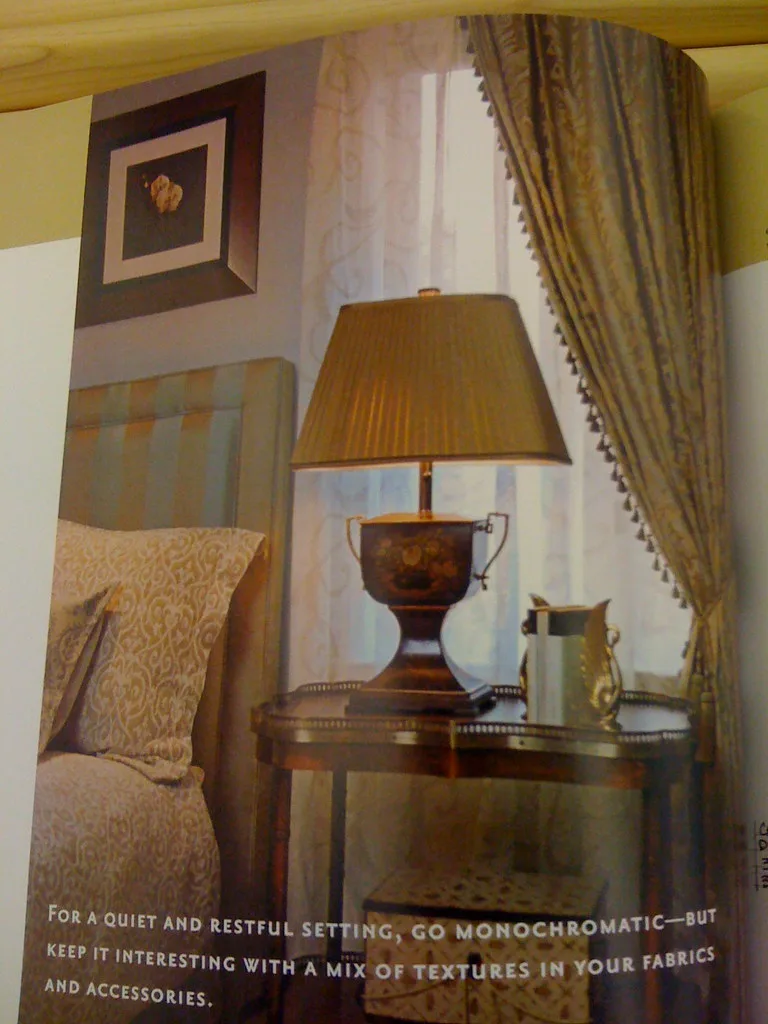
Bedside reading lamps often do well around 3000K to 3500K, depending on the shade and how close the bulb sits to your eyes. That range gives enough visibility for print or a screen without the cooler look of task lighting that belongs in a kitchen or office.
Bedside task light versus ambient light
Reading light and room light are not the same decision. Ambient bedroom lighting should usually stay warmer, while bedside task zones can move a little higher in Kelvin. That split lets you keep the room restful while still seeing pages, labels, or clothing details clearly.
How lamp shades and diffusers change glare
Shade type changes perceived warmth. Fabric shades and frosted diffusers soften light and often make 3000K feel more comfortable. Bare bulbs, clear glass, and shallow shades send more direct light into the room, so a lower Kelvin often feels less harsh than the same bulb in an exposed fixture.
How does fixture type change the look of bedroom light?
Fixture type changes how warm or cool the same bulb appears. A 2700K bulb in a deep shade can look very soft, while the same bulb in a bare recessed downlight can feel sharper. The fixture controls spread, glare, and how much surface the light washes.
Shaded table lamps and fabric shades
Shaded table lamps usually make warmer Kelvin settings feel even more relaxed. Fabric shades absorb some brightness and soften the beam, which is why 3000K often reads gently in bedside lamps. These fixtures work well when you want light aimed at a book, not the whole room.
Bare recessed downlights and deep baffles
Bare recessed downlights expose the source more directly, so the room feels brighter and less forgiving. Deep baffles help cut glare and can make a bedroom more comfortable at 2700K or 3000K. In a ceiling of exposed cans, 4000K can start to feel too sharp for sleep space use.
Frosted diffusers and indirect cove lighting
Frosted diffusers spread light more evenly and take the edge off higher Kelvin values. Indirect cove lighting also hides the source, so 3000K or even 3500K can feel calmer than the number suggests. That makes these fixtures useful when you want a cleaner look without a clinical result.
How do room size, sunlight, and orientation affect the choice?
Natural light changes how bedroom lighting reads after dark. Bright, sun-filled rooms can handle more neutral whites. Darker rooms with limited daylight often feel better with warmer lamps. North-facing rooms may benefit from slightly warmer lighting because their daylight often looks cooler to begin with.
Bright sun-filled rooms
If the bedroom gets strong daylight, 3000K or even 3500K may work for some fixtures without feeling cold. Sunlight already brings warmth and brightness into the room, so the electric light does not need to do all the work. This is especially true in rooms with pale walls and reflective surfaces.
Dark rooms that need a warmer tone
In low-light rooms, cooler bulbs can make the space feel flat or clinical. Warmer lamps fill in that gap better. A bedroom with small windows, thick curtains, or deep shadows usually starts with 2700K, then adds a brighter task lamp only where needed.
North-facing rooms and other cooler-looking spaces
North-facing rooms often pick up a cooler cast from daylight, so slightly warmer artificial light can balance them. A 2700K or 3000K bulb often feels more natural there than a 4000K bulb. That same advice can apply to rooms with gray paint or blue-toned finishes.
Suppose a guest room faces north and gets little afternoon sun. A 2700K ceiling fixture with a fabric shade may feel calm at night, while a 3500K lamp near the mirror gives better visibility for packing or dressing without turning the whole room cool.
What are warm colours for a bedroom?
Warm colours for a bedroom usually mean warm white or soft white light, not a paint color. For lighting, that means 2700K and 3000K are the first places to look. These temperatures usually support a more restful feel than cooler white bulbs, especially at the bed.
Warm white versus soft white
Soft white and warm white are often used interchangeably on packaging, but the Kelvin number is the clearer guide. In practice, 2700K is the safer choice for a very cozy bedroom. 3000K is better when you want the room to look a little cleaner without losing warmth.
When a slightly cooler neutral white still works
3500K can work in a bedroom with strong daylight, a vanity area, or a secondary task zone. It is also useful if the room already has very warm surfaces and you want to avoid a heavy yellow cast. For most sleep-first spaces, though, it should stay secondary rather than primary.
Bedroom lighting decision checklist
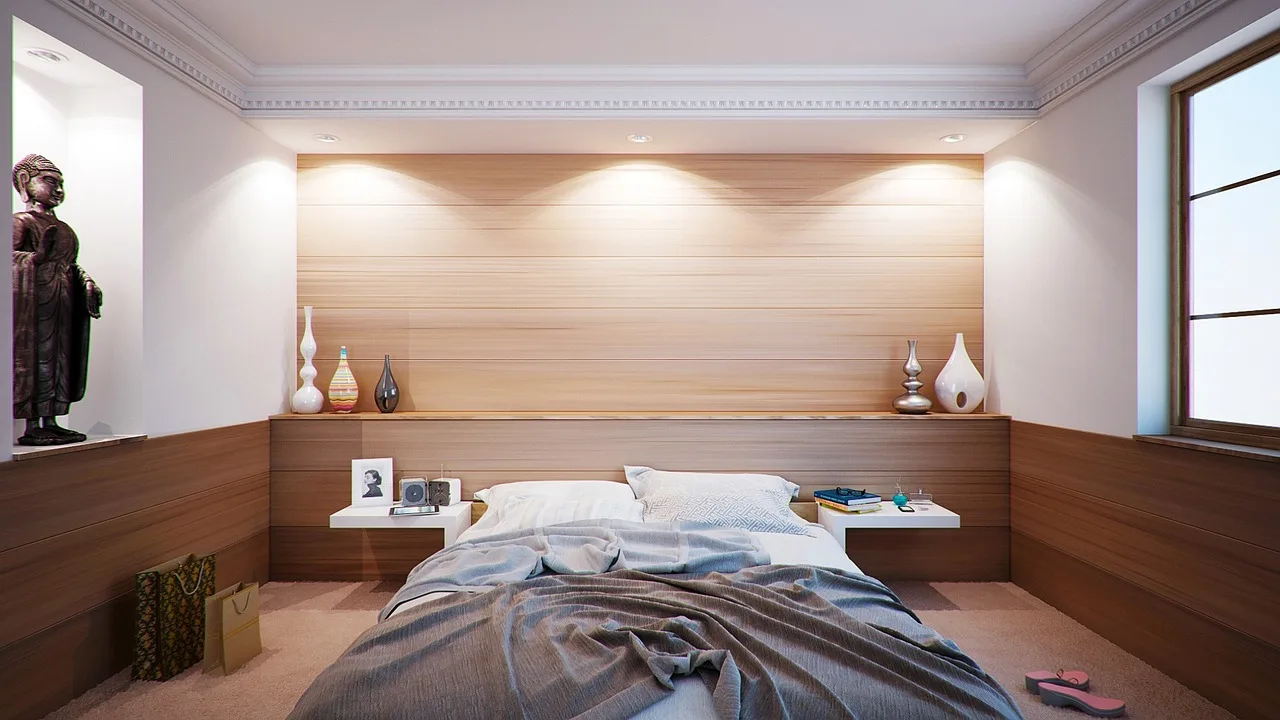
Choose each layer separately. Ambient light should support relaxation, bedside reading should support visibility, and accent light should shape the room without glare. Then check Kelvin, CRI, and dimming range together, because a good number can still look wrong in the wrong fixture.
- Choose ambient light first. Start with 2700K or 3000K for the main bedroom fixture.
- Set task light second. Use 3000K to 3500K for bedside reading, dressing, or a desk.
- Keep accent light warmer. Use 2700K or 3000K for sconces, coves, and decorative lamps.
- Check CRI. Pick bulbs with a high color rendering index if you want bedding, skin tones, and wood finishes to look natural.
- Check dimming range. Make sure the bulb and dimmer are compatible and can dim low enough for evening use.
- Match shade type. Fabric shades, frosted diffusers, and deep baffles soften the light more than clear or bare fixtures.
- Decide on fixed or tunable white. Choose tunable white if one bedroom must shift from bedtime calm to daytime function.
| Area | Good starting Kelvin | Why it fits | Best fixture types |
|---|---|---|---|
| Main ambient light | 2700K to 3000K | Restful for evenings, still usable for general movement | Frosted diffusers, fabric shades, indirect cove lighting |
| Bedside reading | 3000K to 3500K | Clearer for pages and labels without looking harsh | Shaded table lamps, wall-mounted reading sconces |
| Accent lighting | 2700K to 3000K | Supports a calm look and keeps decorative light soft | Deep baffles, hidden strips, indirect coves |
| Dressing or vanity zone | 3000K to 3500K | Better visibility for grooming and matching colors | Frosted diffusers, well-shielded downlights |
If your bedroom feels too yellow or too blue, what should you change?
If the room feels off, do not swap bulbs at random. First check whether the issue is Kelvin, fixture type, or dimming. Bedrooms that feel too yellow or dingy often need a slightly cleaner warm white or better diffusion. Rooms that feel too blue or clinical usually need a warmer Kelvin and less direct glare.
Too yellow or dingy
If 2700K feels muddy, the room may need more output, a higher CRI bulb, or a cleaner 3000K light. Heavy beige walls, dark wood, and thick shades can deepen the warmth further. Try a frosted diffuser or a less amber bulb before moving all the way to a cooler category.
Too blue or clinical
If 4000K feels stark, step down to 3000K or 2700K and reduce direct exposure from bare lamps or exposed downlights. Deep baffles, fabric shades, and indirect cove lighting can soften the room quickly. That change usually matters more than chasing a slightly different Kelvin number.
What to swap first
Start with the bulb in the fixture you use most at night. If that does not solve it, change the shade or diffuser before changing every bulb in the room. Dimming is the last step that often makes the biggest difference for bedtime comfort.
Frequently asked questions
What color temperature is best for bedroom lighting?
For many bedrooms, 2700K to 3000K is a practical starting range. It keeps the room warm enough for evening use without making everything look orange. If the bedroom has a separate reading lamp or vanity, that area can move up to 3500K for better visibility.
What color temperature for bedroom bulbs should I buy?
Buy 2700K if you want the softest, sleep-friendly default. Buy 3000K if you want warmth with a cleaner look, especially in layered lighting plans. If the bulb will sit in a task zone, 3500K can work, but keep it away from the main relaxation layer.
What color light is best for a relaxing bedroom?
Warm white light is usually best for a relaxing bedroom. That means 2700K is the safest place to start, especially with fabric shades, frosted diffusers, or indirect light. Cooler bulbs can still work in small zones, but they should not dominate the room at night.
Should bedroom lights be warm white or soft white?
Bedroom lights should usually be warm white or soft white, with the exact choice guided by the Kelvin number on the bulb. 2700K is the warmer, softer option. 3000K is still warm, but it reads a bit cleaner and works well when one room does several jobs.
Can I use 3000K in a bedroom if I want a cleaner look?
Yes. 3000K is a good choice when you want a bedroom to look warmer than neutral white but less amber than 2700K. It works especially well in layered lighting, where the ceiling light, bedside lamp, and accent light each have a different role.
Sponsored / affiliate links. As an Amazon Associate I earn from qualifying purchases. I may earn additional commission from eligible campaigns.
 Satco 8W LED A19 Light Bulb 2700K Soft White 800 Lumens E26 Medium Base Dimmable 320 Degree Beam Enclosed Fixture Rated 120V California T24 Compliant S11356 (2 Pack)
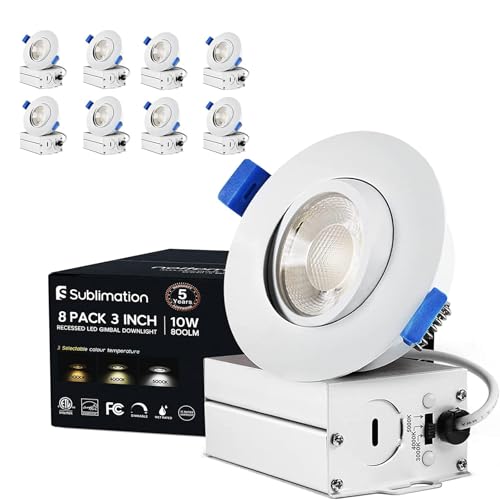 Sublimation 8 Packs 3 Inch led recessed Light,Waterproof recessed Lights for Shower,Ultra-Thin 10w with Junction Box,3 Colors Adjustable,Suitable for Bathroom,Parlor,Bedroom,Kitchen,Balcony