Wood Filler vs Wood Putty: Real Difference (+ When to Use Each)
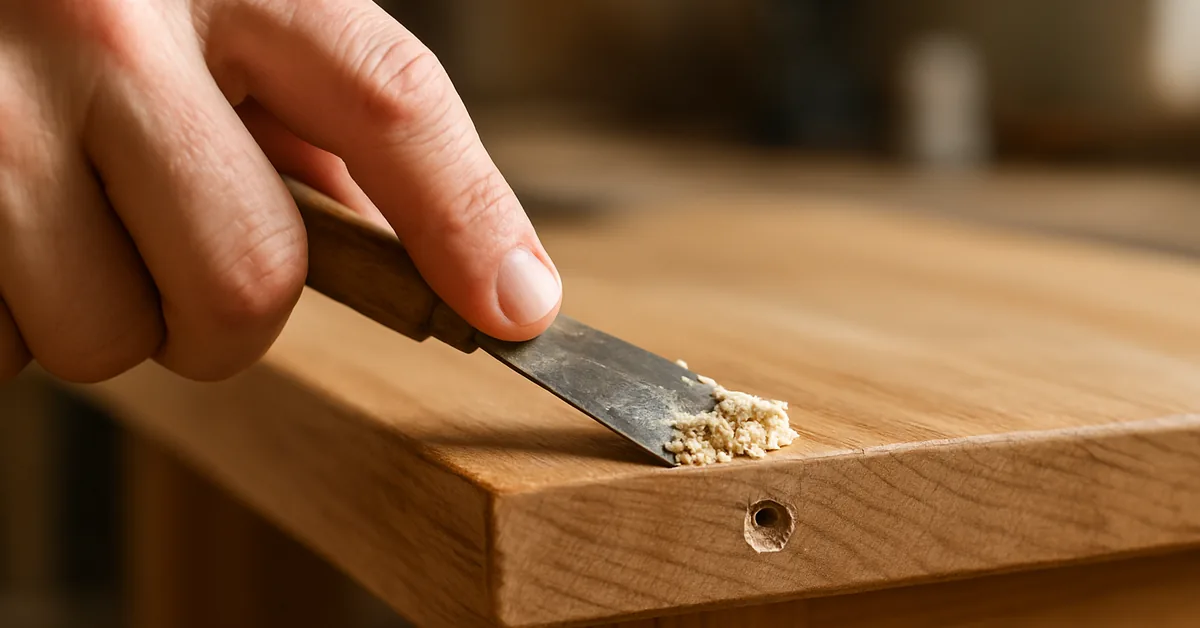
Wood filler dries hard and accepts stain, making it the right choice for structural repairs like knot holes, gouges, and old screw holes — wood putty stays soft and never fully hardens, so it only works for cosmetic touch-ups on trim that’s already painted. Using putty in a load-bearing joint, or filler under a stain you need to match, ruins the repair. This guide covers when to use each, the four filler types worth knowing, and how to undo the mistake if you picked wrong.
Quick Answer
Wood filler is a stronger, sandable, stainable compound for structural repairs — gouges, knot holes, missing wood. Wood putty is a soft, oil-based paste for cosmetic touch-ups on painted surfaces only; it never accepts stain and shouldn’t bear weight. When the repair needs strength or will be stained, reach for filler. When it’s just a nail hole on painted trim, reach for putty.
What Is Wood Filler?
Wood filler is a material made to fill gaps and holes in wood. Think of it as a patch for your wood projects. It’s designed to be strong and durable.
You can often sand it, paint it, or stain it once it dries. This makes it a versatile choice for many repairs. It’s usually made from wood fibers mixed with binders and other chemicals.
These binders are what give wood filler its strength. They can be water-based, solvent-based, or epoxy-based. The type of binder affects how the filler dries and how strong it becomes.
Water-based fillers are easy to clean up. Solvent-based ones can be stronger but smellier. Epoxy fillers are the toughest and best for very deep or structural repairs.
The main purpose of wood filler is to provide a solid base. It’s meant to hold nails or screws. It can also bridge larger gaps.
Imagine a large knot blown out of a piece of trim. Wood filler is what you’d use to fix that. It’s designed to be a permanent part of the wood repair.
When you buy wood filler, you’ll see it comes in many colors, including black wood filler options for dark hardwoods. This helps you match the wood you’re working with. Some fillers are pre-colored.
Others you might need to tint yourself. This is important because if you plan to stain the wood, the filler needs to accept stain well. Some fillers don’t stain like natural wood.
That’s a key point to remember.
You can also get different types of wood filler based on the job. There’s lightweight filler, which is easy to sand. There’s also heavy-duty filler for bigger jobs.
Some are flexible, which is good for areas that might move slightly. It’s always a good idea to read the label to see what the filler is best suited for.
What Is Wood Putty?
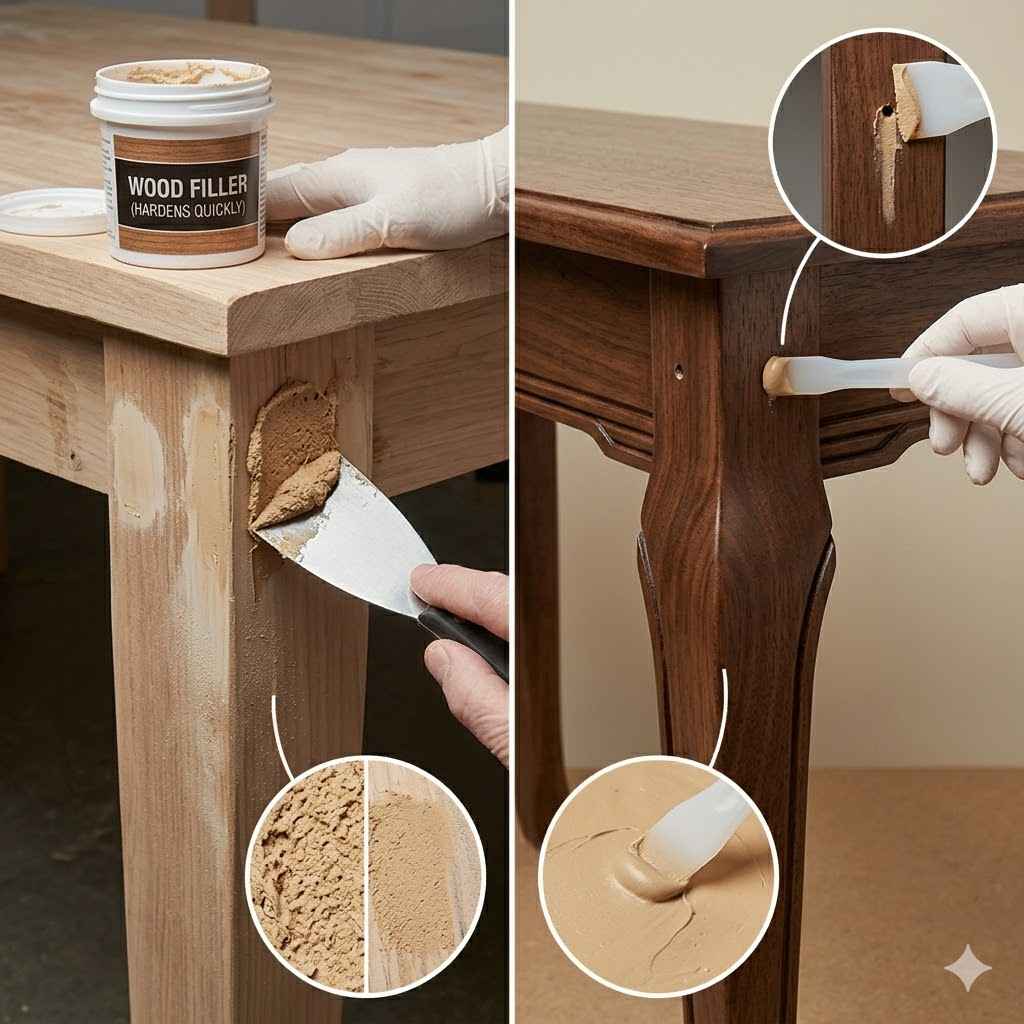
Wood putty, on the other hand, is a bit different. It’s softer and more pliable than wood filler. Its main job is cosmetic.
It’s great for filling small imperfections. Think nail holes or tiny scratches. It’s not designed to be structural.
You can’t rely on it to hold screws or bear weight.
Wood putty is often oil-based. This makes it smooth and easy to spread. It stays workable for a longer time.
This is helpful when you’re just touching up small spots. It doesn’t shrink or crack as much as some fillers might when used for tiny fixes. This is why it’s good for those little touch-ups.
Because it’s softer, wood putty is often used after a project is painted or finished. It’s perfect for filling small gaps where paint might have chipped. Or for covering up the heads of finishing nails that you didn’t want showing.
It dries to a smooth surface that blends well with surrounding paint.
A key characteristic of wood putty is that it typically doesn’t accept stain. Because it’s oil-based and doesn’t contain wood fibers like most fillers, it won’t look like wood when you try to stain it. It often dries to a lighter color.
This is why it’s usually recommended for use on painted surfaces.
There are some newer, water-based putties available now. These are easier to clean up. But the traditional oil-based putty is still very common.
The texture is smooth and buttery. It feels different from the grittier texture of most wood fillers. This difference in texture is a good clue to its intended use.
The Core Difference: Strength vs. Finish
The most significant difference between wood filler and wood putty boils down to their purpose and performance. Wood filler is built for strength and durability. It’s meant to make a lasting repair.
It can bond strongly to wood. It can also be sanded and shaped. This makes it suitable for filling larger holes, cracks, and even rebuilding damaged wood sections.
You can use it in places where the wood will be stressed.
Wood putty is all about appearance. It’s for filling small aesthetic flaws. Think nail holes in trim or tiny dings on furniture.
It’s not meant to be structural. You can’t hammer a nail into dried putty or expect it to hold anything. Its pliability and smooth texture allow it to fill tiny gaps without cracking.
It dries to a smooth surface that’s easy to paint over. It’s the finishing touch for a perfect look.
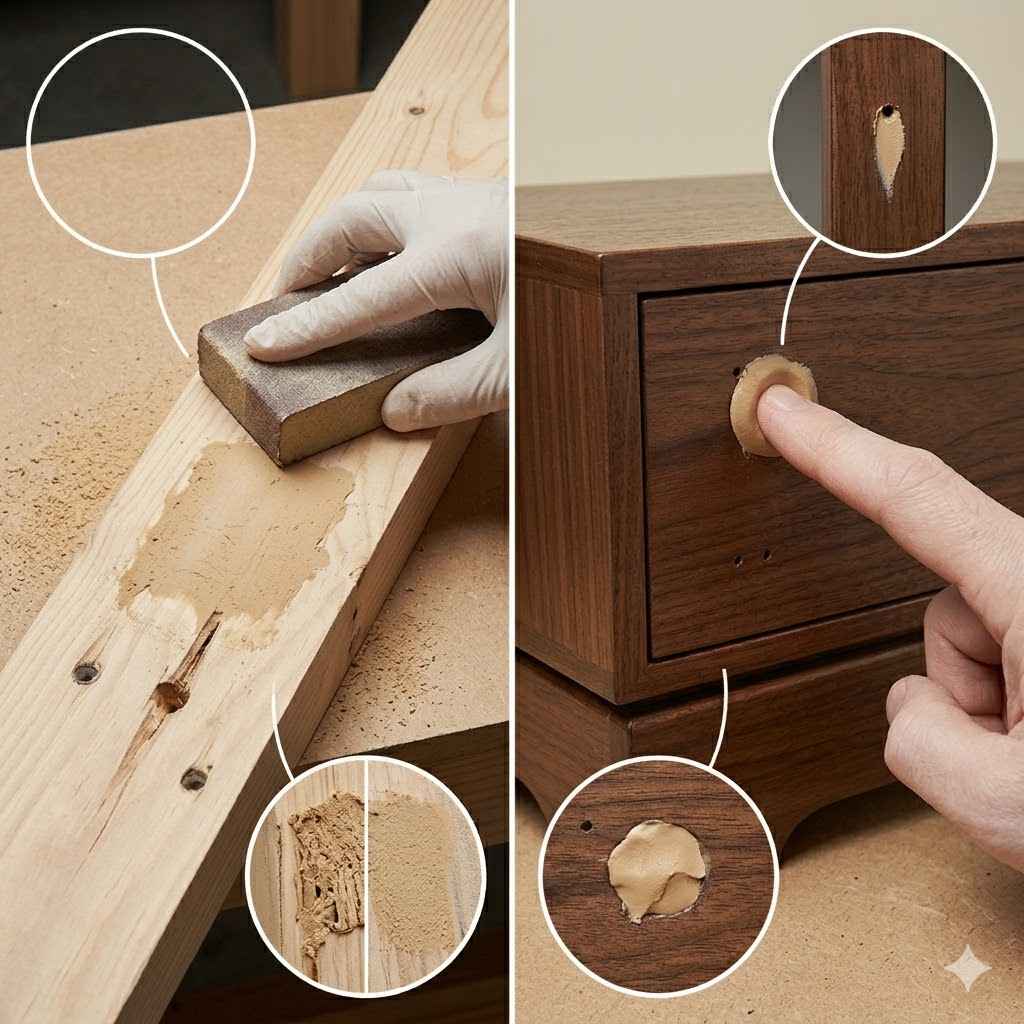
Consider this: if you need to fill a hole where a doorknob used to be, you’ll want wood filler. It will provide a strong patch that can handle the stresses of a door. If you just need to fill the tiny hole left by a finishing nail in your baseboard trim, wood putty is a better choice.
It will fill the hole smoothly and be easy to paint over.
The way they dry is also different. Wood filler often shrinks a bit as it dries. This is why you might need to apply it in layers for deeper holes.
It dries hard and can be sanded down flush. Wood putty, being more oil-based, is less prone to shrinking. It remains somewhat flexible.
Best Wood Filler Pick
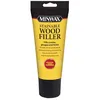
Minwax Stainable Wood Filler, 6 oz – $8.88
Fills knot holes and gouges exactly as described above, and it is formulated to accept both oil- and water-based stains, the “yes for filler” half of this guide’s stain rule.
- Best for: unfinished wood repairs you plan to stain to match
- Why we picked it: accepts Minwax oil- and water-based stains, unlike putty
- Main drawback: small 6 oz tub, buy two for bigger restorations
Compare more wood filler & putty options
 Option 1 Mohawk Fil-Stik Putty Stick – $6.99
|
 Option 2 PC-Woody Epoxy Repair Paste – $18.89
|
 Option 3 Boncart Wood Filler 9.87 oz – $12.99
|
As an Amazon Associate we earn from qualifying purchases.
When to Use Wood Filler
You reach for wood filler when the repair needs to be strong. This means filling larger gouges or cracks in furniture. It’s perfect for repairing broken edges on cabinets.
Or for filling knot holes that have fallen out. If you’re doing major restoration work, wood filler is your go-to. It can rebuild missing wood material.
Another common use for wood filler is when you’re changing hardware. Suppose you’re moving a shelf and need to fill the old screw holes. Wood filler will create a solid base there.
You can then re-drill new holes if needed. It acts like new wood in those spots.
One repair sticks out: an old rocking chair with a crack running clean through the armrest, deep and wide enough that a quick fix wasn’t going to hold.
“This needs to be strong, not just smooth. I built up a good quality wood filler in thin layers, let each layer dry, then sanded it flush. It held up perfectly and made the chair safe to use again.”
That’s where wood filler shines – in repairs that need to last and be tough.
Also, if you plan to stain the wood after filling, wood filler is often the better option. Some fillers are formulated to accept stain. This means the filled area can blend in with the surrounding wood color.
You just need to find a filler that matches your stain type. Always test the stain on a scrap piece first. Some fillers stain darker, some lighter.
If you are doing any structural woodworking, like building a new piece or repairing a table leg, wood filler is essential. It’s the only way to make those repairs look seamless and feel solid. It’s the building block of wood repair.
Wood Filler: Best For
- Large holes and deep cracks
- Structural repairs
- Areas needing to hold screws or nails
- Repairs that will be stained
- Rebuilding missing wood sections
When to Use Wood Putty
Wood putty is best for those small, cosmetic flaws. Think of the little dents and scratches you see on finished furniture. Or nail holes in picture frames or baseboards.
It’s perfect for touch-ups after painting. It fills these tiny imperfections without drawing attention. It just smooths things over.
I was helping my friend repaint her living room. We were done with the walls and trim. But then we noticed all these tiny little nail holes in the baseboards from where someone had hung decorations over the years.
They weren’t deep, just little indentations. I grabbed a small tub of wood putty. It was so easy to dab into each hole.
It smoothed right over. After it dried, a quick coat of matching trim paint made them disappear. That’s the magic of wood putty for those tiny fixes.
It’s also great for filling small gaps between molding and a wall. Or where two pieces of trim meet at an inside corner. It’s pliable enough to press into these tight spots.
And it dries to a smooth finish that accepts paint beautifully. It gives your finished project that extra professional touch.
You generally won’t use wood putty if the area needs to be sanded heavily. Or if it will be stained. Its primary role is to provide a smooth surface for paint.
It’s not meant to replicate wood grain or texture.
If you’re working on a painted project and notice a small chip in the paint or a tiny ding, putty is your friend. It fills the void without making a big deal of it. It just makes the surface look perfect again.
It’s the detailer of the wood repair world.
Wood Putty: Best For
- Small nail holes
- Tiny dents and scratches
- Filling minor imperfections on painted surfaces
- Cosmetic touch-ups
- Areas that will be painted, not stained
Types of Wood Filler
Wood fillers come in a few main varieties, each suited to different gap-filling techniques. Understanding these can help you pick the right one for your specific job.
📊 Minwax High Performance Wood Filler reaches carving hardness in 20 minutes and is safe to sand, plane, or file after 30 minutes — Source: Minwax Technical Data Sheet, 2026
Water-Based Wood Fillers
These are the most common and easiest to work with for many DIYers. They are made with water as the solvent. This means they clean up with soap and water.
They are also low in odor. This makes them great for indoor use. They dry relatively quickly.
Water-based fillers are usually labeled as “latex” or “vinyl” fillers. They are good for most common repairs like filling nail holes and minor cracks. They are easy to sand once dry.
However, they can shrink as they dry. This means for deeper holes, you might need to apply them in multiple thin layers. This is a common practice to avoid cracks.
The strength of water-based fillers can vary. They are not usually recommended for structural repairs where significant force will be applied. But for general woodworking and home improvement, they are excellent.
They come in various colors to help match your wood.
Water-Based Filler At a Glance
Pros: Easy cleanup, low odor, quick drying, easy sanding.
Cons: Can shrink, may require multiple applications for deep holes, not for heavy structural loads.
Solvent-Based Wood Fillers
These fillers use solvents like mineral spirits or naphtha. They tend to be stronger and more durable than water-based fillers. They often shrink less.
This can make them a better choice for deeper repairs. They don’t get gummy when sanded.
The downside is that they have stronger fumes. You need good ventilation when using them. Cleanup usually requires a solvent.
They can be a bit harder to work with for beginners. But their durability is a big plus for certain jobs. They might also take a bit longer to dry than water-based versions.
Solvent-based fillers are a good middle ground between water-based and epoxy fillers. They offer more strength without the two-part mixing of epoxies. They are a solid choice for furniture repair and trim work.
Solvent-Based Filler At a Glance
Pros: Strong, durable, less shrinkage, good for deeper fills.
Cons: Strong fumes, requires solvent cleanup, can be harder to sand if over-dried.
Epoxy Wood Fillers
Epoxy fillers are the strongest and most durable type. They usually come in two parts: a resin and a hardener. You mix them together before use.
This creates a chemical reaction that makes the filler very hard and waterproof, which is why epoxy is the top pick for exterior wood filler repairs exposed to moisture. They are excellent for repairing rotten or severely damaged wood.
Epoxy fillers don’t shrink. They can be used for very deep repairs in one application. They are also incredibly strong.
You can drill into them, sand them, and even carve them. They are the choice for serious structural repairs or areas exposed to moisture.
The drawback is that they can be more expensive. They also have a limited working time once mixed. You need to work quickly.
Cleanup requires specific solvents. They are often used by professionals or for very demanding DIY projects.
Epoxy Filler At a Glance
Pros: Extremely strong, waterproof, no shrinkage, can be machined.
Cons: Expensive, two-part mixing, limited working time, specific cleanup.
Wood Patching Compounds
These are sometimes grouped with wood fillers. They are often a thicker, paste-like consistency. They are very easy to spread.
They are good for filling larger gaps and can often be used instead of wood filler. They tend to be easier to sand than some other fillers. They are usually water-based.
They are a great option for filling larger surface imperfections. They don’t offer the same strength as epoxy fillers. But for most general home repairs, they work well.
They are a good compromise between ease of use and performance.
Patching Compounds At a Glance
Pros: Easy to spread, good for large surface fills, sandable.
Cons: Less durable than epoxy, may shrink.
Types of Wood Putty
Wood putty is generally simpler. The main distinction is often oil-based versus water-based.
Oil-Based Wood Putty
This is the classic wood putty. It’s made with oil, chalk, and other fillers. It has a smooth, pliable texture.
It stays workable for a long time, which is great for small jobs. It doesn’t shrink much.
Oil-based putty is perfect for filling nail holes in trim or baseboards. It’s also good for small dings on furniture. It dries to a smooth surface that is easy to paint over.
The main downside is that it requires mineral spirits for cleanup. It also doesn’t accept stain. It’s best used on painted projects.
I remember doing a quick touch-up job on some old window frames. They were painted white. There were a few little dings and old nail holes.
I used an oil-based wood putty. It was so forgiving. I could press it into the holes with my finger.
Then I just smoothed it off with a putty knife. It dried overnight. The next day, a quick coat of paint made them invisible.
It’s the go-to for that kind of quick cosmetic fix.
Oil-Based Putty At a Glance
Pros: Smooth, pliable, long working time, minimal shrinkage, good for painted surfaces.
Cons: Requires solvent cleanup, does not accept stain.
Water-Based Wood Putty
These are a newer alternative. They are made with water as the solvent. This means easy cleanup with water.
They are also low in VOCs (volatile organic compounds). This makes them a more eco-friendly option with less odor.
Water-based putties are also easy to spread and sand. They are great for small cosmetic repairs on painted surfaces. They dry fairly quickly.
Some might shrink a little more than oil-based putties. But for filling tiny nail holes or minor dents, they work very well. They are a good choice if you prefer easier cleanup and less odor.
Water-Based Putty At a Glance
Pros: Easy cleanup, low odor, good for painted surfaces, sandable.
Cons: May shrink slightly, not for structural use.
Can You Stain Wood Filler? Can You Stain Wood Putty?
This is a crucial question for many projects, especially if you’re working with unpainted wood. The answer is generally: yes for wood filler, no for wood putty.
Many wood fillers are designed to be stainable. They contain wood fibers and binders that can absorb stain. However, not all fillers stain the same way.
Some will absorb stain more deeply than others. This can lead to a color mismatch. It’s always best to choose a filler color that closely matches your wood to start with.
Then, test the stain on a scrap piece of wood with the filler applied to it.
You might need to experiment with different staining techniques to get the best match. Sometimes, a pre-stain wood conditioner can help the filler accept the stain more evenly. Or you might need to use a combination of stains and glazes to achieve the desired look.
Some fillers might need to be tinted after drying but before staining to get closer to the wood color.
Wood putty, on the other hand, is typically not stainable. Because it’s usually oil-based and doesn’t contain wood fibers, it doesn’t absorb stain like wood does. If you try to stain wood putty, it will likely look different from the surrounding wood.
It might stay lighter or take on an odd hue. For this reason, wood putty is almost always reserved for projects that will be painted. If you’re doing a project that will be stained, you should avoid using wood putty.
In summary: if your project is destined for a painted finish, either wood filler or wood putty can work for small cosmetic flaws. But if you plan to stain the wood, you need to use a stainable wood filler. Avoid putty altogether.
Can You Paint Over Wood Filler and Wood Putty?
Absolutely! Painting is where both wood filler and wood putty truly shine, especially for their intended uses. Both can be painted over successfully.
For painted projects, wood filler is excellent for filling larger holes and structural repairs before you paint. It provides a solid surface that paint can adhere to. Just make sure it’s fully dry and smooth.
Then, you can prime and paint as usual. The filler becomes part of the painted surface, blending in seamlessly.
Wood putty is also fantastic for painted surfaces. Its primary use is filling those small imperfections like nail holes in trim or minor dents on furniture. It dries smooth, and when you apply primer and paint, it becomes virtually invisible.
It gives your painted surfaces a clean, flawless look.
The key to a good painted finish over either material is proper preparation. Ensure the filler or putty is completely dry. Sand it smooth so there are no bumps or ridges.
If you’re using a water-based filler or putty, you might want to apply a coat of primer over the patched area before painting. This helps ensure the paint adheres evenly. Some people find that water-based fillers can sometimes absorb paint differently than wood.
A primer seals that in.
So, whether you’ve used wood filler for a bigger repair or wood putty for a quick touch-up on a painted piece, you can be confident that paint will give you a beautiful, unified finish. It’s the final step that hides all the work.
What Happens If You Use the Wrong Product?
Using wood putty for a structural repair is a recipe for disappointment. Since putty isn’t designed to be strong, it won’t hold up. Imagine filling a large hole in a chair leg with putty.
You might get away with it for a while. But eventually, the weight or stress will cause the putty to crack or crumble. The repair will fail.
It won’t provide the support needed.
On the flip side, using wood filler for very fine cosmetic touch-ups on painted trim might be overkill. It can be harder to get a perfectly smooth finish with filler. It might shrink slightly, leaving a tiny sinkhole you then have to fill again.
Or it might be harder to sand perfectly flush for those tiny spots. You could end up with a slight bump or imperfection that shows through the paint. It’s more work than necessary.
A common mistake is trying to stain over wood putty. You expect it to look like wood, but it doesn’t. The putty might absorb the stain differently, leaving a blotchy, unnatural-looking spot.
This can ruin the finish of an otherwise beautiful piece of furniture or woodwork. You’ll then have to figure out how to paint over the mistake. Or try to remove the putty and start again with a stainable filler.
I once saw a project where someone used wood putty to fill a large knot hole on an exterior door that was going to be stained. They thought it would be fine. When they stained it, the putty area looked like a weird, pale grey patch.
It completely ruined the look. They had to scrape out all the putty and start over with a stainable wood filler. It was a lot of extra work and frustration.
It taught me a valuable lesson: always use the right tool (or product) for the job.
Real-World Scenarios: Choosing Wisely
Let’s walk through some common situations and decide whether wood filler or wood putty is the better choice.
Scenario 1: Repairing a Deep Gouge in a Wooden Tabletop
Your table has seen better days. There’s a deep gouge from a dropped pot. This needs to be a strong repair.
You can’t have it crumbling later. You also want it to look good. If the table is stained, you need a stainable filler.
If it’s painted, either will work for the fill, but you’ll paint over it.
Choice: Wood Filler. You need a product that can fill the depth and provide a durable surface. If it’s a stained table, use a stainable wood filler.
If it’s a painted table, a good quality wood filler will work well. You might need to apply it in layers. Then sand it smooth for a seamless paint job.
Scenario 2: Filling Nail Holes in Baseboard Trim
You’ve just installed new baseboard trim. Or maybe you’re touching up old trim. There are small nail holes from finishing nails.
These are small, cosmetic imperfections. The trim is painted white.
Choice: Wood Putty. Wood putty is perfect for this. It’s easy to apply.
It fills the small holes smoothly. It dries to a surface that accepts paint perfectly. It’s quick and efficient for these tiny fixes.
Using wood filler here would be more work than needed and could potentially leave a slightly raised or textured mark that shows through the paint.
Scenario 3: Fixing a Rotten Section of a Window Frame
The wood on your window frame is soft and crumbly. It’s starting to decay. This is a structural issue.
It needs a repair that will be strong and weather-resistant.
Choice: Epoxy Wood Filler. For rotten wood, you need the strongest solution. You’ll likely need to remove the rotted wood first.
Then, an epoxy wood filler can rebuild the damaged area. It will harden like new wood and resist moisture. A regular wood filler might not be strong enough or water-resistant enough for this type of repair.
Scenario 4: Filling Small Dings on a Painted Bookshelf
You’ve moved your bookshelf. It has a few small chips and dings on the edges and corners. The bookshelf is painted.
You want it to look perfect again.
Choice: Wood Putty. These are small cosmetic issues. Wood putty is ideal.
It’s easy to spread into the dings. It dries smooth and is ready for a touch-up coat of paint. It gives a clean, professional finish for minor surface damage.
Scenario 5: Rebuilding a Corner of a Wooden Picture Frame That Broke Off
A corner of a nice wooden picture frame chipped off. The frame is stained. You want to repair it so it looks like it did before.
Choice: Stainable Wood Filler. This requires rebuilding a broken piece of wood. You need a strong filler that can be shaped and, crucially, accept stain.
A good quality stainable wood filler is essential here. You’ll likely apply it in layers, let it dry, and then carefully sand and stain it to match the rest of the frame. Choosing a filler that’s close to the wood color before staining can help achieve a better match.
Quick Checks: Is It Filler or Putty?
If you’re unsure what you have in your toolbox, here are a few ways to tell:
- Texture: Most wood fillers have a slightly gritty or paste-like texture. They feel substantial. Wood putty is usually very smooth, soft, and pliable. It feels almost like clay.
- Packaging: Labels will often clearly state “Wood Filler” or “Wood Putty.” Read the product description.
- Intended Use: Think about what the product is designed for. If it claims to be strong, sandable, and able to hold screws, it’s likely filler. If it talks about cosmetic finishes and filling nail holes on painted surfaces, it’s likely putty.
- Cleanup: Water-based fillers and putties clean up with water. Solvent-based fillers often need mineral spirits. This can be a clue.
When in doubt, it’s always better to buy a new product for your specific need. Using the wrong one can lead to more work and a less-than-ideal finish.
Frequently Asked Questions
Can I use wood filler on drywall?
Yes, many types of wood filler can be used on drywall for small holes and cracks. However, there are also specific drywall compounds that are formulated for this purpose. Wood filler might shrink more than drywall compound, so multiple applications could be needed. Always check the product label for compatibility.
Does wood putty dry hard?
Wood putty dries, but it typically remains somewhat pliable. It doesn’t dry as hard or as rigid as wood filler. This is why it’s suited for cosmetic fixes rather than structural repairs. It’s meant to fill small gaps without cracking, not to bear weight or stress.
Can I mix wood filler and wood putty?
It’s generally not recommended to mix wood filler and wood putty. They have different formulations and properties. Mixing them could result in an inconsistent material that doesn’t perform as expected. It might not cure properly, could shrink unevenly, or won’t hold up to sanding or finishing.
How long does wood filler take to dry?
Drying time varies greatly depending on the type of wood filler, the thickness of the application, and environmental conditions (humidity and temperature). Water-based fillers can dry in as little as 15-30 minutes for thin applications. Solvent-based fillers might take longer, and epoxy fillers require specific curing times after mixing. Always check the product’s instructions for an estimated drying time. For deeper fills, allow adequate drying time between layers.
Can I sand wood putty?
Yes, you can sand wood putty, but it’s usually not necessary to sand it extensively. Its purpose is to fill small imperfections smoothly. It typically dries to a smooth enough finish that it only needs light sanding to blend perfectly with the surrounding surface, especially if it will be painted. Over-sanding can sometimes remove too much or create a different texture.
What is the best wood filler for exterior use?
For exterior use, you’ll want a wood filler that is durable, weather-resistant, and potentially waterproof. Epoxy wood fillers are excellent choices for exterior repairs because they are very strong and don’t shrink or crack with temperature changes. Some high-quality, exterior-grade water-based fillers also exist, but always check the product description to ensure it’s rated for outdoor use.
Conclusion
Navigating the world of wood fillers and putties doesn’t have to be confusing. The core difference lies in their purpose: wood filler is for durable repairs, while wood putty is for cosmetic fixes. By understanding their strengths and weaknesses, you can confidently choose the right product for your next project.
This will save you time, frustration, and ensure a professional, long-lasting result. For more repair techniques, browse our full woodworking tips and guides. Happy fixing!
Sponsored / affiliate links. As an Amazon Associate I earn from qualifying purchases. I may earn additional commission from eligible campaigns.