Can You Use Wooden Utensils On Nonstick Pans? Safe Or Not?
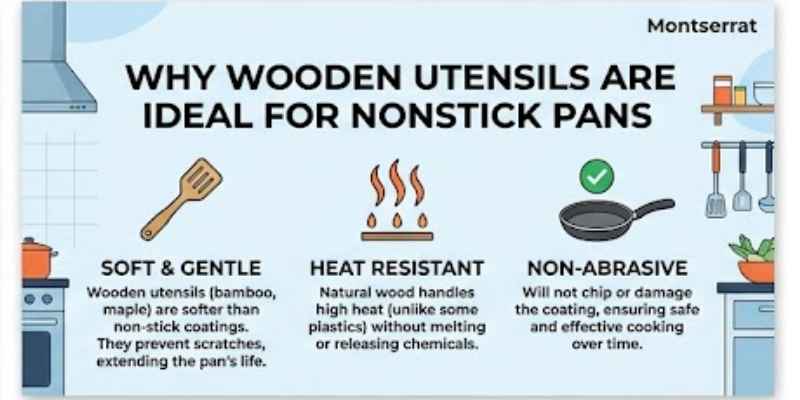
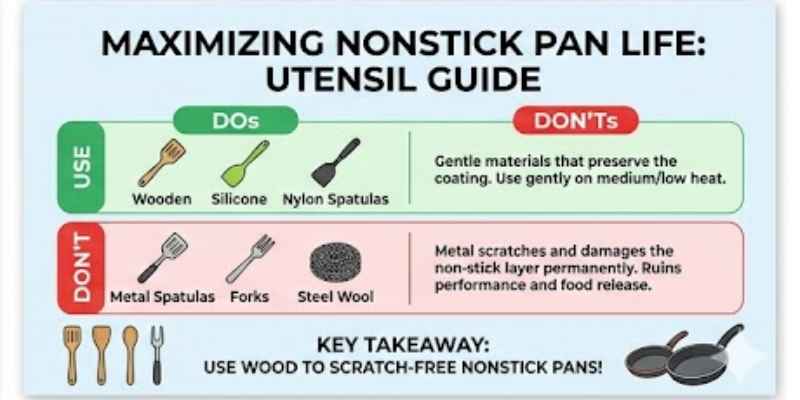
Yes, you can generally use wooden utensils on nonstick pans. Wood is a soft material. It is much less likely to scratch the delicate surface of nonstick cookware compared to metal utensils.
Proper care and gentle handling are still key for protecting your pans.
Understanding Nonstick Pans and Utensils
Nonstick pans are a kitchen dream. They make cooking easier. Food slides right off.
Cleanup is a breeze. But this smooth surface is also fragile. It needs a little care.
The nonstick coating, often Teflon or ceramic, can wear away. This happens if you’re too rough with it. Metal spatulas and whisks are big culprits here.
They can create tiny scratches. Over time, these scratches let food stick. They also weaken the whole coating.
That’s where utensils made of softer materials come in. Think of silicone, nylon, or wood. These materials are designed to be gentle.
They don’t dig into the nonstick surface. This helps preserve the pan’s ability to release food. It also keeps the coating intact longer.
So, the choice of utensil is important. It directly impacts how long your nonstick pans will last and perform well.
A Personal Kitchen Mishap
I remember one evening clearly. I was making a simple stir-fry. My usual go-to spatula was a metal one.
It was sturdy and felt good in my hand. I was stirring the vegetables quickly. The wok was hot.
Suddenly, I heard a faint scraping sound. It wasn’t loud. But it made me freeze.
I paused and looked at the pan. I saw a tiny, almost invisible mark on the surface. My heart sank a little.
I had always been careful. But in that moment of haste, I had made a mistake. I felt a pang of annoyance with myself.
That scrape, though small, was a sign of damage. It was a reminder that even with nonstick, you need the right tools.
From that day on, I made a conscious effort. I swapped out my metal tools for others. I started using a silicone spatula.
Then I grabbed my wooden spoon. It felt different. It was less aggressive.
It felt much kinder to the pan. The sound changed too. No more scraping.
Just a gentle swish. It made cooking feel more relaxed. It was a small change.
But it felt like a big step in protecting my kitchen gear. It also taught me that sometimes the simplest tools are the best. They offer protection without sacrificing function.
This experience solidified my belief in using the right utensil for the job.
Utensil Material Matters: A Quick Look
Wood: Natural, hard but not too hard. Great for stirring and scraping. Doesn’t conduct heat much.
Silicone: Very flexible. Safe for high heat. Can get into corners well.
Nylon: Sturdy but softer than metal. Good for general cooking tasks.
Metal: Best avoided for nonstick surfaces. Can easily scratch.
Why Wood is Often a Good Choice
Wood is a natural material. It comes from trees. Because of this, it has some unique properties.
These properties make it ideal for cooking. For one, wood is not very hard. It’s much softer than metal.
Think about a hardwood floor. It’s strong. But it’s still softer than steel.
This is why a wooden spoon won’t easily scratch your nonstick pan. The wood will give a little. It won’t gouge or scrape away the coating.
Another benefit is that wood doesn’t transfer heat well. This means if you leave a wooden spoon in a hot pan, the handle stays cool. This is a big plus for comfort.
Metal handles can get very hot. You might burn your hand. Wood also has a nice feel.
It feels warm and natural in your hand. It’s a simple material. But it does a great job in the kitchen.
Many people have wooden spoons they’ve had for years. They are durable and reliable.
The Science Behind Gentle Cooking
The nonstick coating on pans isn’t just paint. It’s usually a special polymer. This polymer creates a smooth surface.
This surface makes food release easily. It’s often reinforced. This makes it more durable.
However, it has limits. The coating can be damaged by abrasive materials. These are things that can grind or scrape.
Metal utensils are often made of steel. Steel is much harder than the nonstick coating. When you rub metal on nonstick, it’s like using sandpaper on a painted wall.
Tiny particles of the coating can be removed.
Wood, on the other hand, is a composite material. It has fibers. These fibers are bound together.
When wood rubs against the nonstick surface, the fibers bend. They might wear down a tiny bit. But they don’t break off chunks of the coating.
It’s a much gentler interaction. This is why wood is considered safe for nonstick pans. It respects the delicate nature of the coating.
It helps maintain the pan’s performance over time. It’s a simple principle of material science at work.
Utensil vs. Pan Surface: A Hardness Test (Concept)
Nonstick Coating: Think of it like a very thin, special plastic layer. It’s strong for its job but can be scratched.
Wooden Utensil: Like a firm, but slightly yielding wood block. It will wear down very slowly.
Metal Utensil: Like a sharp chisel. It can easily cut into and remove the coating.
Real-World Scenarios: Kitchen Habits
Many factors influence how well nonstick pans last. One big factor is how we cook. Do you cook on very high heat?
Some nonstick pans can handle it. Others can’t. High heat can break down the coating.
It can also make food stick more. This makes you want to scrape harder. Then you might use a metal tool.
This creates a cycle of damage. Gentle heat and gentle cooking are better. Using wood helps here.
It’s less likely to cause a panic scrape.
Another habit is how we clean. Do you scrub hard with steel wool? That’s a definite no-no for nonstick.
Even a stiff brush can be too much. Most nonstick pans recommend a soft sponge. Warm water and mild soap are usually best.
Drying the pan well is also smart. Leaving water spots can sometimes lead to mineral buildup. This can affect the nonstick surface over time.
Choosing wooden utensils is part of a larger set of good habits. These habits protect your pans.
The design of the utensil also plays a role. A sharp edge on a wooden spoon is less common. Most wooden spoons have rounded edges.
This makes them even gentler. Silicone spatulas often have thin, flexible edges. These are great for scraping up bits without scratching.
Metal utensils, especially those with sharp edges or points, are the most risky. They are designed to cut or scrape. This is not what you want for a nonstick surface.
When Wood Might Not Be the Best (Rare Cases)
While wood is generally safe, there are a few rare situations. Some very cheap wooden utensils might have rough spots. These could potentially snag or scratch.
It’s always good to check your wooden tools. Make sure they are smooth. Sand them down if needed.
This is rare, though. Most quality wooden utensils are well-made.
Another point is extreme force. If you were to hammer a wooden spoon against a pan, you could dent the pan. But that’s not normal cooking.
For everyday stirring, flipping, and scraping, wood is safe. It’s designed for these tasks. It’s the intended use of wooden spoons and spatulas.
So, for regular cooking, don’t worry about wood damaging your nonstick.
Quick Scan: Utensil Safety Checklist
- Wood: Safe. Gentle.
- Silicone: Safe. Flexible.
- Nylon: Safe. Sturdy.
- Metal: Risky. Avoid for nonstick.
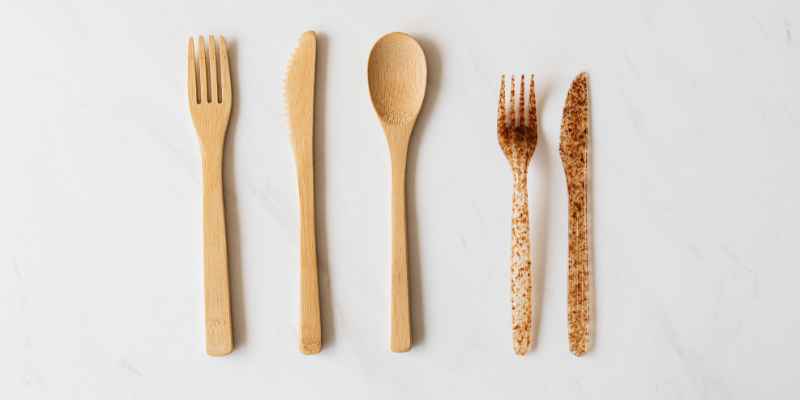
- Bamboo: Also safe. Similar to wood.
What This Means For Your Cooking
Knowing that wood is safe is a relief. It means you can cook with confidence. You don’t have to stress about every move.
You can use your wooden spoon to stir sauces. You can use a wooden spatula to flip pancakes. You can even use a wooden spoon to scrape browned bits from the bottom of the pan.
These bits are flavor! You want to get them. Wood helps you do that without harming the pan.
This knowledge helps you make better choices. When you buy new kitchen tools, you know what to look for. You’ll probably lean towards wood, silicone, or nylon.
You’ll likely steer clear of metal sets for your nonstick pans. It’s about preserving your investment. Nonstick pans can be expensive.
Treating them well means they last longer. They continue to perform beautifully. This saves you money in the long run.
It also makes cooking more enjoyable.
When It’s Normal and When to Worry
It’s completely normal for a nonstick pan to eventually show some wear. Tiny, faint marks might appear over many years. This is usually a sign of normal use.
It’s not something to panic about. The important thing is that food still releases well. The coating is still mostly intact.
You should worry if you see significant peeling. Are there large flakes of coating coming off? Is food sticking badly to large areas of the pan?
Does the pan look rough or gouged all over? These are signs of major damage. This damage can happen from using the wrong utensils.
It can also happen from overheating or improper cleaning. If you see these issues, it might be time to
Normal Wear vs. Serious Damage
Normal: Very faint, almost invisible marks after years of use. Food still releases easily.
Concerning: Large flakes of coating coming off. Food sticking in big patches. Pan surface looks deeply scratched or worn away.
Simple Tips for Wooden Utensil Care
Taking care of your wooden utensils is easy. It helps them last and perform their best. First, always wash them by hand.
Don’t put them in the dishwasher. The hot water and harsh detergents can dry out the wood. This can cause it to crack or warp over time.
After washing, dry them well with a towel. Let them air dry completely before storing. This prevents mold.
You can also treat them with a food-safe mineral oil. Do this every month or so. Rub a little oil onto the wood.
Let it soak in. Then wipe off any extra. This keeps the wood from drying out.
It also helps make it more water-resistant. These simple steps will keep your wooden spoons and spatulas in great shape.
Considering Alternatives: Silicone and Nylon
Besides wood, silicone and nylon are also excellent choices. Silicone is very popular. It’s heat-resistant.
It’s flexible. This makes it great for scraping out bowls and pans. It comes in many fun colors too.
Silicone is very gentle on nonstick surfaces.
Nylon is another good option. It’s a bit firmer than silicone. It’s still much softer than metal.
Nylon utensils are good for everyday cooking tasks like stirring and flipping. They are often more affordable than silicone. Both silicone and nylon are excellent alternatives if you prefer them over wood.
They all share the goal of protecting your nonstick pans.
The Three Musketeers of Nonstick Utensils
- Wood: Natural, comfortable, doesn’t heat up.
- Silicone: Flexible, heat-proof, great for scraping.
- Nylon: Sturdy, affordable, good all-rounder.
When to Use Metal Utensils (and When Not To!)
So, when can you use metal utensils? They are perfectly fine for pans with surfaces that aren’t nonstick. Think of stainless steel pots and pans.
Cast iron skillets are also great with metal. They are durable. They can handle aggressive scraping.
In fact, sometimes you need metal. For example, if you’re trying to get stuck-on food off a cast iron pan. You might need a metal scraper.
The key is knowing your cookware. If it’s advertised as nonstick, then metal is generally off-limits. Some higher-end nonstick pans might claim to be metal-utensil safe.
But even then, it’s a risk. Why shorten the life of an expensive pan? It’s usually best to err on the side of caution.
Stick to wood, silicone, or nylon for your nonstick surfaces. You’ll thank yourself later when your pans still look and cook like new.
Frequently Asked Questions About Wooden Utensils and Nonstick Pans
Are wooden spoons safe for Teflon pans?
Yes, wooden spoons are very safe for Teflon pans. Teflon is a type of nonstick coating. Wood is soft and won’t scratch the Teflon surface.
This helps keep your pans in good condition.
Can I use a wooden spatula on a ceramic nonstick pan?
Absolutely. Wooden spatulas are safe for ceramic nonstick pans. Ceramic coatings are also delicate.
Wood is a gentle material that won’t damage the surface. It’s a great choice for these pans.
Will a wooden utensil wear out my nonstick coating faster?
No, quite the opposite. Using wooden utensils helps preserve your nonstick coating. They are less likely to scratch or damage it than metal utensils.
This means your nonstick surface should last longer.
Do wooden utensils need special cleaning for nonstick pans?
Yes, wooden utensils should be hand-washed. Do not put them in the dishwasher. The dishwasher’s heat and strong soap can damage the wood.
Gentle hand washing and air drying is best.
Are bamboo utensils safe for nonstick pans?
Yes, bamboo utensils are also safe for nonstick pans. Bamboo is a type of hard grass. It’s similar to wood in its gentleness.
It is unlikely to scratch your nonstick surfaces.
What should I do if my nonstick pan is already scratched?
If your nonstick pan has light scratches, it might still be usable for a while. However, food may start to stick more. If the scratches are deep or there are large flakes of coating coming off, it’s best to replace the pan.
This is because the protective coating is compromised.
Final Thoughts on Gentle Cooking
So, the answer is a clear yes. You can safely use your trusty wooden utensils on your nonstick pans. It’s not just safe; it’s smart.
It’s a simple habit that protects your cookware. By choosing wood, you avoid scratches. You help your pans last longer.
This means better cooking experiences for you. It also saves you money. Embrace the gentle touch.
Your nonstick pans will thank you for it.
Sponsored / affiliate links. As an Amazon Associate I earn from qualifying purchases. I may earn additional commission from eligible campaigns.