Dogwood vs. Bradford Pear Tree: Which One Should You Plant?
Flowering dogwoods (Cornus florida) are native, long-lived ornamentals that support birds and pollinators, while Bradford pear trees split apart within just 15 to 25 years and are now illegal to sell in Ohio, South Carolina, Pennsylvania, and New Jersey. Planting a Bradford pear risks storm-snapped limbs and a $450–$900 removal bill down the road. This guide compares their lifespan, bloom, growth habit, disease resistance, and exactly which states have banned Bradford pears.
This post contains affiliate links. We may earn a commission at no extra cost to you — see our affiliate disclosure.
Understanding Dogwood vs Bradford Pear Tree
Dogwoods are a whole family of trees. Many kinds are native to the United States. They are loved for their beautiful spring blooms.
These blooms are actually modified leaves, called bracts. They surround tiny flowers. Dogwoods often have a nice shape and good fall color too.
They are generally seen as a good choice for yards and parks.
Bradford pear trees are different. They were first brought to the U.S. from Europe.
They were grown for their white spring flowers. They also have a nice shape. However, over time, people realized they had big issues.
They are known to get diseases. They also tend to break apart easily in wind and storms. Plus, they have become a problem in many areas.
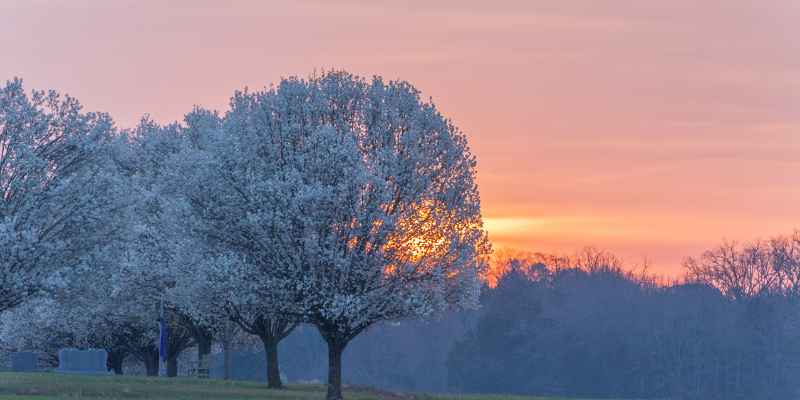
Dogwood Tree: Nature’s Native Beauty
Dogwood trees have a special place in the heart of American nature. They are often seen as elegant and graceful. Many species are native to the United States.
This means they have grown here for a very long time. They fit perfectly into our local ecosystems. They support local wildlife.
The most common dogwood people think of is the Flowering Dogwood (Cornus florida). This tree is native to the eastern U.S. It’s famous for its spring show.
The four large white or pink “petals” are really bracts, often notched at the tip. They bloom in early spring, usually before the leaves fully open, making a stunning display. The true flowers are small and greenish-yellow in the center.
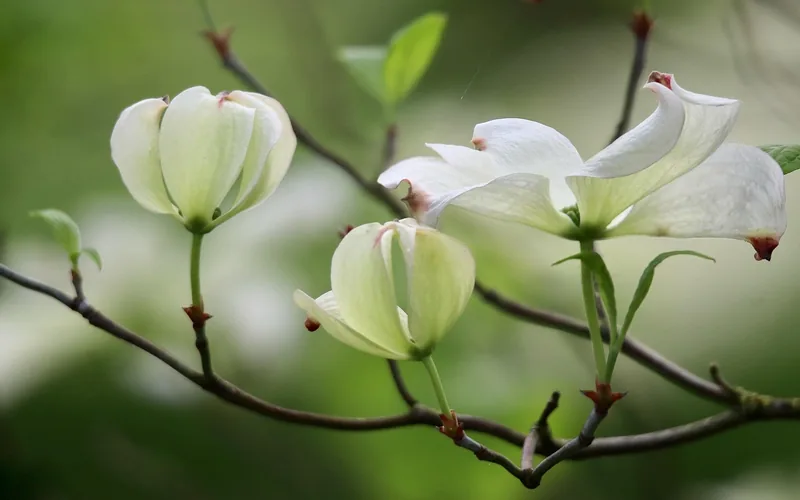
Dogwoods usually have a vase-like or spreading shape. They can grow about 15 to 30 feet tall. They often have horizontal branching.
This gives them a layered look. Their leaves are simple and oval-shaped. They turn a lovely reddish-purple in the fall.
In late summer, they produce bright red berry-like fruits. Birds love these fruits and rely on them as a fall food source — though if you have curious pets or kids, it’s worth checking whether dogwood berries are safe before letting them explore under the tree.
These trees prefer well-drained soil. They like a little shade, especially in hot afternoon sun. They can be a bit picky about where they grow.
They don’t like wet feet. They can also be prone to certain diseases like powdery mildew or dogwood anthracnose. But with the right care and location, they are a resilient and beautiful choice.
Bradford Pear Tree: A Tricky Imitation
The story of the Bradford pear tree is a bit sad. It started with good intentions. People wanted a pretty, fast-growing tree for city streets and yards.
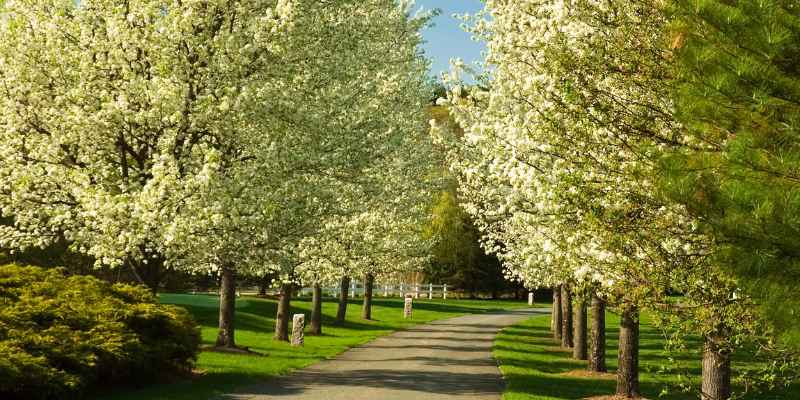
The ‘Bradford’ cultivar was very popular for decades. Its main appeal was its abundant white flowers in spring. It also had a neat, upright shape.
However, problems began to show up. Bradford pears have a major structural flaw. Their branches grow at tight angles.
This is called included bark. It’s like two arms hugging too closely. Over time, this weak point makes the branches very prone to splitting.
Strong winds or even heavy snow can cause them to break. This often damages the whole tree. Sometimes, it means the tree has to be removed.
Another big issue is disease. Bradford pears are susceptible to fire blight, a serious bacterial disease. It can kill branches or even the whole tree, leaving them looking scorched.
This makes them a high-maintenance tree for many homeowners.
But the most significant problem is that Bradford pears are invasive. While the ‘Bradford’ cultivar itself was supposed to produce sterile fruit, cross-pollination with other pear varieties (including wild ones) results in fertile seeds. These seeds are carried by birds.
They can sprout up in wild areas, fields, and forests. They push out native plants. They create thickets that are hard to manage.
They are now banned or discouraged in many states — see the full state-by-state list further down this guide.
Quick Comparison: Dogwood vs. Bradford Pear
Dogwood Trees
- Native to North America.
- Showy bracts (modified leaves) around flowers.
- Graceful, often spreading shape.
- Support local wildlife.
- Can be prone to some diseases.
- Generally good for the environment.
Bradford Pear Trees
- Originally from Europe.
- Abundant white flowers.
- Upright, often dense shape.
- Prone to splitting due to weak branches.
- Susceptible to fire blight.
- Considered invasive in many areas.
How Long Do Dogwood and Bradford Pear Trees Live?
Lifespan is one of the clearest, most overlooked differences between these two trees, and it rarely shows up in side-by-side comparisons. A Bradford pear typically lives just 15 to 25 years before structural failure sets in, while a flowering dogwood can remain healthy for 20 to 30+ years in a stressed urban yard and several decades under good growing conditions.
📊 Bradford pears have a functional lifespan of only 15–25 years before storm damage or included-bark splitting typically takes them down — some University of Georgia Extension agents put the realistic number even lower, at 10 to 15 years without intervention. Source: Clemson University HGIC, “Bradford Pear” factsheet, 2024
That means a Bradford pear planted today will likely need to be removed or replaced before a child born the same year finishes high school. A dogwood planted at the same time can still be providing shade and spring color for that same family decades later — if you’re planting a new one now, see how long it takes a dogwood tree to reach full size so you can plan your landscape accordingly.
Where Are Bradford Pear Trees Banned? State-by-State List (2026)
As of 2026, several states have moved to restrict or ban the sale and planting of Bradford pear and other Callery pear cultivars because of how aggressively they spread into wild areas.
- Ohio — illegal to sell, grow, or plant since 2023 (invasive species list)
- South Carolina — nursery sale ban effective October 1, 2024
- Pennsylvania — added to the state’s noxious weed list, enforced since February 2024
- New Jersey — banned under the state’s Invasive Species Management Act
- Missouri — sale ban enacted, taking effect January 1, 2029
- Illinois — sale ban enacted, taking effect January 1, 2028
- Kansas — a ban has been proposed for January 1, 2027, but is not yet enacted
If you live in any of these states, a Bradford pear may not even be legally available at local nurseries much longer — one more reason a native dogwood is the safer long-term investment.
“Removing an individual tree might seem like a drop in the bucket, but every tree removed is one less seed source and it is being replaced with something that is ecologically beneficial.”
Cost to Remove a Bradford Pear Tree
Removing a mature Bradford pear typically runs $450 to $900, based on the 20-to-40-foot size most Bradford pears reach before they start failing structurally. Oversized trees near a roofline can push $1,000–$1,500 or more, and stump grinding usually adds another $150–$300 on top of that.
If a storm or fire blight has already brought down large limbs and you’re clearing debris yourself before a crew arrives, a sharp folding pruning saw makes safe, clean cuts on branches up to a few inches thick without the noise or kickback risk of a chainsaw on smaller wood. For bigger limbs, see our guide to chainsaws for cutting tree branches. And the wood itself doesn’t have to go to waste — some homeowners repurpose freshly cut Bradford pear as smoking wood for a grill or smoker.
Best Pruning Saw Pick
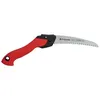
Corona RazorTOOTH 7-Inch Folding Pruning Saw – $19.80
A fast-cutting folding saw sized right for clearing the storm-snapped or fire-blight-killed limbs this guide covers — small enough to carry in a tool belt while you assess a splitting Bradford pear.
- Best for: Cutting branches up to 4-5 inches thick by hand
- Why we picked it: Locking folded blade is safe to store and carry while inspecting storm damage
- Main drawback: Not a substitute for a chainsaw on trunk-sized limbs
Compare more pruning saw options
 Option 1 Fiskars 10″ Folding Pruning Saw – $17.98
|
 Option 2 REXBETI 11-Inch Folding Saw – $18.99
|
 Option 3 Fiskars 2-Piece Saw & Shears Set – $18.21
|
As an Amazon Associate we earn from qualifying purchases.
Dogwood vs. Bradford Pear: Lifespan & Legal Status at a Glance
| Trait | Dogwood (Cornus florida) | Bradford Pear | Best For |
|---|---|---|---|
| Typical lifespan | 20–30+ yrs (stressed sites); decades in ideal conditions | 15–25 yrs before structural failure | Dogwood — long-term investment |
| USDA hardiness zone | Zones 5–9 | Zones 5–9 | Tie — zone isn’t the deciding factor |
| Legal status (2026) | Not restricted; native species | Banned for sale in OH, SC, PA, NJ; more states phasing out | Dogwood — no legal risk |
| Removal cost | N/A — rarely needs removal | $450–$900 typical for a mature tree | Dogwood — avoids future cost |
The Bloom Story: Different Flowers, Same Season
One of the main reasons people plant ornamental trees is for their spring blossoms. Both dogwoods and Bradford pears deliver this. But how they do it is quite different, and it affects their overall look and how long they hold their color.
Dogwood blooms are unique. They are technically not flowers — they are large, colorful bracts, usually white or pink, that surround the actual tiny flowers clustered in the center.
The bracts are often notched at the tip. Legend says this is where a cross was hung. The dogwood blooms typically appear in late spring — often April or May in much of the U.S. — and the bloom period can last for a few weeks.
Bradford pear flowers are true flowers. They are small, white, and grow in clusters, with a strong, sometimes unpleasant, fishy smell meant to attract pollinators. The flowers cover the tree, creating a stunning, snowy effect.
They usually bloom a bit earlier than dogwoods, often in early to mid-spring, and their intense bloom can last for a week or two.
The timing can overlap. But dogwoods often have a more delicate, layered look, with their bracts standing out against the emerging leaves. Bradford pears offer a more massive, uniform white display — and that fishy smell can be a turn-off for some, while dogwood blooms are generally scent-free or have a mild, pleasant aroma.
Growth Habits: Shape, Size, and Structure
How a tree grows is key to its place in your landscape. It affects its structure, how much space it needs, and its overall appeal. Dogwoods and Bradford pears have very different growth patterns.
Dogwood trees often have a beautiful, natural shape. The most common Flowering Dogwood has a spreading habit and can be wider than it is tall when mature.
The branches tend to grow horizontally, giving it a layered, artistic look — not a tree that grows straight up like a flagpole. It has a more relaxed, elegant posture. Mature dogwoods can reach heights of 15 to 30 feet, with a similar spread.
Bradford pears, on the other hand, were specifically bred for a compact, upright form with a narrow, pyramidal shape. This made them seem ideal for small spaces or street plantings.
They grow quickly upwards, with densely packed branches that can create a formal look. However, as mentioned, this upright growth also leads to those tight branch angles — structural weak points that cause the tree to split as it ages.
The density can also make them look a bit crowded and less natural than a dogwood.
The structure of a dogwood is part of its charm — its horizontal branching creates shade and a pleasant canopy. The structure of a Bradford pear is its downfall: the included bark and tight crotches lead to repeated breakage, meaning many Bradford pears don’t live long, healthy lives. They often require extensive, expensive, and often futile pruning to try to manage their weak structure.
Tree Shape Spotlight: What to Look For
Dogwood (Cornus florida)
- Shape: Spreading, often wider than tall.
- Branching: Horizontal, layered, graceful.
- Mature Size: 15-30 feet tall and wide.
- Vibe: Natural, artistic, elegant.
Bradford Pear (‘Callery Pear’ cultivar)
- Shape: Narrow, upright, pyramidal.
- Branching: Dense, tight angles, prone to splitting.
- Mature Size: 25-50 feet tall, 15-30 feet wide (though often doesn’t reach full potential due to damage).
- Vibe: Formal, compact, but structurally weak.
Disease Resistance and Pest Issues
No tree is completely immune to problems. But some are much tougher than others. When comparing dogwood and Bradford pear trees, there’s a clear winner in terms of resistance.
Dogwoods have their issues. The most talked-about is dogwood anthracnose, a fungal disease that can cause leaf spots, twig dieback, and cankers. Powdery mildew is another common problem, especially in humid conditions, making the leaves look dusty.
Scale insects can sometimes infest dogwoods — small bugs that suck sap. However, these issues are often manageable. Proper planting, good air circulation, and sometimes specific treatments can keep a dogwood healthy. Many dogwood varieties have been bred for better disease resistance.
Bradford pears have more severe problems. The big one is fire blight, a devastating bacterial disease that can spread rapidly. It causes branches to turn black and die, looking as if they’ve been burned by fire. There is no cure for fire blight — infected branches must be pruned, and it’s often a losing battle.
Bradford pears are also susceptible to powdery mildew and can attract aphids. But the structural weakness and fire blight are the main concerns.
The fact that Bradford pears are so prone to splitting is a structural issue, not a disease. But it means they are constantly fighting damage, which weakens them and makes them more open to disease and insect attacks. A dogwood, while not perfect, generally faces fewer life-threatening issues, leading to a longer, healthier life for the tree.
Health Check: Common Problems
Dogwood Concerns:
- Dogwood Anthracnose: Fungal disease causing leaf spots and dieback.
- Powdery Mildew: White, dusty coating on leaves.
- Scale Insects: Small sap-sucking pests.
Bradford Pear Concerns:
- Fire Blight: Severe bacterial disease causing blackening and dieback.
- Structural Weakness: Branches prone to splitting.
- Powdery Mildew: Common fungal issue.
- Aphids: Sap-sucking insects.
Environmental Impact: Native vs. Invasive
This is perhaps the most critical difference, and it affects your yard and the wider environment. Dogwood trees are native. Bradford pear trees are invasive. This distinction has huge implications.
Native trees like dogwood are essential for local ecosystems — they have co-evolved with local insects, birds, and other wildlife, providing food and habitat. Birds eat dogwood fruits, insects pollinate their flowers or feed on their leaves, and they are part of a complex web of life. (If you’re also trying to tell dogwood apart from ornamental cherry trees, see our guide to dogwood vs. cherry blossom differences.) Planting native trees supports biodiversity and helps maintain a healthy environment.
Bradford pear trees, while pretty, are problematic. They are classified as invasive in many parts of the United States, meaning they can spread out of control, outcompete native plants, and form dense thickets that reduce the variety of plants available for wildlife.
They can alter habitats. Birds eat the fruit and spread the seeds — this is how they invade wild areas. The U.S. Department of Agriculture (USDA) and various state agricultural departments actively work to control invasive species like the Callery pear (which includes Bradford). Many states have banned their sale or planting outright.
If you have a Bradford pear, you might even consider removing it to help restore natural habitats — a responsible choice for the environment. Choosing a native dogwood is a positive action that enhances your landscape while supporting local nature. It’s about more than just looks; it’s about ecological health.
Ecological Footprint: Native vs. Invasive
Dogwood (Native)
- Supports local birds and insects.
- Provides habitat and food source.
- Helps maintain biodiversity.
- No risk of spreading out of control.
- Good for the local environment.
Bradford Pear (Invasive)
- Outcompetes native plants.
- Forms dense, monoculture thickets.
- Reduces habitat diversity.
- Seeds spread by birds into wild areas.
- Banned or discouraged in many regions.
When Is It Normal? Identifying Red Flags
Both trees can show signs of stress or distress. Knowing what’s normal and what’s not helps you take action, or helps you understand if your tree is struggling.
For a dogwood tree:
- Normal: Some leaf spots might appear, especially in wet springs. A little powdery mildew can happen. Fall color is a natural process. Losing leaves in fall is expected. Producing small red fruits is also normal.
- Concerning: Widespread leaf drop in summer. Significant wilting that doesn’t recover. Large, dark cankers on branches. Yellowing leaves that aren’t related to fall color. Dieback of multiple branches that isn’t seasonal.
For a Bradford pear tree:
- Normal: Abundant white flowers in spring. Fast upright growth. Leaves turning yellow or red in fall.
- Concerning: Any sign of black, burnt-looking branches (fire blight). Cracks or splits in the trunk or major branches. Drooping or dying branches that aren’t related to a storm. Rapid decline in leaf health. Formation of seedlings around the base or in nearby areas.
It’s important to remember that Bradford pears are structurally weak. So, any sign of cracking or splitting is a major red flag. Dogwoods can be a bit more resilient if the issues are minor and seasonal.
Quick Fixes & Better Choices
If you’re currently dealing with a Bradford pear, the best “fix” is often removal. Because of their invasive nature and structural problems, many experts recommend replacing them, since the seeds can spread easily and become a nuisance. If you have one, consider planting a native dogwood or another suitable native tree in its place.
If you are choosing a new tree, the choice is clear:
- Opt for Native: Dogwood trees (like Cornus florida or Kousa dogwood, Cornus kousa, though less native to some areas) are excellent choices. They offer beauty and ecological benefits. Ready to make the switch? You can buy a red dogwood or another native cultivar from most local nurseries and mail-order growers.
- Explore Other Natives: Consider other native flowering trees like Redbud, Serviceberry, or certain Crabapples. These offer similar spring blooms and support local wildlife.
- Avoid Callery Pears: Do not plant Bradford pears or any other Callery pear cultivar. Their invasive nature and structural issues make them a poor long-term investment.
If you have a dogwood with minor issues, focus on good care: ensure good air circulation, water it properly, avoid over-fertilizing, and mulch around the base. Healthy trees are better at fighting off problems.
Making the Smart Choice
If you have a Bradford Pear:
- Consider removal and
- If keeping it, monitor closely for disease and structural issues.
- Be aware of its invasive potential.
If you want a new ornamental tree:
- YES: Dogwood, Redbud, Serviceberry, Native Crabapples.
- NO: Bradford Pear (Callery Pear).
Frequently Asked Questions About Dogwood vs. Bradford Pear
Are Bradford pear trees bad for the environment?
Yes. Bradford pear trees are considered invasive in many parts of the United States. They can spread out of control, outcompete native plants, and disrupt local ecosystems. Their seeds are spread by birds, allowing them to invade wild areas.
How long do Bradford pear trees live?
Most Bradford pears live only 15 to 25 years before structural failure, according to Clemson University’s Home & Garden Information Center. Some University of Georgia Extension agents cite an even shorter realistic lifespan of 10 to 15 years without regular corrective pruning, versus roughly 20 years under ideal conditions.
How long do dogwood trees live?
A flowering dogwood typically lives 20 to 30 years in a stressed urban yard, and several decades — sometimes 60 to 80 years — under good growing conditions with well-drained soil and afternoon shade. That’s roughly double the useful life of a Bradford pear.
Which states have banned Bradford pear trees?
Ohio, South Carolina, Pennsylvania, and New Jersey currently restrict or ban the sale of Bradford (Callery) pear. Missouri’s ban takes effect January 1, 2029, and Illinois’s takes effect January 1, 2028. Kansas has proposed a ban for January 1, 2027, but it isn’t enacted yet.
Why do Bradford pear trees split so easily?
Bradford pear trees have branches that grow at very tight angles. This creates weak points with “included bark” where the branch meets the trunk, making them prone to splitting apart, especially in strong winds or heavy snow.
Are dogwood trees messy trees?
Dogwood trees can drop leaves and fruits in the fall, and the bracts also fall after blooming. However, they are generally considered less messy than some other trees. Their natural dropping of organic material is part of a healthy ecosystem, and regular raking is usually sufficient.
Are there any disease-resistant dogwood varieties?
Yes. Several disease-resistant dogwood varieties are available. Some cultivars of Cornus florida and Kousa dogwoods (Cornus kousa) have shown better resistance to common issues like anthracnose and powdery mildew. It’s always a good idea to ask your local nursery for recommendations.
Conclusion: A Clear Choice for Your Garden
When you compare the dogwood and the Bradford pear, the choice for a garden tree becomes very clear. Dogwoods offer native beauty, ecological support, a lifespan that can outlast a Bradford pear by decades, and a graceful presence. Bradford pears, despite their early appeal, come with significant drawbacks.
Their invasive nature, short 15-to-25-year lifespan, and growing list of state-level bans make them a problem for homeowners and the environment alike. Choosing a dogwood means investing in a tree that will thrive for years and contribute positively to your surroundings.