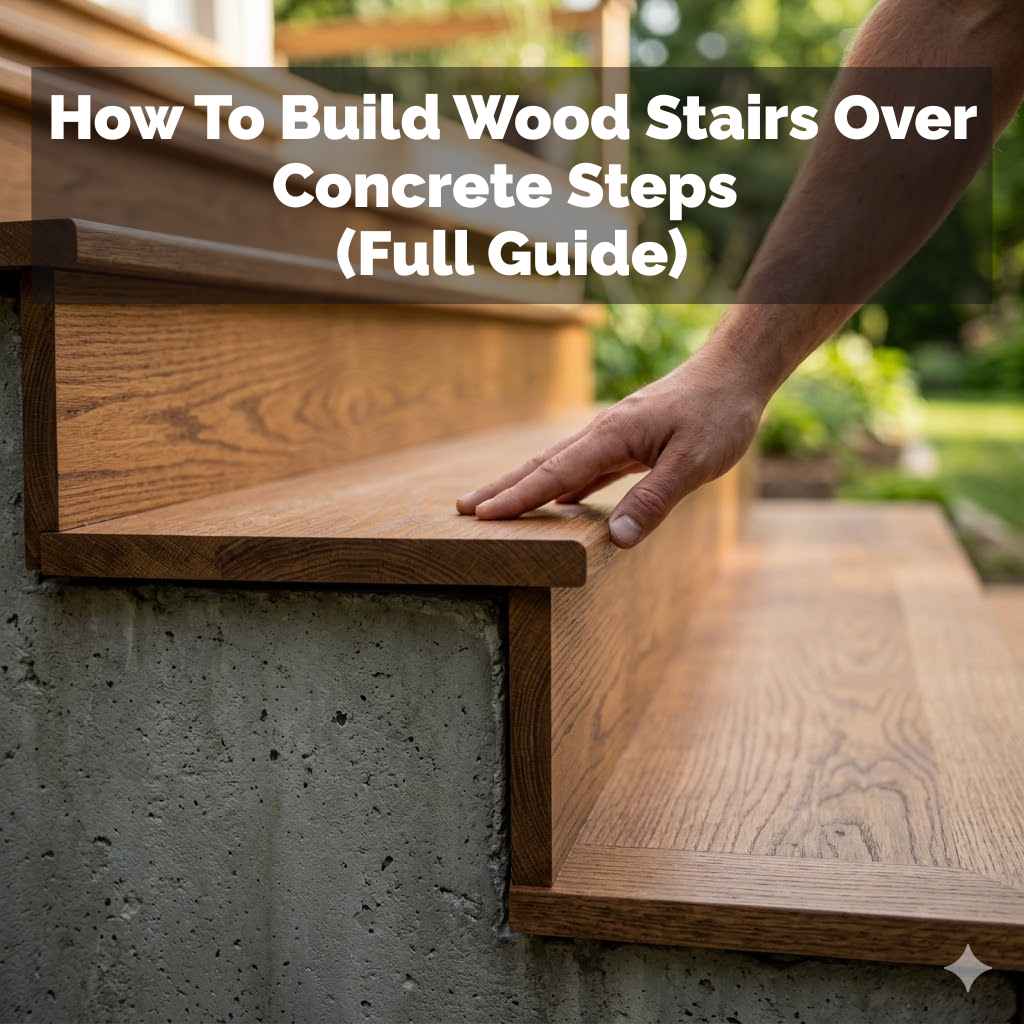
How to Build Wood Stairs Over Concrete Steps (IRC Rise & Run)
Wood stairs go over concrete steps by gluing and screwing pressure-treated risers and treads directly to the existing concrete with 1-3/4 inch concrete screws — no demolition required, as long as the concrete is structurally sound and reasonably level. Skip the prep work and the new treads will creak or come loose within a season. This guide covers measuring your existing steps, cutting and installing treads and risers to meet code, and finishing the wood so it survives outdoor weather.
Understanding Your Concrete Steps
Before buying any lumber, inspect what you’re building on top of. Look for cracks, spalling (flaking surface concrete), and slope — small hairline cracks and minor chips are fine to build over once patched, but structural cracks that run through the step or steps that rock underfoot need a mason’s repair first, not a wood overlay. A wood overlay hides cosmetic damage; it does not fix a structural problem.
Measure the rise (the vertical height of each step) and the run (the horizontal depth) for every step individually — concrete steps poured decades apart, or by different crews, are rarely perfectly uniform. Most concrete steps are straight rectangles, which are simple to overlay; curved or angled concrete stairs need custom-cut treads and are a different, more advanced project.
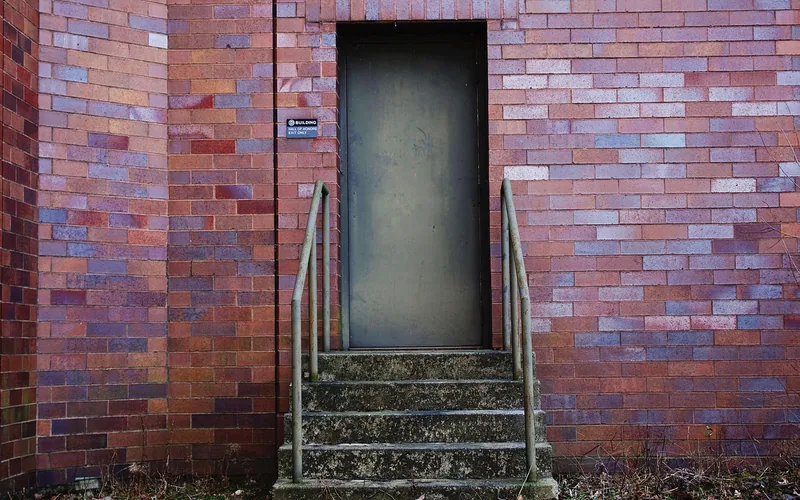
Why Cover Concrete Stairs with Wood?
Wood warms up an entry that bare concrete leaves cold and utilitarian, and it can be stained or painted to match the house instead of staying gray forever. It also hides minor chips, discoloration, and old paint without the cost of demolishing and repouring the concrete underneath — removing existing concrete steps typically costs far more than the lumber and fasteners for an overlay.
Worn, polished concrete gets slippery when wet; a wood tread with the right finish or an added non-slip strip grips better underfoot. The tradeoff is maintenance — wood needs periodic resealing that bare concrete does not.
Planning Your Wood Stair Project
Measure the total rise, and the width and depth of every step, and write the numbers down before you buy anything. For wood choice: pressure-treated pine is the standard for outdoor stairs since it resists rot and insects at a moderate cost; cedar costs more but takes a finish better and smells better to work with; hardwoods like oak hold up well but are usually reserved for indoor stairs since they cost significantly more per board foot.
Decide on fasteners now, not during installation — concrete screws (Tapcon or similar) driven into pre-drilled pilot holes are the standard mechanical fastener, and construction adhesive rated for concrete adds holding power but should never replace screws on a walking surface. Decide on the design too: most overlays use both risers (the vertical face) and treads (the horizontal surface), since risers close the gap in front of each concrete step and add rigidity that a tread-only overlay lacks.
If the total rise from ground to the top landing exceeds 30 inches, most building codes require a graspable handrail; check with your local building department, since exact thresholds vary by jurisdiction. Non-slip strips on the treads are worth adding regardless of code — they cost little and meaningfully cut slip risk on an outdoor stair.
Essential Planning Steps
1. Measure: Total height, width, and depth of each concrete step individually. Note any slope.
2. Wood choice: Pressure-treated pine for budget outdoor builds, cedar for a better finish, hardwood for indoor stairs only.
3. Fastening method: Concrete screws into pre-drilled pilot holes, with construction adhesive as a supplement, never a replacement.
4. Design: Plan for both treads and risers, plus any nosing or edge trim.
5. Safety: A handrail is typically required once total rise exceeds 30 inches; add non-slip strips regardless.
6. Tools: List every tool before you start — see the checklist below.
Gathering Your Materials and Tools
Buy lumber with 10–15% extra to cover defects and mis-cuts — warped or knotty boards are common even from a good lumber yard — a badly warped board is worth returning rather than fighting into place. For fasteners, use concrete screws rated for exterior use (see the spec box below) and an exterior-rated construction adhesive; keep a box of wood shims on hand for leveling gaps between the treads and an uneven concrete surface.
For tools, you’ll need a circular saw or miter saw, a tape measure, a chalk line, a 2-foot and 4-foot level, and a hammer drill with a masonry bit for the pilot holes — a standard drill/driver will burn out quickly trying to drill into concrete. Round out the kit with a chisel for cleaning up edges, a sander or sandpaper, a utility knife, safety glasses, work gloves, hearing protection, and a dust mask.
If you’re adding risers, buy that lumber separately from the tread stock, along with primer and exterior paint or stain and sealant to protect both. Buying based on your finished design, rather than guessing, avoids a second trip to the lumber yard mid-project.
Key Materials List
- Pressure-treated lumber for treads and risers (buy 10–15% extra)
- Concrete screws (Tapcon or equivalent) rated for exterior use
- Exterior-rated construction adhesive
- Wood shims
- Primer, paint, or stain and sealant
- Optional: Non-slip strips, railing materials
Essential Tools Checklist
- Measuring tape
- 2-foot and 4-foot level
- Circular saw or miter saw
- Hammer drill with masonry bit
- Chisel
- Sander or sandpaper
- Safety glasses, gloves, hearing protection, dust mask
- Chalk line
- Utility knife
Preparing the Concrete Steps
Sweep the steps clean and scrub off loose debris and any old paint with a wire brush or pressure washer, then let the surface dry fully. Fill cracks and holes with a concrete patching compound and let it cure completely before building over it — trapped moisture under the wood is what eventually causes rot and squeaking, so this step is worth the extra day it costs.
Old sealant or wax on the concrete blocks adhesive from bonding; an etching or mild acid wash (follow the product’s instructions and wear protective gear) restores a bondable surface. Check the pitch of the existing steps too — a slight forward slope for drainage is normal, but if it’s pronounced enough to throw off level, use a leveling compound or shims so the new treads sit flat. For outdoor stairs, confirm water will still drain off the finished wood surface rather than pooling against the riser.
Cutting the Wood for Treads and Risers
Measure each step individually rather than assuming they match — even steps poured at the same time often vary by 1/4 inch or more. The tread needs to span the full depth of the concrete step plus about 1 inch of front overhang (the nosing); the riser board covers the vertical face and should fit snugly against the concrete below it.
Mark cuts with a chalk line and square, and cut at a straight 90-degree angle unless your steps are visibly out of square. Cut and test-fit one tread and one riser on the first step before cutting the rest — use that first pair as a template once the fit is confirmed, which speeds up every step after it. A sharp blade on a miter saw gives the cleanest edge; a dull blade tears the wood fibers and leaves a rougher cut that shows through paint or stain.
Cutting pressure-treated lumber produces fine dust — wear a dust mask and safety glasses throughout. Use pressure-treated stock for any framing or blocking pieces too, not just the visible treads and risers, since untreated wood in contact with concrete is far more likely to rot.
Cutting Tips for Accuracy
Measure twice, cut once: Double-check every measurement before the saw touches the board.
Use a guide: A clamped straightedge keeps the saw tracking a straight line.
Sharp blade: A dull blade tears wood fibers and shows through the finish.
Test fit: Try each piece on its step before cutting the remaining boards.
Template: Use the first perfectly-fitted piece as a template for the rest.
Best Concrete Screw Pick
Tapcon 1/4 x 1-3/4 Inch Blue Climaseal® Hex Head Concrete An – $14.23
A concrete screw sized for the 1-3/4 inch embedment this guide recommends for securing risers and treads directly into the concrete steps.
- Best for: Anchoring pressure-treated risers and treads directly into concrete steps
- Why we picked it: Matches the embedment depth and spacing this guide recommends for a walking surface
- Main drawback: Still requires a hammer drill and masonry bit for pilot holes — not a driver-only fastener
Compare more concrete fastening options
 Option 1 Allkeen 1/4″ x 1-3/4″ Concrete Screws, Anchoring t – $6.97
|
 Option 2 CONFAST 1/4″ x 1-3/4″ Hex Head Concrete Screw Anch – $16.98
|
 Option 3 Tapcon 1/4 x 1-3/4″ Star Head Blue Climaseal™ Conc – $46.25
|
As an Amazon Associate we earn from qualifying purchases.
Installing the Risers
Risers close the vertical gap in front of each concrete step and add rigidity the tread relies on, so install them before the treads. Spread exterior construction adhesive on the back of the riser board, set it against the concrete riser face, and check it’s plumb (perfectly vertical) with a level before it sets.
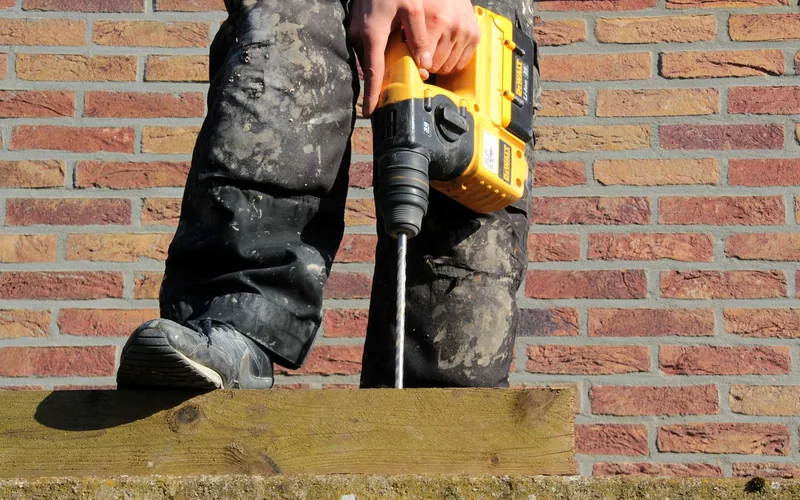
Drill pilot holes through the riser with a masonry bit sized to the screw, then drive concrete screws through the wood into the concrete. Space screws roughly every 6–8 inches, and use stainless steel or galvanized screws outdoors so rust stains don’t bleed down the wood face. If the riser sits slightly proud of the concrete anywhere, tap a shim in behind it rather than forcing the screw to pull it flush — over-tightening into a gap strips the pilot hole.
📊 Concrete screws need a minimum of 1 inch of embedment into the concrete, with a maximum of 1-3/4 inches — Source: Tapcon Concrete Screw Technical Specifications, Concrete Fastening Systems
“For 100% efficiency, use a minimum center-to-center spacing of 3-3/4 inches between concrete screws.”
Riser Installation Flow
1. Apply adhesive: Spread exterior construction adhesive on the back of the riser.
2. Position: Set the riser against the concrete step face; check it’s plumb.
3. Drill and secure: Drill pilot holes with a masonry bit, then drive concrete screws every 6–8 inches.
4. Shim if needed: Tap shims behind any gap rather than over-tightening the screw.
5. Repeat: Do this for each step before moving on to the treads.
Attaching the Treads
Treads carry all the foot traffic, so they need more fasteners than the risers do. Apply adhesive to the top of the installed riser and to the concrete surface underneath where the tread will sit, then set the tread so its front edge lines up flush with the riser and the nosing overhangs consistently at the front.
Drill pilot holes and drive concrete screws every 6 inches along the tread’s length, plus a few angled screws from the riser into the underside of the tread for extra rigidity. A tread attached with too few screws will flex noticeably underfoot — when in doubt, add more fasteners rather than fewer, since they bear the full weight of every step someone takes. Check the tread is level and shim underneath if it rocks even slightly; an uneven tread is a real tripping hazard, not just a cosmetic issue.
Orient the wood grain running front to back on each tread so water sheds off rather than pooling along the grain lines. On the top tread, keep the surface flush with or very slightly below the landing height so there’s no lip to catch a toe on.
Tread Installation Best Practices
1. Adhesive: Apply to both the riser top and the concrete beneath the tread.
2. Position: Align flush with the riser, with a consistent nosing overhang.
3. Level check: Confirm the tread is level; shim any rocking point.
4. Secure: Concrete screws every 6 inches, plus angled screws from the riser.
5. Transition: Keep the top tread flush with the landing — no lip.
Adding Nosing and Edging
Nosing is the front overhang of the tread beyond the riser — about 1 inch is typical, and it does double duty, giving a finished edge and a clearer visual line for your foot to land on. If the tread board is wide enough, cut the nosing directly into it; for a more decorative look, add a separate profile molding to the front edge with glue and brad nails or small screws instead.
If the treads don’t fully cover the concrete’s side edges, add quarter-round or a similar trim piece to hide the exposed concrete — attach it with wood glue and countersunk finishing nails, then fill the nail holes before finishing. These details take extra time but are what separate a professional-looking result from a rough one.
Nosing and Edging Details
Nosing: Front overhang of the tread, typically 1 inch, for a finished edge and safer footing.
Nosing methods:
- Cut directly into the tread board
- Add a separate molding piece
Edging: Trim to cover exposed concrete edges — quarter-round or similar molding.
Attachment: Wood glue plus countersunk finishing nails or small screws.
Finishing and Protecting the Wood
Fill nail holes and small gaps with wood filler and let it cure fully, then sand the whole surface — medium-grit first, fine-grit to finish — and wipe away all the dust with a damp or tack cloth before applying anything else.
For a natural wood look, apply a stain followed by an exterior-grade sealant with UV and water protection. For painted stairs, use two coats of exterior primer, then a durable porch-and-floor paint rated for foot traffic rather than a general-purpose wall paint. Interior-rated stains and sealants fail fast outdoors — peeling and fading within a year is common when an interior product is used outside, so confirm the can is labeled for exterior use before you buy it.
Cedar resists rot naturally but still benefits from a protective finish; pine is softer and needs it more. Apply every coat thin and let it dry fully before the next one — rushing coats traps moisture underneath and shortens the finish’s life.
Finishing Steps for Longevity
1. Fill and sand: Wood filler for holes; sand smooth with fine-grit paper.
2. Clean: Remove all dust with a damp or tack cloth.
3. Prime (if painting): Two coats of exterior primer.
4. Stain or paint: Apply your chosen color in thin coats.
5. Seal: Exterior-grade sealant or topcoat for UV and water protection.
6. Dry time: Let each coat cure fully before the next.
When Are Your Wood Stairs Safe?
A finished stair should feel completely solid — no wobble, no creaking, no give when you tap on a tread. Check every screw is tight and the wood is firmly attached to the concrete underneath before calling the project done. If you added a railing, confirm it doesn’t move under load and that every connection to the stairs or wall is secure — a railing that flexes isn’t doing its job in an actual fall.
The transition from the top tread to the landing should have no lip to catch a toe on, and all edges should be slightly eased rather than sharp. Add non-slip strips on outdoor stairs, since wet or icy wood is measurably more slippery than bare concrete.
📊 The IRC caps residential stair riser height at 7-3/4 inches and requires a minimum tread depth of 10 inches, with no more than 3/8 inch of variation between the largest and smallest step in a flight — Source: IRC Section R311.7.5, UpCodes
Building over existing concrete steps rarely changes the rise and run enough to violate these limits, but it’s worth checking with a tape measure once the wood is installed — a 1-inch-thick tread and riser stacked on top of concrete steps that were already near the code limit can push a step just over it. Check your local building department for any amendments to these baseline IRC numbers before finishing outdoor work.
Safety Checklist
- Solid feel: No wobble or creaking underfoot.
- Secure fasteners: Every screw tight, wood fully anchored to concrete.
- Sturdy railing: No movement under load, if a railing is present.
- Smooth transitions: No lip between the top tread and the landing.
- Non-slip surfaces: Strips or textured finish for wet or icy conditions.
- Code compliance: Riser height 7-3/4 in. max, tread depth 10 in. min (IRC R311.7.5).
Maintenance for Your New Wood Stairs
Sweep outdoor stairs regularly to keep leaves and debris from trapping moisture against the wood, which is what eventually leads to rot or mold. Check the finish once or twice a year for wear, cracking, or peeling, and touch up small areas with a matching stain pen or a fresh coat before the damage spreads — deeper gouges need wood filler first.
Wipe up spills promptly, especially oil or grease, which stain wood permanently if left. Use mild soap and water for cleaning; harsh chemicals strip the finish faster than normal wear does. Indoors, vacuum regularly and reapply sealant or wax once the finish starts to dull. Periodically check that every screw is still tight, particularly on the treads — this five-minute inspection catches loose fasteners before they turn into a safety issue.
Simple Maintenance Tasks
Sweep/vacuum: Remove dirt and debris regularly.
Clean spills: Address spills immediately, especially oil and grease.
Inspect finish: Check for wear, peeling, or fading once or twice a year.
Touch up: Repair minor finish damage before it spreads.
Tighten fasteners: Confirm every screw remains secure.
Common Issues and How to Address Them
Even careful work runs into small problems. Here’s how to fix the ones that show up most often on a wood-over-concrete stair.
Squeaking stairs: Usually the tread rubbing against the riser or the concrete underneath. Inject wood glue into the gap and clamp it tight, or add one more screw through the contact point.
Warped boards: If a board warps after installation, remove the fasteners, add a bead of construction adhesive, and reattach it with a couple of extra screws to pull it flat — a mild warp can usually be corrected this way. A severely warped or cupped board should be replaced rather than forced flat, since it will keep pulling at its fasteners over time.
Gaps: Small gaps between boards or trim take wood filler. Larger gaps need the piece recut or a wider trim added to cover them — filler alone won’t hold up under foot traffic in a gap wider than about 1/8 inch.
Loose treads: Almost always a fastener issue. Check that existing screws are driven fully into solid concrete, and add more if the tread still has any give.
Splinters: Sand thoroughly with fine-grit paper during the build; if they appear later, sand the spot down again and apply a fresh coat of finish over it.
Catching these issues early keeps a small fix small. Most of them come down to the same two things — a missing screw or an unsealed edge — so a quick seasonal check of both saves a bigger repair later.
Frequently Asked Questions About Wood Stairs Over Concrete
Can I Build Wood Stairs Over Any Concrete Steps?
Generally yes, as long as the concrete is structurally sound and reasonably level. Significant cracks, rocking steps, or a heavy slope need a mason’s repair before you build over them — a wood overlay hides cosmetic wear, not structural damage. Always check your local building code for specific requirements before starting.
What Kind of Wood Is Best for Outdoor Stairs?
Pressure-treated lumber is the standard choice for outdoor stairs because it resists rot and insects at a moderate cost. Cedar and redwood cost more but take a finish better and resist decay naturally. Composite decking material is a low-maintenance alternative to any of them, though it costs more upfront than pressure-treated pine.
How Do I Make Sure My Wood Stairs Are Safe?
Confirm every tread is screwed into the concrete with no wobble, keep the riser height at or under the IRC’s 7-3/4 inch maximum and tread depth at 10 inches minimum, and add a graspable handrail once total rise exceeds about 30 inches. Non-slip strips add extra safety on outdoor stairs, especially when wet.
Do I Need to Remove Old Paint From Concrete Steps?
Yes, it’s worth the extra step. Old paint, sealant, or wax blocks adhesive and screws from getting a solid grip on the concrete underneath. Scrubbing or etching the surface down to bare concrete gives both the adhesive and the fasteners a much stronger, longer-lasting hold.
How Much Should the Tread Overhang the Riser?
About 1 inch is the typical, safe nosing overhang. It gives the stair a finished look and a clearer edge to step on. Whatever amount you choose, keep it consistent across every step — the IRC allows no more than 3/8 inch of variation between the largest and smallest tread in a flight.
Can I Use Wood Glue or Adhesive Alone to Attach the Treads?
No. Adhesive adds holding strength, but concrete screws are what actually anchor the tread against foot traffic and weather over years of use. Skipping the screws in favor of adhesive alone is a common shortcut that leads to sagging or loose treads within a season or two.
Final Thoughts on Your Stair Project
Building wood stairs over sound concrete steps is a weekend-scale project that pays off in curb appeal without the cost of demolition. Prep the concrete properly, anchor every riser and tread with real concrete screws rather than adhesive alone, and keep the rise and run within code — get those three things right and the finish work is the easy part.
Sponsored / affiliate links. As an Amazon Associate I earn from qualifying purchases. I may earn additional commission from eligible campaigns.