Can You Use Paint Markers On A Dry Erase Board? Answered
It’s a question many of us have asked. You’re in the zone, brainstorming, or maybe just making a fun to-do list. You reach for a colorful paint marker, thinking it will pop.
But then, a little doubt creeps in. Will it come off? Will it ruin your nice, clean dry erase surface?
It’s frustrating when inspiration strikes, and you’re not sure of your tools. Let’s clear this up. You want to know if paint markers are okay for your dry erase board.
We’ll look at what happens, why it happens, and what you can use instead.
Paint markers are generally not designed for dry erase surfaces. While some might wipe off initially, they can leave stains or become permanent due to their binding agents. It’s best to use markers specifically made for dry erase boards to protect the surface and ensure easy cleanup.
Paint Markers on Dry Erase Boards: What Happens
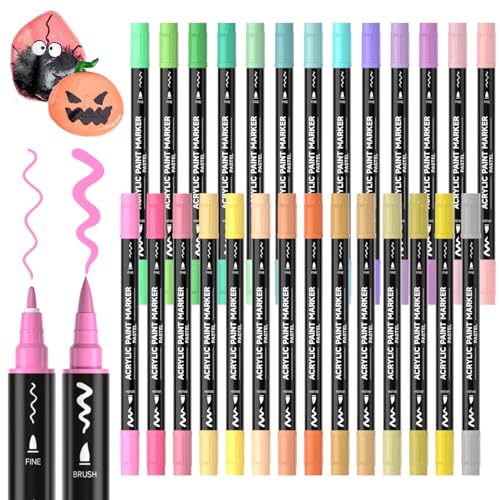
So, can you use paint markers on a dry erase board? The short answer is: it’s risky and usually not a good idea. Paint markers are made for different surfaces.
They use pigments and binders that are meant to stick. Think of them like tiny, permanent art supplies. Dry erase boards, on the other hand, have a special slick coating.
This coating lets markers glide on and then wipe off easily. It’s a delicate balance.
When you use a paint marker, its thicker, more permanent ink can clog the pores of the dry erase surface. Even if it looks like it wipes away clean at first, tiny traces of pigment can remain. These traces build up over time.
They can lead to ghosting. Ghosting is that faint shadow of old writing that never quite disappears. Sometimes, paint markers can even etch the surface.
This makes it harder for regular dry erase markers to work well later.
The chemistry of paint markers is different. They often contain acrylics or other resins. These help the paint adhere strongly to surfaces like canvas, wood, or metal.
They are not meant to be temporary. Dry erase markers have solvents. These solvents help the ink release from the board when you wipe it.
Paint markers lack these solvents. This is why they can be so hard to remove from porous or semi-porous surfaces.
Most paint markers are also opaque. They are designed to cover things up. This opacity comes from the pigments and binders.
These are the very things that make them hard to erase. You might get a bright, beautiful line for a little while. But the lasting impact on your board is often negative.
It’s like using super glue when you only needed tape.

My First Paint Marker Fiasco
I remember this one time. I was helping a friend set up a new creative space. We had a huge whiteboard wall.
It was gorgeous. I wanted to make some fun, colorful icons for our project. I saw my set of acrylic paint markers.
They were so vibrant! I thought, “Why not? It’s a board, right?” I grabbed a bold red one and drew a little star next to a key idea.
It looked amazing.
Then, the meeting ended. It was time to clear the board. I grabbed my trusty eraser.
The star just smeared. It didn’t wipe away. It spread into a reddish blob.
Panic set in. I grabbed a damp cloth. That just made it worse, turning the smeared red into a pinkish haze.
It looked like a crime scene on our pristine whiteboard. My friend came over, and I just mumbled, “Uh, art project experiment?” We spent the next hour scrubbing with special cleaner. It barely came off.
That taught me a hard lesson about respecting different art tools and their intended uses. It was a small star, but it felt like a huge mistake.
Paint Marker Components vs. Dry Erase Markers
Paint Markers:
- Pigments (for color)
- Binders (like acrylics, to make it stick)
- Solvents (to help ink flow and dry)
- Additives (for opacity, durability)
Dry Erase Markers:
- Dyes (for color)
- Solvents (to keep ink wet, help release from surface)
- Resins (special type that doesn’t bond strongly)
The key difference is the binder. Paint markers use strong binders. Dry erase markers use resins that break down easily.
Why This Happens: The Science of Surfaces
Dry erase boards aren’t just painted metal or plastic. They have a special coating. This coating is usually melamine or a similar polymer.
It’s incredibly smooth. It has tiny pores. These pores are crucial.
When you use a dry erase marker, the ink sits on top of this smooth surface. The special resin in the ink allows it to dry into a film. This film doesn’t stick to the surface.
It’s like a tiny, removable sticker.
When you wipe, the eraser lifts this film. It’s a clean break. Now, think about a paint marker.
Its binder grabs onto that smooth surface. It can seep into those tiny pores. Even if the marker ink is oil-based or water-based, the binder is the problem.
It’s designed to create a lasting bond.
Imagine trying to stick a Post-it note to a perfectly clean window. It peels off easily. Now imagine trying to stick a piece of duct tape.
It’s much harder to get off without leaving residue. A paint marker is more like the duct tape. The dry erase marker is the Post-it note.
The surface of your dry erase board is the window.
The type of dry erase board also matters. High-quality boards have a better coating. This coating is more durable and less porous.
Cheaper boards might use thinner coatings. These can be more easily damaged or stained by incorrect marker types. So, using the wrong marker on a lower-quality board is an even bigger gamble.
Quick Scan: Paint Marker vs. Dry Erase Marker
| Feature | Paint Marker | Dry Erase Marker |
|---|---|---|
| Ink Type | Pigment-based, often acrylic | Dye-based, special resin |
| Intended Surface | Canvas, wood, metal, plastic | Smooth, non-porous dry erase surfaces |
| Erasability | Difficult to impossible on dry erase boards | Wipes clean easily |
| Surface Impact | Can stain, ghost, or damage coating | Designed for gentle use |
| Lifespan on Board | Semi-permanent to permanent | Temporary, designed for frequent erasing |
When Paint Markers Might Seem to Work
You might see people using paint markers and say, “But it wiped off for them!” This can happen, but it’s usually under specific circumstances. First, the paint marker might be very old. The binders could have dried out.
Or, the paint might be a special, lighter type. Some craft paint markers are less aggressive than industrial ones.
Second, they might have only left the mark on for a very short time. Fresh paint marker ink might not have bonded as strongly. Third, they might be using a very high-quality dry erase board.
These boards have a tougher, more forgiving surface. They can sometimes handle a mistake better.
Finally, and this is a big one, they might have used a special cleaner afterwards. Sometimes, a strong cleaner designed for stubborn marks can remove paint. But this is not ideal.
You’re essentially using a harsh chemical to undo a mistake. Over time, even these cleaners can degrade the dry erase surface. It’s a trade-off.
You might get the mark off this time, but damage the board for future use.
I’ve also seen people use paint markers for very simple designs. Like drawing a border that they intend to keep. But even then, if they ever need to erase something inside that border, they might have trouble.
The lines between “temporary” and “permanent” get very blurry. It’s a gamble you usually don’t want to take with your valuable whiteboard.
Contrast: Myth vs. Reality
Myth: Paint markers are just like dry erase markers, only brighter.
Reality: Paint markers have strong binders that bond to surfaces. Dry erase markers use special resins that release easily. This is a fundamental difference in their chemistry and intended use.
Myth: If it wipes off once, it’s safe to use.
Reality: Initial erasability doesn’t guarantee long-term protection. Stains and ghosting can appear over time, even if a mark comes off easily at first.
Myth: Any cleaner can remove paint marker residue.
Reality: While some strong cleaners might remove residue, they can also damage the dry erase surface, making it less effective for future use.
What This Means for Your Creative Projects
If you’re using a dry erase board for brainstorming, planning, or teaching, you want it to be reliable. You want to erase and start fresh without worry. Using paint markers can sabotage this.
Imagine you’ve mapped out a whole project plan. You need to change one part. But the paint marker you used for the main headings is now stuck.
You can’t erase it cleanly. This can make your planning session chaotic and frustrating.
For visual thinkers, a clean slate is important. It helps you see new ideas clearly. Stains and ghosting create visual clutter.
This clutter can distract you. It can make it harder to focus on the current task. It’s like trying to read a book with smudges on every page.
The information is there, but it’s harder to absorb.
Think about a classroom setting. A teacher uses a whiteboard for lessons. If paint markers leave permanent marks, the board becomes less useful.
Students might get distracted by the old marks. The teacher might spend more time cleaning than teaching. This impacts the learning environment.
In a business meeting, a messy whiteboard can look unprofessional. It can suggest disorganization. You want your visual aids to be clear and crisp.
Paint markers work against this goal. They introduce an element of permanence that is counter to the dry erase board’s purpose.
Quick Fixes & Tips (If You Accidentally Used Paint Markers)
Immediate Action is Key:
- Wipe ASAP: As soon as you realize, try to wipe with a dry erase eraser.
- Use Water: If that doesn’t work, try a slightly damp cloth (water only).
- Specialty Cleaner: If there’s still residue, use a cleaner specifically designed for stubborn dry erase marks (e.g., Goo Gone for Dry Erase Boards, or a dedicated whiteboard cleaner). Use sparingly and test in a small corner first.
- Rubbing Alcohol (Last Resort): Use 70% isopropyl alcohol on a soft cloth. Rub gently. This can sometimes lift paint marker residue. Be aware this is a stronger solvent and can degrade the board over time if used frequently.
- Avoid Abrasives: Never use abrasive cleaners or scrub pads. These will scratch and damage the surface permanently.
When It’s Normal vs. When to Worry
It’s perfectly normal for a dry erase board to need occasional deep cleaning. Even with the right markers, some ghosting can occur over time. This is especially true if you leave marks on for days or weeks.
Faint lines from a previous session are also common. Most dry erase boards are designed to handle this.
You should start to worry if:
- Marks are not lifting at all. If your regular dry erase markers are leaving visible traces after a few minutes, the surface might be compromised.
- The surface feels rough or sticky. This indicates the coating is damaged or has residue baked in.
- Eraser residue builds up quickly. If your eraser seems to be just pushing ink around, the surface might be losing its non-stick properties.
- You see permanent etching or scratches. This is usually from using harsh cleaners or abrasive tools, but could also be from very aggressive inks.
- Paint marker residue is visibly staining the board. If you have a distinct colored stain that won’t budge with normal cleaning, that’s a sign of trouble.
These signs suggest the dry erase coating might be permanently altered. This can happen from using the wrong type of marker, like paint markers. It can also happen from using cleaners that are too harsh or abrasive tools.
A damaged surface won’t work as well. It will be harder to erase. It may become permanently stained.
Observational Flow: The Life of a Dry Erase Board
Stage 1: Pristine Board
- Brand new, smooth surface.
- Markers glide, erase cleanly.
Stage 2: Normal Use
- Regular dry erase markers used.
- Occasional faint ghosting, normal.
- Wipes clean with proper care.
Stage 3: Minor Incident (e.g., Accidental Paint Marker)
- Paint marker applied, might seem okay at first.
- Difficult to erase, leaves residue.
- Special cleaner might be needed.
Stage 4: Compromised Surface
- Ghosting becomes permanent.
- Dry erase markers start to streak or not lift.
- Surface may feel rough or sticky.
- Increased effort needed for cleaning.
Stage 5: Damaged Surface
- Permanent stains or etching visible.
- Board is effectively ruined for dry erase use.
- May need replacement.
Alternatives to Paint Markers for Your Board
If you want vibrant colors on your dry erase board, you have great options! The best choice is always to use markers specifically labeled as “dry erase markers.” These come in a huge range of colors, from basic black and blue to neon pinks and greens. Many brands offer fine tip, chisel tip, and even brush tip dry erase markers for different writing styles.
For extra vibrancy, especially on darker boards, consider neon or fluorescent dry erase markers. These often contain special pigments that appear very bright under certain lighting conditions. Some even glow under blacklights, which can be fun for presentations or themed brainstorming sessions.
If you need a more permanent art element that you don’t want to erase, consider using a separate piece of material. You could draw your art on paper, cardstock, or even a separate small whiteboard or poster board. Then, you can simply tape or tack that to your main dry erase board.
This way, your art stays put, and your main board remains fully functional for its intended purpose.
Another creative approach is to use a whiteboard-specific liquid chalk marker. These are designed to look like chalk but are made for smooth, non-porous surfaces like whiteboards. They offer bold, opaque lines that are usually erasable.
Always check the packaging to ensure they are for dry erase boards. Some “liquid chalk” markers are for porous surfaces and can stain.
Finally, if you’re set on the look of paint, but need it to be removable, look for “washable” or “temporary” paint markers. Some craft companies make these. However, even “temporary” can mean different things.
Always test in an inconspicuous area first. But for most everyday uses, sticking to proper dry erase markers is the safest and most effective bet.
Stacked Micro-Sections: Best Practices for Dry Erase Boards
Use Only Dry Erase Markers: This is the golden rule. They are formulated for the surface.
Erase Promptly: Don’t leave marks on the board for extended periods. This prevents ink from drying and bonding.
Use a Good Eraser: A clean, soft felt eraser works best. Replace it when it gets too dirty.
Clean Regularly: Use a dedicated whiteboard cleaner or a damp cloth (water only) weekly or as needed.
Avoid Abrasives: No scouring pads, harsh chemicals, or abrasive cleaners. They will scratch and ruin the surface.
Test New Cleaners: Always test any new cleaner in a small corner first to ensure it doesn’t damage the coating.

Frequently Asked Questions About Paint Markers and Whiteboards
Can I use Sharpies on a dry erase board?
No, Sharpies are permanent markers. They will bond to the dry erase surface and are very difficult, if not impossible, to remove completely. They will cause staining and ghosting.
What happens if paint marker ink dries on my whiteboard?
If paint marker ink dries on your whiteboard, it becomes much harder to remove. The binders in the paint cure and bond strongly to the surface. It can lead to permanent staining and ghosting, making the board difficult to use for its intended purpose.
Are there special cleaners for paint marker stains on whiteboards?
Yes, there are specialized whiteboard cleaners designed for stubborn marks. Products like Goo Gone for Dry Erase Boards, or stronger whiteboard cleaning solutions, can sometimes lift paint marker residue. However, these should be used sparingly, as harsh chemicals can still degrade the dry erase surface over time.
Always test in a small area first.
Can I use chalk markers on a dry erase board?
Some chalk markers are designed for dry erase boards. Look for “liquid chalk markers for whiteboards” or similar phrasing. These have a different formulation than traditional chalk and are usually erasable.
Traditional chalk dust, however, can be abrasive and difficult to clean from a dry erase surface.
How can I protect my dry erase board surface?
The best way to protect your dry erase board is to use only markers specifically made for dry erase surfaces. Clean the board regularly with appropriate cleaners and soft cloths. Avoid using abrasive materials or harsh chemicals.
Store your dry erase markers with the cap on to prevent them from drying out.
My whiteboard is already ghosting. Can paint markers make it worse?
Yes, paint markers can definitely make ghosting worse. Their binders can seep into existing pores or micro-scratches on the surface, adding more color that is hard to lift. This can accelerate the deterioration of the board’s erasability.
Final Thoughts on Paint Markers and Whiteboards
It’s tempting to grab those vibrant paint markers for a pop of color. But when it comes to your dry erase board, it’s really not worth the risk. The unique surface of a whiteboard is designed for a specific type of marker.
Using paint markers can damage that surface. This leads to permanent stains and ghosting. Stick to proper dry erase markers for your brainstorming, planning, and creative sessions.
Your board will thank you, and your ideas will stay clear and easy to manage.
Sponsored / affiliate links. As an Amazon Associate I earn from qualifying purchases. I may earn additional commission from eligible campaigns.