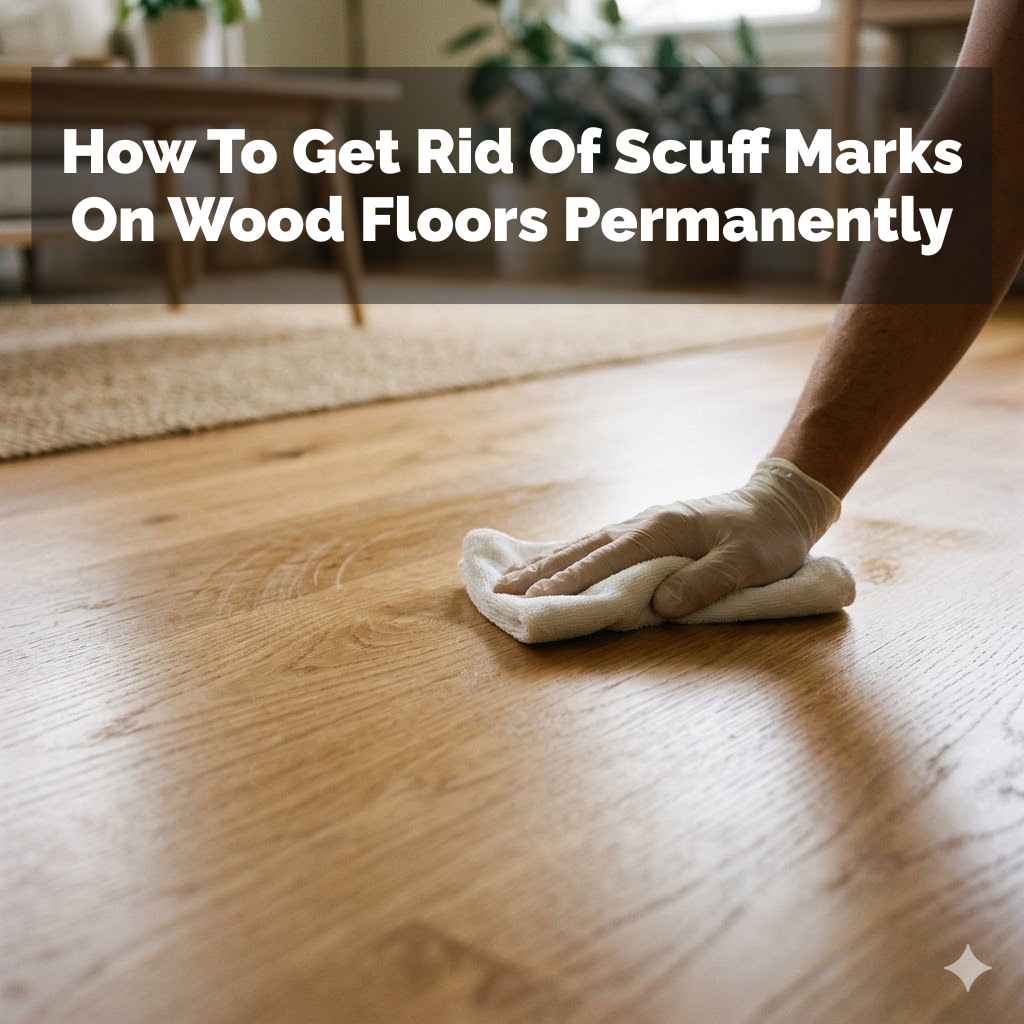
How To Get Rid Of Scuff Marks On Wood Floors Permanently
Wood floors can get scuff marks from shoes, furniture, or even pets. Most scuffs are surface-level and can be gently removed. Using the right cleaner or method depends on your floor’s finish.
Simple household items often work best for light marks, while tougher ones might need a specific wood floor cleaner. Always test a small, hidden spot first.
Understanding Wood Floor Scuff Marks
Scuff marks on wood floors are common. They happen when something rubs hard against the floor’s surface. This action can transfer color or material onto the wood.
It can also slightly damage the floor’s top layer, called the finish. The finish is what protects the wood itself. When the finish is worn or scratched, scuffs can look worse.
Different types of shoes can cause them. The heels of shoes, especially those with dark rubber soles, are frequent culprits. Moving furniture also creates them.
Even a pet’s nail dragging can leave a mark. These marks aren’t usually deep damage to the wood. They are more often a surface issue.
That’s good news because it means they can often be cleaned away.
The color of the scuff mark often tells you something. Dark marks usually come from rubber. Lighter marks might be from dirt or the transfer of lighter colored materials.
Understanding this helps pick the right cleaning method. Not all scuffs are the same. Some are easy to wipe off.
Others need a bit more gentle effort.
My Own Scuff Mark Scare
I remember one particularly stressful evening. I was helping a friend move into her new apartment. We were carrying a big, heavy armchair.
One of the legs scraped hard across her beautiful, newly refinished oak floors. I froze. It was a dark, ugly line right in the middle of the living room.
My friend looked horrified. I instantly felt a wave of panic wash over me. I had always heard wood floors were so delicate.
My mind raced with images of sanding and refinishing. The thought of the cost and effort was overwhelming. I just stood there, staring at the mark, feeling completely helpless.
It looked like a permanent scar.
Thankfully, my friend was calmer. She assured me it was probably just a surface mark. She told me not to worry.
She then went to her kitchen. She came back with a soft cloth and a tiny bit of baking soda mixed with water. We gently rubbed the mark.
To my absolute amazement, it started to fade. Within a minute, the scuff mark was completely gone. The relief I felt was immense.
It taught me a valuable lesson: don’t jump to conclusions about permanent damage. Often, a simple solution is all that’s needed. It also showed me the power of natural cleaning methods on wood.
Scuff Mark Causes & Types
Why they happen:
- Rubbing from shoe soles
- Furniture movement
- Pet claws
- Dropped items
What they look like:
- Dark lines (often rubber)
- Light streaks (dirt, material transfer)
- Slight dulling of the finish
Why Scuff Marks Stick Around (And How to Prevent Them)
Some scuff marks seem to dig into the floor’s finish. This happens when the pressure is high. Think of a sharp heel pressing down.
It can push dirt or rubber particles into the wood’s protective layer. The longer a scuff mark sits there, the harder it can be to remove. Dirt and grime can also get ground into the mark.
This makes it look darker and more permanent than it is.
The type of finish on your wood floor also plays a role. Polyurethane finishes are quite durable. They offer good protection.
Older finishes, like wax or oil, can be softer. They might show scuffs more easily. They can also be more prone to scratching and wear.
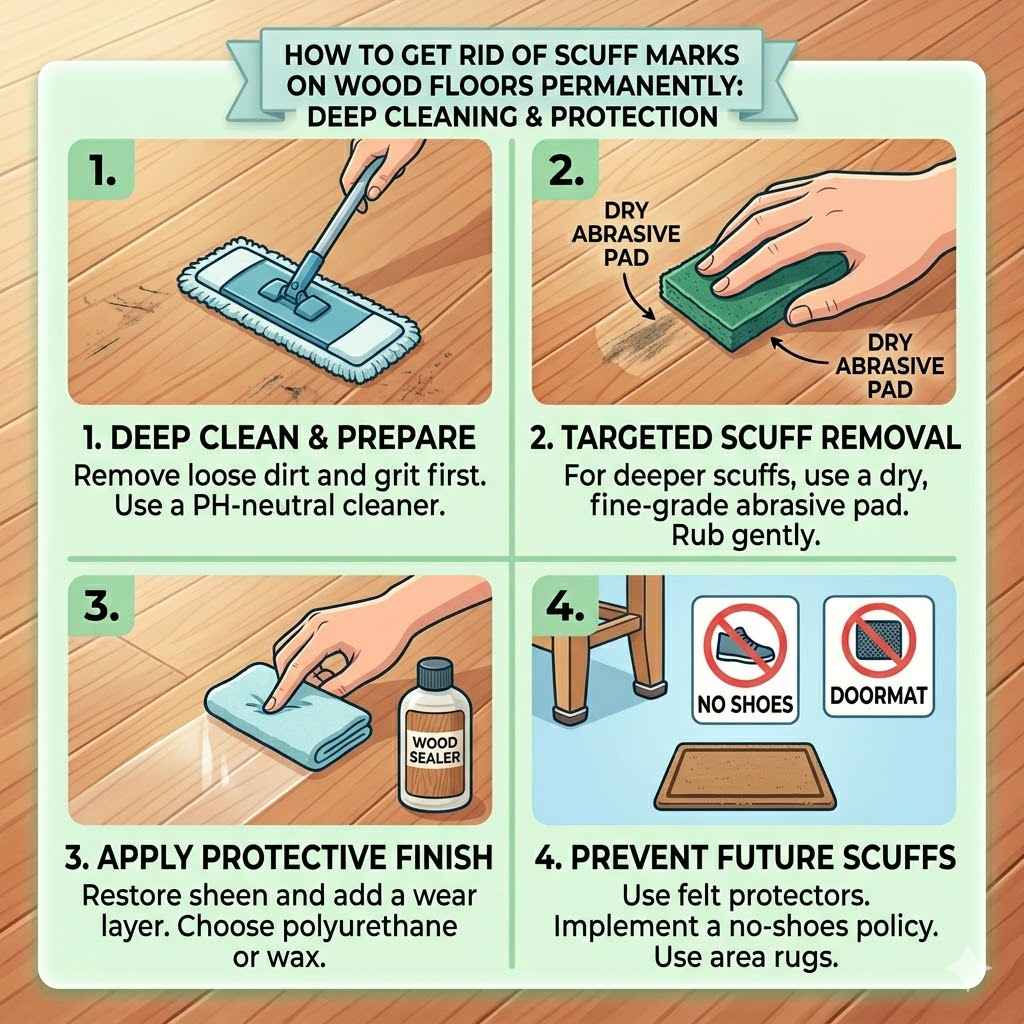
Preventing scuffs is always easier than removing them. This is where simple habits make a big difference. Putting felt pads on the bottom of furniture legs is key.
These pads act like little cushions. They let furniture slide smoothly. They stop legs from digging into the floor.
You can buy these pads in many shapes and sizes. They are very inexpensive.
Another good habit is to take off shoes when you come inside. Especially shoes with rubber soles. Encourage family members and guests to do this.
Having a shoe rack or mat by the door helps. This makes it easy for people to remember. It also keeps dirt from being tracked onto the floors.
Regular sweeping or vacuuming also helps. It removes grit that can cause scuffs.
Prevention Tips Checklist
- Furniture Protection: Use felt pads on all furniture legs.
- Shoe Policy: Remove shoes indoors, especially rubber-soled ones.
- Entry Mats: Place mats inside and outside doors to catch dirt.
- Regular Cleaning: Sweep or vacuum floors often to remove grit.
- Pet Care: Keep pet nails trimmed to avoid scratching.
Gentle Methods for Common Scuff Marks
Many scuff marks are not deep. They are simply a transfer of material onto the finish. For these, gentle methods are best.
Harsh scrubbing can damage the finish. It can make the problem worse. Always start with the mildest approach.
Test it in an unseen area first.
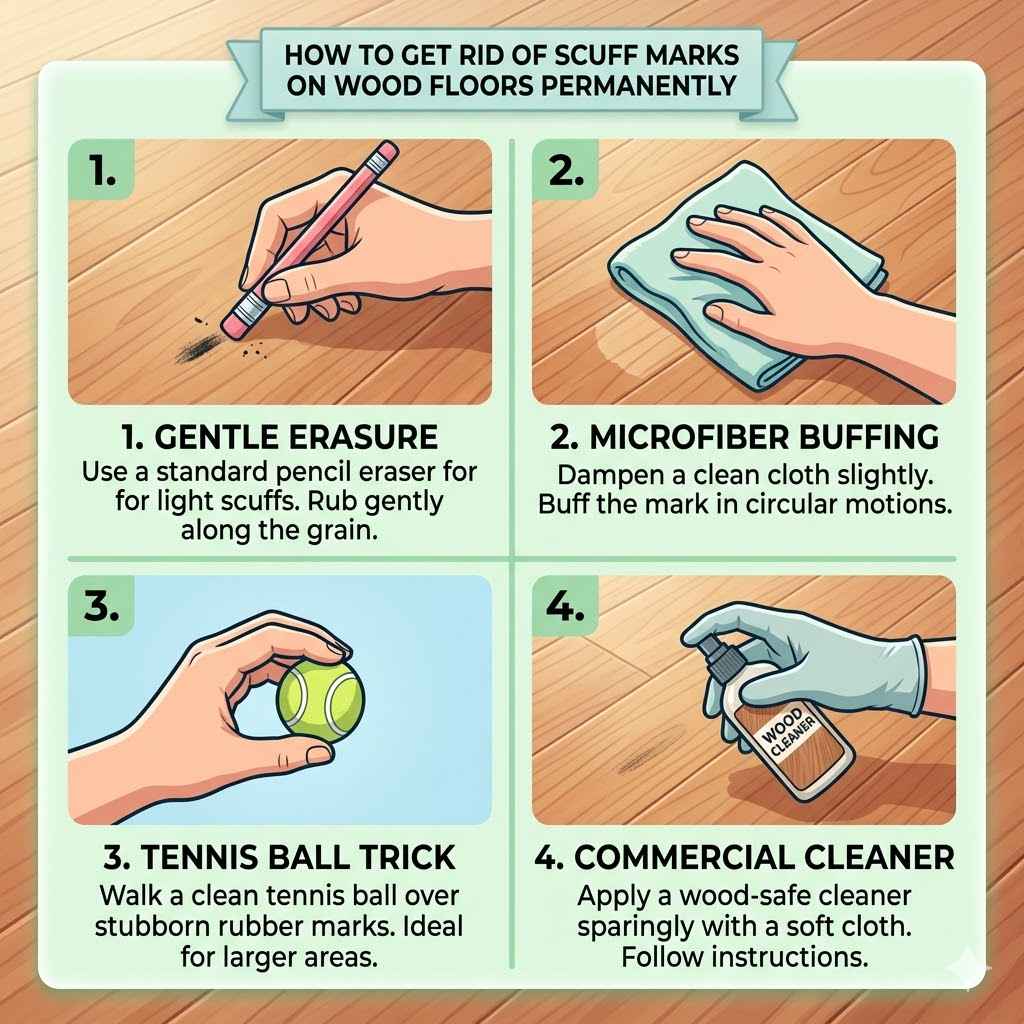
1. The Pencil Eraser Trick: For light scuffs, a clean, white pencil eraser can work wonders. Gently rub the eraser over the scuff mark.
It works like magic for light marks from shoes. It lifts the scuff without harming the finish. Just be sure the eraser is clean.
You don’t want to add new marks.
2. Baking Soda Paste: This is a slightly stronger, but still gentle, option. Mix a little baking soda with water.
You want a paste that’s not too runny. Apply a small amount to a soft cloth. Gently rub the scuff mark in a circular motion.
Then, wipe the area clean with a damp cloth. Finally, dry it with a clean, dry cloth. Baking soda is a mild abrasive.
It can lift marks without scratching.
3. Tennis Ball Rub: This sounds odd, but it’s effective! Use a clean, dry tennis ball.
Gently rub the scuff mark with the tennis ball. The fuzzy surface can often lift the scuff. It’s a good method for darker rubber marks.
Be gentle, don’t scrub too hard.
4. Water and a Soft Cloth: Sometimes, all it takes is a little moisture. Dampen a soft cloth with plain water.
Gently wipe the scuff mark. Often, the mark will lift right off. This is best for very fresh scuffs.
Always dry the area afterward to prevent water spots.
Quick Scuff Removal Tools
What you might need:
- Clean, white pencil eraser
- Baking soda
- Soft cloths (microfiber is great)
- Clean water
- Dry cloth
- Clean tennis ball
When to Use Specific Wood Floor Cleaners
For more stubborn scuffs, or if the gentle methods don’t quite work, you might need a dedicated wood floor cleaner. These cleaners are formulated for wood. They are designed to lift dirt and grime.
They also help to preserve the floor’s finish. Always choose a cleaner that is safe for your floor’s finish type.
Polyurethane or Urethane Finishes: Most modern wood floors have these finishes. They are very durable. You can use pH-neutral wood floor cleaners.
Many brands offer these. They often come in spray bottles. You just spray them onto a cloth.
Then you wipe the scuff mark. Avoid cleaners with ammonia or wax. These can damage the finish or leave a dull film.
Wax or Oil Finishes: These are less common now. They require special care. Use cleaners specifically made for waxed or oiled floors.
Never use water-based cleaners or steam on these finishes. They can cause damage and discoloration. Often, a special wax or oil product is used to remove scuffs from these types of floors.
How to Use Them: Always follow the product instructions. Typically, you’ll spray the cleaner onto a soft cloth. Then, gently rub the scuff mark.
Don’t oversaturate the cloth. Wipe away any residue with a clean, damp cloth. Finally, buff the area dry with a clean, dry cloth.
This restores the sheen. It also prevents water damage.
Choosing the Right Cleaner
For Polyurethane Floors:
- Look for “pH-neutral wood floor cleaner.”
- Avoid ammonia and wax-based cleaners.
- Brands like Bona, Bruce, or Swiffer WetJet Wood Floor Cleaner are popular.
For Wax or Oil Floors:
- Use cleaners specifically labeled for wax or oil finishes.
- Never use water or steam.
Household Items That Can Work Wonders
Sometimes, you don’t need special products. Common household items can be surprisingly effective. They are often safer for the finish too.
Here are a few more ideas:
1. Toothpaste (Non-Gel, White Paste): Yes, toothpaste! Use a small amount of white, non-gel toothpaste.
Apply it to a soft cloth. Gently rub the scuff mark. The mild abrasive in toothpaste can help lift the mark.
Wipe clean with a damp cloth and dry thoroughly. This is for tougher scuffs.
2. Olive Oil or Mineral Oil: For some scuffs, especially on finished wood, a little oil can help. Put a few drops of olive oil or mineral oil on a soft cloth.
Gently rub the scuff mark. The oil can help to lift and loosen the scuff. Wipe off any excess oil.
Then, buff the area dry. This method works well if the scuff has slightly dulled the finish.
3. Rubbing Alcohol (Use with Caution): Rubbing alcohol can remove tough marks. However, it can also damage some finishes.
Use it only on a very stubborn scuff. Dampen a cotton ball or the corner of a cloth with rubbing alcohol. Gently dab the scuff mark.
Do not rub hard. Wipe the area immediately with a damp cloth. Then, dry it well.
Test this in a hidden spot first!
4. Vinegar (Diluted): A very diluted white vinegar solution can sometimes help. Mix one part white vinegar with ten parts water.
Dampen a soft cloth with the solution. Gently wipe the scuff mark. Vinegar is acidic, so use it sparingly.
Rinse the area with a clean, damp cloth. Dry thoroughly. This is for surface dirt that looks like a scuff.
Household Item Spot-Check
Item | Best For | Caution
Eraser | Light scuffs | Ensure it’s clean
Baking Soda Paste | Moderate scuffs | Gentle rubbing only
Tennis Ball | Dark rubber marks | Use a clean ball
Toothpaste (White) | Tougher scuffs | Mild abrasion
Olive/Mineral Oil | Dull scuffs | Buff well after
Rubbing Alcohol | Very stubborn marks | Test first, use sparingly
Diluted Vinegar | Surface dirt | Rinse and dry
Dealing with Deeper Scratches vs. Surface Scuffs
It’s important to know the difference between a scuff mark and a scratch. Scuff marks are usually on the surface. They are often a transfer of color or material.
Scratches go deeper. They actually cut into the wood’s finish or even the wood itself. Scuffs can typically be cleaned.
Scratches often need repair.
How can you tell? Look closely at the mark. If it looks like a dark line sitting on top of the finish, it’s likely a scuff.
If you can see a groove or a line where the wood or finish is physically removed, it’s a scratch. Sometimes, a deep scuff can look like a scratch because it dulls the finish.
For a deep scratch, you might need a wood repair kit. These kits often come with colored putty or markers. You use them to fill in the scratch.
The goal is to make the scratch less visible. Some people use crayons that match their floor color. For very deep scratches, you might need professional refinishing.
This is a bigger job. It involves sanding down the floor and applying new finish.
So, before you try to fix something, identify it correctly. If it’s a mark that looks like dirt or color transferred, try cleaning first. If you see a clear line or groove, it’s a scratch.
The methods for scuffs won’t work for deep scratches. You’ll need different tools and techniques for those.
Scuff vs. Scratch: Key Differences
Scuff Mark:
- Surface level
- Material transfer (rubber, dirt)
- Often looks like a stain or smudge
- Usually cleanable
Scratch:
- Deeper than the surface
- Physical damage to finish or wood
- Looks like a cut or gouge
- May require filling or refinishing
When to Call a Professional
While many scuff marks can be fixed with simple methods, there are times when professional help is best. If you have tried several gentle methods and the scuff mark remains, it might be tougher than it looks. Or, it could be a sign of a deeper issue with your floor’s finish.
If you have very old or delicate floors, like antique wood or floors with intricate finishes, it’s wise to be cautious. A professional floor cleaner or restorer will know exactly what products and techniques are safe for your specific floor. They have access to professional-grade tools and cleaners.
They can also assess the overall health of your floor.
Another reason to call a pro is if you’re dealing with a large number of scuff marks. Or if the marks are spread across a wide area. Trying to tackle a huge job yourself can be exhausting.
It might also lead to inconsistent results. A professional can complete the job efficiently. They will ensure a uniform look across your floor.
Finally, if you’re unsure about the type of finish on your floor, it’s safer to ask an expert. Using the wrong cleaner or method on an unknown finish can cause permanent damage. A professional can identify your floor type.
They can then recommend the best course of action. Don’t hesitate to seek advice if you feel overwhelmed or uncertain. Your beautiful wood floors are worth the investment in expert care.
Frequently Asked Questions About Wood Floor Scuffs
Can I use a magic eraser on wood floors?
Magic Erasers are very abrasive. They can remove scuff marks, but they can also remove the finish from your wood floor. This can leave a dull spot or damage the protective layer.
It’s best to avoid them or use them with extreme caution on a very hidden spot. Gentle methods are usually safer.
How do I remove scuff marks from dark wood floors?
Dark wood floors can show scuffs more easily. For dark wood, start with the gentlest methods like a pencil eraser or a clean tennis ball. If you need more, try a wood floor cleaner made for your finish.
Always use a white or clear cloth so you can see if you are transferring color onto the cloth. Avoid anything that could add color to your dark floor.
What is the best way to clean rubber scuff marks?
Rubber scuff marks are common and often dark. A clean tennis ball is surprisingly effective for these. You can also try a pencil eraser or a baking soda paste.
If those don’t work, use a wood floor cleaner. Focus on gently lifting the rubber residue from the finish without scrubbing too hard.
Can steam mops remove scuff marks from wood floors?
No, steam mops should generally not be used on wood floors. The heat and moisture can damage the wood and its finish. It can cause warping, cupping, or discoloration.
Stick to damp cloths or approved wood floor cleaners. Steam is too harsh for most wood floor finishes.
How often should I deep clean my wood floors?
You should sweep or vacuum your wood floors daily or every other day to remove dust and grit. A light cleaning with a damp mop and approved wood floor cleaner can be done weekly or bi-weekly, depending on traffic. Deep cleaning frequency depends on wear and tear.
Over-cleaning can also wear down the finish, so use caution.
Are scuff marks permanent on wood floors?
Most scuff marks are not permanent. They are usually on the surface of the finish. With the right cleaning methods, they can be removed.
Only deep scratches that go into the wood itself are considered permanent damage that requires repair or refinishing. Always try gentle cleaning first.
Conclusion: Keeping Your Floors Looking Their Best
Seeing scuff marks on your wood floors can be disheartening. But remember, they are usually a simple surface issue. By using gentle cleaning methods and the right products, you can restore their beauty.
Prevention is always the best strategy. Simple habits like using felt pads and removing shoes can save you a lot of trouble. Don’t let a few marks get you down.
With this guide, you have the tools to keep your wood floors looking pristine and beautiful for years to come.
Sponsored / affiliate links. As an Amazon Associate I earn from qualifying purchases. I may earn additional commission from eligible campaigns.