How Long to Let Acrylic Paint Dry Between Coats
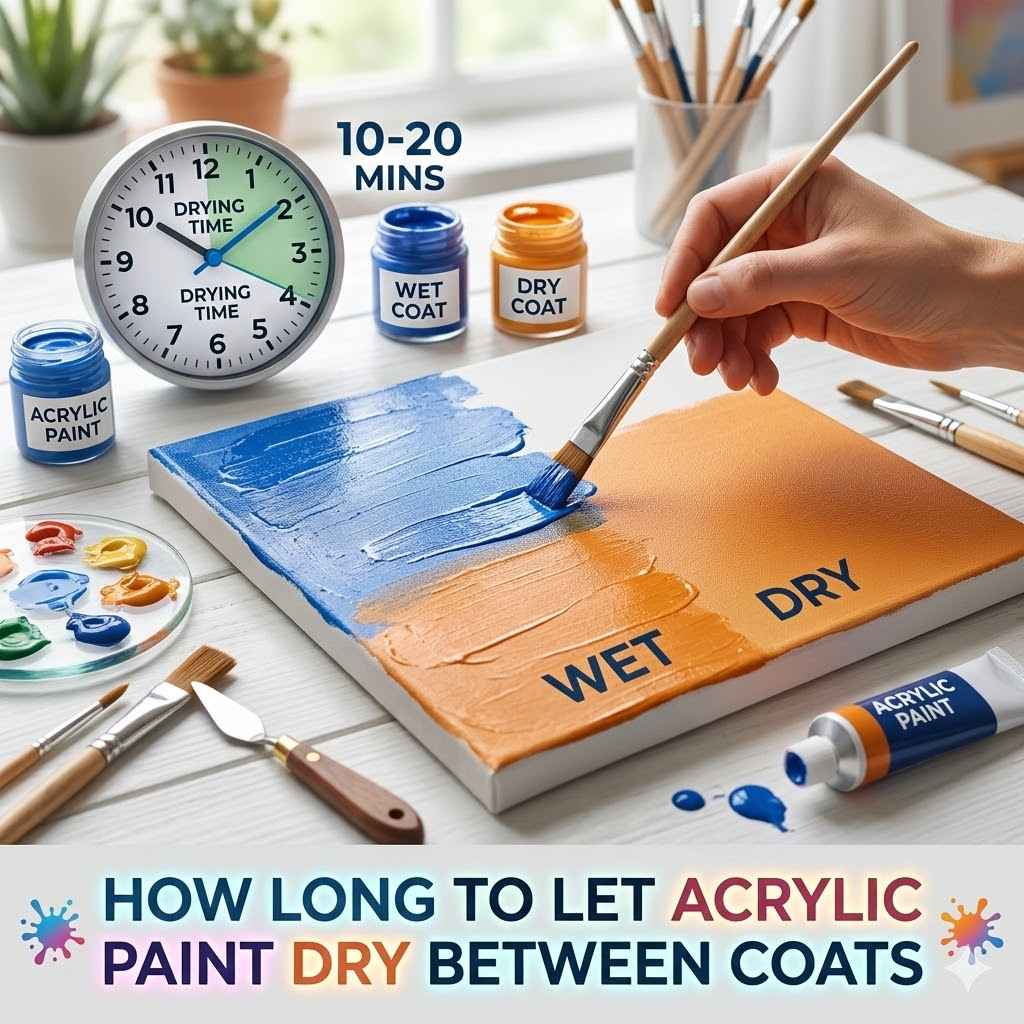
It’s super common for new artists to wonder How Long to Let Acrylic Paint Dry Between Coats. You want your layers to look smooth and even, not muddy. Waiting too long or not long enough can mess up your painting.
Don’t worry, it’s not as tricky as it seems! We’ll break it down super simply so you can get back to painting with confidence. Let’s figure this out together.
Understanding Acrylic Paint Drying Times
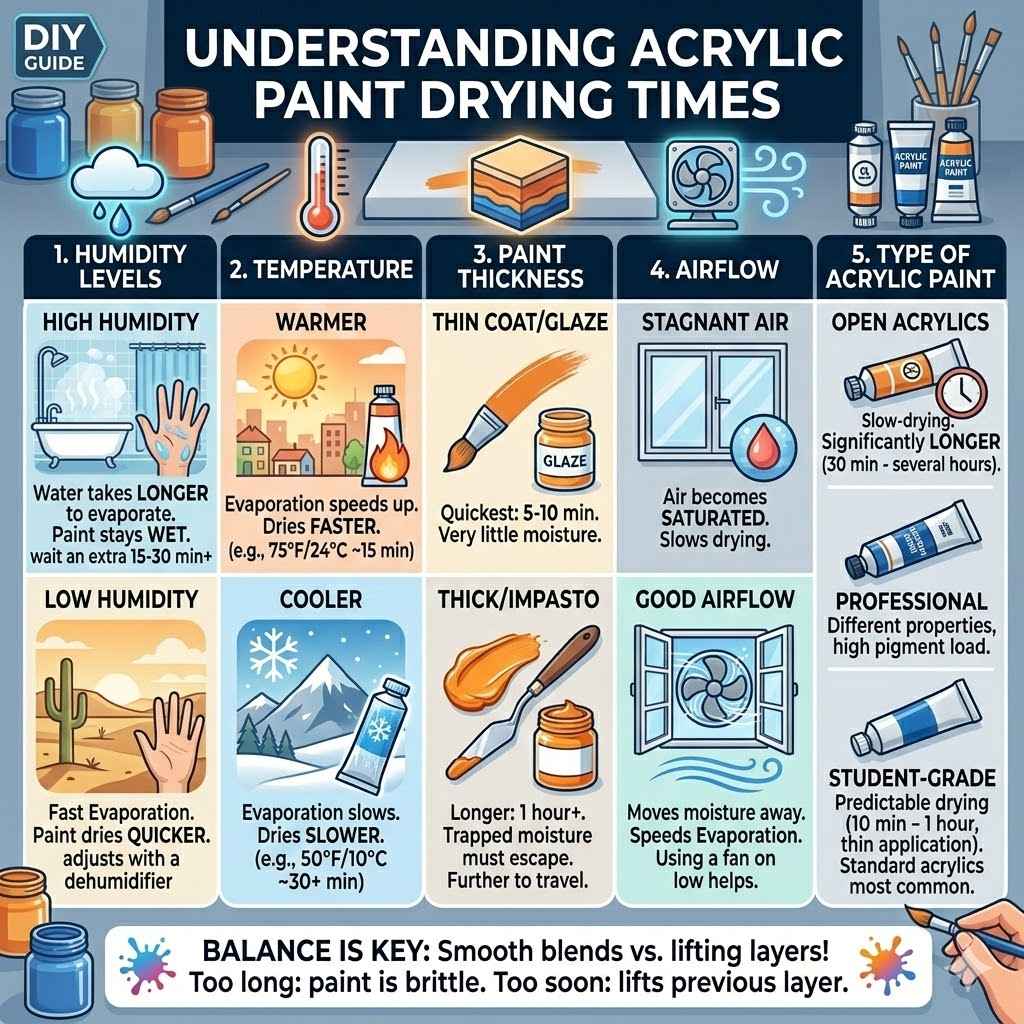
Acrylic paints are popular for many reasons, especially for beginners. They dry fast, are water-soluble when wet, and become permanent once dry. This quick drying can be a blessing and a curse. Knowing the right time to add another layer is key to achieving smooth blends and opaque coverage. Too much waiting can make your paint become brittle or hard to work with, while painting too soon can lift the previous layer, causing streaks and a messy look. This section will explore the main factors that influence how long acrylic paint needs to dry.
Factors Affecting Drying Time
Several things can make acrylic paint dry faster or slower. Understanding these will help you guess the right waiting period. It’s all about paying attention to your surroundings and your paint.
Humidity Levels
Humidity is the amount of water vapor in the air. When humidity is high, water in the paint takes longer to evaporate. This means your acrylics will stay wet for a longer period. Think of it like a steamy bathroom versus a dry desert; water evaporates much slower in the steamy air.
High humidity can increase drying times by 20% or more. In humid environments, you might need to wait an extra 15-30 minutes between coats. This is why artists in tropical climates might find their paints behave differently than those in arid regions.
Adjusting your workspace, perhaps with a dehumidifier, can help speed things up if needed.
Temperature
Warmer temperatures help water evaporate more quickly. This means your acrylic paint will dry faster when it’s warm. On the flip side, cooler temperatures slow down evaporation, making your paint take longer to dry.
Generally, for every 10 degrees Fahrenheit increase in temperature, drying time can decrease by a noticeable amount. For example, paint might dry in 15 minutes at 75°F (24°C) but take 30 minutes or more at 50°F (10°C). This is a simple principle of evaporation; heat gives water molecules more energy to escape into the air.
Paint Thickness
How much paint you apply matters a lot. A thin wash of acrylic will dry much faster than a thick, impasto layer. When you apply paint thickly, there’s more moisture trapped within the paint film. This moisture needs time to escape.
A very thin layer, like a glaze, might be touch-dry in 5-10 minutes. However, a thick application, like you’d use for texture, could take an hour or even longer to dry completely. This is because the water molecules in the thicker paint have further to travel to reach the surface and evaporate.
Airflow
Good airflow around your painting helps move moisture away from the surface. This speeds up evaporation and thus, drying time. If your painting area is stagnant, the air around it will become saturated with moisture from the paint, slowing down the drying process.
Using a fan on a low setting can make a big difference. It helps to constantly refresh the air around your canvas. This means the humid air is
Type of Acrylic Paint
Not all acrylic paints are created equal. Some brands and types are formulated to dry faster or slower. For instance, professional-grade acrylics might have different drying properties than student-grade ones due to their pigment load and binder composition. Open acrylics are specifically designed to dry very slowly.
If you’re using a paint labeled as “open acrylics,” expect drying times to be significantly longer, potentially 30 minutes to several hours depending on the application. Standard acrylics are the most common and have predictable drying times, typically ranging from 10 minutes to an hour for thin to medium applications.
How Long to Let Acrylic Paint Dry Between Coats Specifics
Now let’s get to the core of the question: How Long to Let Acrylic Paint Dry Between Coats? The answer isn’t a single number, but a range. It depends on the factors we just discussed. Here’s a general guide to help you figure it out.
General Drying Guidelines
For most standard acrylic paints, a good rule of thumb is to wait until the surface feels dry to the touch. This usually happens within 15-30 minutes for thin to medium layers. However, “dry to the touch” doesn’t always mean fully cured.
If you’re layering colors, you want the previous layer to be dry enough that it won’t lift or mix with the new paint. If you can press your finger on it and it doesn’t feel tacky or leave a mark, it’s generally safe to paint over.
Thin Layers and Washes
Thin layers or washes of acrylic paint dry very quickly. This is because there’s less water and binder to evaporate. These can often be ready for a second layer within 5 to 15 minutes, especially in good drying conditions.
This is perfect for building up subtle color variations or creating glazes. You can apply a thin layer, let it dry for a few minutes, and then apply another. The effects can be very beautiful and luminous.
Medium Layers
When you apply paint with a bit more body, not quite impasto but not a thin wash either, you’ll need to wait a bit longer. For these medium layers, aim for 15 to 30 minutes of drying time.
This is a common application for many painting styles. It allows for good coverage without being so thick that it takes forever to dry. If you’re unsure, it’s always better to wait a few extra minutes.
Thick Layers and Impasto
Thick applications of paint, known as impasto, take the longest to dry. Because there’s so much paint and moisture, these layers can take anywhere from 30 minutes to several hours to become touch-dry. Full curing can take even longer.
If you’re working with heavy body acrylics and applying them thickly for texture, be patient. You might need to leave thick areas to dry overnight before adding more layers or working on them. Some artists even use specialized drying accelerators for impasto techniques, but this is less common for beginners.
The Importance of “Dry to the Touch” vs. Fully Cured
It’s important to understand the difference between “dry to the touch” and “fully cured.” Dry to the touch means the surface has set, and you can handle it without smudging. Fully cured means the entire paint film has hardened and bonded.
For layering paint, being “dry to the touch” is usually sufficient. However, if your painting will be handled a lot or exposed to harsh conditions soon after finishing, waiting for it to fully cure is better. This can take days or even weeks depending on the paint thickness and environmental factors.
When to Add a Second Coat Immediately
There are specific techniques where you might paint over wet acrylics. This is called wet-on-wet or wet-into-wet painting. It’s used for creating soft blends and seamless transitions. In this case, you deliberately apply new paint onto an un-dried layer.
This technique requires practice. The colors will naturally mix and soften where they meet. It’s not about waiting for the paint to dry at all.
You’re using the wetness of the layers to your advantage for blending.
When to Wait for Complete Dryness
If you want sharp lines, distinct color blocks, or to avoid muddying your colors, you must wait for the previous layer to be completely dry. This is especially true when working with masking tape or stencils. Painting over wet acrylics can cause the tape to lift the paint, or colors to bleed under the edges.
For example, if you’re painting a portrait and want to add details to the eye after the base skin tone is down, you’ll want that base to be fully dry. This ensures the detail you add sits cleanly on top without mixing into the wet layer underneath.
Troubleshooting Common Acrylic Painting Issues
Even with guidelines, you might run into problems. Don’t let these common issues discourage you. Here are some solutions for when your acrylic drying times aren’t cooperating.
Paint Lifting or Peeling
This happens when you paint over a layer that isn’t dry enough. The new brushstrokes disturb the wet paint underneath, causing it to lift. It can create an unintentional streaky or patchy effect.
The best solution is patience. Always ensure the previous layer is at least dry to the touch before adding more. If it already happened, you might need to let it dry completely, then gently sand the area smooth and repaint.
Muddy Colors
Muddy colors occur when wet paints mix unintentionally. This often happens when layering too soon or when wet-on-wet techniques are attempted without control. You wanted a clean color, but it turned into a dull brown or gray.
The key here is the waiting game. Give your layers ample drying time between applications. If you’re using a palette for mixing, keep your colors separate and clean your brush thoroughly between different hues.
Uneven Drying and Cracking
Sometimes, very thick layers of acrylic can dry unevenly. The outer layer dries quickly, while the inside remains wet. This can lead to cracking as the outer layer shrinks. This is more common with paints that contain less flexible binders.
To avoid this, try applying thick paint in thinner layers over time. This allows each layer to dry more thoroughly before adding the next. You can also consider using mediums that help improve flexibility and adhesion, which can reduce cracking.
Case Study: A Beginner’s Layering Challenge
Sarah was painting a still life of a red apple. She wanted a smooth, vibrant red. She applied a first coat of red, but it looked a bit streaky. Eager to fix it, she immediately applied a second coat. Instead of a smooth red, she got a patchy, uneven surface with some areas looking lighter and others darker. She had applied the second coat before the first was dry enough.
After letting it dry completely, she gently smoothed the surface with fine sandpaper. Then, she waited a full 30 minutes, using a fan on low speed, before applying her second layer of red. This time, the coverage was even and smooth, showing the importance of adequate drying time for opaque layers.
Using Drying Mediums and Accelerators
For artists who need their acrylics to dry faster, there are mediums available. Drying accelerators are additives you can mix with your paint. They speed up the evaporation process.
These mediums can reduce drying times by half or more. However, they can sometimes alter the paint’s sheen or consistency. Always test them on a scrap piece of canvas first to see how they affect your paint.
Sample Scenario: Fast Background Work
Imagine you need to paint a large background for a project and want to move on to details quickly. The room is a little cool and humid. You’ve applied a medium-thickness layer of blue.
Instead of waiting 45 minutes, you could mix a small amount of drying accelerator into your next batch of blue paint. With the accelerator, that layer might be dry enough for you to start painting details on your foreground subject in just 20-25 minutes. This allows you to complete your painting in a single session.
Working with Open Acrylics
Open acrylics are a special type of acrylic paint. They are designed to stay wet for much longer periods, sometimes hours or even days. This makes them ideal for blending techniques similar to oils.
When working with open acrylics, the question How Long to Let Acrylic Paint Dry Between Coats becomes less about quick layering and more about letting them set properly before further manipulation. You might wait for several hours or even overnight before adding significant new layers that need to adhere without disturbing the wetness below.
Tips for Optimizing Acrylic Drying Times
You can control the drying time of your acrylics to some extent. Here are some practical tips to help you get the results you want, whether you need them to dry fast or slow down.
Creating the Ideal Painting Environment
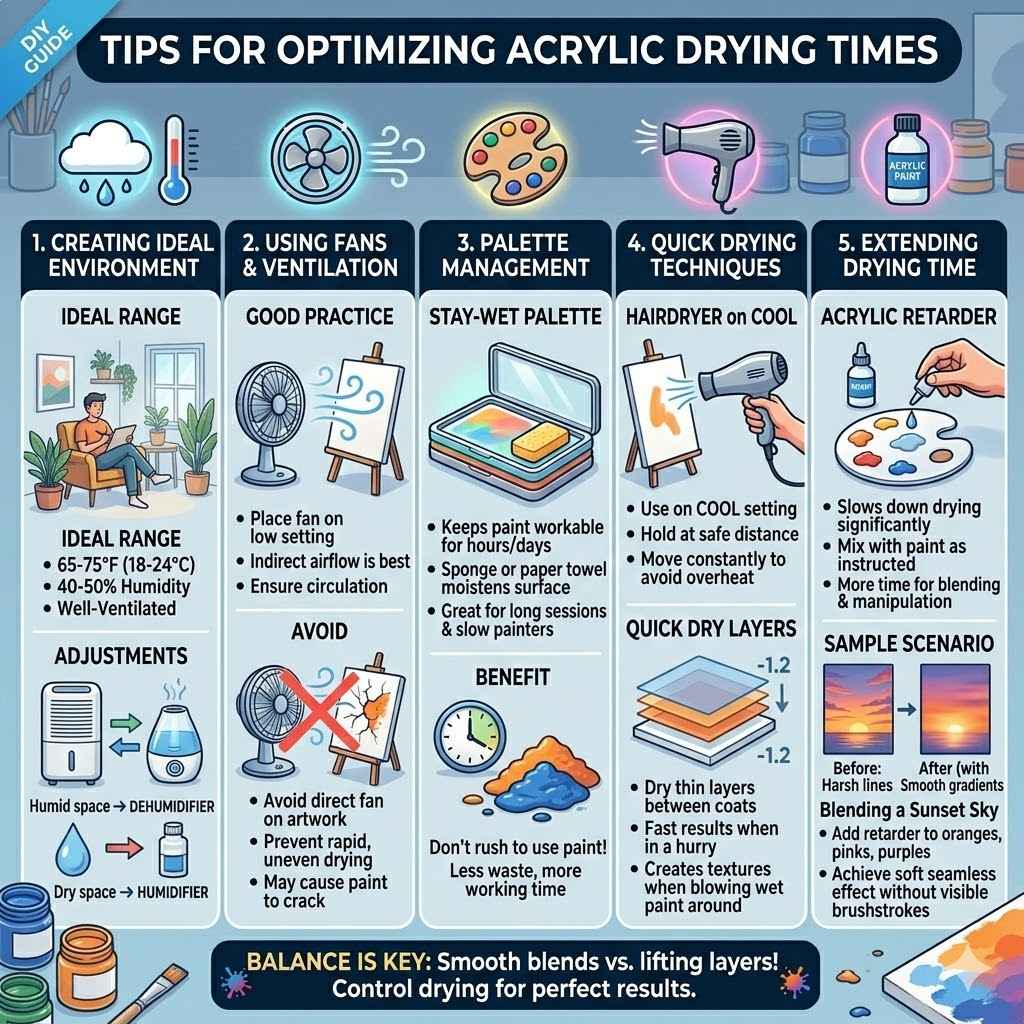
Your studio or workspace plays a big role. Aim for a well-ventilated area with moderate temperature and humidity.
A room temperature between 65-75°F (18-24°C) is generally ideal. Humidity around 40-50% is also good. If your space is too humid, consider using a dehumidifier.
If it’s too dry, a humidifier can help.
Using Fans and Ventilation
As mentioned, airflow is your friend when you want faster drying. Place a fan on a low setting in your studio, ensuring it circulates air gently.
Avoid placing the fan directly on your wet artwork, as this can cause rapid, uneven drying and potentially crack the paint. Gentle, indirect airflow is best. Good ventilation also helps clear away fumes from mediums or solvents if you use them.
Palette Management for Acrylics
How you manage your paint on the palette can also impact drying. Using a stay-wet palette can keep your acrylics workable for extended periods, allowing you to paint over hours or even days without your paint drying out.
A stay-wet palette typically uses a sponge or paper towel to keep the paint surface moist. This is excellent for long painting sessions or for artists who work slowly. It means you don’t have to rush to use up your paint before it hardens.
Quick Drying Techniques
If you want your acrylics to dry super fast, you can use a hairdryer on a cool setting. Hold it a good distance away from your painting and move it constantly.
This method is excellent for quickly drying thin layers between applications, especially if you’re in a hurry. It can also be used to create interesting textures by blowing the wet paint around. Just remember to use the cool setting to avoid overheating the paint, which could lead to cracking.
Extending Drying Time
If you find your acrylics drying too fast, especially when you’re trying to blend, use an acrylic retarder medium. This additive slows down the drying process significantly.
Mix it with your paint according to the manufacturer’s instructions. It can extend the workable time of your acrylics by 10, 20, or even more minutes, giving you more time for smooth blending and color manipulation.
Sample Scenario: Blending a Sunset Sky
You are painting a sunset sky and need to blend the oranges, pinks, and purples smoothly. Your acrylics are drying too quickly on the canvas, leaving harsh lines instead of soft gradients.
To fix this, you can add a few drops of acrylic retarder to your paints as you mix them on your palette. This will give you more time to work the colors together on the canvas. You can then gently blend the edges where the colors meet, achieving that soft, seamless sunset effect without visible brushstrokes or hard divisions.
Frequently Asked Questions
Question: How long should I wait to apply a second coat of acrylic paint if I’m unsure?
Answer: If you are unsure, it’s always best to wait a little longer. Aim for at least 30 minutes, or until the paint is definitely not tacky to the touch. This prevents issues like paint lifting or muddy colors.
Question: Can I use a hairdryer to speed up drying?
Answer: Yes, you can use a hairdryer on a cool setting. Hold it at a distance and move it constantly. This is great for drying thin layers quickly between applications.
Question: What is the difference between dry to the touch and fully cured?
Answer: Dry to the touch means the surface feels set and you can handle it without smudging. Fully cured means the entire paint film has hardened and bonded, which can take days or weeks.
Question: My acrylics feel tacky even after an hour, what’s wrong?
Answer: This is likely due to thick paint application or high humidity. Try applying paint in thinner layers next time, or use a drying accelerator. Ensure your painting space has good ventilation and moderate humidity.
Question: How long does it take for acrylic paint to fully cure?
Answer: Full curing can take anywhere from a few days to several weeks, depending on the paint thickness, type of acrylic, and environmental conditions like temperature and humidity. For most layering, being dry to the touch is enough.
Wrap Up
Knowing How Long to Let Acrylic Paint Dry Between Coats is simple when you consider a few key things. Thin layers dry fast, thick layers take time. Temperature, humidity, and airflow all play a part. For most projects, waiting until the paint is dry to the touch, around 15-30 minutes, is ideal. Be patient, and your paintings will look smoother and cleaner. Happy painting!