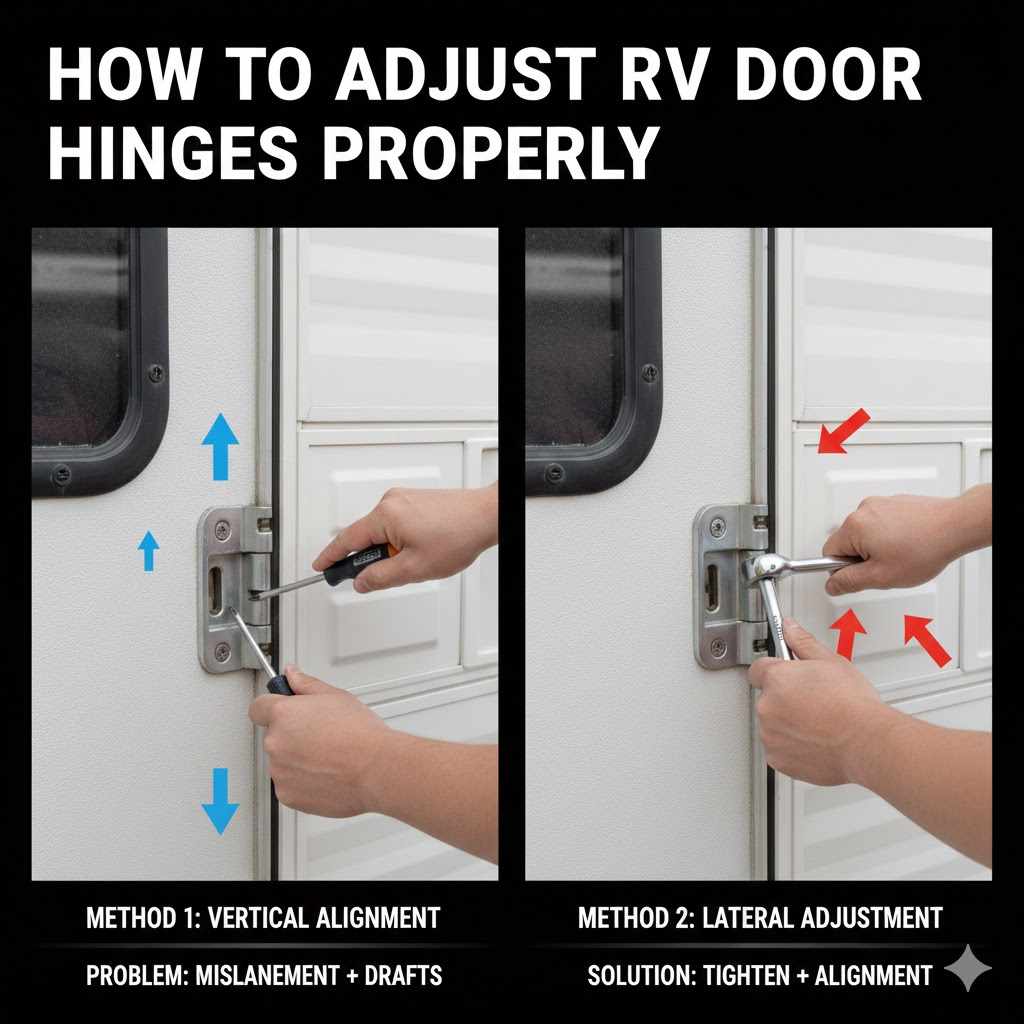
How to Adjust RV Door Hinges Properly
Many RV owners find that their doors don’t close right. They might sag, stick, or not latch well. This is often because the door hinges have shifted a bit over time.
Knowing How to Adjust RV Door Hinges Properly can seem tricky if you’re new to RV maintenance. But it’s a straightforward fix that can save you a lot of hassle. We’ll walk you through the simple steps to get your RV doors working smoothly again.
Why RV Door Hinges Need Adjustment
RV doors are used a lot. Every time you get in or out, the door and its hinges take a hit. The roads you travel on can be bumpy, which shakes things up.
Over time, these bumps and constant use can cause the hinges to loosen up or bend slightly. This might make your door hard to close, let drafts in, or even prevent it from locking securely. Keeping your hinges in good shape is important for security and comfort.
Common Signs of Misaligned Hinges
You might notice a few things if your RV door hinges aren’t quite right. The door could scrape against the frame when you open or close it. It might also feel loose when you push on it.
Sometimes, you’ll see a gap between the door and the frame that wasn’t there before. This gap can let in noise and weather. The latch might not catch properly, or you might have to push hard to get it to close all the way.
These are clear signs it’s time to check your hinges.
The Impact of Sagging Doors
A sagging RV door isn’t just annoying; it can cause other problems. The weight of the door can put extra stress on the frame and the hinges themselves. This can lead to more wear and tear, making the problem worse over time.
A door that doesn’t seal well can also let in bugs and moisture, which can damage the inside of your RV. It might even make your RV less energy efficient because air can escape easily. Fixing sagging doors early keeps them working better for longer.
Tools You Need for Hinge Adjustment
You don’t need a lot of fancy tools to fix your RV door hinges. Most of the time, a few common items will do the trick. Having the right tools makes the job much easier and helps you do a clean, effective repair.
It’s always better to be prepared before you start.
Essential Tools and Supplies
- Screwdrivers: You’ll likely need both Phillips head and flathead screwdrivers. Make sure they fit the screws in your hinges snugly to avoid stripping them.
- Wrenches or Socket Set: Some hinges might have nuts or bolts that need tightening. A set of adjustable wrenches or a socket set will be handy.
- Pliers: Needle-nose pliers can be useful for holding small parts or bending things slightly if needed.
- Lubricant: A good spray lubricant, like WD-40 or a silicone-based spray, is essential for making hinges work smoothly.
- Safety Glasses: Always protect your eyes, especially when working with tools or potentially dusty hinges.
- Gloves: These can protect your hands from grease and sharp edges.
Having these items ready means you can tackle the hinge adjustment without any delays. It’s a good idea to check your RV’s manual too, as some manufacturers might recommend specific tools or steps.
Optional but Helpful Items
- Block of Wood or Jack: If the door is very saggy, you might need something to support its weight while you work on the hinges. A block of wood placed under the door’s edge or a small automotive jack can help.
- Cleaning Rags: You’ll want to wipe away old grease and dirt before applying new lubricant.
- Pen or Marker: To mark the position of screws if you need to remove them completely.
These extra items can make the process smoother and safer, especially if you’re working on a heavier door or a hinge that’s been stuck for a while.
Step-by-Step Guide: How to Adjust RV Door Hinges Properly
Adjusting RV door hinges is a process that can usually be done by yourself. By following these steps carefully, you can fix common door problems and make your RV door operate like new. This guide breaks down the task into manageable actions.
Step 1 Inspect the Hinges and Door
Before you start adjusting, take a close look at the hinges and the door itself. Check if the hinge pins are loose or if the hinge plates are bent. See if the screws holding the hinges to the door and the RV frame are tight.
You should also check the door frame for any damage or warping. This initial inspection helps you understand what’s causing the problem.
Look for signs of wear on the hinge barrels, which are the parts that connect the two leaves of the hinge. If the barrels are worn out or damaged, you might need to replace the entire hinge, not just adjust it. Also, gently try to lift the edge of the door.
If there’s a lot of play or movement, the hinges are likely loose.
Step 2 Tighten Loose Screws
Often, a sagging or sticking door is simply due to loose hinge screws. Start by trying to tighten all the screws on each hinge. Use the correct size screwdriver to avoid stripping the screw heads.
If a screw turns but doesn’t seem to tighten, the hole might be stripped.
If you find stripped screw holes, you might need to use a slightly larger screw or fill the hole with wood filler or a special screw anchor before reinserting the screw. For metal frames, you may need to use a screw with a self-tapping end or a nut and bolt combination if possible. Make sure to tighten screws on both the door side and the frame side of each hinge.
Step 3 Adjusting Hinge Alignment
If tightening screws doesn’t fix the problem, the hinges might need to be slightly repositioned or shimmed. This is where you make small adjustments to align the door correctly.
Shimming Hinges
Shimming involves placing thin pieces of material, like cardboard or special metal shims, behind the hinge plates. This moves the door slightly in or out. For example, if the door is rubbing against the top of the frame, you might add a shim behind the top hinge’s plate on the door side.
If it’s rubbing on the bottom, you might add a shim behind the bottom hinge.
A common scenario is a door that’s hard to close because it’s too tight on the latch side. You might need to adjust the hinges so the door swings outward just a bit more. This can be done by adding a shim behind the hinge leaf on the frame side.
Experiment with thin pieces of cardboard first. You can often find old business cards or cut pieces from a sturdy cardboard box to use as temporary shims.
Bending Hinges (Use with Caution)
In some cases, you might be able to gently bend a hinge leaf to adjust the door’s position. This is usually done on the hinge leaf that attaches to the door. You can use a large wrench or pliers to apply gentle pressure.
However, this method carries a risk of damaging the hinge or the door. It’s often better to try shimming first.
If the door is dragging on the bottom, you might try to slightly bend the top hinge’s door leaf downward. This would lift the door’s corner. Conversely, if the top of the door is too high, you might bend the bottom hinge’s door leaf upward.
Be very careful not to overbend, as this can break the hinge. Small, gradual adjustments are key.
Step 4 Lubricate the Hinges
Once you’ve made adjustments and tightened everything, it’s time to lubricate the hinges. This ensures they move freely and prevents future sticking. Spray a lubricant into the hinge barrels and around the hinge pins.
Open and close the door several times to work the lubricant in.
You can use a silicone-based spray for this job. It doesn’t attract as much dirt and dust as oil-based lubricants, which is helpful in an RV environment. Make sure to wipe away any excess lubricant that drips down to keep things clean.
Step 5 Test the Door Operation
After adjusting and lubricating, test the door thoroughly. Open it and close it several times. Check if it swings smoothly and without rubbing.
Ensure the latch engages properly and the door seals tightly against the frame. If it’s still not right, you might need to repeat some adjustment steps or try different shim positions.
Pay attention to how the door feels. Does it close with less effort? Does it sit flush in the frame when closed?
If you still have issues, re-examine the hinges for any subtle bends or wear that you might have missed. Sometimes, a second or third attempt at minor adjustments is all it takes.
Troubleshooting Common RV Door Hinge Problems
Even with the best efforts, you might encounter specific issues when adjusting your RV door hinges. Knowing how to handle these common problems will help you get the best results.
Door Still Sagging After Adjustment
If the door continues to sag after tightening screws and shimming, the hinges themselves might be worn out. The hinge barrels could be elongated from years of use, meaning the pin has too much room to move up and down. In this case, the best solution is to replace the hinges entirely.
You can often find replacement hinges at RV supply stores or online. Measure your existing hinges to ensure you get the correct size and style.
Another possibility is that the door itself has warped or the frame is no longer square. This is a more significant issue. If the door frame is warped, it might need professional repair.
However, for minor warping, you might be able to compensate with careful hinge adjustments. You can try adding shims to the side of the hinge that pulls the door away from the warped area. This requires trial and error.
Hinge Screws Won’t Tighten (Stripped Holes)
Stripped screw holes are a common problem in RVs because the screws often go into wood or thin metal. If a screw just spins, the threads are gone. To fix this, you can use a slightly larger screw that can bite into new wood.
Another method is to use wood filler or epoxy putty to fill the hole, let it harden completely, and then re-drill a pilot hole for the screw.
For metal frames, you can sometimes use a self-tapping screw that creates new threads. If possible, removing the hinge and using a longer screw that goes into a solid part of the frame is also an option. Sometimes, you might need to install a threaded insert for a more permanent fix.
Door Rubs Against Frame
When a door rubs against the frame, it’s usually an alignment issue. If it rubs on the latch side, you might need to adjust the hinges to pull the door away from the frame slightly. This could involve adding a shim behind the hinge leaf on the frame side.
If it rubs on the hinge side, you might need to adjust the hinges to push the door away from the frame.
The exact placement of the shim matters. Try placing a thin piece of cardboard behind the top hinge leaf on the frame. Then, try closing the door.
If the rubbing improves, you’ve found the right area. You might need to slightly adjust the thickness of the shim or try shimming a different hinge. Take note of where the rubbing occurs so you can target your adjustments.
Hinge Pins Are Difficult to Remove or Insert
Hinge pins can become stiff due to rust or dirt buildup. Before trying to force them, clean the area around the pin. You can spray a penetrating lubricant into the hinge.
Let it sit for a while. Then, try tapping the pin upwards with a hammer and a nail set or a flathead screwdriver.
If the pin is bent, it might be very difficult to remove. Carefully try to straighten it with pliers. If it’s badly bent, you may need to replace the pin or the entire hinge.
Once removed, clean the pin and the hinge barrels thoroughly. Apply a light coat of grease or lubricant before reinserting it. Make sure the hinge is aligned correctly before you tap the pin back in fully.
How to Adjust RV Door Hinges Properly for Different RV Types
The basic principles of adjusting RV door hinges are the same across most types of recreational vehicles, from travel trailers to motorhomes. However, there can be slight variations based on the construction of your RV.
Travel Trailers and Fifth Wheels
Doors on travel trailers and fifth wheels are often made of lighter materials. They might be more susceptible to sagging due to their weight distribution and the stresses of towing. The hinges are usually standard butt hinges.
The adjustment process involves tightening screws, shimming, and sometimes minor bending, just as described above. Pay attention to the hinge plates and how they are attached to both the door and the RV’s body or frame.
For these types of RVs, ensure you’re not over-tightening screws into thin aluminum or fiberglass panels. Use appropriate washers if needed to distribute pressure. If the door frame itself is part of the fiberglass body, any adjustments need to be made carefully to avoid cracking the material.
Always check for stability of the mounting surface before applying force.
Motorhomes
Motorhome doors can be heavier and might have more complex locking mechanisms. The framing of motorhomes can vary significantly, from wood to aluminum or even composite materials. When adjusting hinges on a motorhome, always consider the material of the frame.
Screws might go into solid metal framing, which is generally more robust than wood. However, it can also mean that stripped metal threads require more specialized repair, like using a helicoil.
Some motorhome doors have integrated screens or complex seals. Ensure that your hinge adjustments do not interfere with these components. It’s also wise to check if the door is part of a larger slide-out section, as this can introduce additional structural considerations for alignment.
If you’re unsure about the construction of your motorhome’s door frame, it’s best to consult a professional RV technician.
Class C RVs vs. Class A RVs
Class C RVs often have doors similar to those in travel trailers, mounted on a truck chassis. Class A RVs, with their integrated bus-like chassis, can have very large and heavy doors. The principles remain the same, but the scale might differ.
For a large Class A door, you might definitely need assistance to support the door’s weight while you work. Using a hydraulic jack or having a helper is highly recommended.
When working on a Class A motorhome, inspect the hinge mounting points on the vehicle body very carefully. These can be substantial metal structures, but they can also be subject to wear or corrosion. Ensure all mounting hardware is in good condition and that the underlying structure is sound before attempting any significant adjustments.
The weight of these doors means even a small misalignment can put considerable stress on the hinges and frame.
Preventative Maintenance for RV Door Hinges
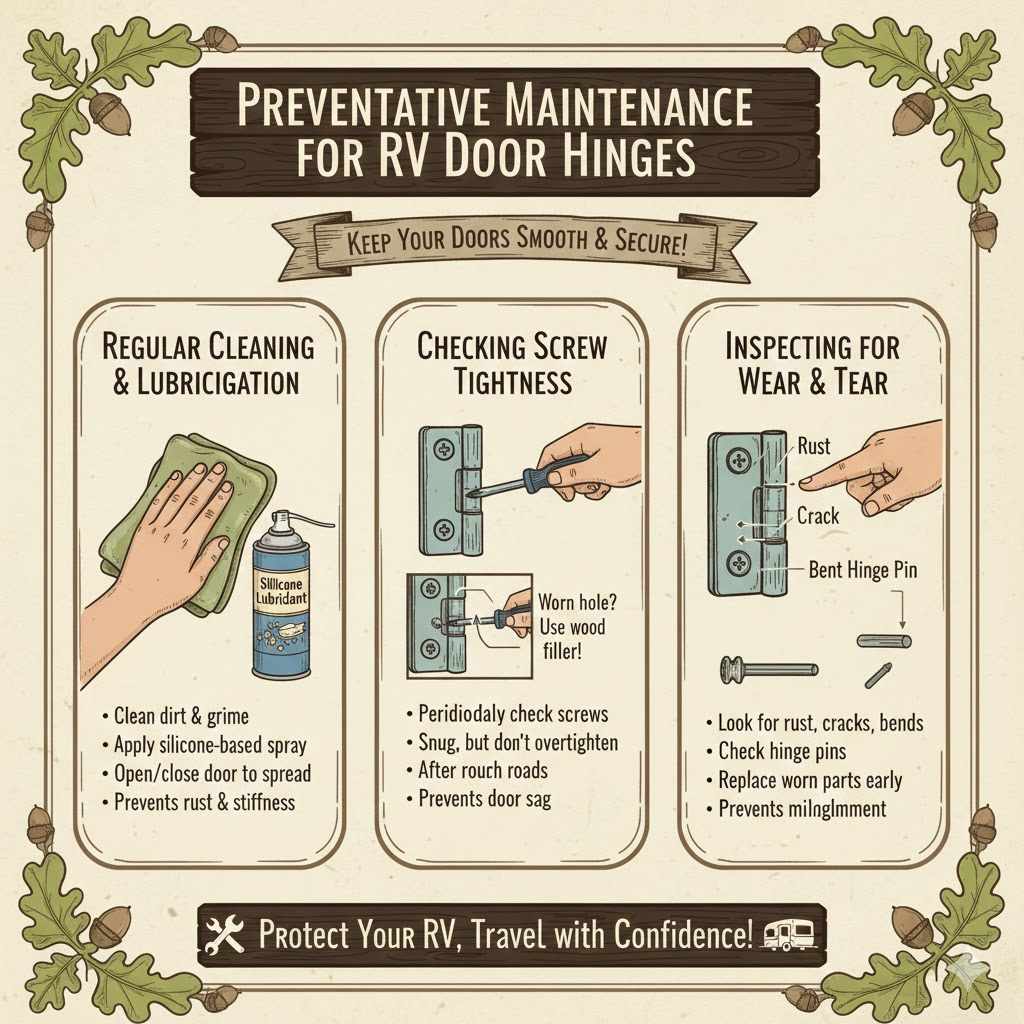
Taking good care of your RV door hinges can prevent many problems before they even start. Regular checks and a little bit of maintenance go a long way in keeping your doors working smoothly.
Regular Cleaning and Lubrication
Make it a habit to clean your RV door hinges every few months. Dust, dirt, and road grime can build up and make them stiff. Use a damp cloth to wipe them down.
After cleaning, apply a light coating of lubricant. A silicone-based spray is excellent because it doesn’t attract as much dirt and provides good protection against rust and corrosion.
When you lubricate, open and close the door several times to ensure the lubricant gets into all the moving parts. Wipe away any excess spray to prevent it from dripping onto the door or floor. This simple task helps maintain smooth operation and extends the life of your hinges.
Checking Screw Tightness
Periodically, and especially after traveling over rough roads, check that all the screws holding your hinges are tight. A quick visual inspection and a gentle turn with a screwdriver can catch loose screws before they cause the door to sag. Don’t overtighten, but ensure they are snug.
If you notice any screws are starting to loosen regularly, it might indicate that the mounting hole is becoming worn. Address this potential issue early by considering the repair methods for stripped screw holes, such as using a slightly larger screw or wood filler, to prevent more significant problems down the line.
Inspecting for Wear and Tear
Keep an eye on your hinges for any signs of wear. Look for rust, cracks, or bent hinge leaves. Check the hinge pins to see if they are worn down or bent.
If you see significant damage, it’s better to replace the hinge or pin before it causes the door to become misaligned or fail completely. Replacing a worn part is usually much easier than fixing damage caused by a failing hinge.
For instance, if you notice that a hinge pin is significantly thinner than it should be, or if the barrels of the hinge are visibly widened, it’s a sign that the hinge is worn out. This wear allows for excessive play, which leads to door sag and misalignment. Proactive replacement of worn hinges is a smart move for overall RV door maintenance.
Frequently Asked Questions
Question: How often should I lubricate my RV door hinges
Answer: It is a good idea to lubricate your RV door hinges at least twice a year, or more often if you notice them becoming stiff or noisy. Traveling in dusty or wet conditions may also warrant more frequent lubrication.
Question: Can I use regular grease on my RV door hinges
Answer: While regular grease can work, a silicone-based spray lubricant is often preferred for RV door hinges. It does not attract as much dirt and dust, which is beneficial in the outdoor environment.
Question: What if the hinge screws are stuck and won’t budge
Answer: If hinge screws are stuck, try applying a penetrating lubricant and letting it sit for a while. Then, use a screwdriver with a good grip and apply steady pressure. Sometimes, tapping the end of the screwdriver gently with a hammer can help loosen it.
Question: My RV door is very heavy. How can I adjust the hinges safely
Answer: For heavy RV doors, it is highly recommended to have a second person help you support the door’s weight while you make adjustments. Alternatively, you can use a block of wood or a car jack placed under the door’s edge to provide support.
Question: Do I need special tools to adjust RV door hinges
Answer: Typically, you will only need common tools like screwdrivers and possibly a wrench or socket set. Specialty RV tools are usually not required for basic hinge adjustment.
Final Thoughts
Properly adjusting RV door hinges is a manageable task that can significantly improve your RV experience. By following these simple steps of inspection, tightening, shimming, and lubricating, you can resolve common door issues like sagging and rubbing. Regular maintenance is key to keeping your RV doors functioning smoothly and securely for all your travels.