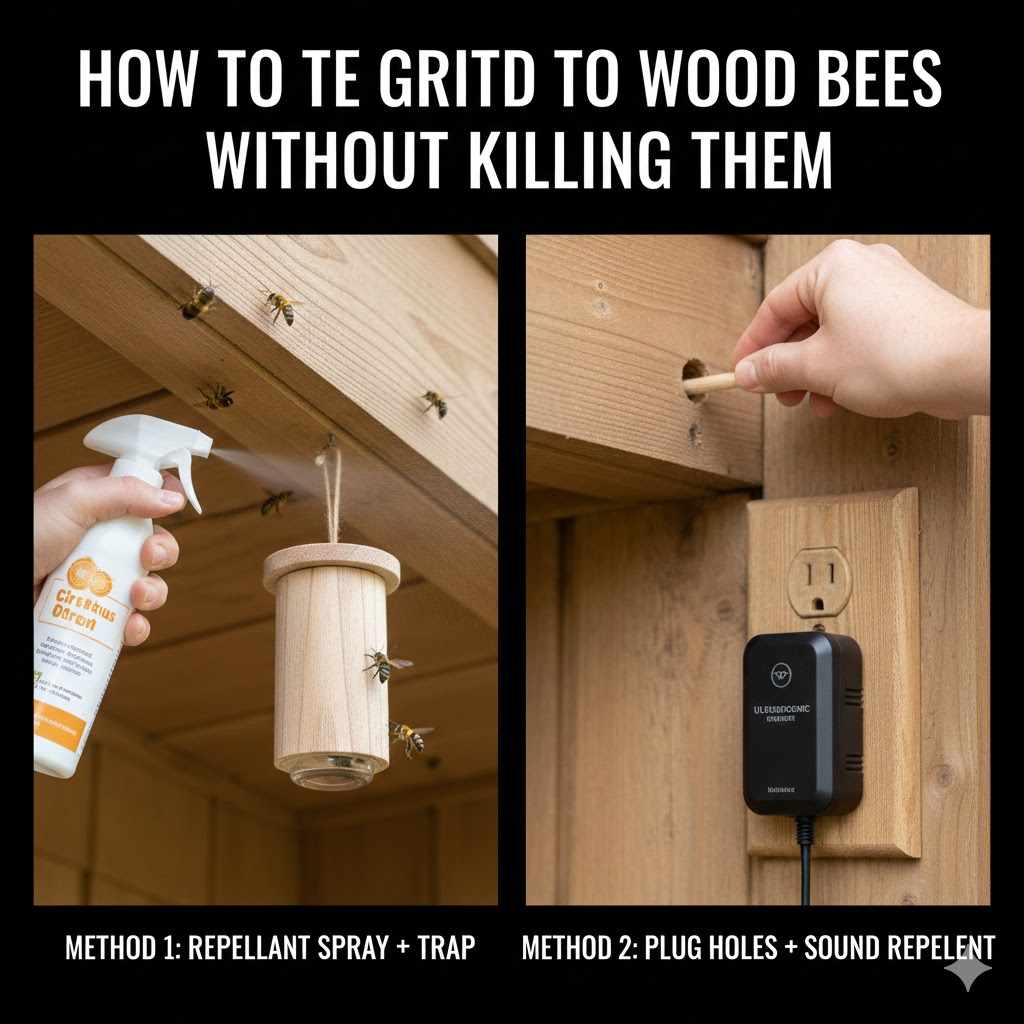
How To Get Rid Of Wood Bees Without Killing Them
Many people want to know How to Get Rid of Wood Bees Without Killing Them because they are a common garden pest, but they also play a role in pollination. It can be tricky to deal with them when you want to protect your home and garden without harming these buzzing visitors. Don’t worry, this guide will break it down simply.
We’ll walk you through easy steps to manage them humanely. Get ready to learn how to keep them away from your property the kind way.
Understanding Wood Bees
Wood bees, often mistaken for bumblebees, are solitary insects that bore into wooden structures to build their nests. Unlike social bees that live in colonies, each female wood bee excavates her own tunnel and lays her eggs. They are important pollinators, especially for certain types of plants.
However, their habit of drilling into wood can cause structural damage over time. Many homeowners find themselves at a loss when these bees start appearing around decks, eaves, and fences, wanting solutions that don’t involve harm. This section will cover what they are and why they might be attracted to your home.
What Are Wood Bees
Wood bees, scientifically known as carpenter bees, are large, robust insects often seen in spring and summer. They have shiny, dark abdomens, unlike the fuzzy abdomens of bumblebees. The males are typically seen buzzing around flowers and wooden structures, often acting aggressively, but they cannot sting.
Only the females can sting, and they rarely do so unless directly threatened. Their size and buzzing can be intimidating, leading many to seek immediate, often lethal, solutions.
These bees are native to many regions and are vital for plant reproduction. They are particularly effective pollinators for plants like tomatoes and blueberries. Their preference for unfinished or weathered wood makes many outdoor structures, like wooden decks, fences, and house trim, prime targets for their nesting habits.
Why Wood Bees Are Attracted To Your Home
Wood bees are drawn to wood that is soft, unfinished, or weathered. This includes areas like decks, porches, fences, soffits, and even untreated furniture. They prefer wood that has already been exposed to the elements, as it is easier to tunnel into.
The presence of existing wood bee tunnels can also attract more bees. Bees leave behind pheromones that signal to other bees that the location is suitable for nesting. This can lead to a rapid infestation if not addressed.
Sun-exposed areas also seem to be a favorite. They often build their nests on the south or west-facing sides of structures, where they can receive ample sunlight.
Here are some common attractants for wood bees:
- Unpainted or unfinished wood surfaces.
- Weathered or decaying wooden structures.
- Existing boreholes from previous bee activity.
- Areas that receive a lot of direct sunlight.
- Softwoods like pine, fir, and redwood.
The Importance Of Not Killing Wood Bees
While wood bees can be a nuisance, they are also beneficial insects. They are important pollinators for a wide variety of plants. Their pollination efforts contribute to healthy ecosystems and agricultural productivity.
Killing them indiscriminately can disrupt local ecosystems. Many people are looking for humane ways to deter them rather than exterminate them. This approach respects their ecological role while still protecting property.
There are effective methods to discourage wood bees from nesting in your home without resorting to killing them. These methods focus on making your property less appealing to them and gently guiding them elsewhere.
Humane Deterrents And Prevention Methods
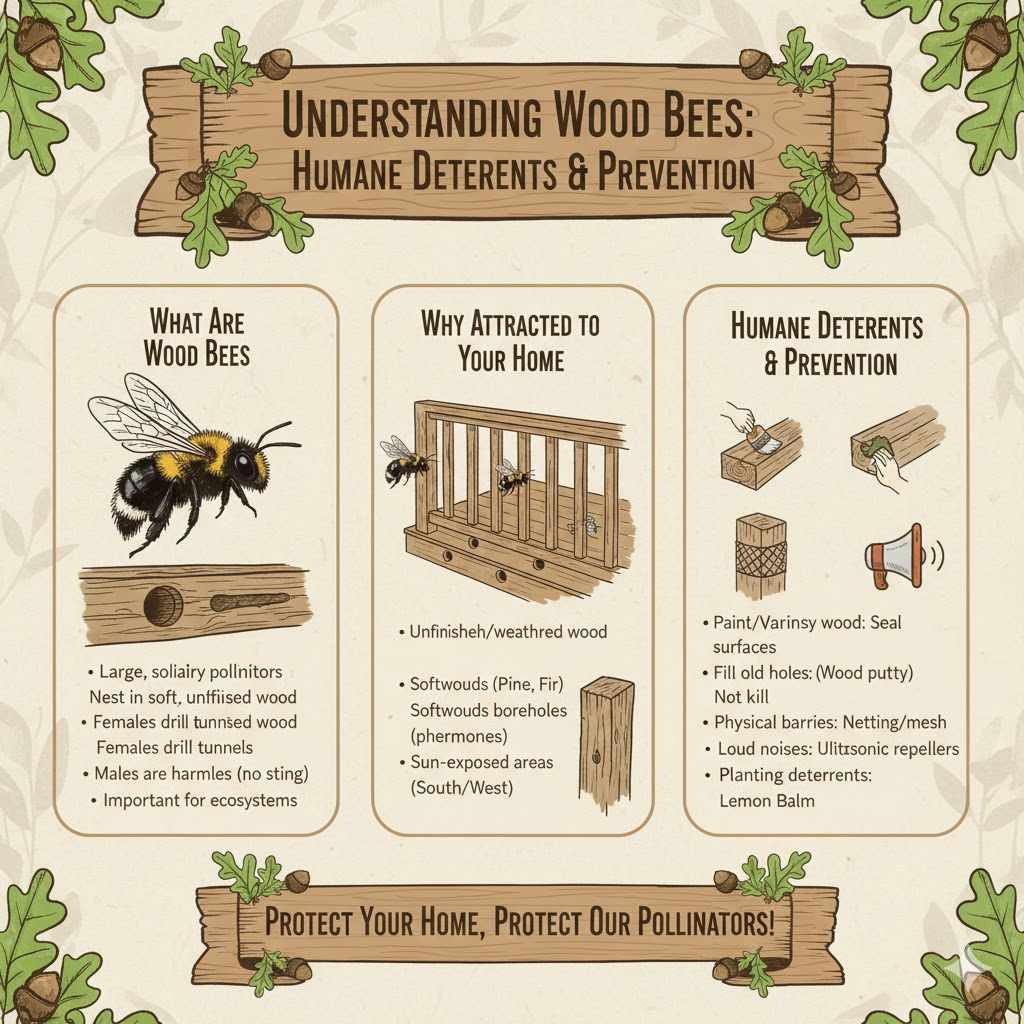
Dealing with wood bees without killing them means focusing on making your property less inviting and using natural methods to encourage them to relocate. This approach is effective for long-term control and respects the environment. We will explore various strategies, from simple DIY solutions to specific product recommendations, that can help you manage wood bee populations humanely.
The goal is to create a barrier and deterrent effect so they choose other, less intrusive places to nest.
Natural Repellents
Several natural substances can deter wood bees. These are often readily available and can be used safely around homes and gardens. They work by emitting scents or tastes that wood bees find unpleasant.
Citrus oils are a popular choice. The strong scent of citrus can mask the pheromones that attract wood bees and is off-putting to them. You can use lemon or orange essential oils.
Another effective natural repellent is almond oil. The aroma of almonds is known to repel wood bees. Applying almond oil to wood surfaces can make them less attractive.
Vinegar is also a simple yet effective deterrent. A solution of vinegar and water can be sprayed on wooden surfaces. The acidity can irritate the bees and make the wood unappealing for nesting.
Here are some natural repellents you can try:
- Citrus oils (lemon, orange, grapefruit)
- Almond oil
- Vinegar solution (1 part vinegar to 1 part water)
- Peppermint oil
- Tea tree oil
When using essential oils, it’s best to dilute them with water. A common ratio is about 10-20 drops of essential oil per cup of water. Spray this mixture regularly on areas where you have seen wood bee activity.
For vinegar, a 50/50 mix of white vinegar and water works well.
These natural repellents need to be reapplied frequently, especially after rain or watering, as their scent can fade. Consistent application is key to keeping wood bees away.
Sealing And Protecting Wood Surfaces
Wood bees prefer unfinished or weathered wood. By sealing and protecting your wooden structures, you can make them much less attractive for nesting. This is one of the most effective long-term prevention strategies.
Painting or varnishing wooden surfaces creates a barrier that wood bees cannot easily penetrate. A good quality exterior paint or varnish will seal the wood grain and make it difficult for them to drill into.
Ensure that all exposed wood is covered. Pay close attention to areas like decks, fences, eaves, and any wooden furniture. Even small, unpainted spots can be an invitation for wood bees.
Consider using stains that contain borates. Borate treatments can make wood toxic to boring insects without harming other wildlife or the environment.
Regular maintenance is crucial. Inspect your wooden structures annually for any signs of wear and tear or existing boreholes. Promptly seal any cracks or holes you find.
Here are key steps for protecting wood:
- Apply multiple coats of exterior paint or varnish.
- Use stains that contain insect-repelling properties.
- Seal any existing cracks or holes in the wood.
- Choose durable, weather-resistant finishes.
- Reapply protective coatings as needed, typically every few years.
The type of finish matters. Glossy finishes can be less attractive than matte ones. Also, consider the color.
While not scientifically proven to deter bees, some anecdotal evidence suggests lighter colors might be less appealing.
Physical Barriers And Deterrents
Besides repellents and surface treatments, physical barriers can also help keep wood bees away from your property. These methods aim to block their access or make the areas less hospitable.
One simple method is to cover vulnerable areas with netting or fine mesh. This is particularly useful for protecting specific plants or newly built wooden structures that are not yet painted or treated.
Another approach involves using decorative elements. Metal flashing or caps can be installed on fence posts or railings where wood bees often nest. This provides a hard surface they cannot bore into.
For existing holes, you can fill them with steel wool, caulk, or wooden dowels. This not only seals the hole but also makes it difficult for bees to re-enter or expand the tunnel.
Sound deterrents are also an option. Some people believe that loud noises or vibrations can discourage wood bees. While not scientifically proven, some devices emit ultrasonic waves that are claimed to repel insects.
Consider these physical deterrents:
- Fine mesh netting for temporary protection.
- Metal flashing or caps on wooden posts.
- Filling existing holes with caulk, steel wool, or dowels.
- Wooden plugs for larger holes.
- Adding visual deterrents like shiny objects or streamers (though effectiveness varies).
When filling holes, it’s best to do so in the evening or early morning when the bees are less active and inside their tunnels. This increases the chance of sealing them in, though the goal is to prevent them from using the holes in the first place.
Dealing With Existing Nests Humanely
When wood bees have already established nests in your home, the challenge is to remove them or encourage them to leave without causing harm. This requires patience and a gentle approach. We will look at methods to safely seal existing tunnels and encourage relocation.
The focus remains on making your property unappealing for future nesting.
Sealing Existing Boreholes
Once you identify active boreholes, the next step is to seal them. This prevents further expansion and discourages other bees from using the same tunnels. It’s important to do this at the right time.
The best time to seal boreholes is in the late fall or early spring, before the bees become very active, or during cooler parts of the day. This is when many bees are either hibernating or less likely to be out of their nests.
You can use a variety of materials to fill the holes. Common options include wood putty, caulk, steel wool, or wooden dowels. For larger holes, a wooden dowel slightly larger than the hole can be hammered in and then trimmed flush.
Ensure the filling material is secure and flush with the wood surface. This creates a smooth surface that is unattractive for further tunneling.
Here are steps for sealing boreholes:
- Identify all active boreholes.
- Choose a suitable filling material (wood putty, caulk, steel wool, dowels).
- Fill the holes completely.
- Sand or trim the filling material to be flush with the wood surface.
- Reapply protective coatings like paint or varnish to the repaired areas.
Sealing holes is most effective when done after the bees have finished their nesting cycle for the year. If you seal them while bees are still inside, they might try to bore new exits.
Encouraging Relocation Through Natural Means
Rather than directly confronting the bees, you can make your property less hospitable to encourage them to move elsewhere. This involves consistent application of deterrents.
Spraying natural repellents around existing nests can make the area unpleasant for the bees. Continue this practice regularly, especially on warmer days when they are more active.
Consider adding elements that disrupt their environment. For instance, hanging shiny objects or wind chimes near nesting areas might deter them. While anecdotal, some find these visual and auditory disturbances helpful.
The key is consistent effort. Wood bees are persistent, so a one-time application of a repellent may not be enough. Regular spraying and maintenance of protective coatings are essential for long-term success.
Here’s how to encourage relocation:
- Consistently spray natural repellents around nesting sites.
- Maintain painted or sealed wood surfaces to prevent new tunnels.
- Introduce visual or auditory deterrents near problem areas.
- Be patient; it may take time for them to find a new location.
Remember, the goal is to make your property unattractive for nesting. By continuously applying these humane methods, you signal to the wood bees that your home is not a suitable place for them.
Using Beneficial Nematodes
Beneficial nematodes are microscopic roundworms that are natural predators of wood bee larvae. They are a safe and eco-friendly way to control wood bee populations without harming adult bees or other beneficial insects.
These nematodes are applied to the soil or directly into the boreholes. Once inside the tunnels, they seek out and parasitize the wood bee larvae. This effectively breaks the life cycle of the pest.
You can purchase beneficial nematodes from garden supply stores or online. They are usually sold in a dormant state and need to be hydrated before application.
When applying them, follow the product instructions carefully. It is typically recommended to apply them in the early morning or late evening when the soil is moist and the temperatures are moderate.
Here are the steps for using beneficial nematodes:
- Purchase a product containing beneficial nematodes suitable for wood-boring insects.
- Follow the instructions for rehydrating the nematodes.
- Apply the nematodes to the soil around infested areas or directly into boreholes.
- Water the area lightly after application to help the nematodes move into the soil.
- Repeat applications may be necessary for complete control.
Beneficial nematodes are a sustainable pest control method. They are non-toxic to humans, pets, and other wildlife, making them an excellent choice for those who want to avoid chemicals.
Prevention Strategies For The Future
Once you’ve managed existing wood bee issues, the focus shifts to preventing them from returning. Proactive measures are far more effective and less stressful than dealing with an infestation. This section will guide you on how to make your property unattractive to wood bees for good, ensuring a peaceful coexistence.
We will cover routine maintenance and smart choices in building and repairs.
Regular Inspections And Maintenance
Consistent inspection of your property is the first line of defense against wood bees. Regularly checking wooden structures allows you to spot potential problems early.
Focus on areas that are prone to wood bee activity. This includes decks, fences, pergolas, eaves, and any unpainted or weathered wooden surfaces. Look for small, perfectly round holes, typically about half an inch in diameter.
Maintenance involves keeping these structures in good condition. Promptly repair any damage to the wood, such as cracks or splinters, before they can attract bees.
Applying protective coatings like paint, stain, or varnish should be part of your regular maintenance schedule. These coatings not only preserve the wood but also create a barrier against insects.
Here are key inspection and maintenance points:
- Conduct thorough inspections at least twice a year, in spring and fall.
- Pay close attention to exposed and unfinished wood.
- Repair any cracks or damaged wood immediately.
- Reapply protective finishes as needed, typically every 2-5 years.
- Clean away any debris that might accumulate and provide shelter.
Think of your wooden structures like your skin; regular care keeps them healthy and resilient. Addressing small issues before they become big problems saves time, money, and stress.
Choosing Wood And Finishes Wisely
When building or repairing wooden structures, making informed choices about materials can significantly reduce the risk of wood bee infestation. The type of wood and the finish you apply play crucial roles.
Some wood types are naturally more resistant to wood bees. Hardwoods like oak or cedar tend to be less attractive than softwoods like pine or fir. If possible, opt for these more resistant options.
However, the finish is often more critical than the wood type. Properly sealed and painted wood is a strong deterrent, regardless of the wood species.
Consider using stains that contain borates or other natural insect repellents. These treatments not only protect the wood from moisture and UV damage but also make it unappealing to boring insects.
If you are repairing a small section, try to match the existing finish as closely as possible. If the existing wood is painted, ensure your repairs are also painted.
Key considerations for wood and finishes:
- Prioritize hardwoods like oak or cedar for new construction if possible.
- Always opt for sealed, painted, or well-stained wood.
- Use exterior-grade paints and stains for maximum durability.
- Consider stains with natural repellent additives.
- Ensure all wooden surfaces are fully covered with the protective finish.
The investment in quality materials and finishes upfront can prevent costly repairs and ongoing pest control issues down the line.
Landscaping And Environmental Adjustments
Sometimes, small changes in your landscaping and surrounding environment can make your property less attractive to wood bees. They are often drawn to specific conditions, and altering these can help.
Trim back trees and shrubs that are close to your house. Overhanging branches can provide easy access for bees to reach wooden structures. Keeping them trimmed can disrupt their flight paths.
Keep your garden areas tidy. Remove fallen wood or debris, as these can serve as alternative nesting sites and may attract bees to your general area.
Consider planting certain flowers that are known to repel bees. While this might seem counterintuitive, some plants emit scents that wood bees dislike, such as peppermint or basil.
Ensure good drainage around your home. Damp wood can be more susceptible to boring insects. Improving drainage can help keep your wooden structures drier.
Here are some environmental adjustments:
- Trim overhanging branches from trees and shrubs near your home.
- Keep your yard clean and free of debris, especially fallen wood.
- Plant bee-repellent plants like peppermint or basil around the perimeter of your property.
- Ensure proper drainage to keep wooden structures dry.
- Minimize the use of untreated wood in garden features close to the house.
By making your property less inviting from an ecological standpoint, you can subtly steer wood bees towards more suitable, natural habitats.
Frequently Asked Questions
Question: How can I tell if I have wood bees or bumblebees?
Answer: Wood bees are typically larger and have shiny, black abdomens, while bumblebees are fuzzier all over and often have yellow and black stripes. Male wood bees can be aggressive but cannot sting, whereas female wood bees can sting but are less likely to do so.
Question: Will sealing existing holes kill the bees inside?
Answer: Sealing holes in the late fall or early spring, when bees are less active or hibernating, is generally safe. Sealing during peak activity might trap them, but they often find or create new exits. The goal is to prevent them from using the holes for nesting.
Question: How often do I need to reapply natural repellents?
Answer: Natural repellents, especially those based on essential oils or vinegar, need frequent reapplication. It’s best to spray them every few days, and definitely after rain, as their scent can wash away or dissipate quickly.
Question: Are wood bees dangerous to pets?
Answer: Wood bees are generally not dangerous to pets. While females can sting, they are not aggressive and rarely do so unless provoked. Their primary concern is with wooden structures, not pets.
Question: Can I spray chemicals to kill wood bees?
Answer: While chemical sprays are available, this guide focuses on humane methods. Using chemicals can harm other beneficial insects, pets, and the environment. Humane deterrents are effective and responsible alternatives.
Conclusion
Managing wood bees without killing them involves consistent, humane efforts. Focus on making your property unappealing with natural repellents, proper sealing of wood, and regular maintenance. By protecting wooden structures and applying these methods, you can create a wood bee-free zone naturally and peacefully.