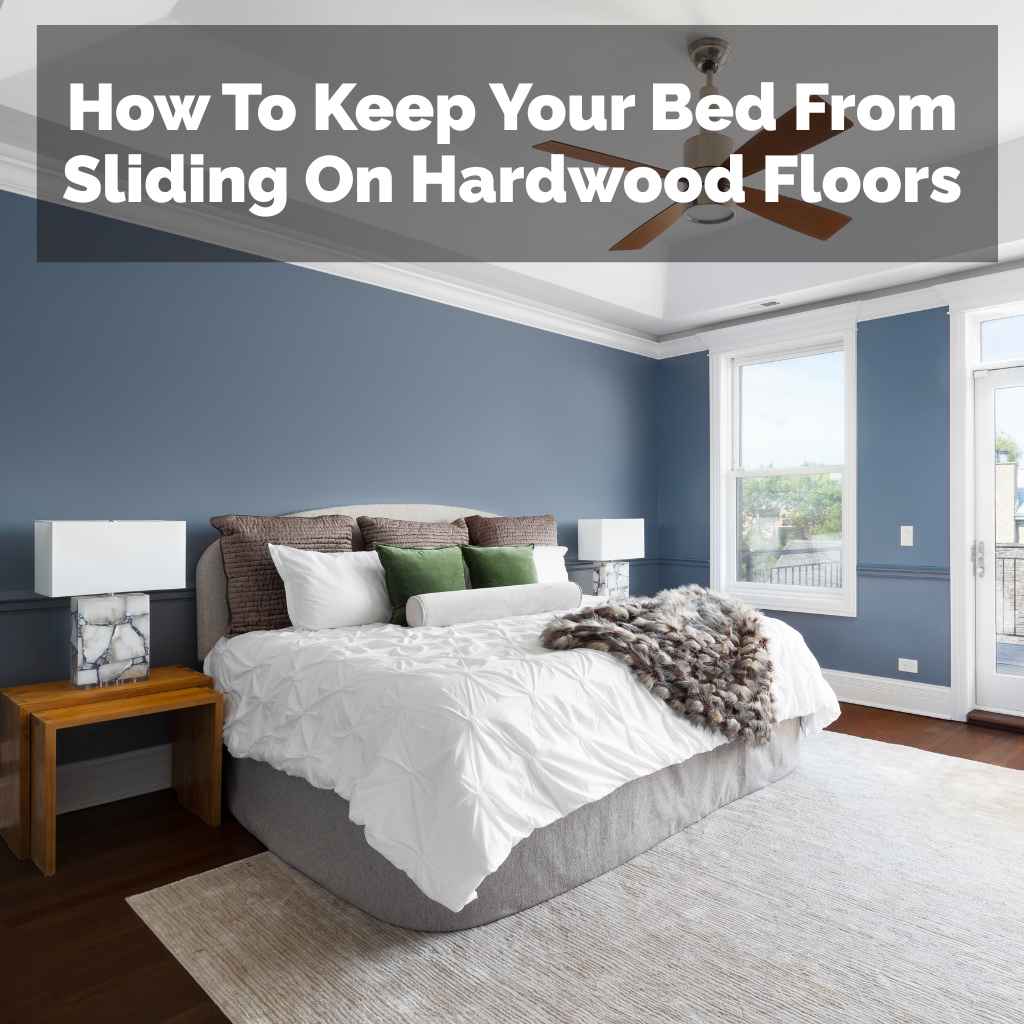
How To Keep Your Bed From Sliding On Hardwood Floors
You might wonder why this happens. Hardwood floors are beautiful, but they offer little grip. Beds are heavy.
Even small movements can cause them to inch away. It’s like trying to keep a rug from bunching up. It just wants to slide!
This guide will help you. We’ll look at why your bed slides. We’ll share simple fixes you can try right away.
We’ll also discuss longer-term solutions. You’ll learn how to keep your bed firmly in place. This will give you peace of mind and better sleep.
To stop your bed from sliding on hardwood floors, use non-slip pads under the bed legs or frame. Simple rug grippers, furniture coasters, or special bed stoppers work well. Ensure the floor is clean and dry before placing them.
Check the pads periodically to make sure they are still in place and effective.
Understanding Why Beds Slide on Hardwood
Many people face this issue. It’s not your fault. Smooth surfaces like hardwood just don’t have much friction.
Think about trying to walk on ice. Your feet slip easily. Your bed’s feet act the same way on your floor.
They lack the grip needed to stay put.
Several factors make this problem worse. The weight of your mattress and box spring is a big one. Add to that the weight of people sleeping in the bed.
This pressure pushes the bed legs down. But if there’s no grip, any movement – rolling over, sitting up, or even just the house settling – can cause a slide.
The type of bed frame matters too. Some frames have very small, smooth legs. These offer less surface area to grip.
Others might have wheels. Wheels are designed to roll, not to stay still. Metal legs can be especially slippery.
They often have a slick finish that offers zero traction.
Humidity can also play a small role. Wood expands and contracts with changes in the air. While this is usually slight, it can sometimes create tiny gaps or changes in how surfaces interact.
If the floor is very clean and dry, it’s easier for things to slide. Dust or a tiny bit of moisture can sometimes offer a tiny bit of temporary grip, but it’s not a reliable solution.
Most importantly, the simple physics of friction are at play. Friction is the force that opposes motion between two surfaces. Smooth surfaces have low friction.
Beds are heavy objects. When the force pushing the bed to move is greater than the available friction, it will slide. You need to increase that friction.

My Own Bed’s Slippery Saga
I remember setting up my first apartment. It had gorgeous, gleaming hardwood floors. I was so proud of them.
I brought in my bed frame and mattress. It looked perfect. Then came the first night.
As I got into bed, I heard this awful scraping sound. My whole bed had slid a good six inches towards the wall. It happened again when I turned over.
It was like I was on a tiny ice rink!
I remember feeling so annoyed. I’d spent so much time arranging the room. Now I had this rolling bed problem.
I tried pushing it back. It was heavy. I’d push it, and then it would just creep away again later.
It felt like a losing battle. I’d wake up in the morning and find it in a completely different spot. I even started worrying if the constant movement was bad for the floor or the frame.
One morning, I woke up to find my bedside table bumping against the wall because the bed had moved so much overnight. That was the last straw. I knew I had to find a real solution.
I started researching, and thankfully, there are some pretty simple ways to fix this without ruining your floors.
Why Your Bed Might Be Moving
Weight: Heavy mattresses and people add pressure.
Surface: Hardwood floors are smooth and offer little grip.
Frame Design: Small, smooth, or wheeled legs make sliding easier.
Lack of Friction: The basic physics of smooth surfaces letting objects slide.
Cleanliness: Dust or debris can sometimes make sliding worse if not managed.
Simple Fixes You Can Try Today
You don’t always need complicated tools. Many quick solutions exist. These use everyday items or simple products.
They can make a big difference right away.
One of the easiest things is to use rug grippers. These are usually thin, mesh pads. They have a grippy texture on both sides.
You can buy them for rugs. They work just as well under bed legs. Cut them to size if needed.
Place one under each leg or corner of your bed frame.
Another great option is furniture coasters or pads. These come in many materials. Look for ones made of rubber or a firm foam.
They add a layer of grip between the bed frame and the floor. Many are designed to be sticky on the bottom. Some are just made of a material that has good friction.
Sometimes, even small pieces of heavy-duty felt can help. Make sure the felt is thick and dense. It needs to be able to hold up to the weight.
Cut it into squares. Stick it to the bottom of your bed legs. This can give a bit more drag than smooth metal or plastic.
For beds with wheels, you can buy wheel stoppers or bed casters cups. These are designed to fit around the wheels. They have a base that sits on the floor.
This base is usually made of rubber or a material that won’t scratch. The cups hold the wheels in place, stopping them from rolling.
Make sure your floor is clean. Dust, pet hair, or small debris can act like tiny ball bearings. They allow the bed to slide more easily.
Give the area under your bed a good sweep or vacuum. Then wipe it down with a dry cloth.
If your bed frame has large, flat feet, you might be able to find rubber furniture feet. These can be stuck or screwed onto the existing feet. They provide a large, grippy surface.
This can be very effective for frames with wide, flat bases.
Quick Solutions Checklist
- Rug Grippers: Cut to size and place under legs.
- Furniture Coasters: Rubber or foam pads for extra grip.
- Heavy Felt Pads: Stick to the bottom of legs for drag.
- Wheel Stoppers: Use for beds with rolling casters.
- Clean Floors: Sweep or vacuum to remove debris.
- Rubber Furniture Feet: Stick-on or screw-on pads for large feet.
More Permanent Solutions for Bed Stability
While the quick fixes are great, sometimes you need something more robust. These options offer longer-lasting stability. They often involve specific products designed for furniture.
They can be a worthwhile investment for a truly stable bed.
Specialized bed leg anti-slip pads are available online and in home stores. These are often made of high-density rubber or a similar durable, grippy material. They are designed to withstand heavy weight and constant pressure.
Many come with strong adhesive backing.
Some bed frames come with adjustable feet. These are called levelers. If your frame has them, you can adjust them so they press firmly against the floor.
This takes up any slack. It makes the entire frame sit flush and stable. You might need to raise the frame slightly to adjust them.
A friend can help lift.
For very heavy beds or those with wide frames, consider anti-skid mats. These are larger than individual leg pads. They go under the entire bed frame.
They provide a uniform layer of friction. Ensure the mat is thick enough not to damage your floor. Also, make sure it’s breathable to avoid trapping moisture.
If your bed frame has legs that are far apart, corner grippers can be a good choice. These are shaped to fit the corners of the frame. They cover a wider area than just the leg tips.
This distributes the weight better and increases the contact point with the floor.
Another idea is to use non-slip carpet tape. This is a strong adhesive tape with a rough surface. You can apply it to the bottom of your bed legs.
Make sure to cover the entire surface that touches the floor. Be cautious with this, as some strong adhesives might be hard to remove later.
For a more involved but very secure solution, look at bed frame anti-slide brackets. These are metal or heavy-duty plastic pieces. They attach to the bottom of the bed frame and extend slightly to the floor.
They offer a very solid anchor point. Installation might require basic tools like a screwdriver.
Durable Bed Stability Options
- Rubber Bed Leg Pads: Designed for heavy weight and grip.
- Adjustable Levelers: For frames with threaded feet to ensure flush contact.
- Anti-Skid Mats: Large mats placed under the entire frame.
- Corner Grippers: For frames with widely spaced legs.
- Non-Slip Carpet Tape: Strong tape for legs (use with care).
- Anti-Slide Brackets: Secure attachments to the frame.
What to Consider Before Choosing a Solution
Before you buy anything, take a close look at your bed. What kind of frame do you have? Does it have legs?
Or is it a platform bed with a solid base? Does it have wheels? Knowing this helps you pick the right fix.
How heavy is your mattress? A lightweight foam mattress behaves differently than a heavy, thick hybrid or innerspring one. Heavier mattresses mean you need stronger, more durable anti-slide solutions.
The pads need to support significant weight without crushing.
What is the exact condition of your hardwood floors? Are they new and pristine? Or do they have some wear and tear?
Some solutions might be more aggressive than others. You don’t want to use something that could scratch or damage your flooring. Always test a small, hidden area first if you’re unsure.
How much movement are you experiencing? A slight creep might only need simple pads. If your bed is sliding several inches a night, you’ll need a more robust solution.
Think about the overall stability you need.
Consider how easy the solution is to install. Do you have basic tools like a screwdriver or hammer? Are you comfortable with DIY projects?
Some solutions are peel-and-stick. Others might require minor assembly. Choose something that fits your skill level and time commitment.
Finally, think about the aesthetic. Most solutions are hidden under the bed. But if your bed is low to the ground, you might see them.
Look for options that are discreet or come in colors that blend in. Black, brown, or clear options are usually available.
Factors for Selecting a Fix
- Bed Frame Type: Legs, platform, wheels?
- Mattress Weight: Lightweight or heavy?
- Floor Condition: New, worn, or delicate?
- Severity of Sliding: Slight creep or major shifts?
- Ease of Installation: DIY skills and tools.
- Appearance: Discreet or visible?
When to Worry About Your Bed Moving
A little bit of shifting can happen. But sometimes, excessive movement can signal other issues. It’s good to know when to pay closer attention.
If your bed is sliding so much that it’s creating noise constantly, that’s a sign. It might mean the frame is under stress. It could also be that the floor itself has an issue.
Very loud scraping or creaking could mean something is loose.
Is the movement causing damage? Are your walls getting scuffed? Is the bed frame itself showing signs of strain?
If the frame is bending or joints are coming apart, the sliding is a symptom of a bigger problem.
If you notice your floorboards are lifting or separating near where the bed is, that’s concerning. This could indicate an issue with the subfloor or the way the hardwood was installed. The bed’s movement might be exacerbating it.
Sometimes, a bed might slide because the floor isn’t perfectly level. This is more common in older homes. If the floor has significant slopes, the bed will naturally want to move towards the lower side.
This might not be a problem with the bed itself but with the house structure.
Look at the legs of your bed. Are they all the same height? Are they sturdy?
If one leg is shorter or damaged, the bed won’t sit evenly. This can lead to instability and sliding, even with grippy pads.
If you’ve tried multiple solutions and your bed still slides significantly, it might be time to consult a professional. A handyman or carpenter could check your floor structure and your bed frame for underlying issues.
Real-World Scenarios and Solutions
Let’s look at some common bed types and how to fix their sliding issues.
The Metal Bed Frame with Small Legs
Many modern bed frames are metal. They often have four small, often cylindrical legs. These legs can be very smooth, especially if they are metal.
They offer little grip on hardwood.
Solution: Use small, circular rubber furniture coasters. These fit snugly under the leg. Look for ones with a sticky bottom or a high-friction surface.
For extra security, use rug grippers cut to size. Ensure the metal leg is clean before applying any adhesive pad.
The Wooden Platform Bed
Platform beds often have wider, flatter feet or a solid base that sits directly on the floor. These are great for support but can still slide if the bottom surface is smooth.
Solution: Consider anti-skid mats that go under the entire base. If it has distinct feet, use larger rubber furniture feet pads. These distribute the weight over a larger area.
For very wide bases, you might need several large pads placed strategically.
The Four-Poster Bed
Four-poster beds are often heavy and have substantial wooden posts. The feet can vary greatly in size and shape.
Solution: Measure the base of each post. Use heavy-duty felt pads or rubber furniture coasters that match the size. For maximum stability, consider anti-slide brackets that can be attached discreetly to the bottom of the posts and anchor into the floor.
This is a more permanent fix.
The Bed with Wheels (Casters)
Beds with wheels are notorious for sliding. The wheels are designed to roll, making them perfect for moving the bed. But they do nothing for stability.
Solution: Wheel stoppers or caster cups are essential here. These are specifically made to cradle the wheels. They prevent rolling.
Make sure the cups are the right size for your wheels. For added security, choose cups with a non-slip base that grips the floor itself.
Scenario-Based Fixes
- Metal Frame (Small Legs): Rubber coasters, rug grippers.
- Wooden Platform Bed: Anti-skid mats, large rubber pads.
- Four-Poster Bed: Heavy felt, rubber coasters, anti-slide brackets.
- Bed with Wheels: Wheel stoppers/caster cups are a must.
What This Means for Your Bedroom
The good news is that preventing your bed from sliding is usually quite manageable. It’s an issue with a solution. Knowing why it happens helps you pick the right fix.
For most people, a sliding bed is just an annoyance. It makes the room feel less put together. It can disrupt sleep if you wake up to a shifted position.
It might even make you feel less safe if the bed moves unexpectedly.
The key is to increase the friction between your bed frame and the hardwood floor. You are essentially adding a grippy layer. This layer acts as a buffer.
It stops the smooth surfaces from easily sliding past each other.
Think about what “normal” is for your bedroom. A very slight, almost imperceptible movement might be okay for some. But if your bed is shifting inches or making loud noises, it’s not normal and needs attention.
You might need to check your chosen solution every few months. Pads can wear down. Adhesives can loosen over time.
A quick inspection ensures your fix is still working effectively. This is especially true in high-traffic areas or with very heavy beds.
Ultimately, a stable bed contributes to a peaceful bedroom environment. It removes a common source of frustration. It allows you to sleep soundly without worry.
The effort to secure your bed is well worth the peace of mind it brings.

Frequent Questions About Sliding Beds
Will furniture pads scratch my hardwood floors?
Most furniture pads made for hardwood floors are designed not to scratch. Look for pads made of soft rubber, felt, or specialized non-marking materials. Always test a small, hidden area first if you have any concerns about your specific floor finish.
How do I clean under my bed if it’s hard to move?
Use a vacuum with an extension hose and a crevice tool to get under the bed. A long-handled broom or mop can also help push out dust bunnies. If you need to lift the bed to clean properly, ask a friend for help.
That’s when it’s easiest to apply new pads.
Can I use double-sided tape to stop my bed from sliding?
Regular double-sided tape might work temporarily, but it often doesn’t hold up to the weight of a bed. It can also leave sticky residue on your floors. Heavy-duty carpet tape or specialized furniture grippers are usually much more effective and easier to remove cleanly.
My bed frame has adjustable feet. How do I use them?
Adjustable feet, also called levelers, screw into the bottom of the bed frame. You usually turn them clockwise to lower them and counter-clockwise to raise them. You’ll need to slightly lift each corner of the bed to reach the feet.
Adjust them until they press firmly against the floor. This should make the frame sit level and stable.
What if my bed is sliding because the floor is uneven?
If the floor is significantly uneven, the bed will naturally try to settle to the lowest point. You might need to use thicker or layered pads on the higher side. In some cases, the unevenness might be a structural issue with your house that a carpenter could assess.
For minor unevenness, specialized adjustable levelers on the bed frame itself can help compensate.
How often should I replace bed leg pads?
This depends on the quality of the pads and the weight of your bed. High-quality rubber pads might last for years. Cheaper felt pads or adhesive solutions may need replacing every 6-12 months.
Check them periodically. If they look worn, compressed, or are peeling, it’s time for new ones.
Conclusion
Dealing with a sliding bed on hardwood can be a nuisance. But as you’ve seen, there are many effective ways to solve it. From simple rug grippers to specialized anti-slide brackets, you can find a solution that works for you.
The goal is to increase friction. This keeps your bed stable. Enjoy your peaceful, stable sleep space!
Sponsored / affiliate links. As an Amazon Associate I earn from qualifying purchases. I may earn additional commission from eligible campaigns.