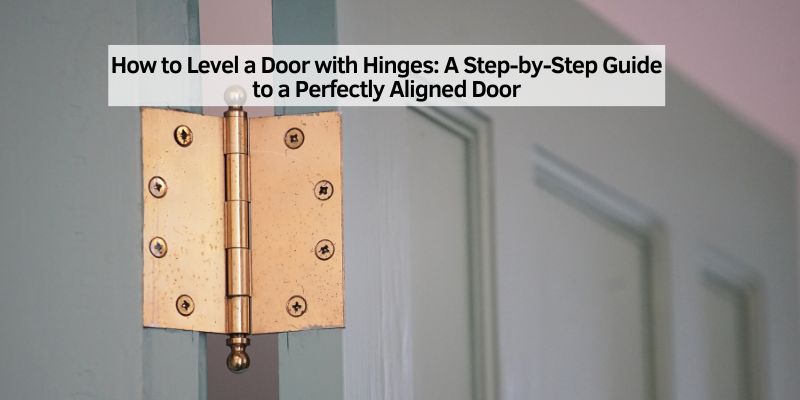
How to Level a Door with Hinges: A Step-by-Step Guide to a Perfectly Aligned Door
Hey there! If you’ve ever noticed your door sticking, scraping the floor, or not closing properly, you’re not alone. I’ve been there, frustrated by a door that just won’t cooperate. Over the years, I’ve learned that leveling a door with its hinges is often the fix you need. It’s a practical, hands-on project that can save you from calling a handyman. In this guide, I’m sharing everything I’ve discovered about how to level a door with hinges. Whether you’re a DIY newbie or a seasoned home improver, I’ve got you covered with clear steps, tips, and tricks to make your door swing smoothly. Let’s dive in and get that door working like a dream!
Why Does a Door Need Leveling?
Doors can become misaligned for all sorts of reasons. When I first tackled this issue in my home, I didn’t realize how common it is. Houses settle over time, especially in older homes like mine. The foundation shifts slightly, and that can throw doors out of whack. Humidity is another culprit—wood expands and contracts with moisture, which can mess with the door’s fit. Then there’s everyday wear and tear. Hinges loosen, screws wiggle free, and suddenly your door is scraping the floor or refusing to latch.
A misaligned door isn’t just annoying; it can cause bigger problems. I’ve seen doors that stick so badly they damage the frame or floor. Plus, a door that doesn’t close properly can let drafts in, driving up your energy bills. Leveling a door with its hinges is a straightforward way to fix these issues. You’re adjusting how the door sits in its frame, using the hinges as your main tool. It’s like giving your door a little tune-up to make it work smoothly again.
Tools and Materials You’ll Need
Before we get started, let’s talk about what you’ll need. I like to gather everything upfront so I’m not running to the hardware store mid-project. Here’s a simple list of tools and materials that have worked for me:
| Tool/Material | Purpose |
|---|---|
| Screwdriver (Phillips or flathead) | Tightening or loosening hinge screws. |
| Level | Checking if the door is plumb and aligned. |
| Shims (cardboard or plastic) | Adjusting hinge position for fine-tuning. |
| Drill (optional) | Drilling new screw holes if needed. |
| Wood filler | Filling old screw holes for a secure fit. |
| Sandpaper | Smoothing out rough spots if you’re filling holes. |
| Tape measure | Measuring gaps and alignment. |
| Pencil | Marking spots for adjustments. |
| Replacement screws (longer ones) | Securing hinges if old screws are stripped. |
I keep these in my toolbox, and they’ve never let me down. If you don’t have shims, you can even use thin cardboard, like from a cereal box—it works in a pinch!
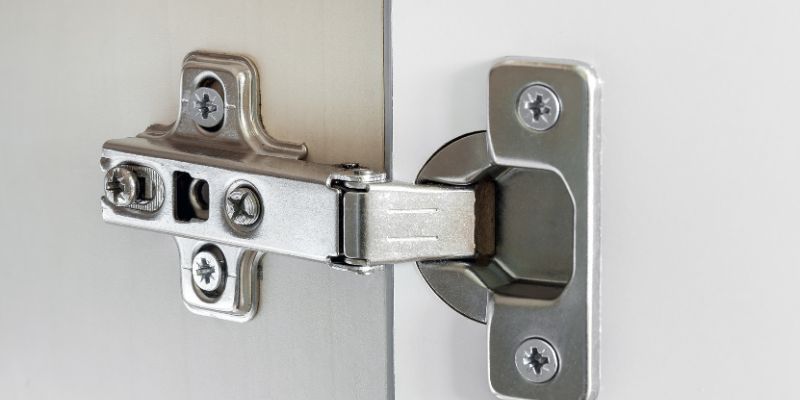
Step-by-Step Guide to Leveling a Door with Hinges
Now, let’s get to the good stuff. I’m going to walk you through the process I use to level a door. It’s not as hard as it sounds, and with a little patience, you’ll have that door swinging perfectly.
Step 1: Inspect the Door’s Alignment
First, I always check what’s going on with the door. Open and close it slowly to see where it’s sticking. Is it rubbing at the top, bottom, or sides? Does it latch properly? I use a level to check if the door is plumb—meaning it’s perfectly vertical. Place the level along the edge of the door when it’s closed. If the bubble isn’t centered, the door is out of alignment.
I also look at the gaps around the door. There should be a small, even gap (about 1/8 inch) between the door and the frame on all sides. If the gap is wider at the top or bottom, that’s a clue about which hinges need adjusting. Take your time here—it’s like being a detective, figuring out exactly what’s off.
Step 2: Tighten Loose Hinge Screws
Most of the time, I find that loose screws are the root of the problem. Over time, screws can work themselves loose, especially in doors that get a lot of use. Grab your screwdriver and tighten every screw on all the hinges—top, middle, and bottom if your door has three. I usually start with the hinge that seems closest to the problem area. For example, if the door is sticking at the top, I focus on the top hinge first.
If a screw just spins without tightening, it’s stripped. I’ve run into this a lot in older homes. Replace it with a slightly longer screw (make sure it’s the same type, like a flathead or Phillips). The new screw will grab fresh wood and hold better. Be careful not to overtighten, though—you don’t want to strip the hole again.
Step 3: Add Shims to Adjust Hinge Position
If tightening screws doesn’t fix the issue, shims are my go-to trick. Shims are thin pieces of material (like cardboard or plastic) that you slip behind a hinge to push the door slightly in one direction. For example, if the door is rubbing at the top on the latch side, adding a shim behind the top hinge can tilt the door just enough to fix it.
Here’s how I do it: Unscrew the hinge from the door frame (not the door itself). Cut a piece of shim material to fit behind the hinge—it should be about the size of the hinge plate. Place the shim between the hinge and the frame, then screw the hinge back in. I usually start with a thin shim, like a single layer of cardboard, and test the door. You can stack shims if you need more adjustment. This part takes some trial and error, but it’s super satisfying when you get it right.
Step 4: Check for Frame Issues
Sometimes, the door itself isn’t the problem—the frame is. I learned this the hard way when I spent hours adjusting hinges only to realize my door frame was slightly warped. Use your level to check the frame. If it’s not plumb, you might need to shim the hinges on the frame side to compensate.
In one of my projects, the frame was so out of alignment that I had to remove the trim and add shims behind the frame itself. It’s a bit more work, but it fixed the issue permanently. If the frame is severely damaged, you might need a professional, but most minor frame issues can be handled with shims and patience.
Step 5: Test and Fine-Tune
After making adjustments, I always test the door. Open and close it a few times to see if it’s still sticking or if the latch catches properly. Check the gaps again with your tape measure. If the door still isn’t perfect, go back to the hinges and add or remove shims as needed. Sometimes, I’ll loosen the screws slightly and tap the hinge gently to nudge it into place before tightening again.
This step is all real-time information—you’re feeling out what the door needs. It’s okay if it takes a few tries. When I first started, I’d get frustrated, but now I know it’s just part of the process.
Step 6: Fill Old Screw Holes (If Needed)
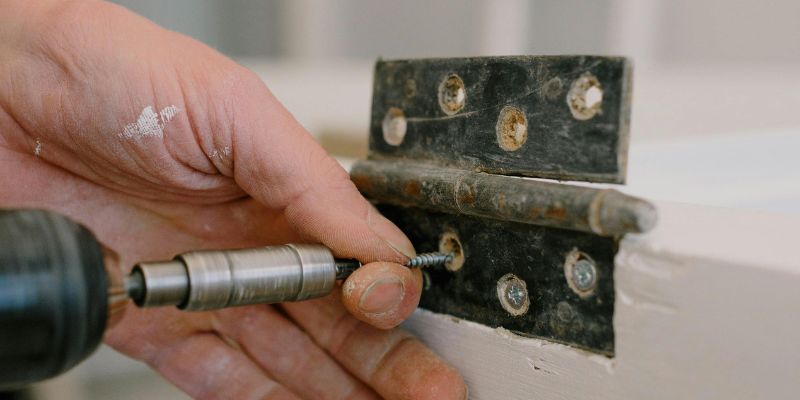
If you’ve had to move a hinge or replace stripped screws, you might have old screw holes that weaken the wood. I’ve dealt with this in my old farmhouse, where the wood was practically crumbling. Use wood filler to fill those holes. Apply it with a putty knife, let it dry according to the package instructions, and sand it smooth. Then, drill a pilot hole for the new screw. This gives the screw something solid to grip, making your repair last longer.
Step 7: Lubricate the Hinges
Once the door is level, I like to give the hinges a little love. A drop of lubricant, like WD-40 or even cooking spray in a pinch, can make the door swing smoother and prevent squeaking. Apply it to the hinge pins and work the door back and forth to spread it around. Wipe off any excess to keep things clean.
Step 8: Final Checks and Cleanup
Before calling it a day, I do one last check. I make sure the door opens and closes smoothly, the latch catches without force, and there’s no scraping or sticking. I also clean up any mess—wood filler dust, stray shims, or tools scattered around. A quick sweep and a pat on the back for a job well done make the whole process feel complete.
Common Mistakes to Avoid
I’ve made my fair share of mistakes when leveling doors, so let me save you some trouble. First, don’t overtighten screws—it can strip the wood and make things worse. Second, don’t skip the level. Eyeballing it might seem faster, but it’s a recipe for frustration. Third, don’t assume the door itself is the problem. Check the frame and hinges first, as they’re often the culprits. Finally, don’t rush the shimming process. Small adjustments make a big difference, so take your time.
When to Call a Professional
Most of the time, leveling a door is a DIY job. But there are moments when I’ve had to admit defeat and call in a pro. If your door frame is severely warped or damaged, or if the door itself is cracked or warped beyond repair, a professional can assess whether you need a new door or frame. Also, if you’ve tried everything and the door still won’t align, there could be a structural issue with your home’s foundation. In those cases, it’s worth the investment to get expert help.
Tips for Long-Term Door Maintenance
Once your door is level, you’ll want to keep it that way. I’ve learned a few tricks to make doors last longer. Check hinge screws every year or so—tighten them before they get too loose. If you live in a humid area, like I do, consider sealing your door with paint or varnish to protect it from moisture. And don’t slam doors! It’s tempting, but it can loosen hinges and throw everything out of alignment again.
Conclusion
Leveling a door with hinges might sound intimidating, but it’s one of those home improvement projects that feels so rewarding when you’re done. I remember the first time I fixed a sticky door in my house—it was like solving a puzzle. With just a screwdriver, a level, and some shims, you can transform a frustrating door into one that glides open and shuts perfectly. This guide has walked you through every step, from spotting the problem to making precise adjustments.
You don’t need to be a pro to do this—just a little patience and the right tools. So, grab your screwdriver and give it a try. You’ll be amazed at how much better your door works, and you’ll have a new skill to show off. Here’s to smooth-swinging doors and the satisfaction of a job well done!
Frequently Asked Questions
Why is my door sticking even after tightening the hinges?
If tightening didn’t help, the door or frame might be out of alignment. Check with a level to see if the door is plumb. You may need to add shims behind the hinges or check if the frame itself is warped. Sometimes, humidity causes the wood to swell, so sanding the sticking edge lightly can help.
Can I use any material for shims?
Yes, in a pinch, you can use cardboard, like from a cereal box, or even thin plastic. I’ve used both with success. Just make sure the material is thin enough to fit behind the hinge and sturdy enough to hold up under pressure.
How do I know if my door frame is the problem?
Place a level on the frame’s vertical and horizontal parts. If the bubble isn’t centered, the frame is out of plumb. You might need to shim the frame or consult a professional if it’s severely warped.
Do I need to remove the door to level it?
Usually, no. Most hinge adjustments can be done with the door in place. If you need to replace hinges or make major frame adjustments, removing the door might make it easier, but it’s not always necessary.
How often should I check my door’s alignment?
I check my doors once a year, especially after seasonal changes like winter or summer, when humidity and temperature shifts can affect wood. Tightening screws and lubricating hinges regularly keeps things in good shape.