How To Pack Lampshades: Essential Moving Guide
Quick Summary: Packing lampshades for moving is simple with the right materials and techniques. Protect your delicate shades by wrapping them securely in bubble wrap or packing paper, then placing them in sturdy boxes, ensuring they have ample padding to prevent crushing and damage during transit.
Moving can feel like a puzzle, and one piece that often causes a bit of worry is how to pack those beloved lampshades. They’re delicate, can be oddly shaped, and you really don’t want them arriving at your new home with dents or tears. It’s a common moving headache, but don’t fret! With a few simple steps and the right supplies, you can ensure your lampshades make it to their new destination looking as good as new. We’ll walk through it together, step-by-step, so you can pack with confidence.
Why Proper Lampshade Packing Matters
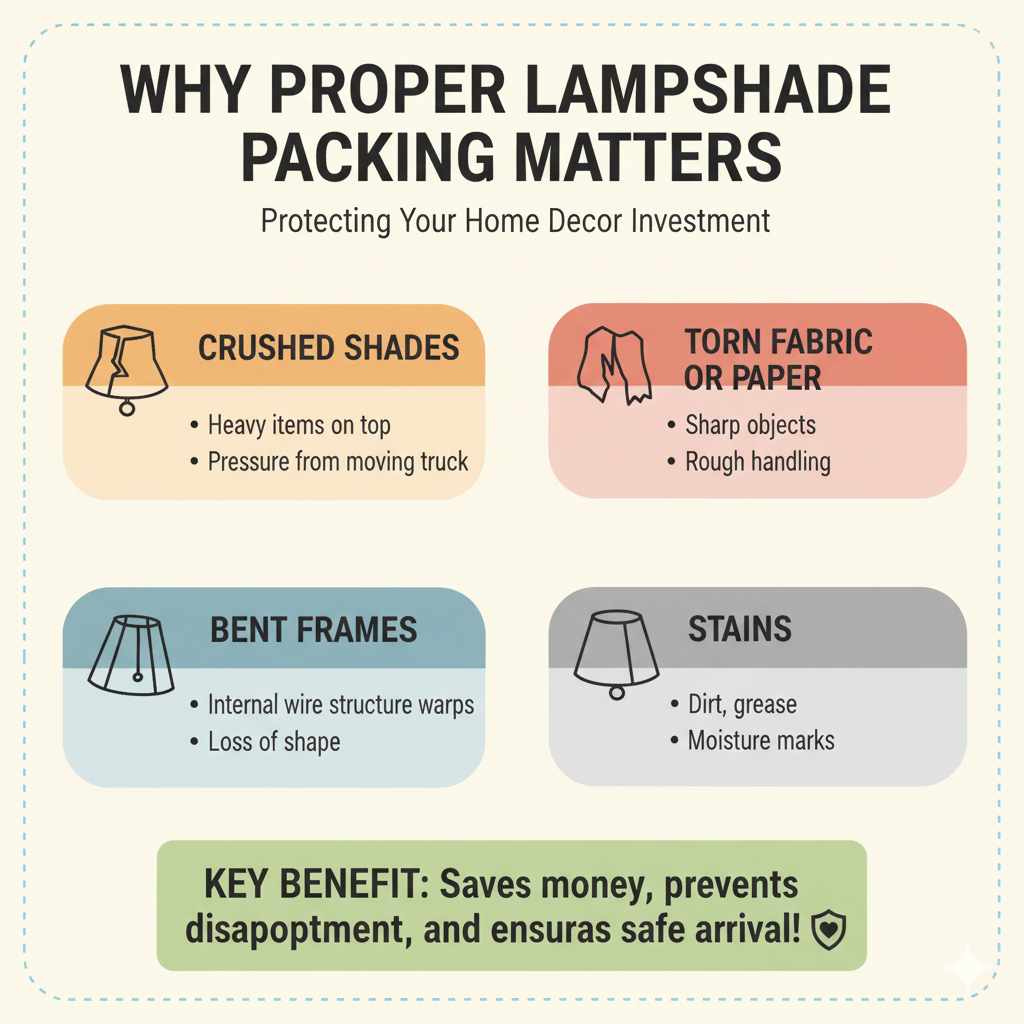
Lampshades are more than just decorative pieces; they diffuse light, creating ambiance and completing the look of a room. When you’re moving, these often-fragile items are at risk. Improper packing can lead to:
- Crushed Shades: Heavy items placed on top, or even just the pressure of a cramped moving truck, can easily flatten a shade.
- Torn Fabric or Paper: Sharp objects or rough handling can snag and tear delicate materials.
- Bent Frames: The internal wire structure can warp, making the lampshade lose its shape.
- Stains: Dirt, grease, or moisture can leave unsightly marks.
Taking a little extra time and care to pack your lampshades properly will save you money on replacements and the disappointment of damaged goods. Think of it as giving them a cozy, protective travel blanket!
Gather Your Packing Supplies
Before you start, make sure you have everything you need. Having your supplies ready makes the packing process much smoother. Here’s what you’ll want to have on hand:
- Boxes: Sturdy, appropriately sized boxes are key. You might need a few different sizes depending on your lampshades.
- Bubble Wrap: This is your best friend for cushioning.
- Packing Paper (or Newspaper): Great for filling voids and adding an extra layer of protection.
- Painter’s Tape: Gentle on surfaces and easy to remove.
- Scissors or a Box Cutter: For cutting tape and paper.
- Markers: To label your boxes clearly.
- Optional: Cardboard Sheets: For extra rigidity on larger or flatter shades.
You can find most of these supplies at your local hardware store, office supply store, or online. For boxes, consider reusing ones from grocery stores if they are strong and clean, or purchase specialized moving boxes for extra durability.
Step-by-Step Guide: How to Pack Lampshades for Moving
Let’s get down to business. Packing lampshades is straightforward when you follow these steps. We’ll break it down for different types of shades, too.
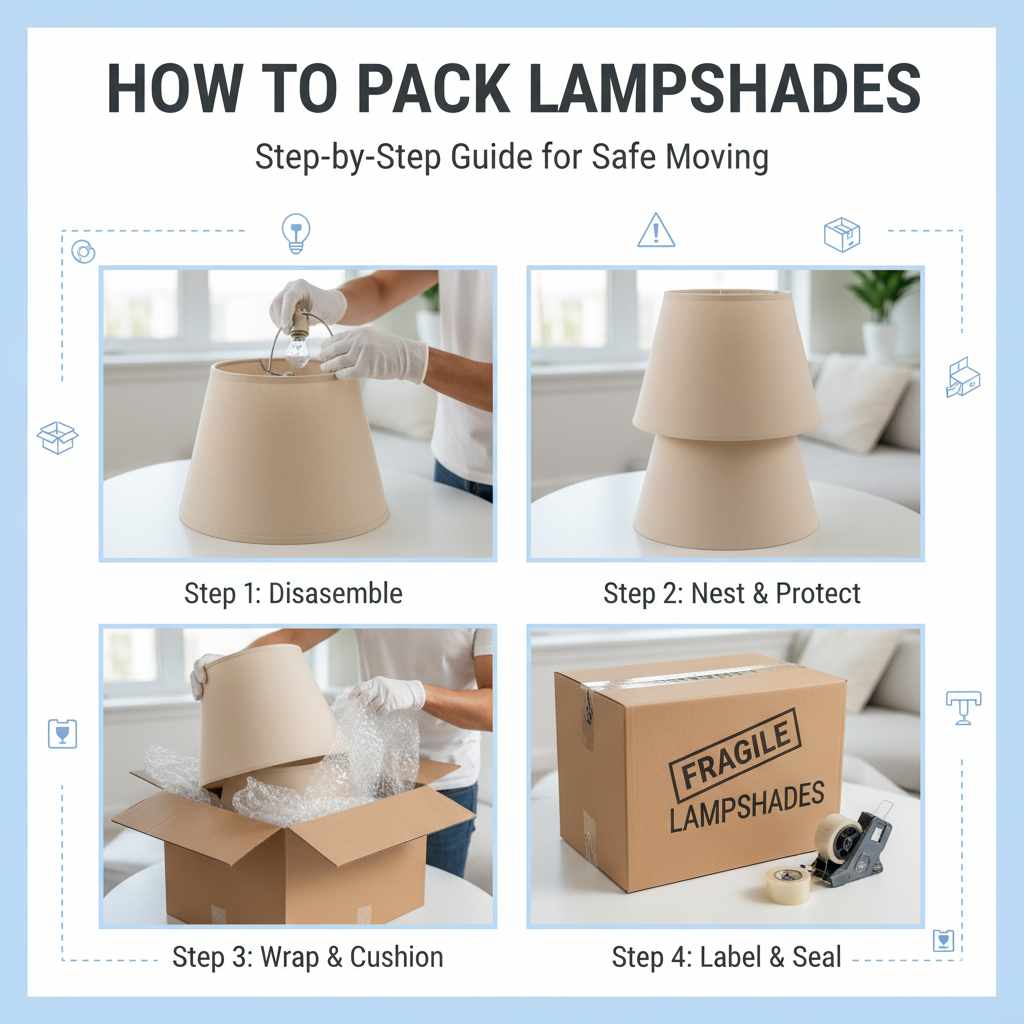
Step 1: Prepare Your Lampshade
First, give your lampshade a quick clean. Dust it gently with a soft cloth or a vacuum cleaner attachment. If it’s washable, follow the manufacturer’s instructions. For fabric shades, a lint roller can work wonders. Ensure it’s completely dry before packing. If there are any loose threads or minor tears, consider a quick repair with fabric glue or a needle and thread if it won’t compromise the shade’s structure. This pre-packing clean ensures no dirt gets trapped during transit.
Step 2: Choose the Right Box
The box is your lampshade’s mobile home. The ideal scenario is a box that is slightly taller than the lampshade, allowing for padding on the top and bottom. If you can’t find a box that’s a perfect fit, you might need to:
- Use a Taller Box: If the box is too tall, you can cut it down to size or fill the extra space with crumpled packing paper or bubble wrap.
- Use a Wider Box: If the box is wider, that’s usually fine, as you’ll be filling the void with cushioning material anyway. The goal is to prevent the shade from shifting.
Tip: Never try to force a lampshade into a box that’s too small. This is a sure way to damage it. It’s always better to use a slightly larger box and fill the extra space.
Step 3: Protect the Lampshade with Padding
This is where the magic happens. Your lampshade needs a cozy, protective layer.
For Fabric or Paper Shades:
- Start by loosely filling the inside of the lampshade with crumpled packing paper or a few clean plastic bags. This helps maintain its shape and provides internal support. Don’t overstuff, as this can warp the shade.
- Next, wrap the entire outside of the lampshade with a generous layer of bubble wrap. Ensure the bubbles are facing outwards to provide the best cushioning. Secure the bubble wrap with painter’s tape.
- For extra fragile shades, you can add a second layer of bubble wrap or wrap it in packing paper first, then bubble wrap.
For Hardback or Drum Shades:
- These are generally more robust, but still need protection. Start by wrapping the shade in a layer of packing paper to prevent scuffs and scratches.
- Then, add a layer of bubble wrap, securing it with painter’s tape.
- If the shade is particularly large or prone to denting, consider cutting out two cardboard circles that are slightly larger than the top and bottom openings of the shade. Place one on top and one on the bottom, between the shade and the bubble wrap, for added rigidity.
Pro Tip: If you’re packing multiple lampshades of the same size, you can stack them inside a larger box, with ample padding between each one. However, it’s generally safer to pack each lampshade in its own box or at least ensure significant space and padding if boxing multiples.
Step 4: Place the Lampshade in the Box
Carefully place the padded lampshade into its chosen box. The padded shade should fit snugly but not be jammed in. If there’s significant empty space around the shade, fill it with more crumpled packing paper or bubble wrap. The goal is to prevent any movement inside the box during transit. Gently shake the box; if you can feel the lampshade shifting, add more padding.
Important: Never place heavy items on top of or inside a box with lampshades. Lampshades should always be packed in their own boxes, or at the very top of a box with nothing else on top of them.
Step 5: Seal and Label the Box
Once the lampshade is secure and the box is filled with padding, close the box flaps. Use strong packing tape to seal the box securely along all seams and edges. Then, using your marker, clearly label the box. Include:
- “FRAGILE – LAMPSHADE”
- The room it belongs in at your new home (e.g., “Living Room,” “Bedroom”)
- An arrow indicating which way is UP
Clear labeling is crucial for movers and for you when unpacking. It helps ensure these delicate items are handled with care and go to the right place in your new home.
Packing Different Types of Lampshades
While the basic principles remain the same, certain lampshade types might benefit from slight adjustments to the packing process.
Drum Shades
These are cylindrical and can be quite sturdy. The main concern is scuffing or denting the sides. After cleaning, wrap them in packing paper, then a layer of bubble wrap. If they are very large, consider adding cardboard discs to the top and bottom as mentioned earlier.
Empire or Cone Shades
These have a wider bottom than top. The key is to protect the sides and the delicate slope. Ensure the internal stuffing helps maintain the cone shape. Wrap generously with bubble wrap, paying extra attention to the top and bottom edges.
Pleated or Fabric Shades
These are often the most delicate. Be very gentle. Ensure the pleats aren’t crushed. Internal stuffing is important. Use plenty of soft packing paper or tissue paper inside, then wrap the exterior with bubble wrap, ensuring no sharp edges of the bubble wrap press directly into the fabric. A double layer of bubble wrap is a good idea.
Glass or Crystal Shades
If your lampshade has glass or crystal elements, extra caution is needed. Wrap each element individually in tissue paper or soft cloth before wrapping the entire shade in multiple layers of bubble wrap. Place these in their own sturdy box with plenty of cushioning on all sides. Consider using double-walled boxes for maximum protection.
What NOT to Do When Packing Lampshades
Just as important as knowing what to do is knowing what to avoid. Here are some common mistakes:
- Packing them flat: Unless it’s a specific type designed to fold, never flatten a lampshade.
- Using newspaper directly on delicate fabrics: The ink can transfer. Use packing paper or tissue paper as a barrier.
- Overcrowding boxes: Each lampshade, especially larger or more delicate ones, should have ample space and padding.
- Leaving empty space: This allows for shifting, which can lead to damage.
- Using boxes that are too small: This is a recipe for disaster.
- Stacking heavy items on top: Lampshades are not designed to bear weight.
Avoiding these pitfalls will significantly increase the chances of your lampshades arriving safely.
Table: Packing Material Comparison
Choosing the right packing materials can make a difference. Here’s a quick comparison:
| Material | Pros | Cons | Best For |
|---|---|---|---|
| Bubble Wrap | Excellent cushioning, protects against impact, readily available. | Can be bulky, may leave temporary indentations on very soft fabrics. | All types of lampshades, especially for outer layers. |
| Packing Paper | Fills voids, provides a soft buffer, good for initial wrapping. | Offers less impact protection than bubble wrap, ink can transfer. | Stuffing insides, initial wrapping for hard shades, barrier for delicate fabrics. |
| Cardboard Sheets/Discs | Adds rigidity, protects edges and flat surfaces. | Adds weight, requires cutting to size. | Reinforcing drum shades or large flat shades. |
| Plastic Bags (clean) | Keeps contents dry, can fill small voids. | Offers minimal cushioning on its own. | Stuffing insides of shades, especially if concerned about moisture. |
Should You Pack Lampshades Separately?
For most lampshades, especially those made of fabric, paper, or with delicate details, packing them separately is highly recommended. This ensures they aren’t crushed by heavier items and have enough surrounding padding. If you have very sturdy, small, identical drum shades, you might be able to pack two or three in a larger box, but only if they are well-protected with ample padding between each one and around the sides. However, the safest bet for peace of mind is one lampshade per box, or at least ample space and cushioning if sharing a box with similar items.
The moving industry often recommends packing fragile items individually. For instance, the Federal Emergency Management Agency (FEMA) emphasizes careful packing of valuables to prevent loss and damage during stressful events, which can include moving.
Tips for Moving Lamps with Shades Attached
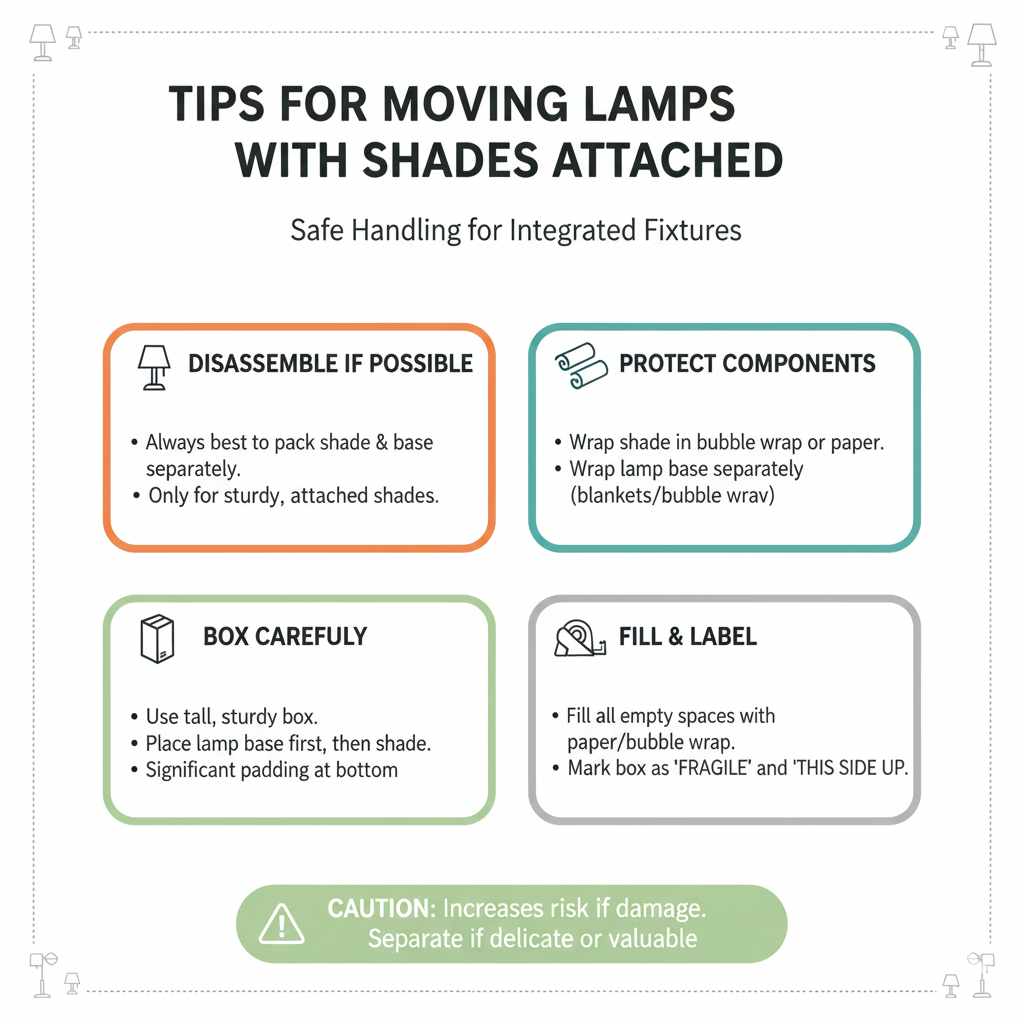
If you’re moving the lamp with the shade still attached, you’ll need to adapt your approach slightly. This is generally only advisable for very sturdy lamps and shades that are securely attached.
- Disassemble if Possible: If the shade can be easily removed, it’s always best to pack it separately using the methods described above.
- Protect the Shade: Wrap the shade as you normally would (bubble wrap, paper).
- Protect the Lamp Base: Wrap the lamp base separately in bubble wrap or moving blankets.
- Box Carefully: Use a box that is tall enough for the entire lamp. Place the lamp in the box first, then carefully position the shade around it, or place the shade on top. Ensure there is significant padding at the bottom of the box.
- Fill Voids: Fill all empty spaces in the box with crumpled packing paper or bubble wrap to prevent any part of the lamp or shade from shifting.
- Label Clearly: Mark the box as “FRAGILE” and indicate “UP.”
Caution: Moving lamps with shades attached increases the risk of damage to both components. If the lampshade is particularly delicate, valuable, or oddly shaped, it’s almost always better to remove it and pack it separately.
Frequently Asked Questions (FAQ)
Q1: Can I use old newspaper to pack my lampshades?
While newspaper can be used as a filler, it’s best to avoid direct contact with delicate fabric or paper lampshades. The ink can transfer and cause stains. Use packing paper or tissue paper for the inner layer and as a buffer, and then use newspaper (or more packing paper) for filling voids in the box.
Q2: What is the best way to pack a very large or extra-wide lampshade?
For very large lampshades, you might need to get creative with box sizing. Consider using a tall wardrobe box or a specialty lamp box. If you can’t find a suitable box, you may need to construct one from smaller boxes or reinforce a large, sturdy box with extra cardboard on the inside. Ensure you use multiple layers of bubble wrap and plenty of filler to prevent shifting.
Q3: How do I protect the frame of my lampshade?
The frame is usually protected by the padding around the shade. Ensure you wrap the entire shade, including the top and bottom edges where the frame is most exposed, with at least one full layer of bubble wrap. If the frame seems particularly delicate or prone to bending, consider adding a second layer of bubble wrap or reinforcing the corners with extra padding.
Q4: What if my lampshade is made of a special material, like silk or straw?
For silk or other delicate fabrics, use acid-free tissue paper for the first layer of wrapping. This prevents yellowing or staining. Then, use bubble wrap for cushioning. For straw or natural materials, be extra careful to avoid snagging or crushing. Gentle handling and ample soft padding are key. Avoid moisture, as it can damage these materials.
Q5: Should I pack lampshades with the finial still attached?
It’s generally best to remove the finial (the decorative knob that screws onto the top of the lamp) before packing. Finials can be small and easily lost, but they can also snag on packing materials or the lampshade itself, potentially causing damage. Pack the finial separately in a small plastic bag and label it clearly, perhaps taping it to the lamp’s cord or to the lamp itself if you’re packing the lamp and shade together.
Q6: How much padding is enough?
You can never have too much padding for fragile items! For lampshades, aim for at least one full layer of bubble wrap around the entire shade, with an additional layer for extra peace of mind, especially for valuable or delicate shades. The inside should be lightly stuffed, and the outside should have enough filler material in the box to prevent any movement. If you can still feel the shade shifting when you gently shake the box, add more padding.
Conclusion
Packing lampshades might seem like a small detail in the grand scheme of moving, but taking the time to do it right ensures these essential decorative elements arrive at your new home in perfect condition. By gathering the right supplies, preparing your shades, and using a methodical approach with plenty of cushioning, you can confidently pack away your lighting fixtures. Remember to label your boxes clearly, and you’ll be enjoying your beautifully lit spaces in no time. Happy moving!