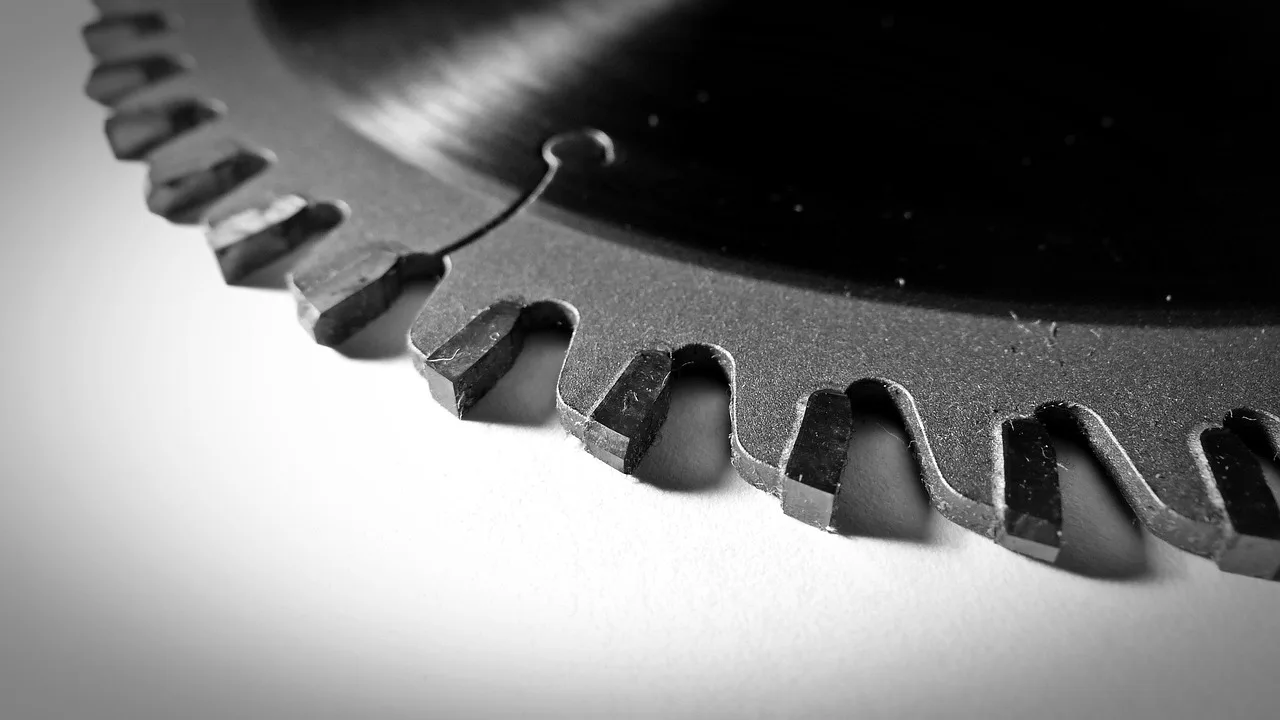
How to Sharpen a Circular Saw Blade: When and How
A carbide-tipped circular saw blade is worth sharpening when the teeth still have full carbide tips, the plate stays flat, and the cut problem does not come from setup or buildup; replace it if teeth are missing, the plate is warped, or the kerf has been damaged. Keep cutting with a damaged blade and you can scorch wood, strain the saw, and pay for bad cuts or a ruined blade. This guide shows how to inspect, clean, sharpen, or replace the blade at the lowest safe cost.
When should you sharpen or replace a blade?


A blade is worth sharpening when cut quality drops, but the carbide tips are intact, the plate is flat, and the saw is set up correctly. If the problem comes from pitch buildup, a misaligned saw, or the wrong tooth count, sharpening will not fix it. Damage and wobble are the hard stop.
Signs the blade is dull
Dullness usually shows up as slower feed, more burning, rougher edges, and more force needed to push the cut. That can come from rounded cutting edges, but the same symptoms also appear with resin on the blade or a blade that does not match the material. Clean first, then judge the teeth.
Suppose a 7 1/4-inch framing blade starts leaving fuzzy edges on 2x lumber and the saw bogs down even with a steady feed. If the teeth still have intact carbide points and the blade plate is flat, sharpening is reasonable. If one tooth is gone or a tip is chipped through the carbide, replacement is the safer call.
Signs the saw setup is the real problem
A blade that looks dull may actually be fighting a wrong setup. A low-tooth-count framing blade on plywood can tear the surface, while a fine-tooth blade on thick framing lumber can feed slowly and heat up. A dirty arbor flange, loose blade clamp, or bent washer can also create cut problems that look like dullness.
When sharpening stops making sense
Stop at replacement if the plate is cracked, teeth are missing, carbide tips are burned or broken, or the blade shows excess wobble or runout. Repair work on a damaged plate is not worth the risk. For many low-cost blades, replacement is cheaper than paying for sharpening plus shipping or service time.
What the numbers and markings mean
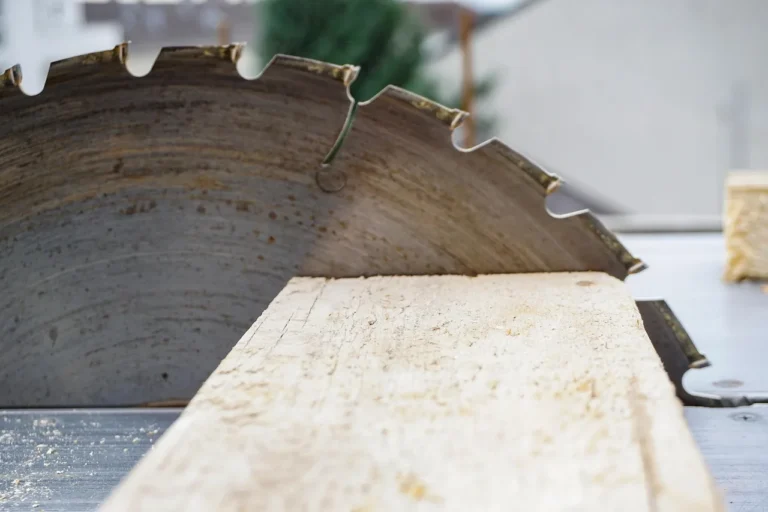
The markings tell you whether the blade fits the saw and what it is built to cut. The key numbers are diameter, tooth count, arbor size, kerf thickness, tooth material, and hook angle. If any of those are wrong for the saw or job, cut quality suffers before the blade is even dull.
Diameter, tooth count, and arbor size
Blade diameter is the outside size, often around 7 1/4 inches, 10 inches, or 12 inches. Tooth count is the number of cutting teeth around the rim; fewer teeth usually cut faster and rougher, while more teeth cut smoother and slower. Arbor size is the center hole, often about 5/8 inch on many saws.
Those numbers must match the saw and the cut you want. A blade with the wrong diameter can hit the guard or not reach full depth. A blade with the wrong arbor size will not mount correctly. The tooth count should fit the task, not just the saw.
Kerf thickness and hook angle
Kerf is the thickness of the cut the blade makes. A thin-kerf blade removes less material, so it often feeds easier on smaller saws. Hook angle is the tilt of each tooth relative to the radius of the blade. More positive hook tends to pull more aggressively into the work.
Hook angle matters because it changes how the saw feeds and how the teeth wear. A blade with a steep hook can feel aggressive in framing lumber but less controlled in sheet goods. If the hook angle is wrong for the material, the cut may feel rough even when the teeth are still sharp.
Tooth material and blade type
Carbide-tipped blades are the most common modern type. They are generally reported to stay sharp longer than plain steel teeth and can often be sharpened again if the tips are intact. Steel blades, usually found on budget or specialty blades, are easier to sharpen in theory but wear faster and may not justify repeated service.
| Marking | What it tells you | Why it matters |
|---|---|---|
| 7 1/4 in. | Blade diameter | Must match saw capacity and guard clearance |
| 40T | Tooth count | Higher counts usually cut smoother and slower |
| 5/8 in. | Arbor size | Must fit the saw spindle |
| .094 in. kerf | Cut width | Thin kerf can reduce motor load |
| ATB, FTG, or TCG | Tooth geometry | Determines how the blade should be sharpened |
| Carbide | Tooth material | Usually sharpenable by a diamond wheel or service |
Can you sharpen a circular saw blade?
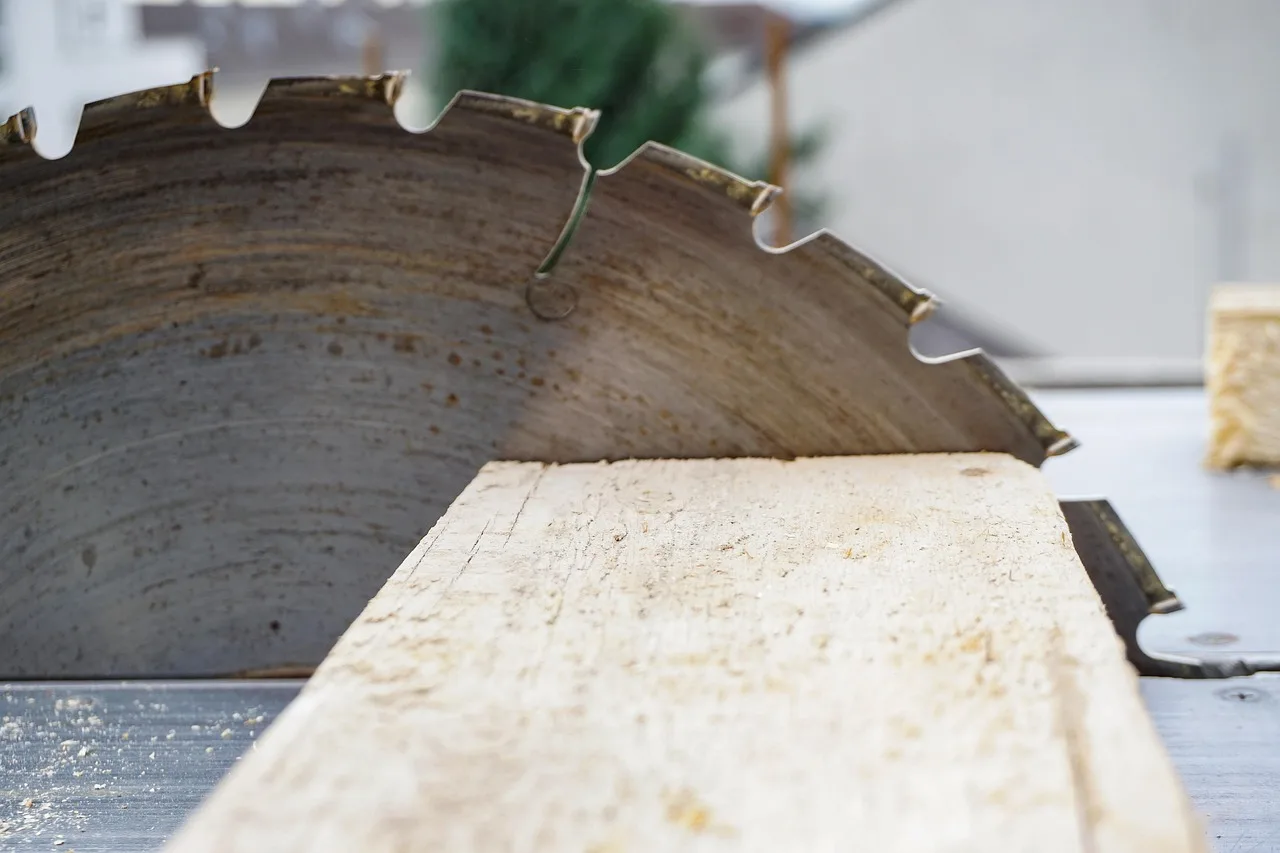
Yes, many circular saw blades can be sharpened, but not every blade should be sharpened at home. Carbide-tipped blades are often sharpened with a diamond wheel or by a professional sharpening service. Steel blades can be sharpened more easily, but they may wear out fast enough that replacement is the better value.
Carbide-tipped blades
Carbide-tipped blades are often the main candidate for sharpening, especially on saws used for framing, plywood, and trim. The teeth can be reground if the carbide is intact and there is enough material left. Once a tip is chipped away, missing, or burned badly, sharpening cannot restore the original tooth shape.
Steel blades
Plain steel blades are easier to touch up with the right abrasive, but they are less common on general-purpose saws today. They also dull faster than carbide. On low-cost blades, the time and labor needed for sharpening often cost more than a new blade.
When a pro service is the better choice
A professional service is often the better choice for carbide blades, large-diameter blades, and blades with complex tooth geometry. Shops use a diamond or CBN wheel, match the tooth shape, and can rebalance the blade after sharpening. That matters if the blade will be used on a saw where smooth tracking is important.
How tooth geometry changes the job
Tooth geometry changes how the blade cuts and how it should be sharpened. Alternate top bevel, flat top grind, and triple-chip grind do not use the same edge shape. If the sharpening method does not match the geometry, the blade may cut poorly or wear unevenly.
Alternate top bevel
ATB teeth alternate left and right bevels. They are common on plywood, crosscut, and combination blades because they leave a cleaner edge. Sharpening must preserve the alternating bevel angles, or the blade can wander and leave a rougher cut.
Flat top grind
FTG teeth have a squared top and are common on rip blades. They remove material quickly and are easier to sharpen because the top face is simpler. Even so, the cutter height and edge symmetry still matter; a badly matched grind can make the blade grab or cut unevenly.
Triple-chip grind
TCG teeth use a chamfered “trimmer” tooth and a flat “raker” tooth. They are common on laminate, melamine, and some nonferrous metal-cutting blades. Sharpening must preserve both tooth shapes, which is one reason these blades are often best handled by a sharpening service.
How to inspect the blade before sharpening
Inspecting first prevents wasting money on a blade that should be replaced. Always unplug the saw before removing the blade, wear gloves and eye protection, and make sure the blade lock holds the arbor still. Clean pitch and resin off before deciding whether the teeth are truly dull.
- Unplug the saw and remove the battery if it is cordless.
- Lock the blade and remove the arbor nut and washer.
- Brush or clean off pitch, resin, and dust buildup.
- Check every tooth for missing carbide, chips, or cracks.
- Lay the blade flat and look for warping or a bent plate.
- Spin or sight the blade to check for wobble and runout.
- Compare the repair cost with the price of a new blade.
Picture a 60-tooth plywood blade that leaves burn marks on melamine. If cleaning removes the resin and the cut improves, the blade was dirty, not dull. If the blade still burns after cleaning and the teeth are intact, sharpening may be worth it. If the tips are chipped, replacement is the safer spend.
Circular saw blade decision table
The table below maps common symptoms to the most likely cause, the usual fix, and whether sharpening is worth paying for. Use it after cleaning the blade and checking the saw setup, because those two steps rule out the easiest false alarms first.
| Symptom | Likely cause | Blade type | Fix cost range | Professional sharpening worthwhile? |
|---|---|---|---|---|
| Burning, slower feed, intact teeth | Dull edges or pitch buildup | Carbide-tipped or steel | Cleaning: low; sharpening: moderate | Yes, if the plate is flat and teeth are whole |
| Rough tear-out on plywood | Wrong tooth count or worn ATB points | ATB plywood blade | Cleaning or sharpening; sometimes replacement | Yes, if the tooth tips still have shape |
| Chipping on laminate or melamine | Worn TCG geometry or incorrect blade choice | TCG blade | Sharpening or replacement | Often yes, but only if the geometry is still intact |
| Missing teeth | Impact damage | Any blade | Replacement | No |
| Cracked plate or warped body | Heat damage or impact | Any blade | Replacement | No |
| Wobble or runout | Bent plate, dirty arbor, or damaged mounting area | Any blade | Inspect and possibly replace | No, until the cause is fixed and the blade is proven flat |
| Fast dulling on framing lumber | Normal wear on a rip or combo blade | Carbide-tipped | Sharpening or replacement | Yes, if the blade is mid- to high-quality |
What is the cheapest safe fix?
The cheapest safe fix is the one that restores cutting without paying to save a damaged blade. For a mid- to high-quality carbide blade, sharpening often costs less than buying a new equivalent blade. For a low-cost blade, replacement is often cheaper once you add service fees, shipping, or downtime.
Sharpening costs versus replacement costs
Common retail pricing changes by size and brand, but the comparison stays the same. If a new general-purpose 7 1/4-inch blade costs little more than sharpening, replacement usually makes better financial sense. If the blade is a higher-end carbide model with many intact teeth, sharpening can extend its life for less money.
When professional sharpening pays off
Professional sharpening pays off when the blade is expensive enough to justify the service and the tooth geometry is worth preserving. That often includes carbide blades with many teeth, especially ATB or TCG blades. The service is also useful when balancing matters after sharpening or when the blade has enough value that a careful grind is worth paying for.
When replacement is the better buy
Replacement wins when the blade has missing carbide, a cracked plate, or so much wobble that the body is suspect. It also wins on many budget steel blades. A common rule of thumb is that if the repair bill gets close to about half the cost of a similar new blade, replacement is usually the cleaner choice.
Frequently asked questions
What do the numbers on a circular saw blade mean?
The numbers usually show diameter, tooth count, arbor size, and sometimes kerf thickness. The markings also point to tooth material and tooth geometry, such as ATB, FTG, or TCG. These numbers tell you whether the blade fits the saw and what material it is meant to cut.
Can you sharpen carbide circular saw blades?
Yes, many carbide circular saw blades can be sharpened, but only if the carbide tips are still present and not burned away. A diamond wheel or professional service is usually required. If the tips are missing, cracked, or deeply chipped, sharpening cannot bring the blade back to safe shape.
When is a circular saw blade too dull to sharpen?
A circular saw blade is too dull to sharpen when wear has turned into damage. Missing teeth, cracked plates, warped bodies, excessive runout, and badly burned carbide all push it past repair. If the teeth still have enough material to regain their shape, sharpening can still make sense.
What tool do you use to sharpen a circular saw blade?
The main tools are a diamond wheel or a CBN wheel, usually on a sharpening machine that can hold the correct angle. A professional sharpening service uses that kind of equipment to match tooth geometry and rebalance the blade. Hand files are not a good match for carbide teeth.
Sponsored / affiliate links. As an Amazon Associate I earn from qualifying purchases. I may earn additional commission from eligible campaigns.