Is Silicone Lubricant Good for Door Locks Expert Guide
Many people wonder if they can use silicone spray on their door locks. It sounds like a good idea, right? But for beginners, figuring out the best way to care for locks can feel a little tricky.
Don’t worry, though! This guide makes it super simple. We’ll walk you through everything you need to know, step by step.
Get ready to learn how to keep your door locks working smoothly.
Understanding Door Lock Lubrication
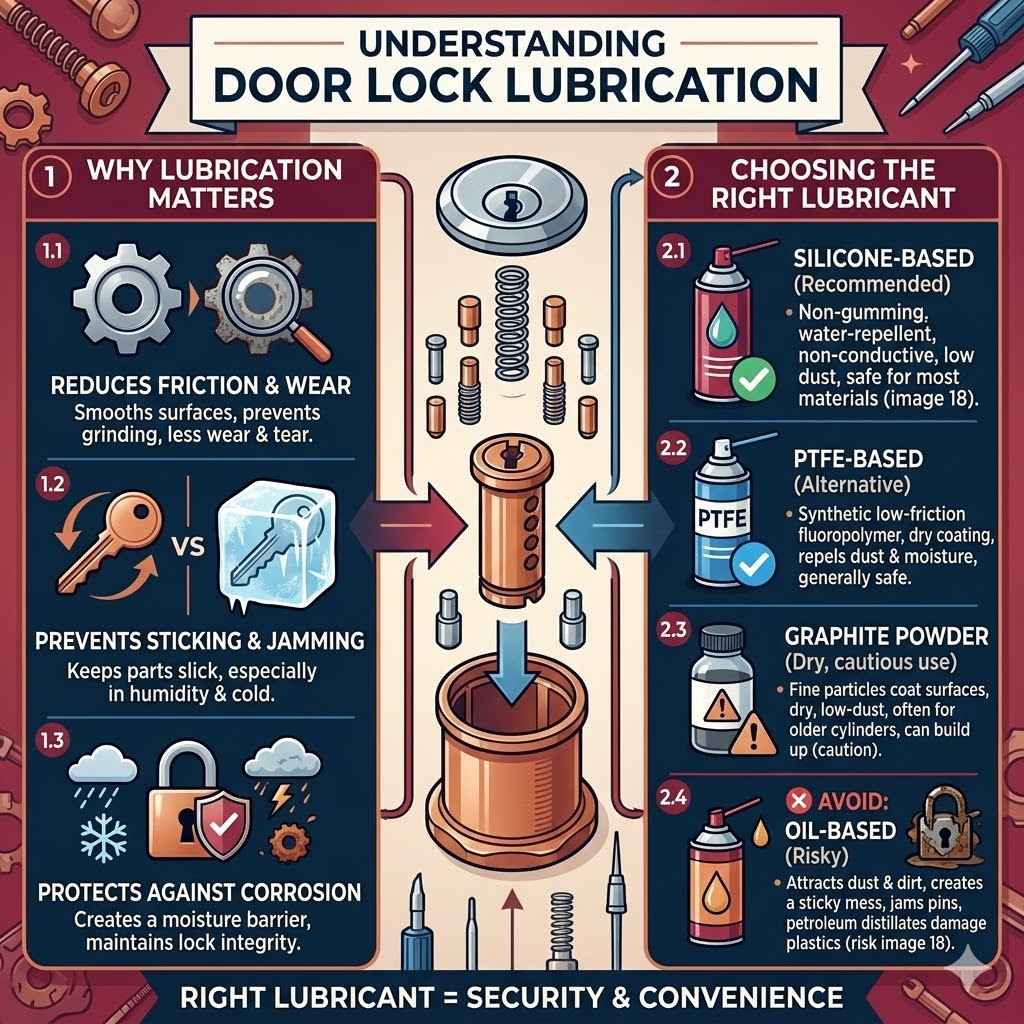
Keeping your door locks working smoothly is important for security and convenience. When locks get stiff or hard to turn, it’s usually because they need lubrication. This helps the small metal parts inside move freely.
Without proper lubrication, parts can wear down faster, making the lock less reliable. This section explains why lubing your locks matters and what kind of lubricants work best.
Why Lubrication Matters for Locks
Door locks are mechanical devices with many small, moving parts. Over time, dust, dirt, and wear can cause friction between these parts. Friction makes turning the key difficult and can lead to jamming.
Regular lubrication reduces this friction, ensuring the key turns smoothly and the deadbolt or latch engages properly. It also helps protect the internal mechanisms from rust and corrosion, especially in outdoor locks exposed to weather.
Reduces Friction and Wear
Lubricants create a smooth surface between metal parts. This prevents them from grinding against each other. Less grinding means less wear and tear.
A well-lubricated lock can last much longer than one that is neglected. Think of it like oiling the gears of a bicycle chain; it makes everything run much better.
Prevents Sticking and Jamming
When parts are dry, they can stick together. This is especially true in humid or cold conditions where moisture can cause parts to seize up. A good lubricant prevents this by keeping the surfaces slick.
This means your key will always be easier to insert and turn, even when the weather is bad.
Protects Against Corrosion
Many locks are made of metal, which can rust. Lubricants act as a barrier, keeping moisture away from the metal surfaces. This is crucial for exterior locks that face rain, snow, and humidity.
Preventing rust helps maintain the integrity of the lock’s internal components and ensures it functions correctly.
Using the right type of lubricant is key to achieving these benefits. The wrong type can actually cause more harm than good by attracting dirt or damaging certain lock materials. We will explore these options next.
Choosing the Right Lubricant
Not all lubricants are created equal, especially when it comes to delicate lock mechanisms. Some products can attract dust and dirt, which build up over time and create a sticky mess. Others might contain petroleum distillates that can degrade plastic or rubber parts found in some modern locks.
Selecting a lubricant specifically designed for locks or one known to be safe for mechanical components is vital.
Graphite Powder
Graphite powder is a dry lubricant. It works by coating metal surfaces with fine graphite particles. These particles are slippery and reduce friction without attracting much dust.
It’s a popular choice for older lock cylinders and is often recommended for tight spaces. However, some modern lock manufacturers advise against it as it can sometimes build up excessively.
PTFE-Based Lubricants
Lubricants containing Polytetrafluoroethylene (PTFE) are often a good choice. PTFE is a synthetic fluoropolymer known for its low friction properties. These lubricants typically come in spray form and provide a dry, slick coating that repels dust and moisture.
They are generally safe for most lock materials, including plastics and rubber seals.
Silicone-Based Lubricants
Silicone lubricants are widely used for various applications due to their water-repellent and non-conductive properties. They are generally safe for most materials and do not attract as much dust as oil-based lubricants. Their ability to create a slick surface makes them a strong contender for lock maintenance.
Let’s focus on silicone specifically to answer the main question.
Is Silicone Lubricant Good for Door Locks? Expert Guide
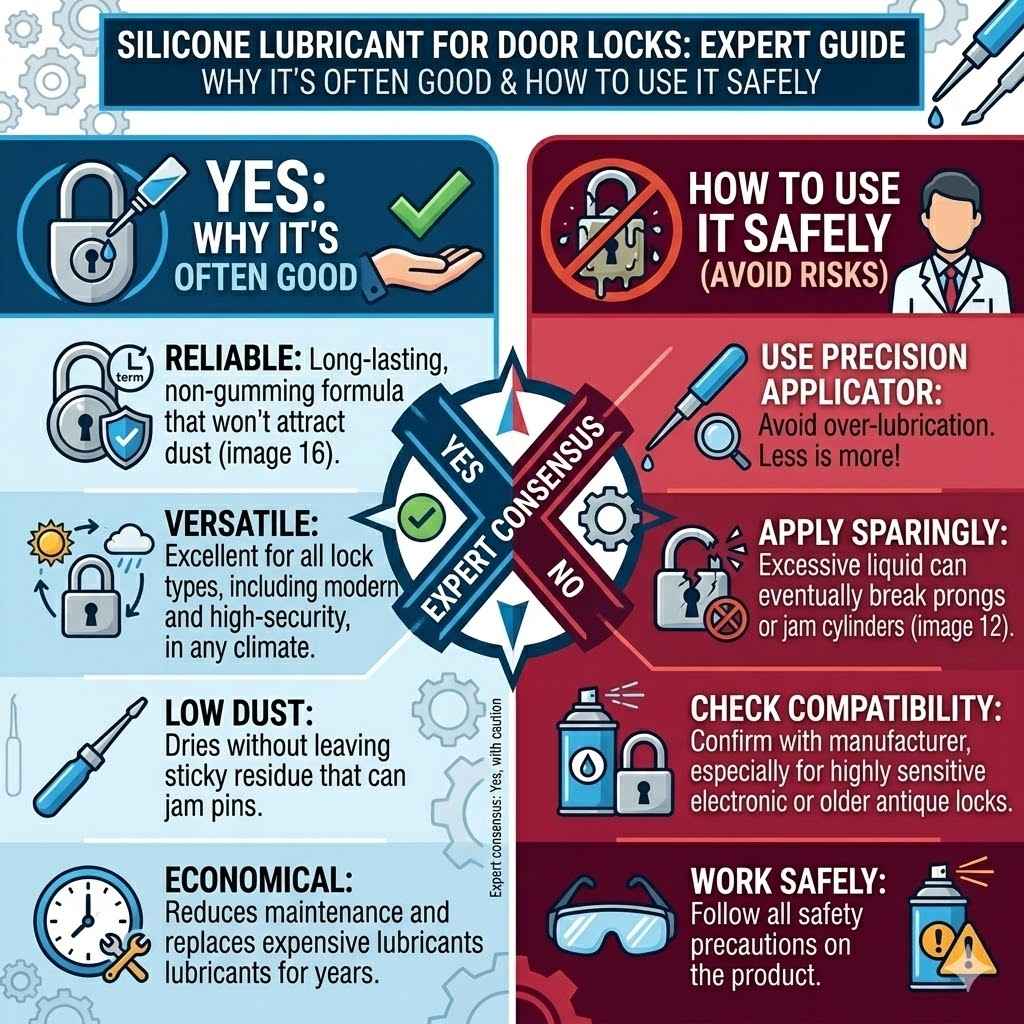
Many people ask: Is silicone lubricant good for door locks? The short answer is yes, it often is, but with important considerations. Silicone-based lubricants are popular for a reason.
They offer a good balance of lubrication and safety for many lock types. However, like any lubricant, it’s important to use them correctly to avoid issues.
The Science Behind Silicone Lubricants
Silicone lubricants are made from silicone oil, which is a synthetic compound containing silicon-oxygen chains. These compounds are known for their stability and resistance to extreme temperatures. They also have excellent water-repellent properties, meaning they don’t easily mix with water and can help keep metal surfaces dry.
This makes them effective at preventing rust and corrosion.
The molecular structure of silicone oil creates a slick surface. When applied to lock mechanisms, it coats the moving parts, reducing the friction between them. Unlike some petroleum-based lubricants, silicone tends to evaporate slowly, leaving a lubricating film behind.
This film is generally non-sticky and doesn’t attract as much dust and grime as thicker oils.
However, it’s important to note that not all silicone products are the same. Some might contain additives that could be harmful to certain lock components. Always check the product label to ensure it’s safe for use on metal and plastic parts, which are common in modern locks.
Benefits of Using Silicone Lubricant on Locks
Using silicone lubricant on your door locks offers several advantages. These benefits contribute to the smooth operation and longevity of the lock mechanism. It is often a go-to choice for many DIY enthusiasts and even some professionals.
Water Resistance
Silicone is naturally water-repellent. This is a significant advantage for exterior door locks that are exposed to rain, snow, and humidity. By repelling moisture, silicone lubricant helps prevent rust and corrosion from forming on the internal metal parts of the lock.
This keeps the lock mechanism functioning reliably, even in harsh weather conditions.
Temperature Stability
Silicone lubricants perform well across a wide range of temperatures. They don’t become too thick and gummy in the cold, nor do they become too thin and runny in the heat. This consistent performance ensures that your lock remains easy to operate year-round.
You won’t have to worry about your key becoming difficult to turn on a freezing morning.
Non-Conductive Properties
Silicone oil is an electrical insulator. This means it will not conduct electricity. This is a beneficial property for locks, especially if there’s any chance of electrical components being nearby or if the lock has electronic parts.
It reduces the risk of short circuits or damage to sensitive electronics.
Potential Drawbacks and Considerations
While silicone lubricant has many benefits, there are a few things to be mindful of to ensure you use it correctly. Understanding these points will help you avoid common mistakes and get the best results for your door locks.
Attraction of Some Dust
Although silicone is less prone to attracting dust than thick oil-based lubricants, it can still gather some fine particles over time. If too much is applied, or if the lock is in a very dusty environment, the lubricant can mix with dust to form a paste. This paste can hinder the smooth movement of lock parts, leading to stiffness.
Compatibility with Certain Materials
Most modern locks use a combination of metal and plastic or rubber components. While silicone is generally safe for most materials, some specific types of plastics or rubber might react poorly to certain silicone formulations. It’s always wise to check the product’s specifications or test it on an inconspicuous area if you’re unsure.
Application Method
The way you apply silicone lubricant is crucial. Spraying too much can lead to overspray and waste. It can also increase the likelihood of dust accumulation.
Using a straw attachment on the spray can helps direct the lubricant precisely into the keyway, and applying it sparingly is key to success.
So, is silicone lubricant good for door locks? Generally, yes. The expert guide is that when used sparingly and with the right product, it’s a very effective solution.
Now, let’s see how to apply it properly.
How to Apply Silicone Lubricant to Door Locks
Applying lubricant to your door locks correctly is just as important as choosing the right type. A simple spray can be effective, but knowing the best technique ensures that the lubricant reaches all the necessary parts without causing problems. This step-by-step process will guide you through the application, making sure your locks work like new.
Step-by-Step Application Guide
Follow these steps to effectively lubricate your door locks with silicone spray. This method is designed to be easy to follow and to maximize the benefit of the lubricant.
Gather Your Supplies
You will need a can of silicone-based lubricant, a clean cloth or paper towel, and possibly a small straw attachment for the spray can. Make sure the silicone lubricant is specifically recommended for locks or general mechanical use. A clean cloth is essential for wiping away any excess lubricant.
Clean the Keyway
Before applying any lubricant, it’s a good idea to clean the keyway (the slot where you ‘s visible grime, you can gently wipe the area around the keyway with a dry cloth.
This ensures the lubricant has a clean surface to work on.
Insert the Straw Attachment
If your silicone lubricant can comes with a thin straw attachment, snap it onto the nozzle. This straw helps to precisely direct the spray into the keyway, ensuring that the lubricant goes where it’s needed most and reduces overspray.
Apply Lubricant Sparingly
Insert the tip of the straw into the keyway of the lock. Press the nozzle briefly to dispense a small amount of lubricant. A short burst is usually sufficient for most locks.
Avoid over-lubricating, as too much can attract dirt and create a sticky residue over time.
Work the Lubricant In
After applying the lubricant, insert your key into the lock. Turn the key back and forth several times. This action helps to distribute the lubricant evenly throughout the internal mechanism of the lock.
You should feel the lock becoming smoother and easier to operate.
Wipe Away Excess
Use your clean cloth or paper towel to wipe away any excess lubricant that might have squeezed out of the keyway. This prevents sticky residue from forming on the exterior of the lock or on your hands when you use the key.
Regular application of lubricant, perhaps every six months to a year depending on usage and environment, will keep your locks in optimal working condition.
Common Mistakes to Avoid
When lubricating door locks, there are a few common pitfalls that can lead to more problems than solutions. Being aware of these mistakes can help you maintain your locks effectively.
Using the Wrong Type of Lubricant
One of the biggest mistakes is using oil-based lubricants like WD-40. While WD-40 can temporarily free up a stuck lock, it’s not a long-term lubricant. It attracts dust and dirt, which can build up and gum up the lock mechanism over time.
Petroleum-based lubricants can also degrade certain plastic or rubber parts common in newer locks. Always opt for silicone-based or PTFE-based dry lubricants for locks.
Over-Lubricating
Applying too much lubricant can be just as bad as using the wrong kind. Excess lubricant can attract more dust and debris, forming a sticky paste that hinders the lock’s movement. It can also drip and stain surfaces around the door.
Apply lubricant sparingly, a little goes a long way. Always wipe away any excess.
Lubricating a Dirty Lock
If your lock is already full of dirt and grime, applying lubricant directly can essentially create mud. The dirt mixes with the lubricant, making it harder for the parts to move. It’s best to clean out loose debris first using compressed air or a small brush before applying any lubricant.
This ensures the lubricant can actually do its job effectively.
By following these guidelines and avoiding these common errors, you can ensure that your door locks remain functional and secure for years to come.
When to Consider Professional Lock Maintenance
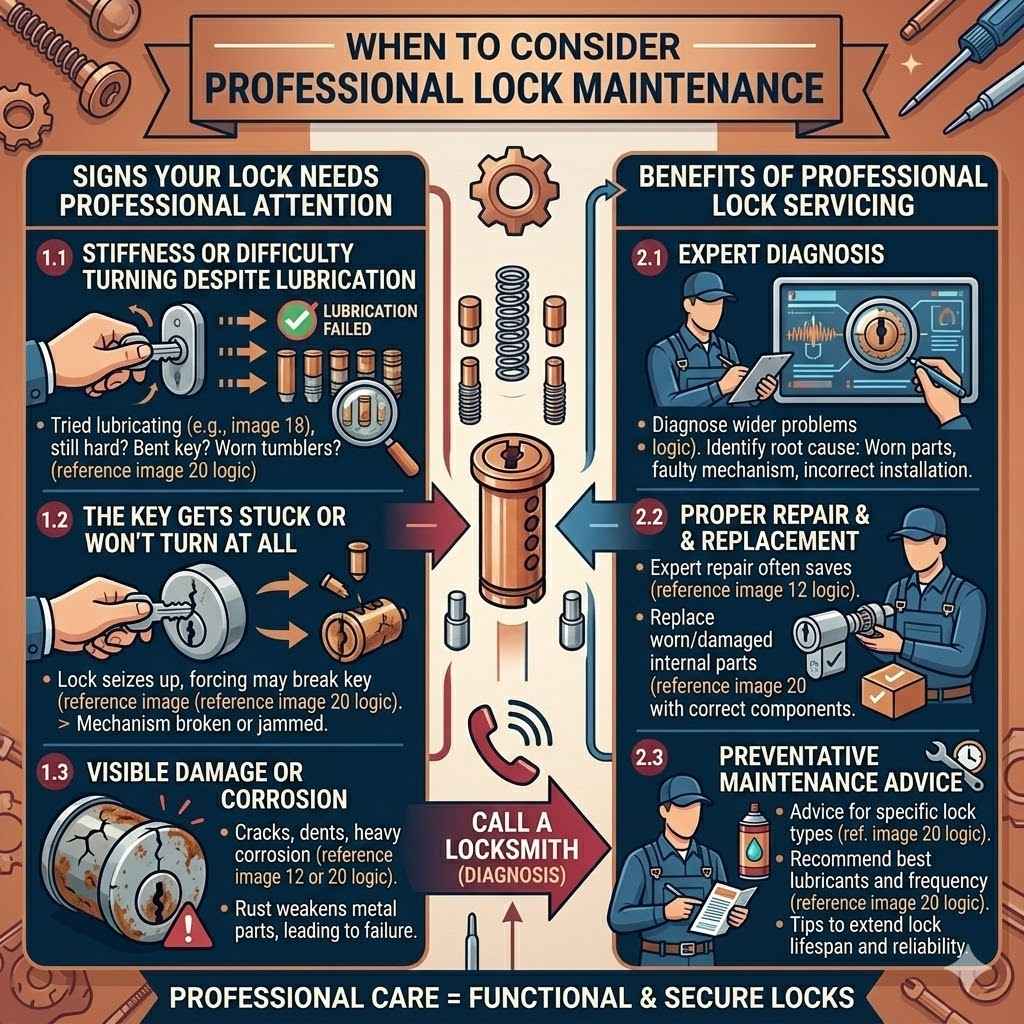
While many lock issues can be resolved with simple lubrication, some problems are more complex. If you’ve tried lubricating your locks and they still aren’t working correctly, or if you notice significant wear or damage, it might be time to call in a professional. Locksmiths have the expertise and tools to diagnose and fix a wider range of problems.
Signs Your Lock Needs Professional Attention
Some indicators suggest that your lock might have a problem beyond what simple lubrication can fix. Recognizing these signs can save you time and potential security risks.
Stiffness or Difficulty Turning Despite Lubrication
If you have applied silicone lubricant multiple times and the key still feels stiff, rough, or difficult to turn, there might be internal damage or wear. This could be due to a bent key, worn tumblers, or a damaged cylinder. A locksmith can inspect the lock’s internal components to identify the exact cause.
The Key Gets Stuck or Won’t Turn At All
A lock that completely seizes up is a serious issue. It could mean that the internal mechanism is broken or jammed. Forcing the key can cause it to break off inside the lock, creating a much bigger problem.
In such cases, professional intervention is usually necessary to open the lock and repair or replace it.
Visible Damage or Corrosion
Inspect your lock for any visible signs of damage, such as cracks, dents, or significant rust, especially on older locks. Heavy corrosion can weaken the metal parts, leading to failure. If you notice any such damage, it’s best to have a locksmith assess the lock’s condition and recommend whether it can be repaired or needs replacement.
These situations often require specialized knowledge and tools that the average homeowner may not possess. A professional can ensure the lock is repaired correctly, maintaining its security features.
Benefits of Professional Lock Servicing
Calling a locksmith for lock maintenance or repair offers several advantages. They can provide solutions that go beyond basic DIY fixes.
Expert Diagnosis
Locksmiths are trained to diagnose a wide array of lock problems. They understand the intricate workings of different lock types and can quickly identify the root cause of an issue, whether it’s worn parts, a faulty mechanism, or incorrect installation. This ensures that the right solution is applied.
Proper Repair and Replacement
If a lock is damaged, a locksmith can often repair it or
Preventative Maintenance Advice
A professional can offer valuable advice on how to best care for your specific type of locks. They can recommend the best lubricants for your locks, how often to lubricate them, and other maintenance tips to extend their lifespan and ensure reliable operation. This preventative care can save you money and hassle in the long run.
Professional servicing ensures that your locks are not only functional but also provide the security you expect.
Frequently Asked Questions
Question: Can I use WD-40 on my door locks?
Answer: While WD-40 can temporarily loosen a stuck lock, it is not recommended as a long-term lubricant for door locks. It attracts dust and dirt, which can build up and gum up the lock mechanism over time, leading to more problems. It’s better to use silicone-based or PTFE-based lubricants specifically designed for locks.
Question: How often should I lubricate my door locks?
Answer: You should aim to lubricate your door locks at least once or twice a year. This frequency may need to be increased for locks that are exposed to harsh weather conditions, such as exterior doors, or locks that are used very frequently. Regular lubrication helps prevent stiffness and keeps the mechanism working smoothly.
Question: My key is hard to turn, even after lubricating. What should I do?
Answer: If lubricating the lock doesn’t resolve the issue of a hard-to-turn key, there might be an internal problem with the lock itself, or the key may be worn or bent. Try using the lubricant again, working the key back and forth vigorously. If it still persists, it’s advisable to consult a locksmith to inspect the lock for potential damage or wear.
Question: Can I use graphite powder in my door locks?
Answer: Graphite powder is a dry lubricant and was traditionally used in locks. However, some modern lock manufacturers advise against its use, as it can sometimes build up excessively and create a sticky residue. Silicone-based lubricants are often a safer and more effective choice for most contemporary lock systems.
Question: Will silicone lubricant damage the finish of my door or lock?
Answer: Silicone lubricants are generally safe for most metal finishes and paints. However, it’s always a good practice to apply the lubricant carefully and use a cloth to wipe away any excess that might drip onto the door or surrounding surfaces. Checking the product label for specific material compatibility is also recommended.
Summary
Silicone lubricant is a good choice for most door locks. It provides water resistance and temperature stability, helping your locks work smoothly. Apply it sparingly into the keyway and work the key to distribute it.
Avoid petroleum-based products and over-lubrication. If problems persist, a locksmith can help.