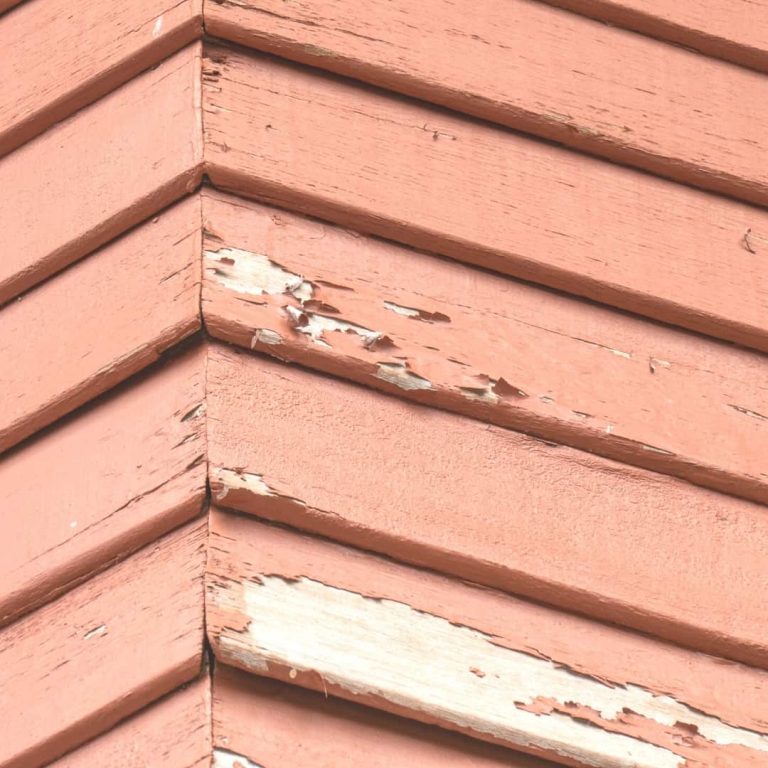
How Much Space Between Pressure-Treated Deck Boards? (Wet vs. Dry)
Pressure-treated deck boards need a 1/8 to 3/8 inch gap — but the exact number depends on whether the wood is wet or already dried. Installing dry boards with no gap traps water and speeds up rot, while spacing wet boards too wide leaves an oversized gap once they shrink. This guide covers the wet-vs-dry rule, exact gaps by board width, the tools that keep every gap even, and what IRC code requires.
Wet vs. Dry Pressure-Treated Boards: Why Spacing Changes
Pressure-treated lumber is wood forced full of preservative under pressure, and it typically leaves the mill still damp — often around 18% moisture content or higher. That extra moisture is the real reason the “right” gap size depends on whether your boards are wet or dry, not just on species or width. If you’re shopping for pressure-treated lumber for a new deck, ask the yard how recently it was treated.
If your boards are still wet (they feel cool or heavy, or leave a damp mark on your hand), install them butted tight against each other with no gap at all. As the wood dries over the following weeks, it shrinks across its width and opens a gap on its own — usually about 1/4 inch. Space wet boards apart intentionally and you’ll end up with an oversized 3/8 inch-plus gap once drying finishes.
If your lumber has already dried, leave an intentional 3/16 inch gap as you install each board. A quick way to check: sprinkle water on the surface — if it soaks in within about 10 minutes, the board is dry. A 16d nail, which measures almost exactly 3/16 inch thick, works as a free spacer.
| Board Condition | Board Width | Recommended Gap | Best For |
|---|---|---|---|
| Wet, freshly treated | Any width | Butt tight (0″) — shrinks to ~1/4″ | Most new PT decks |
| Dry / kiln-dried | 4″ boards | 3/16″ | Pre-dried PT, cedar |
| Dry / kiln-dried | 6″ boards | 1/4″ | Wide dry boards |
| Air-dried | 4″ boards | 3/32″ | Air-dried softwoods |
| Air-dried | 6″ boards | 1/8″ | Air-dried softwoods |
📊 Freshly treated pressure-treated lumber should be installed with boards touching — no gap — because it naturally shrinks to about a 1/4 inch gap as it dries. — Source: ProWood, 2026
Best Deck Spacer Pick
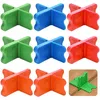
8-Pc ABS Deck Board Spacer Set (4-in-1 Gap Sizes) – $9.30
Covers all four gaps this guide references — 1/16, 1/8, 3/16, and 1/4 inch — on one reusable tool, so you don’t have to guess between wet-board and dry-board spacing.
- Best for: Matching the exact 3/16″ dry-board or 1/4″ wide-board gap from the table above
- Why we picked it: Four gap sizes on one X-shaped tool, no separate spacers to lose
- Main drawback: Plastic wings can flex on very dense hardwood decking
Compare more deck spacer options
 Option 1 8-Pc Deck Spacer Tool, 4 Thicknesses – $9.99
|
 Option 2 8-Pc ABS Deck Spacer Tool Set – $9.99
|
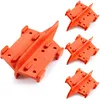 Option 3 CroBlissful 4-Pc Deck Spacers (1/8″ & 3/16″) – $18.99
|
As an Amazon Associate we earn from qualifying purchases.
Importance Of Proper Spacing
Correct spacing is vital for deck boards. It lets water drain off easily, which keeps the wood dry and helps it last longer. Without a gap, boards can swell and warp; warped boards look bad and can become a tripping hazard.
The gap also lets air flow between boards, which keeps the deck cooler underfoot and stops debris and bugs from getting trapped against the wood. Proper spacing keeps a deck strong and attractive for years — skipping it is one of the most common mistakes on a first-time deck build.
Factors Influencing Deck Board Spacing
Different woods expand and shrink at different rates, and moisture content drives most of that change. Pressure-treated wood usually carries more moisture than kiln-dried lumber, so it shrinks more as it dries. Proper spacing leaves room for that movement — boards installed too close can warp, while boards spaced too far apart look sloppy and waste deck surface.
Climate matters too. Hot, dry regions make wood shrink further, so a slightly tighter gap can work. Humid or rainy areas add moisture back into the boards seasonally, which is why many builders favor the wider end of the 1/8–3/8 inch range in wet climates.
Deck use matters as well. Heavy-traffic decks benefit from tighter, more consistent gaps for a stable walking surface, while a decorative or low-traffic deck has more flexibility. Always weigh the local climate and how the deck will be used before settling on a final gap.
Common Spacing Measurements
For most pressure-treated decking, the 1/8 to 1/4 inch range covers dry, narrower boards. Wider boards need more room — a 1/4 inch gap works better on 6 inch boards since they move more across their width as humidity changes. Always check board width and dryness before picking a spacer size, and if you’re still shopping for material, compare deck board pricing and sizing before you buy so you know exactly what width you’re spacing.

Tools For Accurate Spacing
Spacing gauges keep deck boards evenly spaced with almost no effort — place one between each pair of boards before fastening, and the gap stays consistent from end to end. Even spacing helps water drain properly and makes the finished deck look intentional rather than uneven.
A measuring tape confirms board length and keeps courses aligned, and a level checks that the finished surface is flat and safe to walk on. Keep both on hand throughout the project rather than only checking at the end — catching a problem early is far easier than fixing it after the deck is fastened down.
Installation Tips
Follow these steps in order to keep every gap consistent from the first board to the last:
- Test the moisture level: Sprinkle water on the board — if it soaks in within about 10 minutes, the wood is dry and needs an intentional gap.
- Set your spacer: Butt wet boards tight with no spacer; use a 3/16 inch spacer (or a 16d nail) between dry boards.
- Check both ends: Confirm the gap at both ends of each board before driving fasteners — boards can bow slightly along their length.
- Drive fasteners rated for treated lumber: Use hot-dip galvanized or stainless fasteners rated for ACQ pressure-treated wood, driven flush without overdriving.
- Recheck as you go: Fix an inconsistent gap immediately — it is much harder to correct once several boards are fastened down.
Maintenance And Adjustments
Deck boards move over time as weather and use take their toll — they can warp, shrink, or develop uneven gaps. Check the gaps every few months with a ruler, and address any changes quickly. Catching a warped board early is far easier than replacing a section of decking later.
Tighten loose screws and replace any board that has bowed or split. Use a drill for fasteners and a saw for cutting new boards to size, and always wear gloves and eye protection while working. Cutting each replacement board to the same width as its neighbors keeps the gap consistent across the repair.
Frequently Asked Questions
How Much Gap Between Deck Boards?
The recommended gap between pressure-treated deck boards is 1/8 to 3/8 inch, depending on whether the wood is wet or dry. This spacing allows for proper drainage and accommodates wood movement, reducing the risk of trapped moisture, rot, and warping while maintaining the deck’s structural integrity.
Why Is Spacing Important For Deck Boards?
Spacing is crucial for pressure-treated deck boards because it allows for expansion and contraction due to weather changes. It promotes airflow, reduces moisture build-up, and ensures water drains off the surface instead of pooling. Proper spacing also prevents tripping hazards caused by warped or swollen boards.
Can Spacing Affect Deck Durability?
Yes. Too little space traps moisture against the wood, leading to rot and decay, while excessive spacing can compromise the deck’s structural feel underfoot. Correct spacing allows natural expansion, contraction, and drainage, which is what keeps a pressure-treated deck sturdy for its full service life.
What Tools Help In Measuring Deck Board Gaps?
A measuring tape or a carpenter’s square works for basic checks, but dedicated spacer tools or gap gauges are far more consistent. Spacers hold a fixed thickness between boards while you fasten them, removing the guesswork and keeping every gap on the deck the same width.
Do You Need to Leave a Gap for Wet Pressure-Treated Deck Boards?
No. Wet pressure-treated boards should be installed tight with no gap at all. The wood is still damp from the treatment process and will shrink across its width as it dries, opening a natural 1/4 inch gap on its own within a few weeks. Adding a gap to wet boards results in an oversized gap once drying finishes.
Conclusion
Choosing the right deck board spacing comes down to one question: is the wood wet or dry? Pressure-treated wood needs room to breathe, and getting the gap wrong in either direction — too tight or too wide — traps moisture or looks unfinished. Consult your decking manufacturer’s instructions for the exact spec, since IRC R507.1 defers to those instructions rather than setting one universal number.
A well-spaced deck offers durability and safety for decades. Every detail counts in deck building, and spacing is one of the cheapest details to get right the first time. Happy decking!
Sponsored / affiliate links. As an Amazon Associate I earn from qualifying purchases. I may earn additional commission from eligible campaigns.
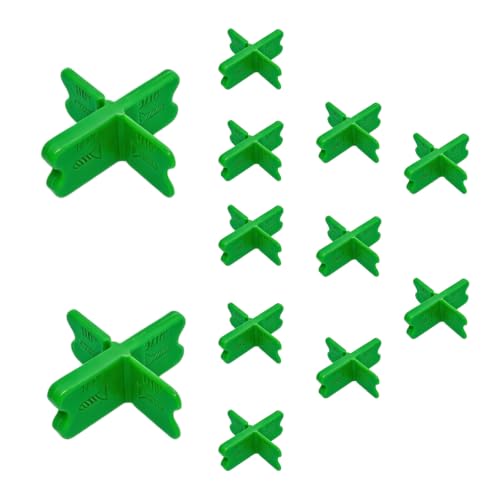 12PCS Composite Deck Spacers, 4 Sizes (1/16",1/8",3/16",1/4") ABS Deck Board Spacer Tool, Green Assorted Deck Spacers for Pressure Treated & Composite Decking
 8 Pcs Deck Spacers Tool Set, 4 Thickness Options (1/16", 1/8", 3/16", 1/4") Deck Board Spacers for Composite Decking, Pressure Treated Lumber, PVC & Hardwood Boards (Green)