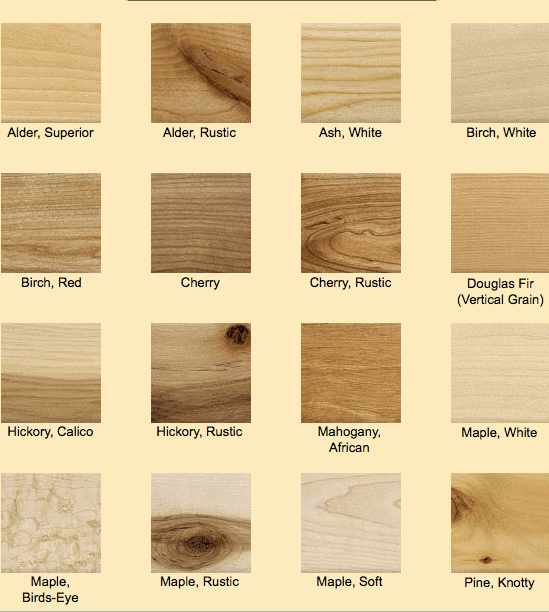
Wood Grain Comparison Chart: 8 Species By Type & Hardness
Wood grain is the visible pattern left by a tree’s growth rings — straight, wavy, spiral, or interlocked — and it’s the fastest way to tell species apart without lab equipment, though color and end-grain pore structure confirm it. Picking the wrong grain type for a project causes tear-out, warping, or a finish that won’t take evenly. This chart compares 8 common species by grain type, texture, and Janka hardness so you can match the wood to the job.
Quick Answer
Straight-grained woods like pine, maple, and cherry are the easiest to work with and finish evenly. Interlocked or wavy grain — found in mahogany and walnut — looks more decorative but is harder to plane without tear-out. Cross-reference grain type with the Janka hardness chart below to match wood to your specific project.
What Is Wood Grain?
Wood grain is the pattern created by a tree’s growth rings and fiber direction, and every species has a distinct look because of it — straight, curly, or wavy. That pattern affects both appearance and workability: some grain runs smooth and predictable, other grain runs rough or twisted and is harder to cut cleanly.
Grain direction also relates to strength, though density matters more than grain alone. Straight-grained lumber, where fibers run parallel to the board’s length, resists splitting and holds fasteners more predictably — which is why builders favor it for structural framing, while furniture makers often chase more decorative wavy or interlocked grain instead. Browse more wood species and material guides if you’re still narrowing down options for a project.
📊 Hickory rates 1,820 lbf on the Janka hardness scale — among the hardest domestic species — versus just 350–380 lbf for Western Red Cedar and Eastern White Pine, nearly a 5x difference in dent resistance. — Source: USDA Forest Service, Forest Products Laboratory
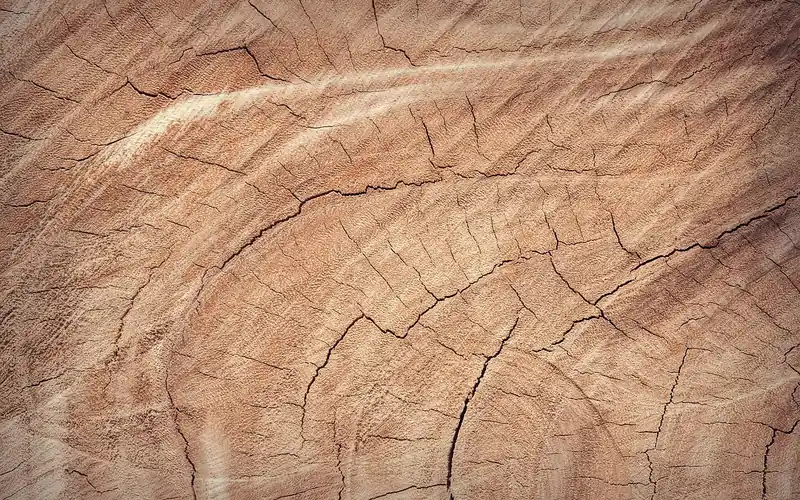
Types Of Wood Grain Patterns
Straight grain runs in a consistent, parallel direction along the board. It’s the most common pattern, the easiest to work with, and the standard choice for furniture and flooring where predictability matters more than decoration.
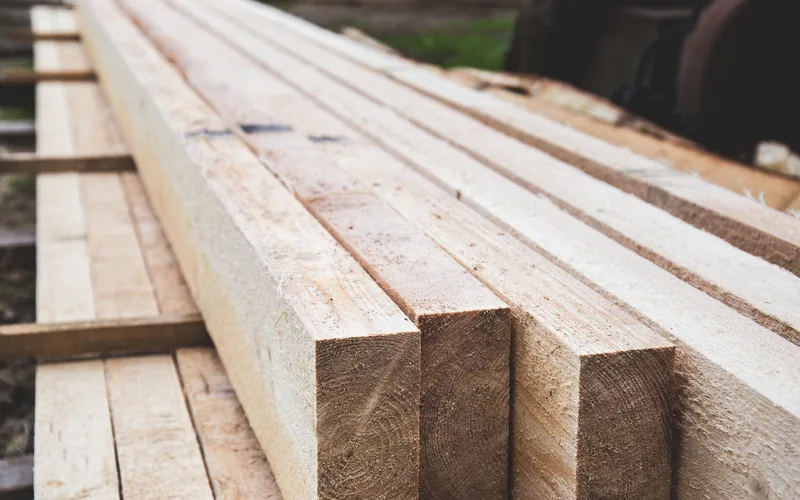
Spiral grain forms when a tree grows with its fibers spiraling around the trunk at a slight incline rather than running straight up. It shows up most in species like pine and fir, and can make lumber prone to twisting as it dries.
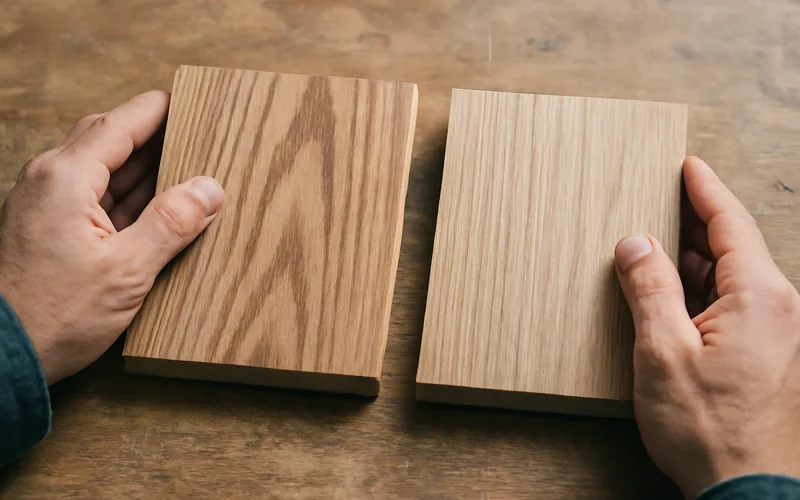
Wavy grain occurs when fibers change direction in smooth, repeating waves rather than a straight line, producing decorative figure like curly or fiddleback patterns. It’s prized in species like maple and walnut for its rich, rippling appearance under finish.
Interlocked grain happens when a spiral-grained tree reverses direction repeatedly as it grows, alternating between left- and right-handed spirals layer by layer. It’s common in mahogany and oak, creates a ribbon-stripe figure on quarter-sawn surfaces, and adds real strength since the crossing fibers resist splitting.
Wood Grain Comparison Chart By Species
Grain type alone doesn’t tell the whole story — texture and hardness matter just as much for choosing the right wood. This chart compares eight common species side by side.
| Species | Grain & Texture | Janka Hardness | Best For |
|---|---|---|---|
| Eastern White Pine | Straight, medium-coarse | 380 lbf | Shelving, cabinets, trim |
| Western Red Cedar | Straight, medium | 350 lbf | Fencing, outdoor furniture |
| Black Cherry | Straight, fine and smooth | 950 lbf | Fine furniture, cabinetry |
| Black Walnut | Straight to wavy, medium | 1,010 lbf | Furniture, gunstocks |
| Honduran Mahogany | Straight to interlocked, fine | 900 lbf | Furniture, boatbuilding |
| Red Oak | Straight, coarse and open | 1,290 lbf | Flooring, furniture |
| Hard Maple | Straight, sometimes wavy, fine | 1,450 lbf | Flooring, cutting boards |
| Hickory | Straight, irregular, coarse | 1,820 lbf | Tool handles, flooring |
“In the most basic terms, the wood texture describes how a wood feels. Given an equal amount of sanding and smoothing operations, different woods will feel smoother than others.”
Factors Affecting Wood Grain
Species is the biggest factor: oak has a coarse, open grain with visible pores, maple’s is fine and nearly closed, pine runs straight, and walnut tends toward dark, wavy figure. Beyond species, growing conditions shape the pattern too — more sunlight and steadier rainfall generally produce tighter growth rings, while trees in harsher or drier conditions often show wider, more irregular rings.
How the log is sawn changes what grain you see on the finished board: plain sawing shows the traditional cathedral-arch grain pattern, while quarter sawing cuts closer to the growth rings and reveals straighter lines or ray fleck figure, depending on species. How the wood is dried matters too — kiln drying stabilizes the wood faster, while air drying preserves more of the natural color; see our guide on using a dehumidifier to dry wood if you’re drying lumber yourself.
Benefits Of Understanding Wood Grain
Grain knowledge pays off in three concrete ways: it helps you predict how a piece will look once finished, how it will hold up structurally, and how hard it will be to work with hand or power tools. A straight-grained board is simpler to cut, plane, and sand to a smooth finish, while wavy or interlocked grain needs sharper tools and lighter passes to avoid tear-out.
It also affects which species pairs well together in a single piece. If you’re deciding between two similarly-priced hardwoods for a project, our walnut versus maple comparison and mahogany wood vs. oak breakdown both go deeper into grain, workability, and cost for those specific matchups.
Best Wood Identification Kit Pick
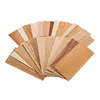
Sauers North American Wood Species ID Kit & Veneer Sample Pack (25 Pcs) – $36.98
A labeled set of real North American wood veneer samples — the fastest way to train your eye on the grain and texture differences this chart describes, side by side in your hand.
- Best for: Learning to tell species apart by grain and color
- Why we picked it: Covers the same domestic species this chart compares, pre-labeled
- Main drawback: Veneer thickness only shows face grain, not full end-grain pore structure
Compare more wood identification resources
 Option 1 30-Piece Labeled Wood Veneer Identification Pack – $22.99
|
 Option 2 WOOD! Identifying and Using Hundreds of Woods Worldwide – $37.99
|
 Option 3 Wood Identification & Use Field Guide (200+ Species) – $10.05
|
As an Amazon Associate we earn from qualifying purchases.
Applications In Woodworking
Furniture makers lean on oak and maple for strength and looks, cherry for its smooth grain and rich color that deepens with age, and pine where budget and easy shaping matter more than durability. Each species brings a different combination of grain, weight, and hardness to the finished piece.
Flooring relies on the same tradeoffs at a bigger scale — oak and maple’s higher Janka ratings resist dents and wear in high-traffic rooms, while bamboo (technically a grass, not a hardwood) offers similar hardness at a lower cost and faster regrowth rate. Grain pattern also shows up underfoot: open-grain oak reads more rustic, closed-grain maple reads smoother and more uniform.
Decorative work pushes grain to the front: veneers slice thin, highly-figured wood to cover larger surfaces affordably, marquetry combines multiple grain patterns into inlaid designs, and hand carving relies on straight or interlocked grain to hold fine detail without chipping out.
Interpreting The Chart
Matching grain with applications: tight, closed grains like maple and cherry suit furniture and cutting surfaces where a smooth finish matters. Open grains like oak show more texture and character, which works well for rustic or decorative pieces but needs a grain filler for a glass-smooth finish.
Predicting wood behavior: straight-grained species are the most predictable to cut, plane, and glue up. Wavy or interlocked grain looks better under finish but is more prone to tear-out, so plan on sharper tools, lighter cuts, or a scraper instead of a plane on those boards.
Selecting wood for projects: use the Janka hardness column above as your durability guide — anything under 1,000 lbf is better suited to indoor furniture and trim than flooring or high-wear surfaces, where 1,300+ lbf holds up noticeably better.
Tips For Using Wood Grain Information
Match your cutting approach to the grain: straight-grained boards tolerate standard planing and sanding, while wavy or interlocked grain needs a sharp blade, a steeper cutting angle, or a scraper to avoid tear-out and chip-out.
Grain direction also affects how a design reads once assembled. Aligning grain patterns across adjacent boards, or deliberately contrasting them, changes how finished, professional a piece looks — small planning upfront saves rework later.
Cutting with the grain layout in mind reduces waste, too: orienting cuts to follow the natural grain direction produces cleaner edges and fewer unusable offcuts than fighting against it.
Frequently Asked Questions
What Is A Wood Grain Comparison Chart?
A wood grain comparison chart is a reference tool that lines up multiple wood species by grain type, texture, and hardness side by side. It helps you identify unfamiliar wood and pick the right species for a specific project instead of guessing from memory.
How Does Wood Grain Affect Wood Quality?
Grain affects appearance and workability directly, but strength depends more on density than grain pattern alone. Straight, tight grain generally finishes smoother and machines more predictably, while coarse or irregular grain can be more prone to splitting if not handled carefully during cutting and joinery.
Why Is Wood Grain Important In Furniture Making?
Grain determines both the look and the durability of a finished piece. A well-matched grain pattern across adjacent boards looks intentional and professional, and choosing a straight-grained species for load-bearing parts (legs, aprons) reduces the risk of cracking under stress over time.
How Can I Identify Different Wood Grains?
Professional identifiers use four clues together: grain pattern, color and overall texture, end-grain pore structure, and weight. End-grain pore pattern is the single most reliable clue on its own — it’s why the chart above lists texture alongside grain type rather than grain type in isolation.
What’s The Difference Between Open-Grain And Closed-Grain Wood?
Open-grain woods like oak have larger, more visible pores that form distinct bands across the surface. Closed-grain woods like maple and cherry have pores so fine they’re nearly invisible without magnification, which is why they sand to a smoother, more uniform finish.
Does Grain Pattern Affect How Wood Takes Stain?
Yes. Open-grain woods like oak soak up stain unevenly along the pores and often need a grain filler first for a smooth result. Closed-grain woods like maple and pine can blotch with certain stains and usually need a pre-stain wood conditioner to absorb color evenly.
What Is The Strongest Wood Grain Pattern?
Straight grain is generally the strongest and most predictable for structural use, since the fibers run parallel to the board’s length and resist splitting under load. Interlocked grain, like in mahogany, also resists splitting well thanks to its crossing fiber layers, though it’s harder to plane cleanly.
Conclusion
Choosing wood by grain comes down to matching the pattern, texture, and Janka hardness to what the project actually needs. Oak and hickory bring strength and character for flooring or heavy furniture; cherry and maple offer smooth, predictable surfaces for fine woodworking; pine and cedar keep budget projects affordable. Use the chart above as your starting reference, then confirm with a close look at end grain before committing to a species.
Sponsored / affiliate links. As an Amazon Associate I earn from qualifying purchases. I may earn additional commission from eligible campaigns.