What Are The Dimensions Of A Cord Of Firewood? Explained
A standard cord of firewood measures 4 feet high by 4 feet wide by 8 feet long. When stacked, it contains 128 cubic feet of wood and air. The actual wood volume is less due to the air gaps between the logs. Understanding these dimensions helps ensure you get the amount of wood you pay for.
What Exactly Is a Cord of Firewood?
A cord of firewood is a standard unit of measurement. It’s used to sell firewood in the United States and Canada. The main idea is to have a consistent way to buy wood.
This helps prevent confusion for buyers. It also helps sellers be fair about how much they provide.
Think of it like buying a gallon of milk. You know what a gallon is. A cord is the same for firewood.
It’s not just a random pile. It has specific sizes and volumes.
The official definition comes from how it’s stacked. It must be 4 feet high. It must be 4 feet wide.
And it must be 8 feet long. This makes a large rectangular pile. This is the space the wood should fill.
Inside this space, you find the wood logs. But you also find gaps. Air fills these gaps between the logs.
So, a cord is not solid wood. It’s wood plus air.
The total volume of this stack is 128 cubic feet. That’s 4 x 4 x 8. This is the key number people remember.
It’s the volume of the stacked space.
The Math Behind a Cord: Volume and Space
Let’s do some simple math. A cord of firewood is a stack that is 8 feet long. It is 4 feet high.
And it is 4 feet deep. To find the total volume, we multiply these numbers. Length times width times height.
So, 8 feet x 4 feet x 4 feet.
This gives us 128 cubic feet. This is the total space the stacked wood takes up. This space includes the wood itself.
It also includes the air between the logs. This is a very important point.
People sometimes think a cord is 128 cubic feet of solid wood. That’s not quite right. The actual wood volume is less.
It depends on how the wood is stacked. It also depends on the size of the logs.
If logs are cut very short, there might be more air gaps. If logs are very large and few, there might be fewer gaps. But the total stacked volume is always 128 cubic feet.
This is the standard that sellers must meet.
So, when you buy a cord, you are buying a space. This space is 8 feet long, 4 feet high, and 4 feet deep. The wood packed into this space is your firewood.
Understanding Volume vs. Solid Wood
Total Stacked Volume: 128 cubic feet (8ft L x 4ft H x 4ft D)
Actual Wood Volume: Varies, but typically around 80-90 cubic feet. This is because of air spaces.
Key Takeaway: The 128 cubic feet is the space the wood occupies when stacked, not the solid wood content.
How Firewood is Stacked Matters
The way firewood is stacked affects how much solid wood is in a cord. There are a few common ways people stack wood. Each one can change the amount of air space.
This is why knowing the dimensions is only part of the story.
The most common way is the “rick” or “face cord.” This is often a stack that is 8 feet long and 4 feet high. But it is only 16 inches deep. This is the length of one log.
So, a face cord is 1/3 of a full cord. Its volume is about 42.67 cubic feet.
A full cord, the one with 128 cubic feet, is often called a “true cord” or “stock cord.” This is the 8x4x4 pile. When you ask for a cord of wood, this is what you should get.
When firewood is delivered, it might be loose. Or it might be in bundles. Loose wood is often piled up.
It can be hard to tell the exact dimensions then. That’s why watching how it’s stacked is important.
If the wood is stacked neatly, you can often see the 8x4x4 shape. The logs should be roughly the same length. They should be arranged so they don’t leave huge gaps.
Loose piles can hide a lot of empty space. This means less wood for you.
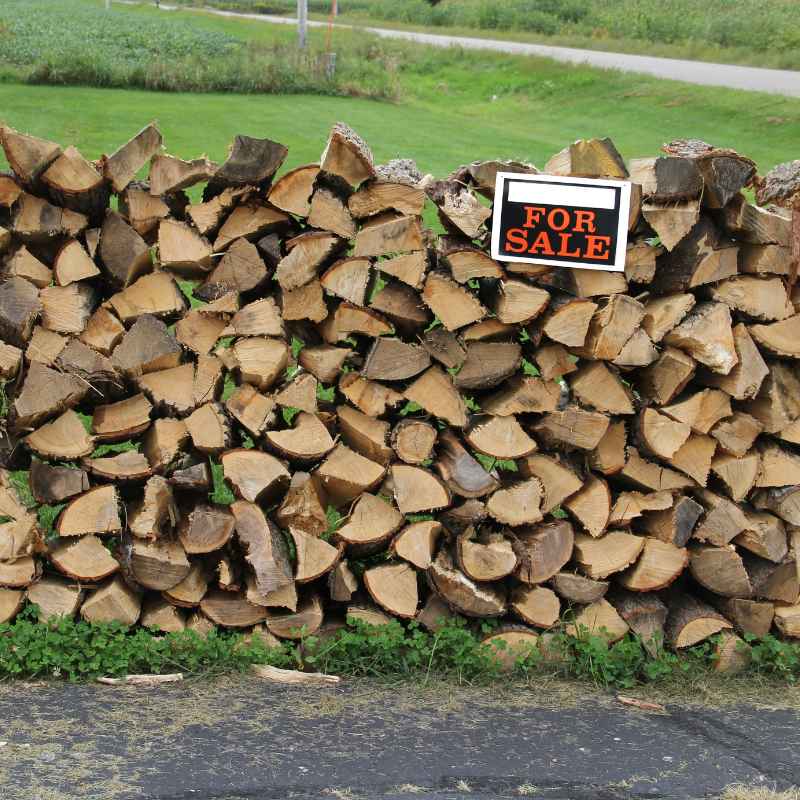
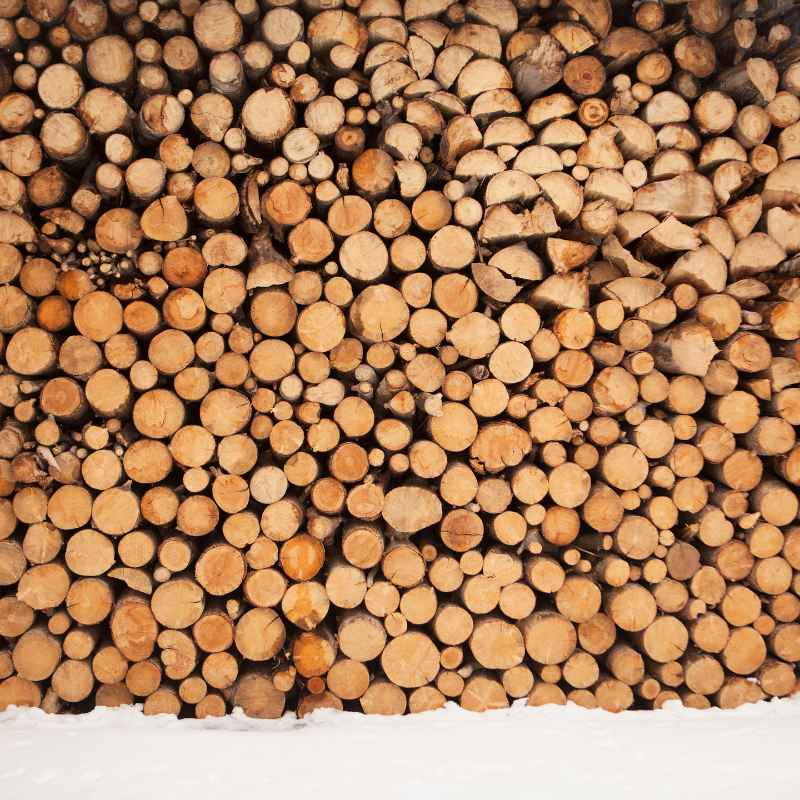
A well-stacked cord looks impressive. It’s a solid wall of wood. It’s a clean rectangle.
This stacking helps keep the wood dry too. It allows air to move around the logs.
Common Stacking Styles
True Cord (or Stock Cord): 8 ft long x 4 ft high x 4 ft deep. This is the standard 128 cubic feet.
Face Cord (or Rick): 8 ft long x 4 ft high x 16 inches deep (one log length). This is 1/3 of a true cord.
Linear Foot: Sometimes wood is sold by the linear foot. This refers to the length of a row of wood. A full cord might be made of 4 linear feet stacked 4 feet high.
Important Note: Always clarify with your firewood supplier what type of cord they are selling. Ask for the dimensions.
The Importance of Log Length and Diameter
The size of individual logs plays a role in how a cord of firewood is built. Firewood is usually cut to specific lengths. This helps it fit into fireplaces or wood stoves.
Common lengths are 16 inches or 24 inches. Some people cut it shorter, like 12 inches.
If logs are cut to 16-inch lengths, a 4-foot deep stack will hold three logs side-by-side. So, a true cord (4 feet deep) would have logs arranged three deep if they are 16 inches long. If logs are 24 inches long, it would have just over two logs deep.
The diameter of the logs also matters. Thicker logs might leave more air space. Very thin logs might pack in tighter.
But the goal for a cord is always the 128 cubic feet space. So, the cutter tries to fill that space well.
When you receive your firewood, notice the lengths. Are they mostly uniform? Are they a good size for your needs?
Extremely large logs can be hard to handle. Very small logs might burn too quickly. A mix of sizes can be good for different uses.
Most firewood sellers try to offer logs that are about 16 inches long. This length is good for many fireplaces. It also fits nicely into the 4-foot depth of a cord.
But variations happen. It’s good to check.
Remember, even with consistent log sizes, there will still be air. This is normal and needed. The air helps the wood dry.
It also helps the wood burn better.
Log Size Considerations
Standard Length: Often 16 inches, but can range from 12 to 24 inches.
Diameter: Varies by tree type and cutting. Moderate diameters are easiest to handle.
Impact on Stacking: Consistent log lengths help create a more stable and less gappy stack.
User Needs: Ensure log lengths match your fireplace or wood stove dimensions.
What “Stacked” Firewood Really Means
The word “stacked” is key to the definition of a cord. It means the wood is arranged in a neat pile. It’s not just dumped from a truck.
A properly stacked cord is organized. This helps measure it accurately.
When firewood is delivered, the driver will often stack it for you. They usually try to make a neat pile. This pile should approximate the 8x4x4 dimensions.
You can often see the structure forming.
If you are buying wood in a rural area, you might see large piles. These piles are often measured visually. The seller knows what a cord looks like when stacked correctly.
They will build the pile to that size.
A good stack is built with the ends facing out. This makes it look like a wall. The logs should be fairly even in length.
They should be placed close together. But not so close that you can’t get air through.
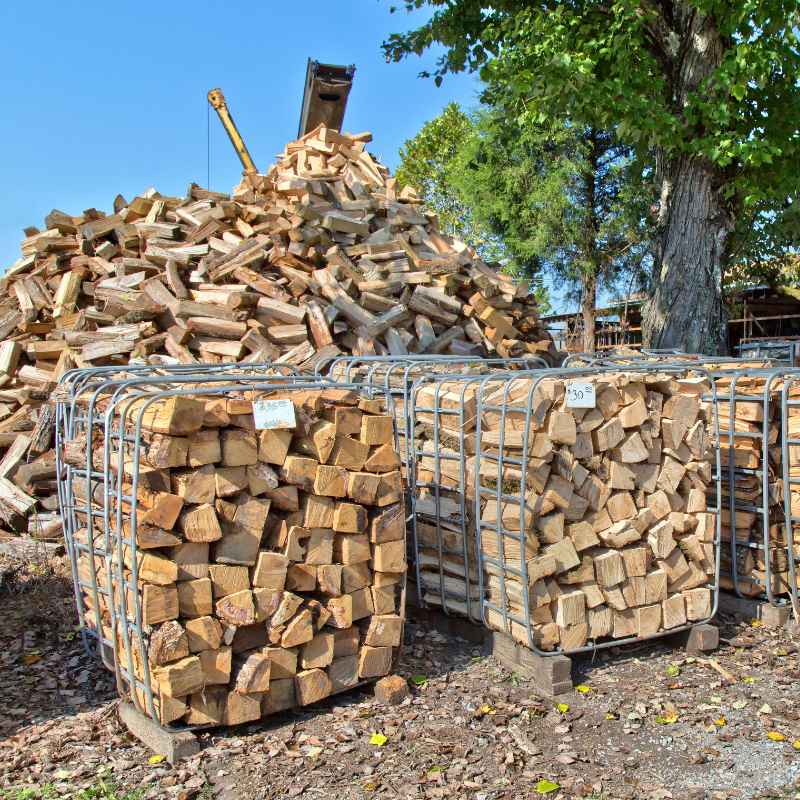
Sometimes wood is delivered in large bins or cages. These are often designed to hold a specific amount of wood. A common size for these cages is around 4x4x8 feet.
If the cage is filled, it should hold a cord.
It’s helpful to have a tape measure handy when wood is delivered. You can quickly check the dimensions of the stack. Is it close to 8 feet long?
Is it about 4 feet high? Does it look about 4 feet deep?
If the stack looks short or narrow, don’t be afraid to ask about it. A good seller will be happy to show you how they measure. They want you to be happy with your purchase.
Remember that stacking also helps the wood season. Seasoned wood is dry wood. Dry wood burns better and hotter.
It produces less smoke. So, a good stack is good for storage and burning.
Assessing a Stacked Cord
Visual Check: Look for a neat, rectangular pile.
Dimensions: Aim for roughly 8 feet long, 4 feet high, and 4 feet deep.
Log Alignment: Logs should be mostly uniform in length and laid parallel.
Air Gaps: Natural air spaces between logs are expected and good.
Seller Practices: A reputable seller will stack wood to standard dimensions.
How Much Wood Is in a Cord? (A Deeper Look)
This is where things can get a little tricky. We know a cord is 128 cubic feet of space. But how many actual pieces of wood are in there?
This varies a lot. It depends on the log size.
Let’s imagine a cord made of 16-inch logs. If these logs are about 4-6 inches in diameter, you might have around 500 to 700 pieces of wood. This is a rough estimate.
Some sources say it’s closer to 600 to 800 pieces.
If the logs are thinner, you’ll have more pieces. If they are very thick, you’ll have fewer pieces. For example, if you have logs that are 10 inches in diameter, you’ll have far fewer pieces than if they are 4 inches.
Another way to think about it is by weight. A cord of seasoned hardwood weighs roughly 4,000 to 5,000 pounds. A cord of seasoned softwood might weigh less, around 3,000 to 4,000 pounds.
The weight can also change based on moisture content. Wet wood is much heavier. So, weight is not always the best measure of a cord.
Volume and dimensions are more reliable.
I remember one time I ordered wood. It was a very cold week. The delivery truck arrived.
The wood looked like a big pile. It seemed okay at first. But when I started stacking it myself, I noticed how much space was in between the logs.
The logs were cut quite short. And many were quite thin. It felt like less wood than I expected for the price.
That’s when I learned to really look at the stack and ask questions upfront. It saved me a lot of frustration later.
So, while we can estimate the number of pieces or the weight, the most solid way to know what you’re getting is the stacked volume. The 8x4x4 dimensions should be your guide.
Why Does the Standard Cord Size Matter So Much?
The standard cord size is important for several reasons. It creates a uniform market. Buyers and sellers can communicate clearly.
This prevents disputes. It also helps with pricing. You can compare prices from different suppliers more easily.
Without this standard, every firewood purchase would be a gamble. You might buy what you think is a cord. But it might be a face cord or just a loose pile.
This could lead to much less wood than you need. Then you’d have to make another trip or order more wood sooner.
For people who rely on wood heat, this is critical. Running out of wood in the middle of winter is dangerous and uncomfortable. Having the right amount means a warm home.
It means peace of mind.
The 128 cubic feet standard is used by many local and state governments. Some states have laws about how firewood must be sold. These laws often refer to the standard cord.
They ensure fair trade practices.
It’s also important for budgeting. If you know a cord costs $X, you can plan your firewood expenses. If the size can change, your budget can get thrown off.
You might spend more than you planned.
So, the standard cord is more than just a number. It’s a system that helps ensure fairness and predictability in the firewood market. It’s a tool for homeowners to get what they pay for.
Benefits of the Standard Cord
Fairness: Ensures buyers receive a consistent amount of wood.
Clarity: Creates a common language for sellers and buyers.
Comparison: Allows for easy price comparison between suppliers.
Budgeting: Helps homeowners plan their firewood expenses accurately.
Legal Compliance: Many states have regulations based on the standard cord.
What to Look for When Buying Firewood
When you’re ready to buy firewood, keep these tips in mind. They will help you get the best value. They will also ensure you get the amount you need.
1. Ask About Dimensions: Always ask if the seller sells by the true cord (8x4x4 feet) or a face cord. If they mention “ricks,” ask for clarification.
Get the dimensions in writing if possible.
2. Check for Stacking: When the wood is delivered, watch how it’s stacked. Is it a neat pile?
Does it look like it will measure up to 8x4x4 feet? Avoid loose piles if you can. They can hide a lot of air.
3. Inspect the Wood: Look at the wood itself. Is it seasoned (dry)?
Seasoned wood is lighter. It often has cracks on the ends. It makes a hollow sound when knocked.
Avoid wet or green wood. It burns poorly and creates more creosote.
4. Consider Wood Type: Hardwoods like oak, maple, and hickory burn longer and hotter. Softwoods like pine and fir burn faster.
They are good for starting fires. Know what type of wood you are buying.
5. Delivery and Stacking Service: Does the price include delivery? Does it include stacking?
If you have mobility issues, this service is very important. Make sure it’s clear what’s included.
6. Reputable Seller: Buy from sellers with good reviews. Ask neighbors for recommendations.
A trusted seller will be honest about the quantity and quality of wood.
7. Measure if Possible: If you can, discreetly measure the stack after it’s delivered. A quick check of the length, height, and depth can give you confidence.
Is it close to 8 feet long? Is it 4 feet high? Does it seem about 4 feet deep?
I had a neighbor once who always bought from the same guy. The wood was always seasoned. It was always stacked neatly.
He never had to worry about running out. He just knew he’d get a good deal. He’d often say, “It’s not just about the price, it’s about the peace of mind.” That really stuck with me.
Face Cords vs. True Cords: A Critical Distinction
This is probably the most common point of confusion. Let’s make it crystal clear. A true cord is the standard 128 cubic feet (8ft x 4ft x 4ft).
A face cord is much smaller.
A face cord is typically 8 feet long and 4 feet high. But it’s only 16 inches deep. This depth is the length of one log.
So, a face cord is one row of wood. It’s essentially one “face” of a larger stack.
To visualize this, imagine building a wall of wood. A true cord is like a thick wall. A face cord is like a thin wall.
The thin wall is only as deep as a single log is long.
Since a true cord is 4 feet (48 inches) deep and a face cord is 16 inches deep, a true cord is about three times bigger than a face cord. That means a face cord is about one-third of a true cord.
This difference can mean a huge price gap. A seller might offer a “cord” for $200. If they mean a face cord, you’re paying $200 for about 42.67 cubic feet of wood.
If you expected a true cord, that same $200 would get you less than half of what you thought you were buying.
Always, always, always clarify. Ask, “Is that an 8x4x4 cord, or is it a face cord?” If they say “face cord,” do the math. If they say “rick,” ask for the depth.
It’s better to be a little too careful than to be short on wood when you need it most.
I learned this the hard way one year. I was new to heating with wood. I saw a great price advertised.
It said “Firewood for Sale – $150 a Cord.” I thought, “Wow, that’s a deal!” I ordered it. The wood came. It was stacked 8 feet long and 4 feet high.
But it was maybe only a foot deep. It was gone in a few weeks. I was shocked.
I realized I’d bought a face cord without knowing the term. It was an expensive lesson. Now, I ask very specific questions about dimensions.
Face Cord vs. True Cord Comparison
| Feature | True Cord | Face Cord |
| Dimensions | 8ft L x 4ft H x 4ft D | 8ft L x 4ft H x 16in D |
| Total Volume | 128 cubic feet | Approx. 42.67 cubic feet |
| Relationship | Standard Unit | Roughly 1/3 of a True Cord |
Always confirm which type of cord is being sold.
What Does “Seasoned” Firewood Mean?
We touched on this, but it’s worth a bit more detail. Seasoned firewood means the wood has been dried. This process is very important.
Unseasoned (green) wood is full of moisture.
Drying the wood takes time. It can take six months to two years. It depends on the wood type and the climate.
The wood needs to be stacked properly. It should be elevated off the ground. It needs good air circulation.
Covering the top helps keep rain off.
Why does this matter for dimensions? Well, wet wood is much heavier. A cord of green wood will weigh more than a cord of seasoned wood.
This can be misleading if you’re buying by weight. But the volume should still be 128 cubic feet.
More importantly, green wood burns poorly. It smolders. It produces a lot of smoke.
This smoke contains creosote. Creosote can build up in your chimney. This is a fire hazard.
It can lead to chimney fires.
Seasoned wood is drier. It burns hotter. It burns cleaner.
It produces less smoke. It’s much more efficient for heating your home. It’s also more pleasant to burn.
So, when you look at a cord of firewood, try to gauge its dryness. Seasoned wood often looks a bit faded. The ends might be cracked.
It often feels lighter than you’d expect. When you knock two pieces together, they should make a clear, hollow sound.
Is There a “Metric Cord”?
In countries using the metric system, firewood is often sold by the cubic meter. One cubic meter is about 35.3 cubic feet. A standard cord (128 cubic feet) is roughly 3.6 cubic meters.
Sometimes, you might see terms like “face cord” used in Canada. However, the standard for a “cord” in North America is generally the 128 cubic feet, regardless of whether people use Imperial or Metric for other measurements.
If you’re ordering firewood internationally, or from a company that uses metric units, be very clear about the volume. Ask for the dimensions in feet and meters. Convert their stated volume to cubic feet to compare it to the U.S.
standard cord.
For most people in the U.S., focusing on the 8x4x4 feet dimensions is the simplest and most reliable way to understand what a cord of firewood is.
How Many Fireplaces Can a Cord of Wood Heat?
This is another question that has many answers. It depends on a few things:
- How cold is it? Colder weather means you’ll burn more wood.
- How well is your home insulated? A well-insulated home loses less heat.
- What type of heating system do you have? Is wood heat your primary source?
- How efficient is your wood stove or fireplace? Modern stoves are much more efficient than old open fireplaces.
- How often do you use it? Are you heating all day, or just for a few hours in the evening?
As a very general guideline, a cord of seasoned hardwood might heat a well-insulated home with an efficient wood stove for about a month or two during the cold winter season. For an older, open fireplace, it might only last a week or two.
I’ve seen people heat their entire homes all winter with just 3-4 cords of wood. Others might only use wood for ambiance in the evenings and go through 2-3 cords a year. It truly varies.
The key is to have enough wood stored. Knowing the dimensions of your cord helps you estimate how much space you need for storage. A true cord is a substantial pile, about the size of a small car.
You need a good spot to keep it dry and accessible.
What to Do If You Think You Didn’t Get a Full Cord
If you suspect you didn’t receive a full cord, here’s what you can do:
- Check the dimensions: When the wood is delivered and stacked, take out your tape measure. Is the stack roughly 8 feet long, 4 feet high, and 4 feet deep?
- Look at the packing: Is there an excessive amount of air space? Were the logs cut much shorter than promised?
-
Contact the seller: Politely explain your concerns.
Share your measurements. A good seller will want to make it right. They might offer to bring more wood or provide a partial refund.
-
Know your rights: Some states have laws about firewood sales.
Research your local regulations if you can’t resolve the issue directly.
It’s always best to try and resolve things directly. Most firewood sellers want repeat customers. They want to build a good reputation.
A simple conversation can often clear things up.
Conclusion
So, the dimensions of a cord of firewood are pretty specific. It’s an 8-foot long, 4-foot high, and 4-foot deep stack. This equals 128 cubic feet of space.
Remember this space includes air gaps. It’s not solid wood. Understanding this standard is your best tool.
It helps you know what you’re buying. It ensures you get a fair amount of wood for your money. It prevents confusion with smaller measurements like face cords.
Always ask for clarification. Look at the stack. Make sure it looks right.
This way, you can stay warm all winter long.
Frequently Asked Questions About Firewood Cords
What is the standard size of a cord of firewood?
The standard size of a cord of firewood is 128 cubic feet. This is achieved by stacking wood in a pile that measures 8 feet long, 4 feet high, and 4 feet deep.
Is a face cord the same as a full cord?
No, a face cord is not the same as a full cord. A full cord (or true cord) is 8x4x4 feet (128 cubic feet). A face cord is typically 8x4x1.5 feet (about 42.67 cubic feet).
A face cord is roughly one-third of a full cord.
How much actual wood is in a cord?
A cord of firewood is 128 cubic feet of stacked space, which includes air gaps. The actual volume of solid wood is less, typically around 80-90 cubic feet, depending on log size and how the wood is stacked.
Why is the way wood is stacked important?
The way wood is stacked affects the amount of air space within the cord. A neatly stacked cord with uniform log lengths will have less air space and more actual wood volume compared to a loosely piled or irregularly stacked cord.
How many logs are in a cord of firewood?
The number of logs in a cord varies greatly depending on the diameter and length of the logs. A cord might contain anywhere from a few hundred to over a thousand pieces of wood.
What does “seasoned firewood” mean in relation to cord size?
Seasoned firewood means the wood has been dried, usually for six months to two years. While drying reduces the weight of the wood, it doesn’t change the overall stacked dimensions of a cord. A cord of seasoned wood will still measure 8x4x4 feet.
Should I buy firewood by the cord or by weight?
Buying firewood by the cord (meaning the 8x4x4 foot stacked volume) is generally more reliable than buying by weight. Wood density varies by species and moisture content, so weight can be misleading.
Sponsored / affiliate links. As an Amazon Associate I earn from qualifying purchases. I may earn additional commission from eligible campaigns.