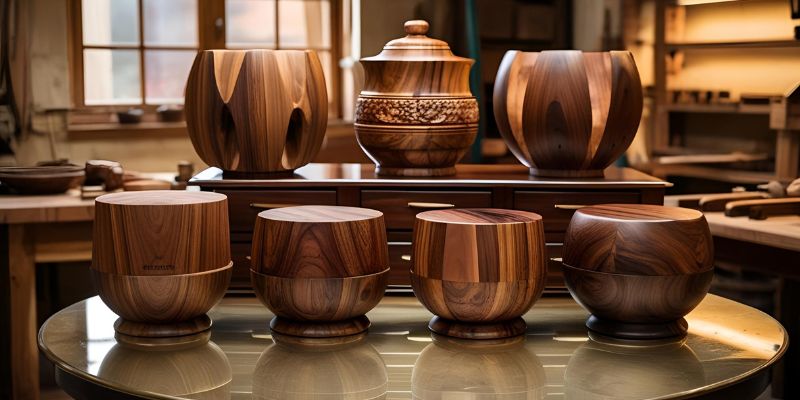
6 Walnut Wood Crafts for Rich Elegance
Choose six walnut projects that keep heartwood, sapwood, and end grain in view: walnut cutting board, end-grain butcher block board, live edge walnut slab, walnut coasters, picture frame with sapwood edge, and walnut drawer box. Pick the wrong cut or finish, and walnut can read flat, blotchy, or muddy, which wastes some of the species’ best contrast. This guide matches each craft to the best walnut cut, skill level, and finish strategy.
Walnut crafts selector table


This table ranks six walnut crafts by build difficulty, waste factor, stock thickness, tool load, and finish choice. Use it to decide whether you should spend premium walnut on a showpiece or save the best boards for a smaller project where the grain does more visual work. The waste ranges below are practical estimates, since layout, defects, sapwood tolerance, and board width can change yield a lot.
| Rank | Craft | Difficulty | Estimated waste factor | Best stock thickness | Tool set needed | Best finish type | Decision rule |
|---|---|---|---|---|---|---|---|
| 1 | Walnut coasters with holder | Easy | Low, about 10% to 20% | 3/8 in. to 1/2 in. | Table saw or miter saw, sander, clamps, drill for the holder | Wipe-on oil or hardwax oil | Pick this for offcuts, test pieces, or a first walnut project. |
| 2 | Walnut cutting board | Easy to moderate | Moderate, about 20% to 35% | 1 in. to 1 1/2 in. | Table saw, planer, clamps, orbital sander | Food-safe oil finish | Choose edge grain when you want a practical project with less waste than end grain. |
| 3 | Picture frame with sapwood edge | Moderate | Moderate to high, about 25% to 40% | 3/4 in. stock | Miter saw, corner clamps, sander | Clear oil or low-sheen clear coat | Use this when you want gallery-style contrast and can accept miter scrap. |
| 4 | Live-edge walnut slab | Moderate | Low to moderate, about 15% to 30% | 1 in. to 2 in. | Jigsaw or handsaw, sander, scraper, clamps | Oil finish | Choose this when the natural edge and sapwood border are the point of the design. |
| 5 | End-grain butcher block board | Advanced | High, about 35% to 50% | 1 1/2 in. to 2 in. | Table saw, planer, clamps, drum sander or strong sanding setup | Oiled finish | Pick this as a premium showpiece when you can tolerate more glue-up work and material loss. |
| 6 | Walnut drawer box | Advanced | Moderate, about 20% to 35% | 1/2 in. sides, 1/4 in. bottom | Table saw, router or dado setup, clamps, square, sander | Unfinished or clear coat | Choose this for furniture work when you need dimensioned parts and crisp joinery. |
Which walnut craft should you start with?
Start with walnut coasters if you want the lowest tool load and the least waste. Start with a walnut cutting board if you want a practical project that still shows walnut’s dark grain and warm contrast. Both are safer choices than end grain, which asks for more setup and more sanding.
Walnut coasters
Walnut coasters are the best scrap project in this set. The matching holder keeps the set tidy, and the small parts let you use narrow offcuts that would be too short for a board or frame. A simple square or round layout keeps the grain calm and the waste low.
For a clean set, aim for consistent thickness and matching grain direction across all four or six pieces. If the stock includes both heartwood and sapwood, keep the lighter faces aligned so the set looks intentional instead of pieced together from leftovers.
A common first-timer mistake is choosing highly figured scraps with wild color shifts for every coaster. That can make the set feel busy. One straight-grain face and one sapwood edge is enough to show walnut’s contrast without making each coaster fight the others.
Walnut cutting board
The walnut cutting board is the simplest food-use project in the list. An edge-grain build keeps the glue-up manageable and uses less material than an end-grain block. Food-safe glue and a food-safe oil finish are the right choices here, not a thick film finish. For food-contact guidance, check manufacturer instructions and reputable finishing resources such as the FDA’s food-contact overview and fine-woodworking finish guidance.
Use straight, stable boards with even moisture content and avoid twist or cup. The best stock is usually thick enough to finish near 1 in. after flattening. If the board includes sapwood, place it as a border or stripe rather than scattering it through the whole layout.
Say your 8-inch-wide walnut board has one pale sapwood strip on one edge and dark heartwood across the rest. Keep that strip intact. If you rip it out and shuffle the pieces, the board may lose the contrast that makes walnut worth the premium.
What finish makes walnut look richest?
The richest look usually comes from an oil finish or another low-sheen finish that keeps walnut’s grain readable. Walnut already has a deep chocolate tone, and a film that sits too heavily on top can mute the color shift between heartwood and sapwood. A thin, even finish keeps the wood looking clear.
Picture frame with sapwood edge. A picture frame with a sapwood edge is one of the best places to use contrast on purpose. The frame uses miter joints, corner clamps, and a deliberate strip of sapwood to make the lighter wood read as part of the design, not a defect. That works well in gallery-style spaces.
Use straight 3/4-inch stock with enough width to allow clean miters after planing. Tight miters matter more than decorative shape here, because gaps are easy to spot on dark walnut. A clear oil or low-sheen clear coat keeps the edge detail visible without making the surface look plastic.
Picture a 5×7 frame where one rail carries a narrow sapwood line at the outer edge. That single light band gives the frame more contrast than a darker, fully heartwood version would, especially on a pale wall.
Live-edge walnut slab
The live-edge walnut slab uses the natural edge as part of the design, so finish choice should stay quiet. A simple oil finish lets the sapwood border and bark line read as natural features. This is a strong choice for a serving board, small shelf, or decor piece where the edge does the visual work.
Use a slab with stable edges and enough thickness to sand cleanly without flattening the live edge too much. If the bark is loose, remove it before finishing. The goal is not a perfect rectangle. It is a controlled shape that keeps the natural edge believable and durable.
How do you keep walnut contrast even?
Keep walnut contrast even by sorting parts before you cut, matching grain direction, and using a finish that does not cloud the surface. End-grain pieces need careful sanding because end grain absorbs finish differently. Drawer boxes need tight layout and consistent stock thickness so the dark and light sections line up cleanly.
End-grain butcher block board
An end-grain butcher block board is the premium showpiece in this group. The checker pattern is the whole point, and the oiled finish helps the pattern stay readable. It is also the most demanding option, because the glue-up, flattening, and sanding all take more time than an edge-grain board.
Use thick stock so the finished board still has useful mass after flattening. Keep the blocks uniform in size and dry them evenly before glue-up. If the blocks vary too much, the checker pattern can drift and look lopsided instead of deliberate.
Choose this only when the extra wood use is worth it. End grain gives a high-end look, but it is not the best scrap saver. It makes sense for a centerpiece board, less so for a quick weekend project.
Walnut drawer box
A walnut drawer box works best with solid walnut and dimensioned parts, not random full-width boards. The usual setup is 1/2-inch thick sides and a 1/4-inch bottom, which gives enough strength for a furniture drawer without making the box bulky. Clear coat or an unfinished interior is common here.
Keep the grain direction aligned so seasonal movement stays predictable. Black walnut is a good furniture wood because it machines cleanly and looks calm in a cabinet opening, but tight joinery matters more than a fancy surface. Small gaps at the corners show up fast against dark wood.
Suppose a drawer side has a pale sapwood strip near one corner. Put that strip in a less visible area or keep all four sides matched. If one side reads light and the others read dark, the box can look uneven even when the joinery is sound.
Black walnut basics
Black walnut has deep chocolate heartwood and creamy sapwood, and that contrast is why it works so well in small crafts and furniture. Walnut wood grain is rich and dark, and the look is strongest when you leave the surface clean and choose a finish that lets the figure stay visible. Oil finish suits that job well.
Why walnut works for small crafts and furniture
Walnut is strong enough for furniture and small decor, but it is not only a furniture wood. It also works well in kitchen items, wall decor, maintenance pieces, and DIY projects when you match the cut to the job. The guide’s six crafts cover that range without drifting into unrelated builds.
For small projects, walnut is often worth the premium when the grain will remain visible, as in a frame, coaster set, or serving board. For hidden parts, the value drops fast. A drawer bottom or cabinet back does not need the same visual grade as a front rail or face frame.
Wood that pairs well with walnut in a craft project usually has a clear contrast, such as a pale maple or ash accent. That contrast works best when the lighter wood is used sparingly. Too much of it can flatten the walnut instead of making the dark grain stand out.
Stock selection matters before the first cut. Look for FAS or clean common walnut boards when the face will show, and accept common-grade material when you can work around defects. Allow sapwood if the design uses it on purpose, choose thickness based on the final part, and screen out twist, checks, pith, and loose knots that will complicate joinery or finishing.
Where do you buy walnut wood for woodworking?
Buy walnut wood for woodworking from hardwood lumberyards, local mills, cabinet shops that sell offcuts, and reputable online lumber suppliers. For project work, ask for Black walnut, not generic “walnut,” and inspect for straight grain, usable width, and moisture condition before you commit to a board.
Is walnut a light wood?
No. Walnut is generally considered a dark wood because Black walnut heartwood is deep brown, sometimes with purple or gray undertones. The sapwood is much lighter, which is why the species can look dramatic in frames, coasters, and slabs. That contrast is a feature, not a flaw, in these six projects.
Walnut vs chestnut wood
Walnut and chestnut can both read rustic, but walnut is darker, smoother in appearance, and usually more premium for fine woodworking. Chestnut often shows larger pores and a more open texture. If you want crisp contrast and a refined finish, walnut is the better pick for the projects in this list.
What wood pairs well with walnut?
Light woods like maple, ash, and birch pair well with walnut because they make the dark heartwood stand out without competing with it. Use the lighter species as an accent, border, or structural contrast. That approach works especially well on a picture frame, drawer box, or live-edge piece.
- Sort the walnut boards by heartwood, sapwood, and grain straightness before you cut.
- Choose the thinnest stock that still fits the project’s strength needs.
- Keep sapwood on one edge, one border, or one deliberate accent line.
- Use oil or another low-sheen finish when you want the grain to read clearly.
- Reserve end grain and thick stock for showpieces, not scrap-saving projects.
Walnut wood maintenance is simple if you keep it gentle. Use a wax conditioner or orange oil polish when the piece needs refreshment, and avoid harsh chemicals that can cloud the finish or dry the surface. For food-contact projects, follow the finish maker’s care directions and keep the surface lightly cleaned, not soaked.
Sources
FDA food-contact guidance on materials and safe use of finished wood surfaces; Forest Products Laboratory resources on wood moisture, movement, and dimensional stability; university extension and hardwood lumber references on walnut properties, grading, and defect screening; finishing manufacturers’ care recommendations for oil and hardwax-oil surfaces.
Frequently asked questions
What are the best walnut wood crafts for a beginner?
Walnut coasters and an edge-grain walnut cutting board are the best beginner projects here. They need fewer specialized tools, waste less material, and still show the dark heartwood and creamy sapwood contrast. If you want a first project with a lower risk of layout errors, start with the coaster set.
How do I choose the right walnut stock for a small craft?
Choose straight grain, stable boards, and stock thickness that matches the part, not the whole board. For small crafts, 3/8-inch to 1/2-inch stock often works for coasters, while a frame usually wants 3/4-inch material. Keep sapwood where it looks intentional, not accidental.
What finish makes walnut crafts look the richest?
An oil finish usually gives walnut the deepest look because it leaves the grain visible and keeps the color from looking muddy. That choice works especially well on picture frames, live-edge slabs, and serving boards. For furniture parts, a clear coat can work when you need extra protection.
What walnut craft uses the least wood waste?
Walnut coasters use the least wood waste because they can be cut from small offcuts and narrow scraps. A matching holder uses only a little extra stock. If you want the next-best low-waste option, a live-edge slab can also preserve more of the original board shape.
How do I keep walnut and sapwood contrast from looking uneven?
Keep the contrast even by grouping similar color sections together and using them on purpose. One sapwood edge, one border, or one accent strip looks cleaner than random pale patches. On a frame or drawer box, align the sapwood so it reads as a design choice.
What tools do I need for simple walnut woodworking projects?
For simple projects, you usually need a saw, clamps, sanding tools, and a square. A cutting board adds a planer if you want flat glue-up stock, while a picture frame benefits from corner clamps. End-grain boards and drawer boxes need more precise setup and more sanding capacity.
Is walnut wood good for furniture and small decor?
Yes. Walnut is a strong choice for furniture and small decor because it machines well, takes a clear finish, and has a dark grain that stands out in smaller pieces. It is especially effective where the face will stay visible, such as frames, drawer fronts, and serving pieces.
What is walnut wood good for?
Walnut works well for furniture, flooring, kitchens, wall decor, outdoor-adjacent pieces, maintenance items, and DIY projects. For this article’s six crafts, it is strongest in projects where the grain and color are part of the design. Hidden parts rarely justify the same grade of walnut.
Sponsored / affiliate links. As an Amazon Associate I earn from qualifying purchases. I may earn additional commission from eligible campaigns.
 12 Pack Basswood Sheets 1/8x18x12 Inch, Unfinished Wood for Crafts, 3mm Basswood for Laser Cutting Engraving, Wood Burning, Architectural Models, Plywood Board for Painting. (18x12x1/8inch)
 12 Pack Basswood Sheets 1/8x20x12 Inch, Unfinished Wood for Crafts, 3mm Basswood for Laser Cutting Engraving, Wood Burning, Architectural Models, Plywood Board for Painting. (20x12x1/8inch)