Black Staining Polypore Vs Hen Of The Woods: Key Differences
It can be tough to tell certain mushrooms apart. Especially when they look a bit alike. You might find a yummy-looking mushroom in the woods.
Then you wonder, is it edible? Is it safe? This happens a lot with fungi.
Today, we’re looking at two such mushrooms. They are the Black Staining Polypore and the Hen of the Woods. Both can show up around the same time.
And they can grow in similar places. Knowing the differences is really important for safety. Let’s dive in and clear things up.
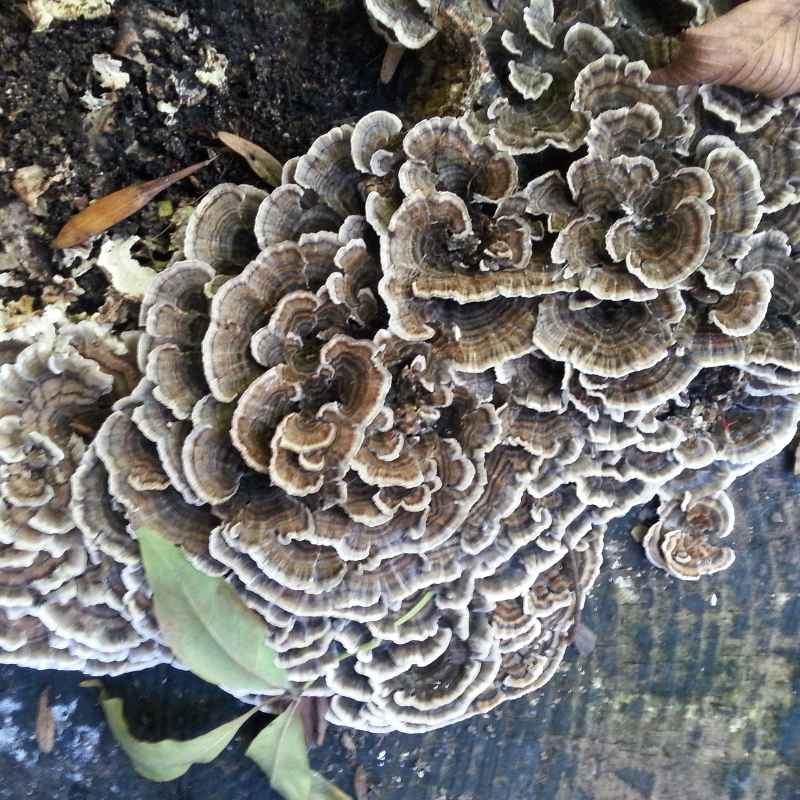
The Black Staining Polypore (Meripilus giganteus) and Hen of the Woods (Grifola frondosa) are distinct mushrooms. The Black Staining Polypore turns black quickly when bruised and has a softer, more porous texture. Hen of the Woods is typically paler, grows in distinct frilly clusters, and does not stain black.
Both are edible but require careful identification.
Understanding the Black Staining Polypore
The Black Staining Polypore is a fascinating fungus. It’s also known by its scientific name, Meripilus giganteus. This mushroom is a polypore.
That means it grows pores on its underside instead of gills. You’ll often find it growing at the base of trees. Especially hardwoods like oak and beech trees.
It can also grow on dead wood. This mushroom is known for its large size. It can grow quite big.
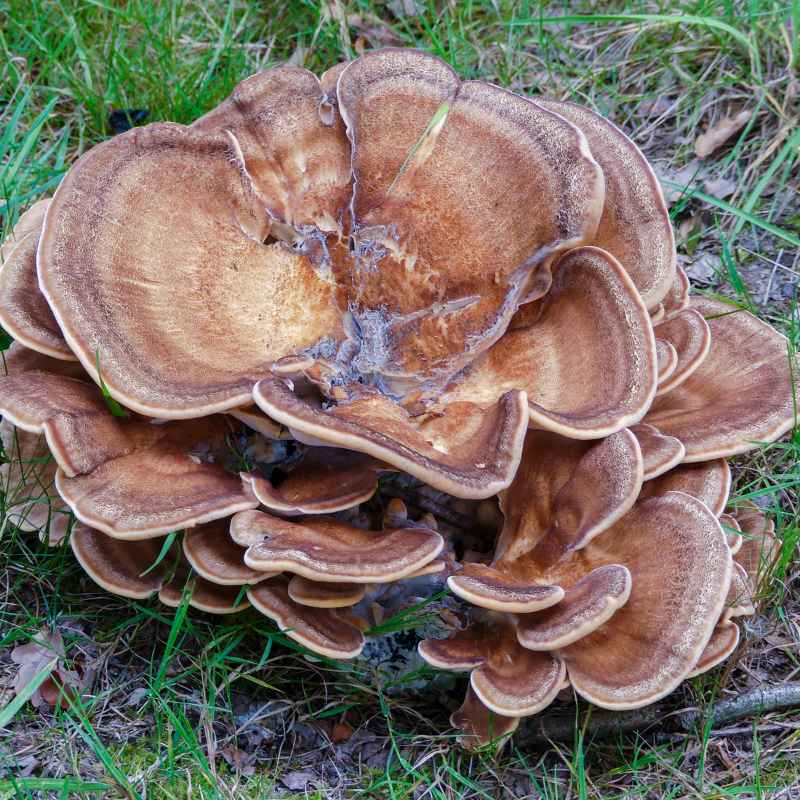
It often appears as a single large mass. Or it can form several smaller shelves. They all grow from one point.
One of the most striking things about this mushroom is what happens when you touch it. Or when you cut it. It quickly turns a deep, dark black.
This is where it gets its common name. It’s like it’s blushing black! This black staining is a very clear sign.
It’s a key feature to look for. The texture of the Black Staining Polypore is also important. It’s usually quite soft and fleshy.
Especially when it’s young and fresh. As it gets older, it can become a bit tougher. But it’s still not as leathery as some other polypores.
The color of the Black Staining Polypore when fresh is a bit different. It’s usually a light brown. Sometimes it can be more of a creamy or tan color.
The pores underneath are very fine. They are usually white or cream-colored at first. But they also turn black when bruised.
The shape can vary. It often looks like a fan. Or it can be more rounded.
Think of a shelf fungus. But a softer, more colorful one. It tends to grow in clusters.
But it’s usually one big main body. With smaller lobes spreading out.
When you cook the Black Staining Polypore, it can be quite tasty. Many people describe its flavor as mild. Some say it’s a bit nutty.
It has a satisfying texture. It’s great for sautéing. Or adding to stews.
However, some people find it a bit too tough if not cooked properly. Or if it’s an older specimen. Like many wild mushrooms, it’s best to cook it thoroughly.
This helps with digestion. It also makes the flavor better. Always be 100% sure of your identification before eating any wild mushroom.
This cannot be stressed enough.
Introducing Hen of the Woods
Now, let’s talk about Hen of the Woods. Its scientific name is Grifola frondosa. This mushroom is also known as Maitake.
It’s a very popular edible mushroom. It’s found in many parts of the world. Like the Black Staining Polypore, it’s a polypore.
It grows from the base of trees. Again, it likes hardwoods. Oak trees are a favorite.
You might see it in forests. Or even in parks and yards with old oak trees. It usually shows up in late summer and fall.
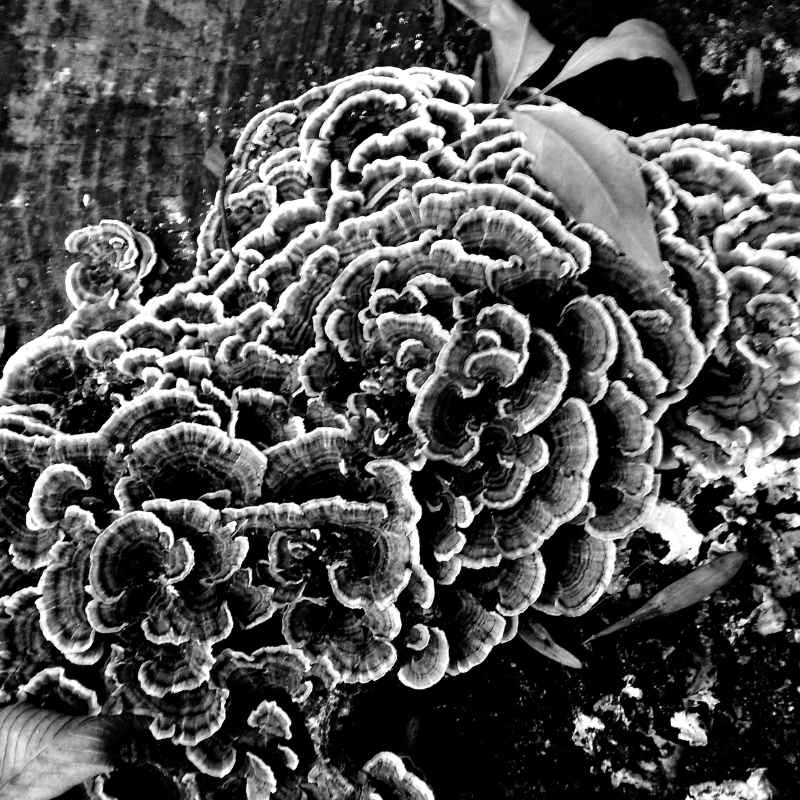
The appearance of Hen of the Woods is quite distinctive. It looks like a big, fluffy hen. Or a cauliflower.
It’s made up of many small, spoon-shaped or fan-shaped caps. These all grow from a central, thicker stem. This gives it that unique, bushy look.
The color is usually lighter than the Black Staining Polypore. It’s often a mix of gray, brown, and cream colors. The edges of the caps are usually lighter.
They might be almost white. This layered look is very pretty.
Unlike the Black Staining Polypore, Hen of the Woods does not stain black when bruised. This is a super important difference. If you bruise it, it might just get a little darker.
But it won’t turn that deep black. The texture is also different. While it’s meaty and firm, it doesn’t have the same immediate softness.
It’s more dense. And it doesn’t bruise to black. The pores underneath are small.
They are usually white or pale cream. They don’t turn black.
Hen of the Woods is highly prized for its taste and texture. It has a rich, earthy flavor. Some people describe it as slightly peppery.
It has a satisfying, chewy texture. This makes it great for many dishes. It’s often grilled, roasted, or sautéed.
It can also be used in soups. Some people even use it in stir-fries. It holds its shape well when cooked.
This is why it’s so popular with chefs and home cooks alike. It’s also known for potential health benefits. Many cultures have used it in traditional medicine.
When you find Hen of the Woods, it’s usually a substantial find. These mushrooms can get quite large. A single specimen can weigh several pounds.
It’s a truly impressive sight in the woods. Its ruffled, layered appearance is hard to mistake once you know what to look for. The key is that dense, clustered growth.
And the lack of black staining.
Side-by-Side: Key Differences Explained
Let’s break down the differences clearly. This is where knowing your mushrooms really matters. Comparing them directly helps a lot.
Think of it like a quick checklist.
Spotting the Differences: A Quick Guide
Black Staining Polypore (Meripilus giganteus)
Color: Light brown to tan when fresh. Darkens significantly.
Bruising: Turns jet black very quickly.
Texture: Soft, fleshy, sometimes a bit rubbery when old.
Shape: Often a single large mass with wavy edges. Lobes can be distinct.
Growth: Usually at the base of trees, can be on roots.
Hen of the Woods (Grifola frondosa)
Color: Grayish-brown to creamy white. Lighter overall.
Bruising: Does NOT stain black. May slightly darken.
Texture: Meaty, firm, dense. Caps are thin.
Shape: Distinct cluster of frilly, fan-shaped or spoon-shaped caps from one base.
Growth: Typically at the base of trees, especially oaks.
The black staining is the biggest clue. If you touch it and it turns black, it’s likely the Black Staining Polypore. If it stays light or just a bit darker, it’s probably Hen of the Woods.
But don’t rely on just one thing. Always look at the overall appearance. And the texture.
And where it’s growing.
My Own Experience: A Close Call in the Woods
I remember one crisp autumn afternoon. The leaves were brilliant shades of red and gold. I was walking through a local nature preserve.
My mission was simple: find some edible mushrooms for dinner. I’d been studying my field guides for weeks. I felt pretty confident.
Then, I saw it. A large cluster of mushrooms at the base of an old oak tree. It looked promising.
It had that slightly ruffled, layered look.
My heart started to beat a little faster. Could this be it? The legendary Hen of the Woods?
I carefully approached. The color was a bit darker than I expected. More of a deep brown.
And some parts looked a little… off. I gently touched one of the outer caps. To my surprise, it immediately turned a dark, inky black where I’d touched it.
My stomach dropped. That wasn’t right. Hen of the Woods doesn’t do that.
Suddenly, a wave of panic mixed with annoyance washed over me. I’d almost made a mistake. A potentially dangerous one.
I remembered reading about the Black Staining Polypore. Its rapid blackening. This was exactly what the books described.
I pulled out my phone and double-checked images. The shape was similar, yes. But the reaction to touch was the undeniable difference.
I took a few photos. Then I backed away. I decided to stick with the more familiar mushrooms I’d found earlier.
That day taught me a valuable lesson. Never be complacent. Always verify.
And when in doubt, leave it out. The woods are full of treasures, but they also hold risks. Respect them.
Where These Mushrooms Grow
The habitat of these two mushrooms is quite similar. This is why they can sometimes be confused. Both prefer the company of hardwood trees.
Oak trees are a common host for both. You’ll often find them growing from the ground. This is usually right at the base of the tree.
They can also grow on decaying wood. Or on buried roots. This is typical for many polypore fungi.
They are decomposers. They help break down dead organic matter.
The season for both mushrooms is generally late summer through fall. This is when the temperatures are cooler. And there’s usually enough moisture.
The exact timing can vary depending on your location. And the weather patterns of the year. In the Northeastern United States, for example, you might start seeing them in August.
And they can continue into October. Or even November, if the weather stays mild.
Location matters too. You’re more likely to find these mushrooms in forested areas. Especially those with mature hardwood trees.
This includes forests, woodlands, and even some parks. If you have large, old oak trees in your yard, keep an eye out. You might be surprised what shows up!
It’s always a good idea to be familiar with the trees in your area. Knowing what kind of trees are around can help you predict where to look.
Fungal Hosts & Habitats
Primary Tree Types:
- Oaks (Quercus species)
- Beech (Fagus species)
- Maple (Acer species)
- Birch (Betula species)
Growth Locations:
- Base of living hardwood trees
- Buried roots of trees
- Decaying hardwood logs and stumps
Typical Season: Late summer through fall (August – October/November in many US regions).
Environment: Deciduous forests, woodlands, parks with mature hardwood trees.
Remember, foraging for mushrooms carries risks. Always be in a safe environment. And be aware of your surroundings.
Never forage alone if possible. Especially if you are new to it. Stick to areas you know.
And be mindful of private property.
Identifying Characteristics: A Deeper Look
Let’s get into the finer details. These are the things that expert foragers look for. Things that might not be obvious at first glance.
It’s like being a detective for mushrooms.
Cap and Underside
The caps of the Black Staining Polypore are usually large and lobed. They can spread out wide. They often overlap.
The surface can be smooth or slightly velvety. The edges are typically wavy or irregular. The underside is where the pores are.
These pores are very small. They look like tiny dots. In fresh specimens, they are white or cream.
But as soon as they are bruised, they turn black. This is the most dramatic feature.
Hen of the Woods has a very different cap structure. It’s made of many individual, smaller caps. These are often described as spoon-shaped or fan-shaped.
They are arranged in a dense cluster. The color ranges from gray to brown to creamy. The edges of these individual caps are often lighter.
Almost white. They have a ruffled appearance. The underside of these caps also has pores.
They are small and white. But they do not turn black when bruised.
Stem and Flesh
The stem of the Black Staining Polypore is usually short and thick. It’s often not very noticeable because it’s hidden by the large cap. The flesh inside is white when young.
It’s quite soft and watery. This flesh will also turn black when exposed to air or bruised. This is a consistent trait.
Hen of the Woods has a more substantial stem structure. It’s usually quite thick and woody at the base. It branches out into many smaller stems.
These then connect to the individual caps. The flesh inside is firm and white. It doesn’t change color to black when bruised.
It’s dense and substantial. This gives the mushroom its meaty texture.
Microscopic Details (Simplified)
Pores:
- Black Staining Polypore: Tiny, round pores. White to cream, staining black.
- Hen of the Woods: Tiny, round pores. White to pale cream, no black staining.
Spore Print:
- Black Staining Polypore: Dark brown to black.
- Hen of the Woods: White to pale cream.
Note: Spore prints are a more advanced identification technique. Always use multiple features.
The spore print is another way to tell them apart. But it requires some effort. You place the mushroom cap on paper.
And wait for spores to drop. The Black Staining Polypore drops dark spores. Hen of the Woods drops pale spores.
Edibility and Taste Profiles
Both mushrooms are considered edible. But there are differences in their culinary qualities. And how they are best prepared.
Black Staining Polypore
When young and tender, the Black Staining Polypore is edible. Many people find it has a mild, somewhat earthy flavor. Some describe it as slightly bitter.
Especially if it’s older. The texture can be firm when cooked. It’s often compared to a mild oyster mushroom.
Or even a portobello.
However, the black staining can be a bit off-putting for some. It doesn’t affect the taste. But it can make the dish look dark.
It’s best to cook it thoroughly. Sautéing is a popular method. You can also add it to stir-fries.
Or to savory pies. Some foragers recommend peeling off the outer black layer. If it’s very dark.
This can help with appearance. And texture.
It’s important to note that some people report digestive upset from this mushroom. This is true for many wild mushrooms. It might be due to the texture.
Or compounds within the mushroom. Or simply eating too much. Always start with a small portion.
And wait 24 hours. To ensure you don’t have a reaction.
Hen of the Woods
Hen of the Woods is a culinary delight. It’s highly sought after. The flavor is rich and savory.
Many describe it as deeply earthy. Some detect a hint of pepperiness. The texture is wonderful.
It’s meaty and chewy. But also tender when cooked right.
This mushroom is very versatile in the kitchen. It’s excellent grilled. Or roasted.
Sautéing brings out its best flavor. It can also be used in soups and stews. Its robust texture holds up well.
It’s often compared to beef. Or lobster. Its distinct shape also makes it look appealing on a plate.
Many people find Hen of the Woods easier to digest than other wild mushrooms. This might be due to its unique composition. It’s also known for its potential health benefits.
It’s been studied for its immune-boosting properties. This adds to its appeal.
Culinary Comparison
Black Staining Polypore
Flavor: Mild, earthy, sometimes slightly bitter.
Texture: Soft, fleshy to slightly rubbery. Can be tough if old.
Best Uses: Sautéing, stews, stir-fries. Cook thoroughly.
Appearance Note: Stains black, making dishes dark.
Hen of the Woods
Flavor: Rich, savory, earthy, sometimes peppery.
Texture: Meaty, firm, chewy yet tender. Excellent mouthfeel.
Best Uses: Grilling, roasting, sautéing, soups, stir-fries.
Appearance Note: Attractive, frilly clusters. Does not stain black.
Regardless of which mushroom you choose to cook, always practice safe foraging. And proper cooking methods. Freshness is key.
And ensuring it’s the correct mushroom is paramount.
What This Means for You
So, what should you take away from all this information? How does it help you in the real world? It’s about making informed decisions.
And staying safe.
When is it Normal to See Them?
It’s normal to see both of these mushrooms during their peak season. Which is late summer and fall. If you’re in an area with mature hardwood forests, you might spot them.
Seeing them at the base of oak trees is very common. Don’t be surprised if you find a large cluster. These mushrooms can grow quite big.
Finding one is often a sign of a healthy forest ecosystem.
When Should You Be Concerned?
The main concern is misidentification. If you’re not absolutely certain, don’t eat it. This is the golden rule of mushroom foraging.
The black staining of the Black Staining Polypore is a good indicator. But it’s not the only feature. If you find a mushroom that looks similar but doesn’t match all the characteristics of either species, it’s best to leave it alone.
Also, be aware of look-alikes. While these two are often confused with each other, there can be other polypores that share some traits.
If you’re a beginner, it’s wise to go with an experienced forager. Or join a local mycological society. They offer walks and classes.
Learning from experts is the safest way to start. Never rely solely on photos or online descriptions. Real-world experience is invaluable.
Simple Checks to Make
Here’s a quick recap of what to check:
- Bruising: Does it turn jet black immediately when touched or cut? If yes, it’s likely the Black Staining Polypore. If not, it could be Hen of the Woods (or something else).
- Overall Shape: Does it look like a fluffy hen or cauliflower (Hen of the Woods)? Or more like a single, large, wavy-edged mass (Black Staining Polypore)?
- Color: Is it generally lighter gray-brown to cream (Hen of the Woods)? Or a deeper brown that turns black (Black Staining Polypore)?
- Texture: Is it dense and meaty (Hen of the Woods)? Or softer and more fleshy (Black Staining Polypore)?
Remember, even if it appears to be Hen of the Woods, always do your full due diligence. Check all features. And if there’s any doubt, err on the side of caution.
Your health is the top priority.
Quick Tips for Foraging
Foraging is a rewarding hobby. But it demands respect and caution. Here are some tips to keep in mind.
Know Your Local Species
Every region has its own unique fungi. Learn which ones are common. And which ones are dangerous.
Get a good field guide specific to your area. Consider joining local foraging groups. They can teach you a lot.
Always Use Multiple Identification Features
Never rely on just one characteristic. Look at the cap shape, color, texture. The underside of the cap.
The stem. The habitat. Even the smell.
Use everything you can to confirm. For key edibles, learn the specific deadly look-alikes.
When in Doubt, Throw It Out
This is the most important rule. If you are even a little bit unsure about a mushroom’s identity, do not eat it. It’s not worth the risk.
There are plenty of other delicious mushrooms out there. Or you can buy them from a trusted source.
Respect the Environment
Forage responsibly. Do not over-harvest. Leave plenty for the ecosystem.
And for other foragers. Try not to damage the habitat. Use a basket to carry your mushrooms.
This allows spores to spread as you walk.
Cook All Wild Mushrooms Thoroughly
Even edible mushrooms can cause stomach upset if eaten raw. Cooking breaks down compounds. Makes them easier to digest.
And can improve flavor. Follow recipes specific to the mushroom type.
Smart Foraging Habits
- Educate Yourself: Get reliable field guides and take courses.
- Start Small: Focus on easily identifiable species first.
- Go with Experts: Learn from experienced foragers.
- Never Eat Raw: Always cook wild mushrooms thoroughly.
- Test Reactions: Try a small amount first for new edibles.
- Respect Nature: Forage sustainably and leave no trace.
These tips will help you forage more safely. And enjoy the process more. It’s a journey of learning.
And connecting with nature.
Frequently Asked Questions
Can Black Staining Polypore be mistaken for other mushrooms?
Yes, it can be mistaken for other large polypores, especially if the black staining isn’t immediately obvious. However, its rapid blackening upon bruising is a very distinctive trait that helps differentiate it from many other common fungi. Always check all identifying features.
Is Hen of the Woods safe to eat if it’s large?
Yes, the size of Hen of the Woods does not typically affect its safety. However, very old or damaged specimens might be tough or unpalatable. It’s best to harvest them when they are firm and fresh.
The key is proper identification, not just size.
What happens if I eat a mushroom that I misidentified?
Eating a misidentified wild mushroom can range from mild stomach upset to severe poisoning, and in some cases, it can be fatal. This is why absolute certainty in identification is crucial. If you suspect you’ve eaten a toxic mushroom, seek medical attention immediately and try to bring a sample of the mushroom with you.
How do I properly prepare Black Staining Polypore for eating?
Black Staining Polypore is best prepared when young and tender. Clean it well. You can then sauté it with garlic and butter, or add it to stews.
Some foragers recommend peeling off the very dark outer layer. Ensure it is cooked thoroughly. Like any wild mushroom, start with a small portion to check for personal tolerance.
Can Hen of the Woods be found growing on logs as well as at tree bases?
While Hen of the Woods is most commonly found at the base of living hardwood trees, particularly oaks, it can also grow on decaying wood, including logs and stumps, if they are heavily rooted or buried in the ground. The central stem structure is key to its identification.
What is the best season to look for both mushrooms?
Both Black Staining Polypore and Hen of the Woods are typically found during the late summer and fall months. This usually spans from August through October or November in many temperate regions, depending on rainfall and temperature patterns.
Are there any poisonous mushrooms that look very similar to Hen of the Woods?
While there aren’t many direct poisonous look-alikes that mimic the entire clustered structure of Hen of the Woods, it’s crucial to differentiate it from other polypores. The lack of black staining is a key identifier. Always confirm with multiple features and consult reliable resources to avoid any potentially harmful fungi.
Final Thoughts on Mushroom Identification
Distinguishing between Black Staining Polypore and Hen of the Woods is a great exercise in mushroom identification. It highlights the importance of detailed observation. The black staining is a major clue for one.
While the overall clustered, frilly appearance is key for the other. Remember that safety comes first. Always be 100% sure.
Enjoy your time in nature. And happy foraging!
Sponsored / affiliate links. As an Amazon Associate I earn from qualifying purchases. I may earn additional commission from eligible campaigns.