
Ceiling Fan Blade Size Guide: Match Span to Room Dimensions
A common rule of thumb is to choose a 42-inch fan for rooms up to about 100 sq ft, 44–50 inches for 100–150 sq ft, 52 inches for 150–225 sq ft, and 56 inches or more for larger spaces; low ceilings may require a flush-mount fan. Too-small blades leave hot spots and weak circulation. Too-large blades can feel drafty and crowd low ceilings. This guide shows how to match span to room size, ceiling height, and room shape, and when one fan is not enough.
Blade span sizing table


Blade span, measured tip-to-tip, is the main sizing metric. Start with room square footage, then check ceiling height and room shape before you buy. Borderline rooms need a practical tie-breaker, not a guess.
| Room length × width | Room sq. ft. | Blade span | Mount type | Caution for borderline cases |
|---|---|---|---|---|
| 8 × 8 | 64 | 29–36 in | Flush-mount / hugger | Keep blades at least 18 inches from walls; this room is small enough that a 36-inch fan is usually the upper end. |
| 10 × 12 | 120 | 36–48 in | Standard mount or short downrod | If the room feels narrow or furniture crowds one side, lean toward the smaller end of the range. |
| 12 × 12 | 144 | 36–48 in | Standard mount or short downrod | Use blade span and ceiling height together; a low ceiling can make a 48-inch fan feel too close. |
| 12 × 16 | 192 | 48–56 in | Standard mount with downrod | This is a borderline large room. Choose the larger span if the ceiling is normal height and the room is open. |
| Open-concept over 350 sq. ft. | Over 350 | 60 in or larger, or multiple fans | Usually downrod, sometimes two fans | One fan may underperform if seating, dining, or cooking zones are spread apart. |
For a room that sits between bands, use the next larger size only if the ceiling height and wall clearances allow it. If the room shape is long, L-shaped, or open to another area, that may matter more than the exact square footage.
How do you size a ceiling fan?
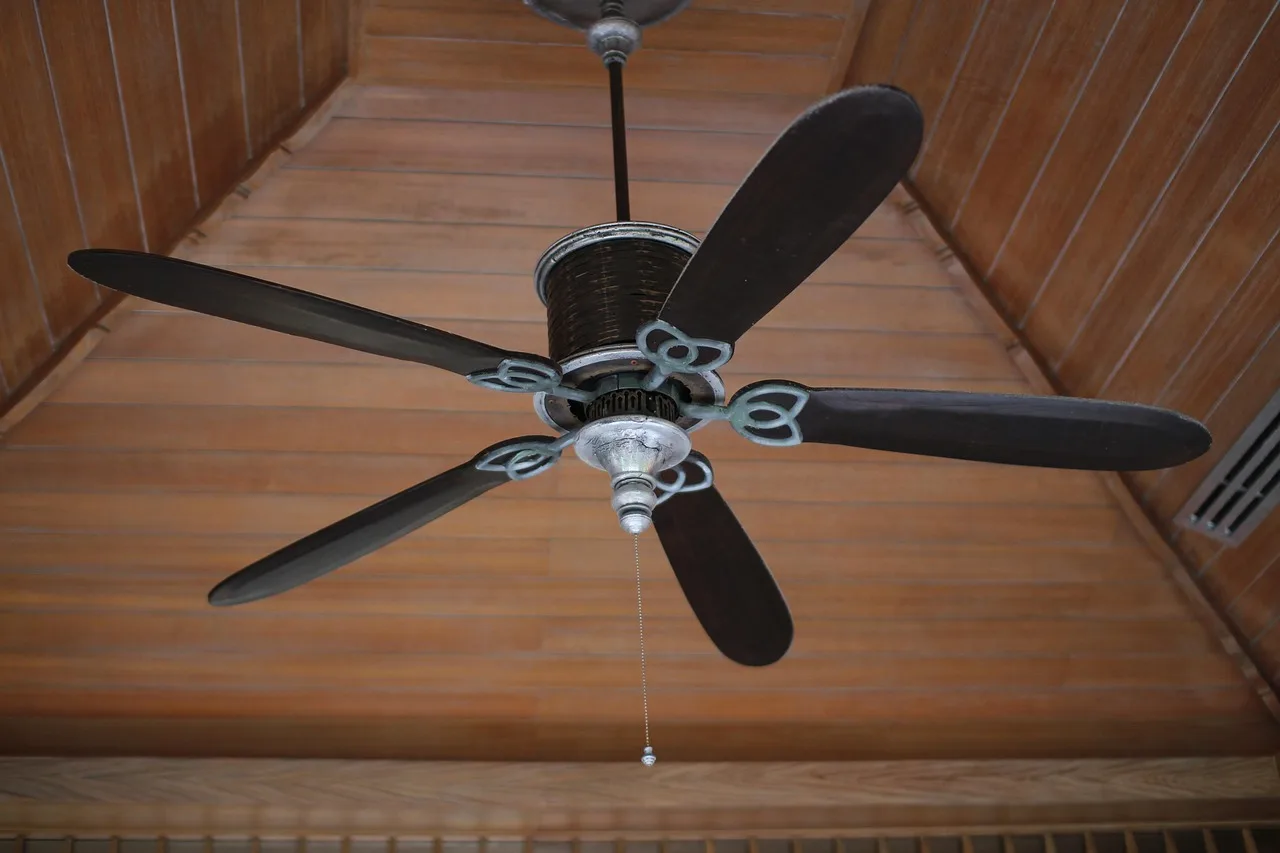
Measure the room length and width, multiply them for square footage, then use that number as the first filter. After that, check whether the ceiling height points you to a flush-mount fan or a downrod, and whether the room shape calls for one fan or two.
Measure room length and width
Use the longest usable wall-to-wall dimensions, not the footprint of one piece of furniture. A 10 × 12 room gives you 120 square feet, which lands in the 75 to 175 square foot range that typically works best with 36 to 48 inch fans.
Convert square footage to a starting size
Use room area to set the blade span band first. For rooms up to 75 square feet, 29 to 36 inch blades are recommended; rooms between 75 and 175 square feet work best with 36 to 48 inch fans; rooms from 175 to 350 square feet need 48 to 56 inch blades; spaces over 350 square feet need 60 inches or larger.
Adjust for room shape and ceiling height
A square room is simpler to size than a long hall or an L-shaped family room. If the room stretches out, or if the ceiling is low enough to limit the fan position, you may need a different mount type or an extra fan instead of one larger unit.
Suppose a room measures 12 × 16 feet, but one end opens into a dining area. The square footage says 192, but the open connection lowers the effectiveness of a single centered fan. In that case, a larger fan may still be useful, but two fans or a fan plus another air-moving source may work better.
What fan size fits your room?

The best fan size follows room square footage, then gets refined by ceiling height and shape. Small rooms need compact blades. Medium rooms fit the common 36 to 48 inch range. Larger rooms need wider spans or more than one fan.
Small rooms under 75 square feet
For rooms up to 75 square feet, 29 to 36 inch blade spans are recommended, and small rooms up to 75 square feet also work well with fans between 24 and 36 inches. That size range keeps the fan from overpowering the room while still moving air where you need it.
Use a flush-mount or hugger fan if the ceiling is low. That keeps the fan close to the ceiling and helps preserve clearance. In a small office, closet-sized room, or compact nursery, a 36-inch fan is often the practical upper limit.
Medium rooms from 75 to 175 square feet
Rooms between 75 and 175 square feet work best with 36 to 48 inch fans. Standard bedrooms and medium-sized living areas often fall in this range, so this is where the most common ceiling fan sizes land.
For a 10 × 12 bedroom, the best fit is usually 36 to 48 inches. If the room is a plain rectangle with normal ceiling height, the midpoint of the range is a safe starting point. If it is narrow, furniture-heavy, or has a low ceiling, stay closer to 36 inches.
Large rooms from 175 to 350 square feet
Larger rooms over 300 square feet also benefit from ceiling fan dimensions of 52 inches or more. In this band, blade span and airflow start to matter together.
A common mistake is choosing a 44-inch fan for a long, open-concept living room where a 52-inch blade span would better match the room dimensions. A 12 × 16 den can look like it needs a large fixture, but the room still needs enough blade span to move air across the full floor area. If the ceiling is high, a downrod usually gives better placement than a flush mount.
Rooms over 350 square feet
Spaces exceeding 350 square feet require ceiling fans with blade spans of 60 inches or larger. For rooms larger than 400 square feet, consider installing multiple fans for better air distribution. Two smaller fans spaced apart often provide better air distribution than one massive fan.
This is where room shape becomes a major factor. In an open-concept plan, one fan can leave a dead zone across the far side of the room, especially if seating and dining areas are separated.
Does ceiling height change fan size?
Yes. Ceiling height changes the mount type, the downrod need, and the blade-to-floor clearance. Low ceilings call for flush-mount fans, while standard and high ceilings usually need a downrod so the fan sits at the right height for airflow and safety.
Low ceilings and flush-mount fans
Flush-mount or hugger fans attach close to the ceiling and help preserve clearance. They are the right starting point when the ceiling is low enough that a hanging fan would crowd the space below.
If you are choosing between blade span and clearance in a low room, clearance wins. A slightly smaller fan that fits safely is better than a larger one that hangs too low.
Standard ceilings and downrod length
Downrods extend the fan below the ceiling, which helps place the blades where they can move air more effectively. On standard ceilings, a short downrod often gives the best balance of height and airflow, especially in medium and large rooms.
High ceilings and airflow reach
High ceilings usually need a longer downrod so the fan does not sit too far above the occupied space. If the fan is too high, the airflow weakens before it reaches you, even if the blade span is technically correct for the room.
How much clearance is enough?
Ceiling fan clearance is a safety step, not a guess. The blades should have at least 18 inches between blade tips and walls, and the standard industry recommendation is at least 7 feet above the floor.
Floor clearance minimums
Keep the blades at least 7 feet above the floor. That gives the fan enough vertical space for safe operation and helps avoid head clearance problems in bedrooms, hallways, and family rooms.
Wall clearance minimums
Keep at least 18 inches between blade tips and walls. That clearance helps the fan move air properly and prevents the blades from feeling boxed in.
Placement checks before you buy
- Measure room length and width.
- Check the ceiling height and decide whether you need a flush mount or a downrod.
- Mark the fan center and confirm 18 inches of wall clearance from every blade tip.
- Confirm the blades will sit at least 7 feet above the floor.
- Check whether the room is long, L-shaped, or open to another area.
Picture a 12 × 12 room with a low ceiling and a ceiling-mounted light already centered in the space. A 52-inch fan may fit the square footage, but the low ceiling and nearby light can make the install awkward. In that case, the right answer may be a flush-mount fan with a slightly smaller span.
Can one fan cover a big room?
Sometimes, but not always. One large fan can work in a square or simple rectangular room, yet long rooms, L-shaped rooms, and open-concept spaces often need more than one fan to keep air distribution even from end to end.
Long rooms and L-shaped rooms
Long rooms can have one end that feels still while the other end feels fine. L-shaped rooms can do the same because airflow does not turn corners well. In those layouts, two medium fans are often more effective than one oversized fan in the middle.
Open-concept rooms over 350 square feet
For rooms over 350 square feet, a single 60-inch-or-larger fan may be enough only if the space is open and relatively centered around one activity zone. If the room spreads into separate zones, multiple fans are usually the better layout.
When two fans work better than one
Use two fans when one fan would need to cover more than one zone, or when the room shape creates dead spots. Two smaller fans can distribute airflow more evenly than one massive fan in spaces over 400 square feet.
Blade span and CFM ranges
Blade span and CFM are related, but they are not the same thing. Blade span sets the fan’s physical reach; CFM measures airflow in cubic feet per minute. You need both the right size and enough airflow for the room.
How size relates to airflow
Smaller fans often land around 1,000 to 2,000 CFM. Medium fans can go up to 3,800 CFM. Large fans may approach about 8,000 CFM, and extra-large fans can range from about 8,000 to 16,900+ CFM.
| Blade span band | Typical room use | Common CFM range | Notes |
|---|---|---|---|
| 29–36 in | Up to 75 sq. ft. | 1,000–2,000 CFM | Good for small rooms and low ceilings. |
| 36–48 in | 75–175 sq. ft. | Up to 3,800 CFM | Common for bedrooms and medium living areas. |
| 48–56 in | 175–350 sq. ft. | Approaching 8,000 CFM | Often used in large living rooms and bigger bedrooms. |
| 60+ in | Over 350 sq. ft. | 8,000–16,900+ CFM | May still need more than one fan in open layouts. |
When airflow matters more than looks
If a room feels stuffy even though the fan looks proportionate, the issue is often airflow placement, not style. Check the blade span band first, then compare it with the room’s square footage and ceiling height. That order prevents a fan that looks right but moves too little air.
Frequently asked questions
What size ceiling fan do I need for a 10×12 room?
A 36 to 48 inch fan is the best match, with a flush-mount model for low ceilings and a standard mount or short downrod for normal ceilings.
How do I match ceiling fan blade span to room square footage?
Use room area first.
What ceiling fan size is best for a small room under 75 square feet?
For a small room under 75 square feet, 29 to 36 inches is usually sufficient. Many small rooms also work with fans between 24 and 36 inches. A hugger or flush-mount fan is often the safer choice when the ceiling is low.
Should I choose one large fan or two smaller fans for a big room?
Choose one large fan only if the room is simple and the airflow can reach the entire space. For rooms over 400 square feet, or for long, L-shaped, and open-concept layouts, two smaller fans often distribute air better than one massive fan.
Does ceiling height change what ceiling fan size I should buy?
Yes. Ceiling height affects whether you need a flush-mount fan or a downrod, and it affects blade height above the floor. A fan can have the right blade span and still be the wrong choice if it hangs too low or sits too high.
Can a ceiling fan be too big for a room?
Yes. An oversized fan can feel drafty, crowd a low ceiling, or leave the room looking unbalanced. Size the fan to the room first, then confirm that the blades still meet the 18-inch wall clearance and 7-foot floor clearance rules.
Sponsored / affiliate links. As an Amazon Associate I earn from qualifying purchases. I may earn additional commission from eligible campaigns.