Difference Between A Groundhog And Woodchuck Explained
It’s a question that pops up when you see one of those busy burrowers in your yard or out in a field. You might hear someone call it a groundhog. Another person might say, “Look at that woodchuck!” Are they the same thing?
Or are we talking about two different critters? This happens more often than you might think. Many common animals have multiple names.
Let’s clear this up right now.
The terms “groundhog” and “woodchuck” refer to the exact same animal. They are common names for the same species, Marmota monax. There is no difference between a groundhog and a woodchuck. The name used often depends on local custom or personal preference.
The Groundhog, Also Known As The Woodchuck
So, why all the different names for the same animal? It’s a bit like how people might call a soda a “pop” or a “coke” depending on where they live. The groundhog, or woodchuck, is a type of large rodent.
It belongs to the squirrel family. Its scientific name is Marmota monax. This name helps scientists know exactly which animal we’re talking about.
But common names can be fun and sometimes confusing.
Think of it this way: it’s the same animal, just with different nicknames. People have been observing these animals for a very long time. As they watched them, they gave them names based on what they saw or how they interacted with them.
These names stuck around in different places.
One common idea is that “woodchuck” comes from an Algonquian word. It might have been something like “wuchak.” This word likely described the animal. “Groundhog” is more descriptive of its habits.
It spends a lot of time digging in the ground. It digs burrows to live in and raise its young. So, both names make sense.
The animal itself is a stout, furry creature. It’s known for its powerful digging skills. They can really move dirt!
You’ll often see them near the edges of woods. They also like open fields, meadows, and even suburban backyards. They are common across much of eastern North America and parts of Canada.
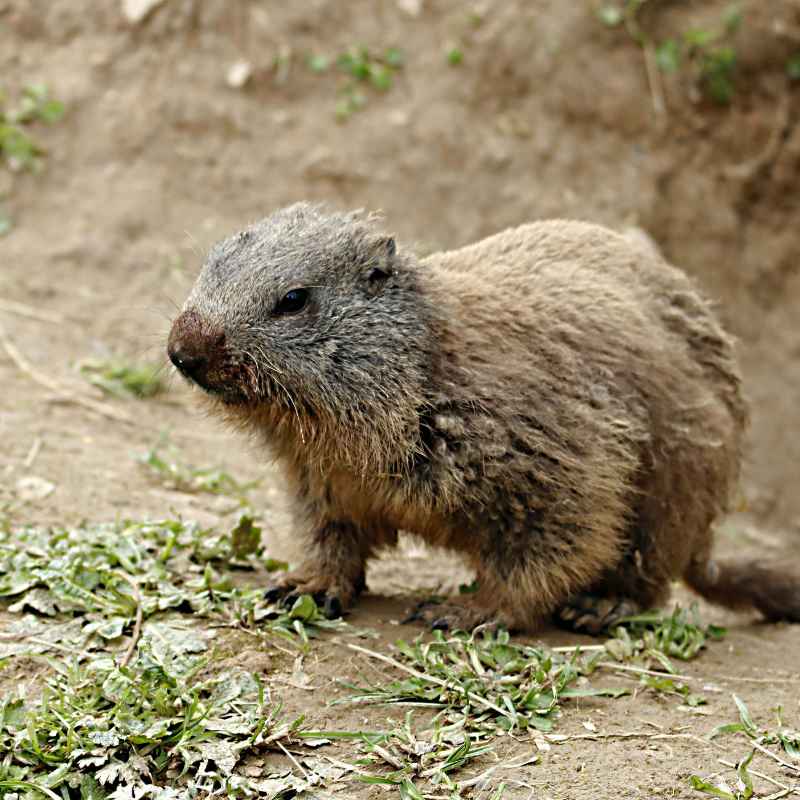
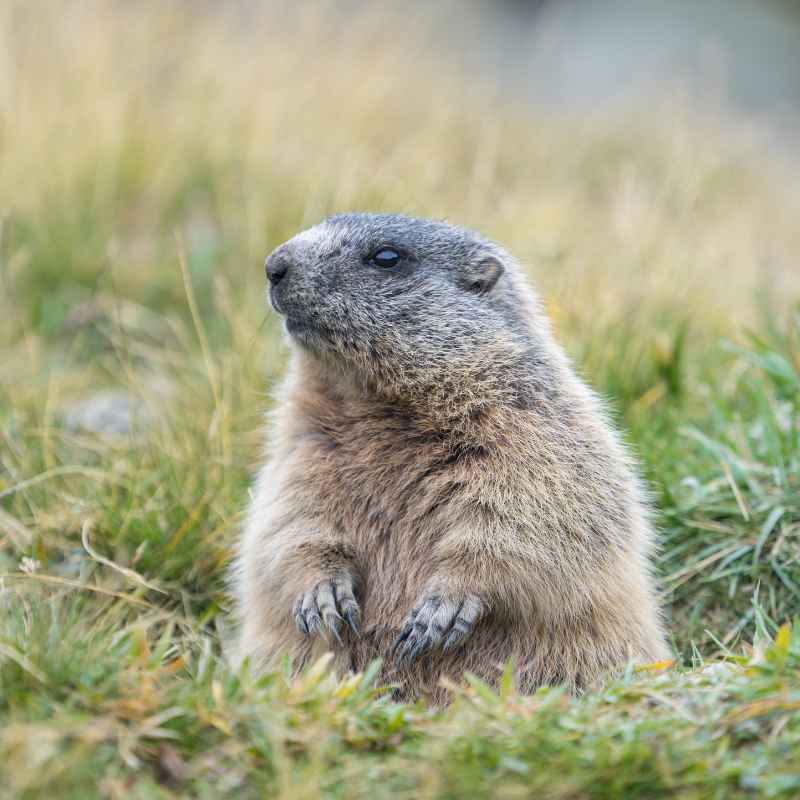
When you see one, you’ll notice its thick fur. It’s usually brownish or reddish-brown. They have small ears and a bushy tail.
Their claws are strong and built for digging. They are quite active in the spring and summer. This is when they are busy eating and preparing for winter.
What’s interesting is how they handle the cold months. Groundhogs are famous for hibernating. They dig deep burrows and then sleep through the winter.
This is a vital part of their life cycle. They need to store enough fat during warmer months to survive the long sleep.
My First Woodchuck Encounter
I remember the first time I really paid attention to one. I was staying at my aunt’s house in rural Pennsylvania. It was late spring, and the garden was just starting to take off.
I was wandering near the edge of the woods, enjoying the fresh air. Suddenly, I saw a plump, furry animal waddling across the lawn.
My first thought was, “What is that?” It looked like a very large, furry potato with legs. It paused, sniffed the air, and then started digging with incredible speed. Dirt flew everywhere!
I stood there, completely mesmerized. It was so focused on its task. I didn’t feel scared, just curious.
The sheer power and efficiency of its digging were amazing. That was my first real introduction to a groundhog, or as my aunt called it, a woodchuck. She just chuckled when I asked if they were different.
She explained they were the same creature, just called by two names.
She told me stories about how they could eat through a vegetable garden in no time. She’d seen them dig burrows that looked like little tunnels leading under her shed. It wasn’t always easy having them around, but she also respected their natural ability to thrive.
It made me see them not just as pests, but as animals with important jobs to do in their environment.
That day really stuck with me. It taught me that nature has its own naming conventions, and sometimes, the simplest explanation is the right one. They are the same animal, and that’s okay.
It’s just a part of how we talk about the world around us.
Groundhog vs. Woodchuck: A Quick Recap
No Difference: Groundhog and woodchuck are two names for the same animal, Marmota monax.
Origin: Names likely come from descriptive observation or Native American terms.
Animal Type: A large rodent in the squirrel family.
Key Traits: Excellent diggers, known for hibernating, typically brown or reddish-brown fur.
Habitat: Fields, meadows, forest edges, and near human settlements.
Understanding The Marmot Family
To really get why we have these different names, it helps to look at the bigger picture. The woodchuck belongs to the marmot family. Marmots are large ground squirrels.
There are several different species of marmots. They are found in various parts of the world, often in mountainous or open areas.
Some other well-known marmots include the yellow-bellied marmot and the hoary marmot. These are different species. They live in different regions and have their own unique characteristics.
The groundhog or woodchuck is the most widespread of the North American marmots.
Its scientific name, Marmota monax, tells us it’s a marmot. The “monax” part is thought to come from an old Native American word. It might mean “the digger” or something similar.
This again points to its most noticeable behavior. It’s a creature that really shapes the ground it lives on.
So, when people say “marmot,” they could be talking about any of these animals. But if they’re in North America and see a large, ground-dwelling rodent, it’s very likely a groundhog. The other species are typically found in more specific, often higher-altitude environments.
It’s fascinating to think about how language evolves. Different regions adopted different common names for the same animal. There wasn’t a single, central authority dictating what to call it.
Over time, both “groundhog” and “woodchuck” became widely used and understood. And today, we use them interchangeably.
In scientific circles, Marmota monax is always the way to go. It removes any doubt. But in everyday conversation, either name works just fine.
Most people understand what you mean. It’s a good example of how common names can be a bit fuzzy but still get the job done.
Why The Name “Woodchuck”?
The name “woodchuck” seems to point to where the animal lives. It’s often found near the edges of wooded areas. However, they don’t live in the trees like some squirrels do.
They live in burrows dug into the ground. They may forage in the woods but often prefer more open spaces nearby.
The theory that “woodchuck” comes from an Algonquian word is strong. Many sources point to variations like “weechahc,” “otchock,” or “wok-wok.” These words described the animal. Over time, English speakers might have heard these sounds and adapted them.
“Woodchuck” is a natural-sounding evolution of those original words.
It’s a common linguistic phenomenon. When people encounter new things, they often try to describe them using sounds or words they already know. This can lead to names that sound a bit like the original but are easier for the new language speakers to say or understand.
Some people used to think that “woodchuck” meant an animal that chucked or threw wood. This is a folk etymology – an incorrect but popular explanation. It’s fun to imagine a creature actively throwing logs, but that’s not what it does.
Its name is more about its environment and its origins.
So, the next time you hear “woodchuck,” think about those ancient sounds. Think about the Native American tribes who lived alongside these animals for centuries. Their names for the creature eventually helped shape the one we use today.
“Woodchuck” Word Origins
- Likely Algonquian Roots: Believed to come from Native American words like “weechahc” or “otchock.”
- Meaning: These original words likely described the animal itself.
- English Adaptation: English speakers adapted the sounds over time into “woodchuck.”
- Habitat Clue: The “wood” part might refer to its common location near forests.
- Debunked Theory: It does NOT mean the animal throws wood.
The Appeal of “Groundhog”
On the other hand, “groundhog” is a very straightforward name. It directly describes the animal’s main activity: burrowing in the ground. If you see an animal that digs extensively and lives underground, calling it a “ground hog” makes perfect sense.
It’s easy to understand for anyone.
This name likely arose independently. It’s descriptive and functional. It captures the essence of the animal’s lifestyle.
Many animals that dig get names related to the ground. Think of “ground squirrel” or “ground beetle.”
The “groundhog” name gained a lot of popularity. It’s perhaps more widely used in some regions of the United States today. It’s also a name that’s easy for children to grasp.
It paints a clear picture of the animal’s home.
Consider the famous Groundhog Day. This tradition uses the name “groundhog.” It’s a widely recognized event. This cultural event has certainly cemented the term “groundhog” in popular American culture.
It’s what most people think of when they hear about this animal, especially around February.
So, while “woodchuck” has deeper linguistic roots tied to original names, “groundhog” is wonderfully descriptive. It tells you exactly what the animal does. Both names are perfectly valid and refer to the same creature we often see popping out of its burrow.
The choice between the names often comes down to habit or region. Someone who grew up in an area where “woodchuck” was more common might stick with that. Someone else might prefer the more literal “groundhog.” It’s a matter of personal style and local dialect.
Behavior and Habits: What Groundhogs/Woodchucks Do
No matter what you call them, their behavior is fascinating. Groundhogs are primarily herbivores. They love to eat grasses, clover, fruits, and garden vegetables.
This is why gardeners sometimes find them a nuisance. They can quickly decimate a patch of lettuce or a row of beans.
They are most active during the day. You’ll often see them foraging in the early morning or late afternoon. They are solitary animals for most of the year.
They only come together to mate.
Their most defining trait is their burrowing. A groundhog’s burrow system can be quite extensive. It can have multiple entrances and exits.
There are chambers for sleeping, nesting, and even a “bathroom” area. These burrows can be several feet deep and many feet long. They provide shelter from predators and the weather.
When they dig, they push dirt out from the entrances. This creates noticeable mounds of soil. These mounds are a sure sign that a woodchuck is living nearby.
You might see these piles of earth near the base of trees, under sheds, or in open fields.
Hibernation is another key aspect of their lives. As cold weather approaches, they retreat into their burrows. They plug the entrances to keep out the cold and predators.
Inside, they sleep deeply, their body temperature dropping significantly. They rely on body fat stored during the warmer months to survive this period.
The length of their hibernation can vary. It depends on the climate. In colder regions, they might sleep for five months or more.
When they emerge in early spring, they are often thin and ready to find food and a mate. This is typically around February or March, which is where the Groundhog Day tradition comes from.
Groundhog/Woodchuck At A Glance
Diet: Herbivorous (grasses, clover, plants, fruits, vegetables).
Activity: Diurnal (active during the day), especially morning and late afternoon.
Social Structure: Solitary, except during mating season.
Key Skill: Expert burrowers, creating complex underground tunnel systems.
Winter Survival: Hibernation in deep burrows.
Signs of a Groundhog in Your Yard
You don’t always need to see the animal itself to know it’s around. Groundhogs leave clear evidence of their presence. Looking for these signs can help you identify if you have a resident groundhog or woodchuck.
The most obvious sign is the burrow entrance. Look for holes in the ground that are roughly 10-12 inches in diameter. These holes are often found at the base of trees, along fencerows, under sheds or decks, or in dense vegetation.
You’ll usually see a large mound of fresh dirt pushed out near the entrance.
These entrances are not just simple holes. They are the beginning of complex tunnel systems. The main entrance is usually the largest and most obvious.
There might be other, smaller escape holes nearby that are harder to spot. These can be concealed under bushes or brush piles.
You might also see signs of their feeding habits. If you have a garden, you might notice plants that have been nibbled down. They tend to eat broad-leafed plants, but they aren’t picky when hungry.
Look for clean-cut edges on leaves or stems.
Their droppings are another indicator. Groundhog droppings look like small, dark pellets. They are similar to rabbit droppings but are typically larger and more rectangular.
You might find these droppings near their burrow entrances or along their travel paths.
Chewing marks are also possible. While not as common as with other rodents, they might gnaw on wooden structures. This is more likely if they are trying to access an area or are simply curious.
If you see these signs, it’s a good bet you have a groundhog or woodchuck living nearby. Knowing they are there can help you decide if you need to take any steps to manage their presence, especially if they are causing damage to your property.
What This Means For You
Having a groundhog or woodchuck around isn’t necessarily a bad thing. They are a natural part of the ecosystem. They help aerate the soil with their burrowing.
Their abandoned burrows can provide homes for other small animals.
However, their digging can cause problems. Burrow entrances can weaken the foundations of sheds, decks, or even small buildings. They can damage gardens and lawns.
Their habit of digging can also create tripping hazards.
The question is, when should you be concerned? If the burrow is far from any structures and not damaging your garden, it might be best to just leave them be. They are usually shy and will avoid contact with humans.
If the burrow is too close to your home or a structure, or if they are destroying your garden, you might want to consider management. It’s important to know that harming these animals is often regulated. It’s always best to check local wildlife laws before taking any action.
Sometimes, simply making an area less attractive to them can help. Keeping your lawn mowed short and removing brush piles can make your yard less appealing for burrowing. Fencing off gardens can also be effective.
If you decide you need to remove them, humane methods are always recommended. Relocating them to a suitable wild area is an option, though success can vary. Sometimes, encouraging them to move on their own with deterrents is the best approach.
Groundhog/Woodchuck Presence: When to Act
- Normal: Living in fields, meadows, away from homes.
- Concerning: Burrows too close to home foundations, sheds, decks.
- Damaging: Destroying gardens, vegetable patches, or lawns.
- Tripping Hazard: Uncovered burrow entrances in high-traffic areas.
- Action Needed: If burrows threaten structural integrity or cause significant damage.
Common Misconceptions and FAQs
Let’s address some common questions people have about these animals. It helps to clear up any confusion.
Are groundhogs and woodchucks different species?
No, they are not. “Groundhog” and “woodchuck” are common names for the same animal, Marmota monax. There is no scientific difference between them.
What does a woodchuck eat?
Woodchucks, or groundhogs, are herbivores. They eat a variety of plants including grasses, clover, alfalfa, flowers, fruits, and vegetables from gardens.
Do groundhogs attack people?
Groundhogs are generally timid animals. They prefer to flee from danger rather than confront it. They will defend themselves if cornered or threatened, but attacks on humans are very rare.
How deep do groundhogs dig their burrows?
Their burrows can be quite deep, often extending 5 to 30 feet horizontally. The main sleeping chamber can be 5 feet or more below the surface, providing insulation.
What is the difference between a groundhog and a marmot?
A groundhog (or woodchuck) is a type of marmot. Marmot is a broader category of large ground squirrels. The woodchuck is the most common and widespread marmot species in North America.
Can a groundhog climb trees?
While they are primarily ground dwellers, groundhogs are capable climbers. They might climb trees or fences to escape predators or to get to food sources, though this is not their usual behavior.
Conclusion
So, the mystery is solved! The groundhog and the woodchuck are one and the same. This understanding removes any confusion.
It helps us appreciate these creatures for what they are. They are skilled diggers and hibernators. They play a role in their natural habitats.
Whether you call them groundhogs or woodchucks, you’re referring to the same fascinating North American rodent. Their lives are tied to the earth they burrow and the seasons they hibernate through. Knowing this helps us better understand the wildlife around us.
Sponsored / affiliate links. As an Amazon Associate I earn from qualifying purchases. I may earn additional commission from eligible campaigns.