DIY Woodworking Projects for Small Spaces
Start with wall-mounted and fold-flat builds: a drop-leaf shelf, pegboard cabinet, under-bed bins, and nesting stools give strong storage for the space they use in small rooms. Bad sizing wastes scarce floor area, blocks movement, and leaves you with furniture that is harder to store than the things it holds. This guide compares compact DIY woodworking projects for apartments, dorms, balconies, and small shops.
Best small-space project types
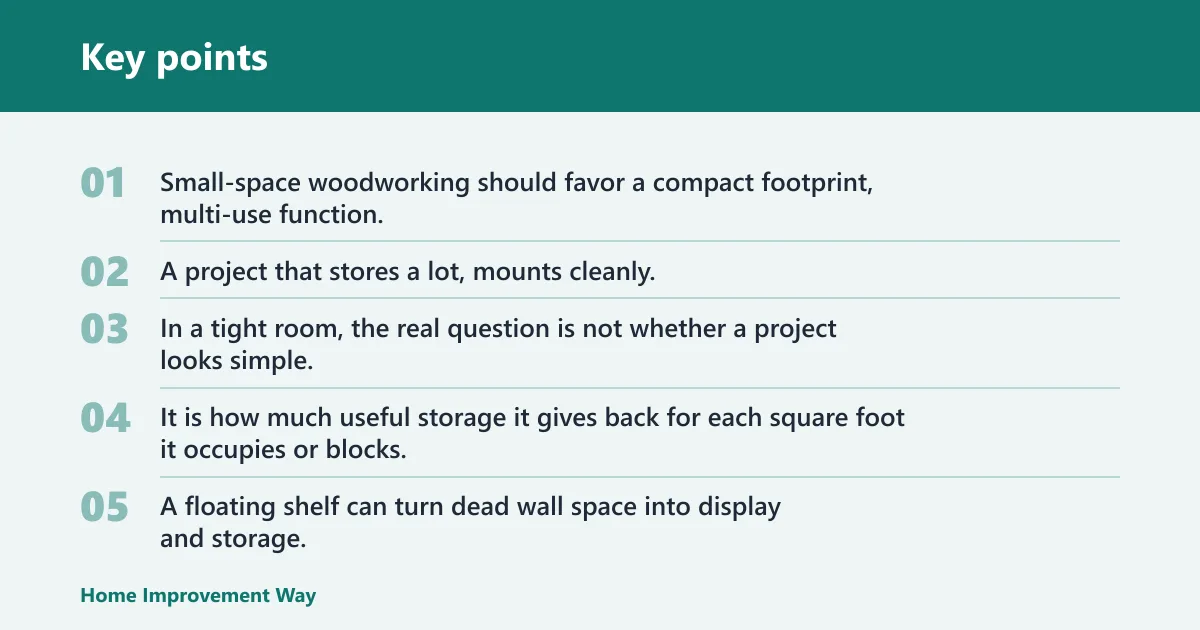


Small-space woodworking should favor a compact footprint, multi-use function, vertical or wall-mounted storage, few-material builds, and portable or flat-pack-friendly designs. That matters more than style. A project that stores a lot, mounts cleanly, or folds away is usually a better fit than a larger decorative piece that consumes floor and wall clearance.
Why storage payoff per square foot matters
In a tight room, the real question is not whether a project looks simple. It is how much useful storage it gives back for each square foot it occupies or blocks. A floating shelf can turn dead wall space into display and storage. A box can corral clutter. A planter can move greenery onto a sill or patio edge without taking over the floor.
Which projects fit apartments, dorms, and balconies?
Apartment-friendly builds are usually small, vertical, and easy to move. Dorm-friendly projects should be light, flat-pack-friendly, and simple to carry through narrow halls. Balcony projects need moisture-aware materials and drainage. For anchoring, follow the wall-specific manufacturer instructions and any landlord rules for your space; for shelves and cabinets, the load path matters more than the label on the project.
When a project looks small but needs more room than expected
Some projects hide their space demand. A box may be compact when finished, yet still need clamp space during glue-up. A shelf may be shallow, but you still need room to drill into studs and hold the bracket level. Top-heavy wall pieces can pull away if you skip proper anchoring. Moisture is another trap; a planter or birdhouse needs details that a decorative box does not.
| Project type | Typical footprint | Tool demand | Storage gain | Build time | Space risk |
|---|---|---|---|---|---|
| Floating shelf | Low wall footprint; common 24"x10" size | Low | High for its size | Short | Stud anchoring required; top-heavy if overbuilt |
| Storage box | Small floor or shelf footprint | Low | High | Short | Clamp space during assembly |
| Birdhouse | Very small | Low | Low for storage, high for utility | Short | Needs outdoor-safe finish and drainage |
| Planter box | Small to medium, usually vertical or windowsill-sized | Low to medium | Medium | Short to medium | Moisture exposure and drainage |
| Wall pegboard panel | Wall footprint only | Low | High | Short | Wall mounting and stud layout matter |
| Nesting stools | Medium while building; small when stored | Medium | Medium | Medium | Needs repeatable cuts and floor room |
| Under-bed bins | Long and low | Low | High | Short | Requires accurate clearances |
| Drop-leaf wall shelf | Very low when folded | Medium | High | Medium | Hinges, wall anchoring, and support hardware |
| Simple bench cubby | Floor footprint only | Medium | Medium | Medium | Can block circulation if oversized |
Decision rule for choosing one project fast
If wall mounting is allowed, start with a shelf or pegboard-style build. If the apartment is very small and wall mounting is not allowed, choose a storage box, under-bed bin, or birdhouse-sized project that can sit on a table. If you only have basic tools, avoid builds that need long clamps, heavy sheet handling, or many angled cuts. If your available tools are limited to a cordless drill and hand tools, keep the joinery simple and the parts few.
What tools do you need for small woodworking projects?

You do not need a full shop to build small wood projects. A cordless drill handles pilot holes and screws, an orbital sander smooths surfaces, a miter saw makes straight or angled repeat cuts, and a jigsaw handles curves and cutouts. Match each tool to the cut or task it does best, then choose projects that fit your work area.
Cordless drill
A cordless drill is the core tool for drilling pilot holes and driving screws. It is especially useful for floating shelves, storage boxes, and wall-mounted pieces where fasteners matter more than heavy cutting. In a corner workspace, it also keeps setup simple because you can drill, assemble, and mount without a full saw table. For safe use, OSHA and tool manufacturers both emphasize securing the workpiece, using sharp bits, and keeping hands clear of the bit path.
Orbital sander
An orbital sander speeds surface smoothing and finish prep. That matters in small spaces because powered sanding can create fine dust, so dust extraction or a vacuum hose helps keep it under control. For box faces, shelf boards, and planter parts, it helps get edges smooth before paint, stain, or an outdoor finish. A vacuum hose or dust bag is worth using in apartments because fine dust travels farther than people expect.
Miter saw
A miter saw handles angled cuts and repeatable box parts. It is useful when you need matching rails, frames, or shelf supports. If your space is tight, this tool can cut layout errors, but it also needs a safe cutting zone and enough room for stock to extend on both sides of the blade. Keep the workpiece supported on both infeed and outfeed sides, as manufacturer safety manuals recommend.
Jigsaw
A jigsaw is the most flexible option for curved cuts, cutouts, and tight-space work. It is a smart choice for birdhouse openings, planter shapes, and small pattern cuts. It also helps when you cannot fit larger cutting equipment into your workspace or apartment. Use the right blade for the material and let the saw do the work; forcing the cut increases tear-out and blade binding.
How to make small wooden projects
Start by choosing a project with four or fewer parts, a flat layout, and a clear use. Measure the finished footprint first, then back into the cut list. Build on a flat surface, drill pilot holes before screws, and dry-fit every joint before fastening. Keep the design simple enough that you can assemble it without moving into another room.
Practical dimensions for shelves, boxes, and planters
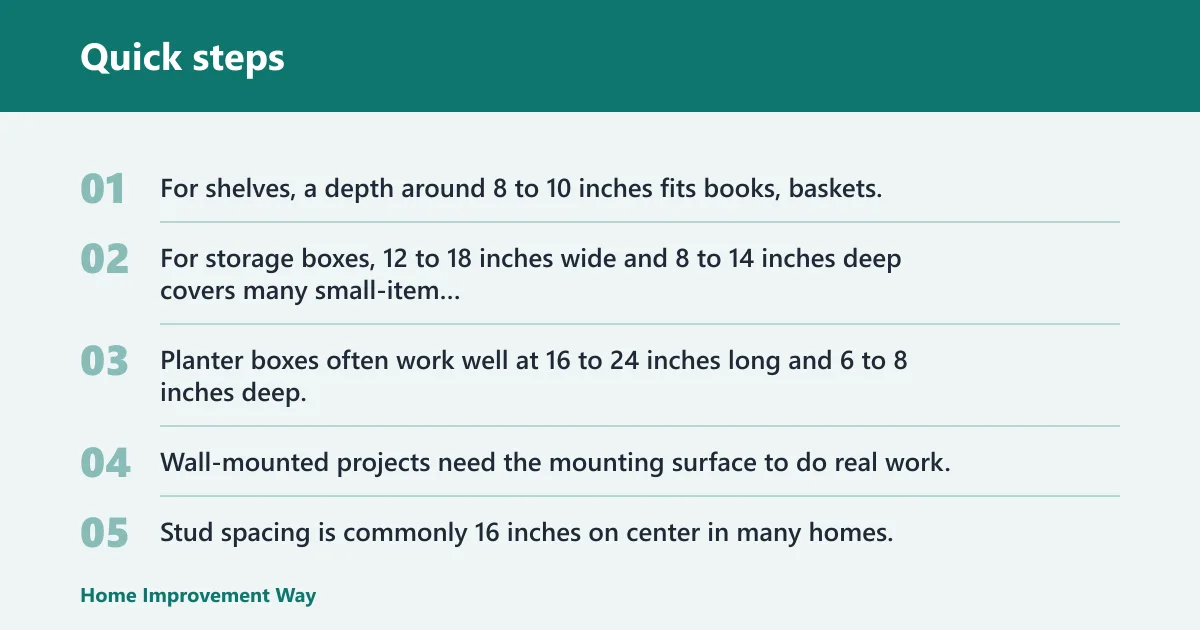
For shelves, a depth around 8 to 10 inches fits books, baskets, and decor without crowding most walkways; 12 inches is a common upper limit before the shelf feels bulky. For storage boxes, 12 to 18 inches wide and 8 to 14 inches deep covers many small-item jobs. Planter boxes often work well at 16 to 24 inches long and 6 to 8 inches deep.
Stud spacing, wall clearance, and shelf depth limits
Wall-mounted projects need the mounting surface to do real work. Stud spacing is commonly 16 inches on center in many homes, so bracket placement should follow the wall layout instead of fighting it. Keep shelf depth modest when the wall is narrow or traffic passes close by. A shallow shelf is safer than a deep one that bumps shoulders or blocks a window casing.
How sheet goods affect size and transport
Sheet goods are usually sold as 4×8 sheets, which sounds simple until you need to transport them through a small car, up stairs, or into an apartment elevator. That is where a store cutting service helps. A full sheet is 48 by 96 inches, so a project should be broken into parts that can move through your door, fit your saw, and still leave room to assemble.
Simple sizing formula before you cut
Use this quick check: available space minus clearance equals maximum finished size. Then subtract 1 to 2 inches for hand clearance on shelves, 2 to 3 inches for bin removal, and at least 1 inch for wall or floor irregularities. If the build uses doors or lids, test the swing path on paper before you cut any wood.
Beginner builds that fit tight spaces
The easiest beginner projects for small spaces are the ones with few parts, few tools, and a clear place to live when finished. Floating shelves, storage boxes, and birdhouses lead this group because they are compact, useful, and less likely to overwhelm a tiny room during the build.
Floating shelf
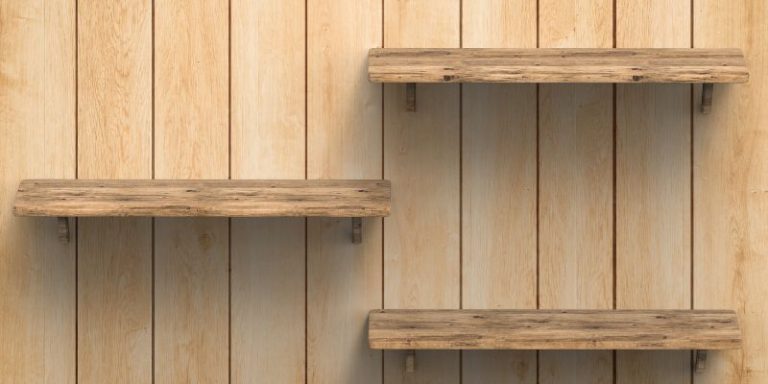
A floating shelf is a wall-mounted storage build made from simple boards plus brackets. It needs stud anchoring, and that is not optional if you plan to load it with books, plants, or kitchen items. It is a strong choice when floor space is scarce because it uses vertical space instead of asking for a new table or cabinet.
Storage box
A storage box is a rectangular build made from cut-to-size panels. It can be lidded or open-top, which makes it useful for cords, toys, mail, or sewing supplies. The shape is simple, the material list is short, and the finished piece can sit on a shelf, under a bed, or beside a chair.
Birdhouse
A birdhouse is often one of the easier small woodworking projects for beginners because the material list is short and the shape is forgiving. It should include ventilation holes and drainage holes. For birdhouse dimensions, the opening size should match the species you want to attract, and the floor should stay large enough for nesting but not so large that predators gain room.
Say your apartment has one clear wall beside a desk, but no floor space for a cabinet. A 24" x 10" shelf gives storage without stealing a walking path, while a box on the floor would crowd the chair. The wall option wins because the room can still move around it.
Wall-mounted and vertical options
Wall-mounted and vertical projects are the best fit when you need storage without adding furniture width. They work well in apartments, closets, and small workshops because they free the floor and let you use wall height. The tradeoff is that they depend on proper anchoring and a wall you are allowed to drill into.
Floating shelf hardware and stud anchoring
Simple shelf builds can use wood boards, brackets, and screws. That is enough for many small loads, but only if the screws bite into studs or other approved anchors. If the shelf is meant to hold weight, do not treat the wall like decorative backing. A top-heavy shelf installed with weak fasteners is a failure waiting to happen.
Vertical storage that frees floor space
Pegboard panels, narrow wall cubbies, and stacked shelves all push storage upward. This is useful when a room is too small for a dresser or sideboard. A pegboard panel often works well at 24 by 48 inches because it offers a practical amount of usable surface for hooks, bins, and spacing without taking over a wall.
When wall mounting is not allowed
If you cannot drill into walls, choose freestanding builds that still stay narrow. Under-bed bins, storage boxes, nesting stools, and small rolling organizers fit this rule better than shelves. Keep the footprint low and rectangular, and avoid builds that depend on wall support for tipping resistance.
Outdoor and window-friendly projects
Outdoor and window-friendly pieces need moisture-aware details. That usually means drainage holes, finishes suited for exposure, and wood species that can handle more humidity than a bedroom shelf. These projects are still small, but the material choice matters more because water changes how wood moves and lasts.
Planter box materials and drainage holes
A planter box can be made from cedar or redwood, both common choices for outdoor use. Add drainage holes so water does not pool at the bottom. Dividers can turn one planter into separate sections for herbs or flowers, and a small box can sit on a windowsill or patio rail without taking over the space.
Birdhouse ventilation and outdoor-safe finish
Birdhouses need airflow and drainage, not just a hole in the front. Ventilation holes help reduce heat buildup, while drainage holes keep water from sitting inside after rain. Use a finish that will not trap moisture or flake too early. The Cornell Lab of Ornithology and similar wildlife guidance emphasize species-appropriate entry sizes and weather protection over decoration.
Moisture-resistant choices for patios and sills
For patios and windowsills, choose compact builds with simple joints and fewer hidden surfaces. The fewer places water can sit, the better. A common first-timer mistake is building a planter that looks small on paper but ends up too deep for a sill and too heavy once soil and water are added.
How do you build woodworking projects when you only have basic tools?
Use a flat-pack approach: cut the parts first, then dry-fit, then fasten, then sand, then finish. Keep the project to square cuts when possible, because they are easier to manage with basic tools. Choose designs that need little clamping and little floor space, and avoid joinery that demands large assembly tables.
Flat-pack-friendly cuts and assembly order
Flat-pack-friendly builds break down into panels that are easy to move and store. This is useful in a bedroom corner, a balcony table, or any setup where materials must be handled one piece at a time. If the build uses sheet goods, the cut plan should fit both your transport limit and your available work surface.
How to handle clamping, sanding, and finishing in a corner workspace
Clamp only when the layout is stable enough to hold still. If the project is too large for your work zone, assemble in stages rather than forcing it onto the floor. Sanding is easiest before final assembly on small parts, and that reduces dust spread. Finish in thin coats so the piece dries without occupying the whole room.
When store cutting service helps with sheet goods
Store cutting service makes sense when a 4×8 sheet is too large to transport or too awkward to break down at home. It also helps when your saw space is smaller than your project footprint. Keep the cut list simple, because the more parts a design has, the more likely it is to exceed the space you actually have.
Frequently asked questions
What are the easiest small woodworking projects for beginners?
Birdhouses, simple storage boxes, and basic floating shelves are the easiest starting points. They use short cut lists, limited hardware, and simple shapes. A birdhouse is especially forgiving if you keep the joinery basic and add the needed ventilation and drainage holes.
What small woodworking projects fit in an apartment or small space?
Wall-mounted shelves, pegboard panels, under-bed bins, and narrow storage boxes fit well in apartments. Choose pieces that use wall height or dead space instead of stealing circulation room. If wall mounting is not allowed, stay with freestanding builds that can slide under furniture or sit on a shelf.
What are the best small diy woodworking projects for beginners?
The best beginner projects are the ones that fit the room and the tool set. Floating shelves are strong if wall mounting is allowed. Storage boxes work in almost any space. Birdhouses are good starter builds for small material lists and simple assembly.
What dimensions should I use for small shelves or boxes?
For shelves, a 24"x10" size fits many spaces and keeps the depth manageable. For boxes, size the footprint around the items you want to store, then leave just enough room for removal. Keep the finished dimensions tied to the available wall or shelf space, not a generic plan.
Sources
Sponsored / affiliate links. As an Amazon Associate I earn from qualifying purchases. I may earn additional commission from eligible campaigns.