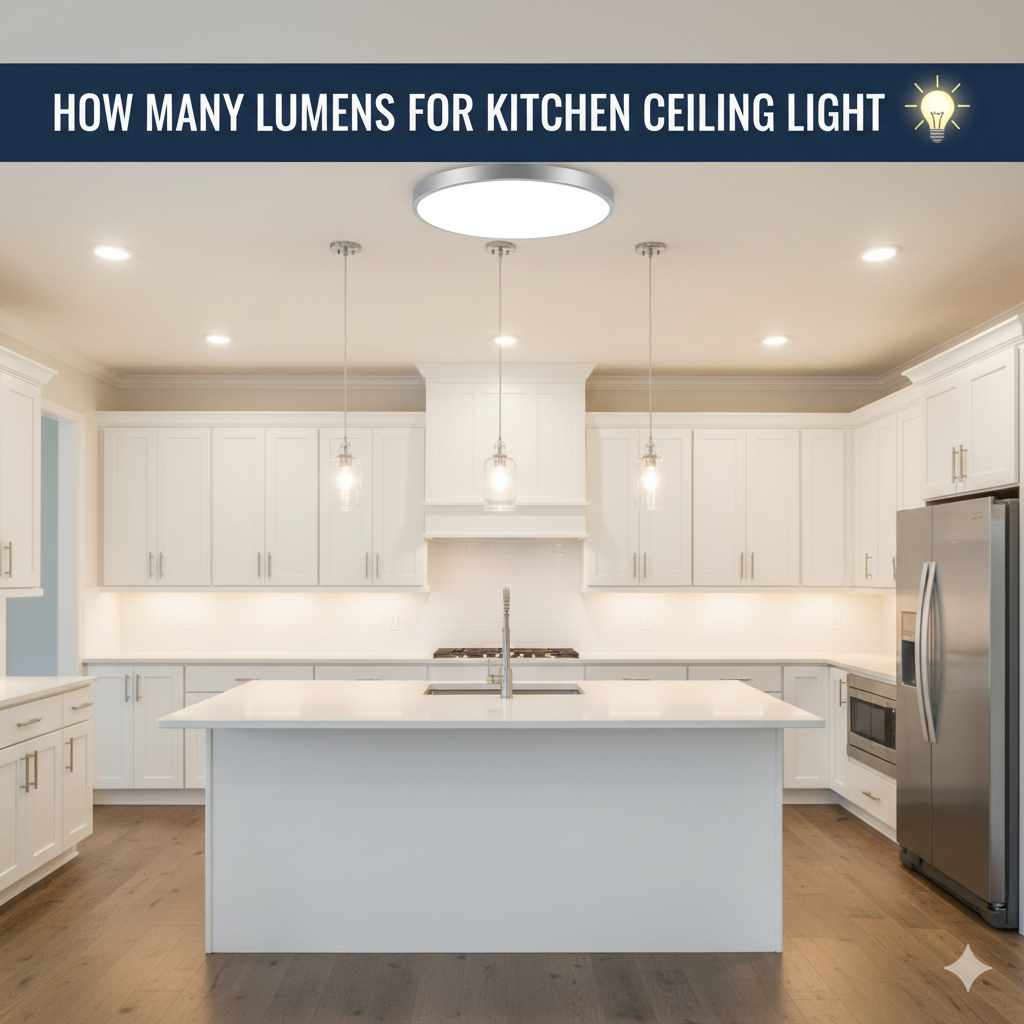
How Many Lumens For Kitchen Ceiling Light: Essential Guide
Quick Summary: For a general kitchen ceiling light, aim for 20-50 lumens per square foot. This range ensures good ambient light for daily tasks without being too dim or glaring. We’ll break down exactly how to calculate this for your space.
Hey there, home improvement enthusiasts! Md Meraj here, your go-to guide for making your home projects feel less like a chore and more like a rewarding adventure. Today, we’re tackling a question that can leave many of us scratching our heads in the lighting aisle: “How many lumens do I actually need for my kitchen ceiling light?” It’s a common puzzle, right? You want your kitchen to be bright enough to chop veggies safely, read a recipe, and feel welcoming, but not so bright it feels like an operating room. Getting the lighting just right can make a huge difference, and it’s totally achievable with a little know-how. Don’t worry, we’ll walk through this step-by-step, so you can confidently pick the perfect light for your kitchen!
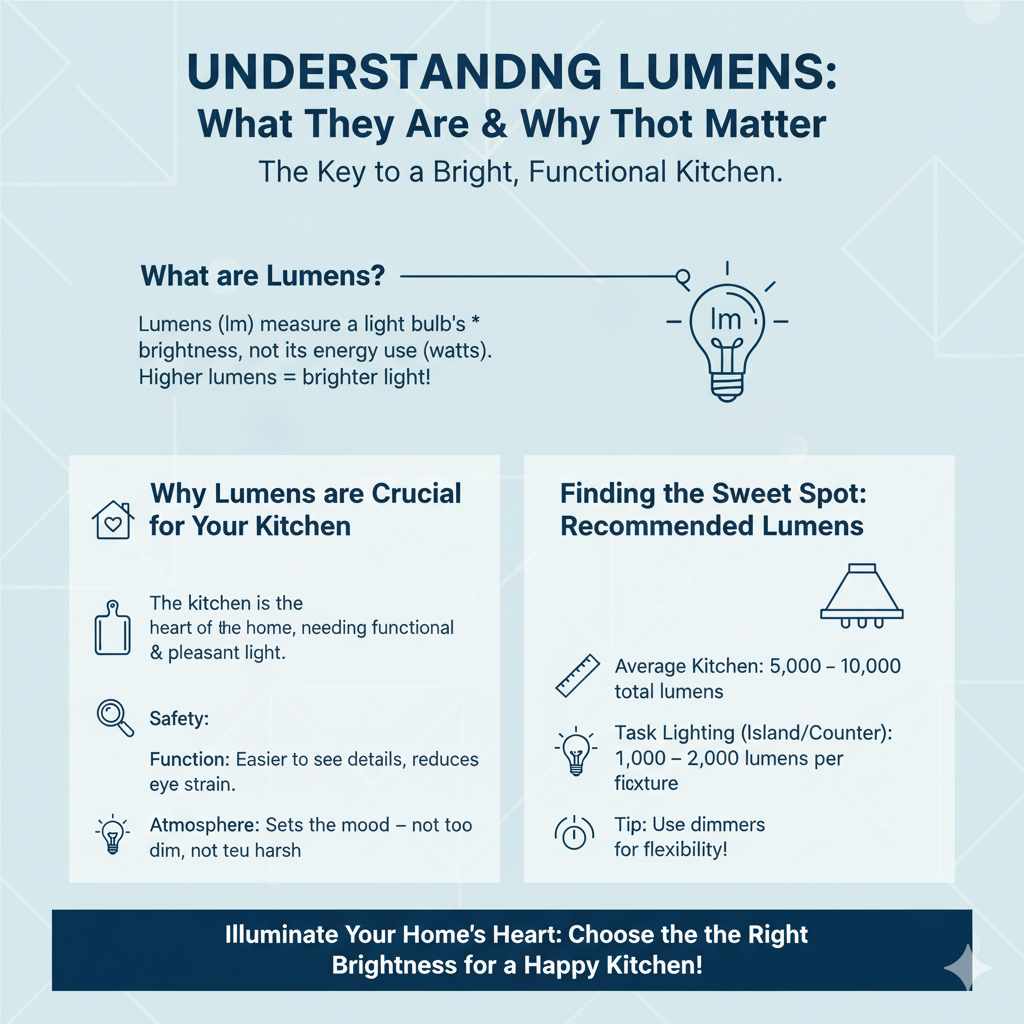
Understanding Lumens: What They Are and Why They Matter
Before we dive into specific numbers, let’s get a clear picture of what lumens are. Think of lumens as the true measure of brightness for a light bulb. Unlike watts, which used to tell us how much energy a bulb used, lumens tell us how much light it actually produces. So, when you’re looking at a light bulb package, you’ll see a number followed by “lm” – that’s your lumen count. Higher lumens mean a brighter light. This is super important for your kitchen ceiling light because it’s usually the main source of light, and you need it to be functional and pleasant.
Why is this so crucial for the kitchen? Well, the kitchen is often the heart of the home. It’s where we prepare meals, gather with family, do homework, and sometimes even enjoy a quick cup of coffee. Proper illumination ensures safety by preventing accidents while cooking and makes it easier to perform detailed tasks. Too little light can lead to eye strain and frustration, while too much can feel harsh and unwelcoming. Finding that sweet spot with the right lumen output is key to a happy, functional kitchen.
The Magic Number: Lumens Per Square Foot
The best way to figure out how many lumens you need for your kitchen ceiling light is to use a simple calculation based on the size of your kitchen. We measure this in “lumens per square foot.” This is a standard way lighting professionals determine the right amount of light for different spaces. It helps ensure that no matter the size of your kitchen, you can achieve the ideal brightness.
Here’s the general guideline for kitchens:
- General Ambient Lighting: 20-50 lumens per square foot. This is for the overall, everyday lighting of your kitchen.
- Task Lighting (like over countertops or sinks): 70-80 lumens per square foot. This is for areas where you do detailed work.
- Accent Lighting (optional): 20-50 lumens per square foot. For highlighting specific features.
Since we’re focusing on the main ceiling light, we’ll primarily use the 20-50 lumens per square foot range. We’ll also touch on how task lighting plays a role in your overall kitchen illumination.
Calculating Your Kitchen’s Lumen Needs: A Step-by-Step Guide
Ready to do some simple math? It’s easier than you think! Follow these steps to find out exactly how many lumens your kitchen ceiling light should provide.
Step 1: Measure Your Kitchen’s Square Footage
First, you need to know the size of your kitchen. Grab a tape measure!
- Measure the length of your kitchen in feet.
- Measure the width of your kitchen in feet.
- Multiply the length by the width. This will give you the total square footage of your kitchen.
Example: If your kitchen is 12 feet long and 10 feet wide, its square footage is 12 ft 10 ft = 120 sq ft.
Step 2: Determine Your Desired Lumen Output Per Square Foot
As we discussed, for general kitchen lighting, the recommended range is 20-50 lumens per square foot. For a bright and functional kitchen, aiming for the middle to upper end of this range is often a good idea. Let’s use 40 lumens per square foot as a good starting point for a well-lit kitchen.
Step 3: Calculate the Total Lumens Needed
Now, multiply your kitchen’s square footage by your chosen lumens per square foot.
Formula: Total Lumens = Square Footage Lumens Per Square Foot
Example: Using our 120 sq ft kitchen and our target of 40 lumens per square foot:
Total Lumens = 120 sq ft 40 lm/sq ft = 4800 lumens
So, for this example kitchen, you’d want a ceiling light fixture that, combined, provides approximately 4800 lumens for good general illumination.
Step 4: Consider Your Fixture Type and Bulb Count
Most ceiling light fixtures will either have integrated LED lights (where the bulb is part of the fixture and not replaceable) or will use standard bulbs. If your fixture uses multiple bulbs, you’ll need to divide the total lumen requirement by the number of bulbs to figure out how many lumens each bulb needs to produce.
Example: If your fixture uses 4 bulbs and you need a total of 4800 lumens:
Lumens Per Bulb = Total Lumens / Number of Bulbs
Lumens Per Bulb = 4800 lumens / 4 bulbs = 1200 lumens per bulb
When shopping for bulbs, look for ones that offer around 1200 lumens each. Many LED bulbs clearly state their lumen output on the packaging.
Factors Influencing Your Kitchen Lighting Needs
While the square footage calculation gives us a great starting point, a few other factors can influence how bright your kitchen actually feels and how many lumens you might prefer. It’s always good to consider these!
Kitchen Activities
What do you primarily use your kitchen for? If it’s a hub for serious cooking, baking, and meal prep, you might lean towards the higher end of the lumen range (40-50 lm/sq ft) for your general lighting, or even consider adding more focused task lighting.
If your kitchen is more for light snacking and casual dining, you might be comfortable with a slightly lower lumen output (20-30 lm/sq ft) for ambient light, relying on other light sources for specific tasks. The U.S. Department of Energy offers excellent advice on energy-efficient lighting choices that can help you save money and energy, including understanding lumens.
Ceiling Height
A kitchen with a standard 8-foot ceiling will feel different from one with a soaring 12-foot ceiling. Higher ceilings tend to diffuse light more, so you might need slightly more lumens to achieve the same perceived brightness compared to a lower ceiling. For every extra foot of ceiling height above 8 feet, consider increasing your lumen output by about 10%.
Color of Walls and Cabinets
Darker colors absorb light, making a room feel dimmer. Lighter colors reflect light, making a room feel brighter. If your kitchen features dark cabinets, countertops, or wall colors, you might need a bit more lumen output to compensate and ensure adequate brightness. Conversely, a kitchen with white walls and light wood cabinets might feel perfectly lit with a slightly lower lumen count.
Fixture Design and Light Distribution
The type of ceiling fixture you choose also plays a role. Some fixtures direct light downwards, which is great for task areas. Others diffuse light upwards or outwards, creating a softer, more ambient glow. A fixture with a frosted shade might require a higher lumen bulb to achieve the same brightness as a clear glass fixture.
Personal Preference
Ultimately, lighting is subjective! Some people prefer a very bright, airy space, while others enjoy a cozier, more subdued atmosphere. Use the calculations as a guide, but don’t be afraid to adjust based on what feels comfortable and functional for you and your family.
Recommended Lumens for Different Kitchen Sizes
To make things even easier, let’s look at some common kitchen sizes and the approximate total lumens you might need for general ceiling lighting. Remember, these are estimates, and you can adjust them based on the factors we just discussed.
| Kitchen Size (Sq Ft) | Approximate Lumens Needed (20-30 lm/sq ft – Cozy) | Approximate Lumens Needed (30-40 lm/sq ft – Balanced) | Approximate Lumens Needed (40-50 lm/sq ft – Bright) |
|---|---|---|---|
| 80 sq ft (e.g., 8′ x 10′) | 1600 – 2400 lm | 2400 – 3200 lm | 3200 – 4000 lm |
| 100 sq ft (e.g., 10′ x 10′) | 2000 – 3000 lm | 3000 – 4000 lm | 4000 – 5000 lm |
| 120 sq ft (e.g., 10′ x 12′) | 2400 – 3600 lm | 3600 – 4800 lm | 4800 – 6000 lm |
| 150 sq ft (e.g., 12′ x 12.5′) | 3000 – 4500 lm | 4500 – 6000 lm | 6000 – 7500 lm |
| 200 sq ft (e.g., 10′ x 20′) | 4000 – 6000 lm | 6000 – 8000 lm | 8000 – 10000 lm |
This table should give you a quick reference point. For instance, if you have a 100 sq ft kitchen and prefer a bright, well-lit space for all your culinary adventures, you’d aim for around 4000-5000 lumens from your main ceiling fixture.
Beyond the Ceiling Light: Layering Your Kitchen Lighting
While a good ceiling light is essential, a truly functional and inviting kitchen often uses layered lighting. This means combining different types of light to create a balanced and adaptable environment. Think of it like building a beautiful wooden project – you need the main structure, but also details and finishes!
- Ambient Lighting: This is your general, overall illumination, primarily provided by your ceiling fixture. It sets the mood and ensures you can navigate the space safely.
- Task Lighting: This is focused light for specific work areas. Think under-cabinet lights for your countertops, a pendant light over your sink, or spotlights directed at your stove. Task lighting is typically brighter than ambient light, often in the 70-80 lumens per square foot range for the illuminated area. This is where you’ll want to be able to see clearly for chopping, mixing, and cleaning.
- Accent Lighting: This is used to highlight architectural features, artwork, or display shelves. It adds depth and visual interest to the room. Think of small spotlights on a textured wall or lights inside glass-front cabinets.
By layering these types of lighting, you can create different moods and functionalities. You might want bright task lighting while cooking, but then dim the ambient lights for a more relaxed evening meal. Dimmers are your best friend here, allowing you to adjust the brightness of your ambient and even some task lights to suit the occasion. For more on home lighting design, resources like The Illuminating Engineering Society (IES) offer comprehensive standards and information, though their technical depth might be more for advanced users.
Choosing the Right Bulb Type: LEDs are Your Best Bet
When selecting bulbs for your kitchen ceiling light, you’ll likely encounter a few options. However, for efficiency, longevity, and brightness control, LED bulbs are overwhelmingly the best choice today.
- LEDs (Light Emitting Diodes): These are incredibly energy-efficient, last for many years (reducing replacement costs and hassle), and come in a wide range of color temperatures and brightness levels. They also produce very little heat, which is a bonus in the kitchen.
- Halogen: These are a bit more efficient than incandescent but still use significantly more energy than LEDs and don’t last as long.
- Incandescent: These are the old-school bulbs. They’re cheap to buy but are very inefficient and burn out quickly. They are largely being phased out due to their energy consumption.
When buying LED bulbs, pay attention to the lumen output (for brightness) and the color temperature (measured in Kelvin, K). For a kitchen, a “cool white” (around 4000K) or “daylight” (5000K-6500K) is often preferred for task areas as it mimics natural daylight and makes colors appear true. However, some prefer a “warm white” (2700K-3000K) for a cozier feel. You can often find LED bulbs that offer adjustable color temperature or dimming capabilities, giving you even more control.
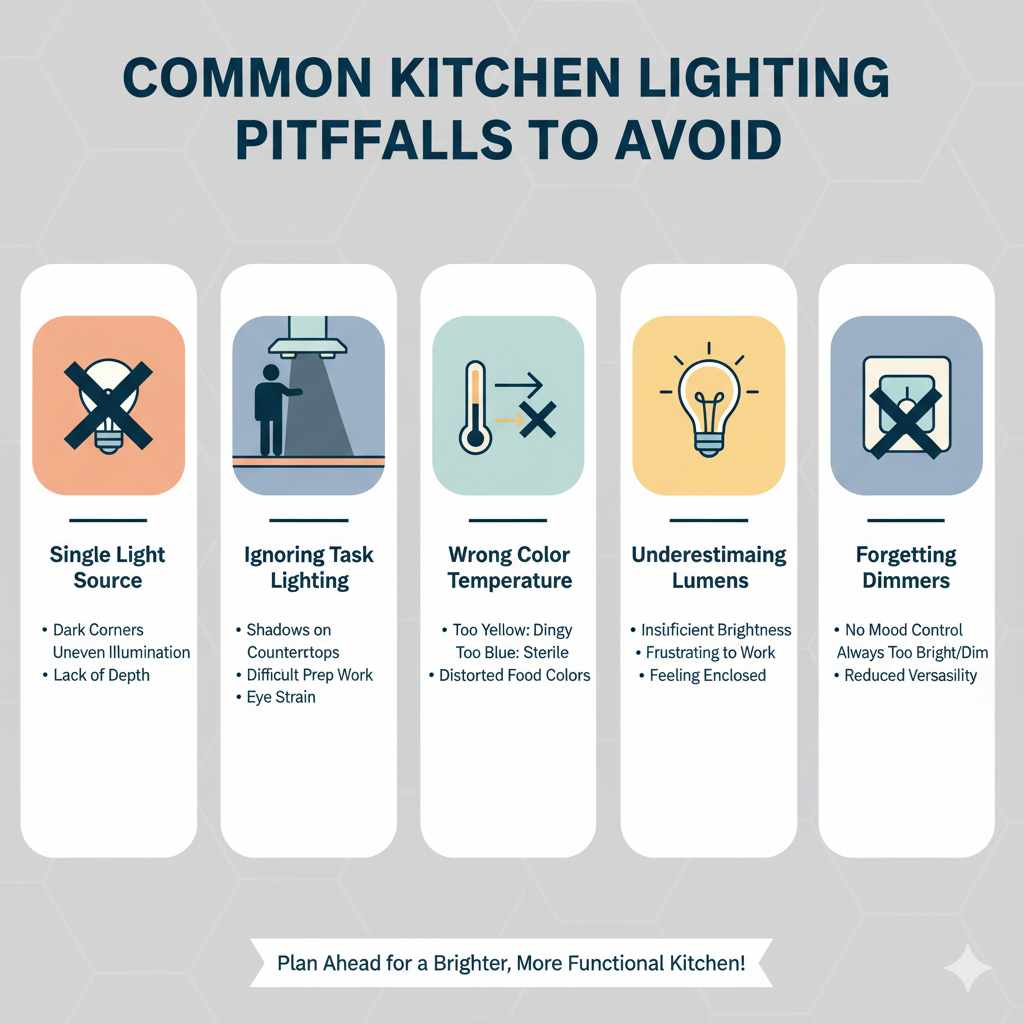
Common Kitchen Lighting Pitfalls to Avoid
As a DIYer, it’s helpful to know what common mistakes others make so you can steer clear of them. Here are a few to watch out for:
- Relying on a Single Light Source: A single overhead fixture, especially in a larger kitchen, often leads to dark corners and uneven lighting. Layering is key!
- Ignoring Task Lighting Needs: A bright ceiling light is great, but if it casts shadows on your countertops when you’re standing there, you’ll struggle with prep work.
- Choosing the Wrong Color Temperature: A very warm, yellow light might feel cozy in a living room but can make it hard to see details in the kitchen. Conversely, a super-blue light can feel sterile.
- Underestimating Lumen Needs: It’s better to have a little too much light with a dimmer than not enough light and feel frustrated.
- Forgetting Dimmers: Dimmers add incredible versatility to your kitchen lighting, allowing you to adjust the mood and brightness instantly.
By being aware of these, you can plan your lighting project more effectively and ensure you get the results you’re hoping for.
Frequently Asked Questions About Kitchen Ceiling Lights
Let’s address some common questions beginners have about kitchen ceiling lights and lumens.
Q1: How many lumens do I need for a 10×10 kitchen ceiling light?
For a 10×10 kitchen (100 sq ft), a good starting point for general ambient lighting is between 3000 to 4000 lumens. If you prefer a very bright kitchen, you could aim for up to 5000 lumens.
Q2: Should my kitchen ceiling light be brighter than my living room light?
Generally, yes. Kitchens are workspaces where clarity and brightness are important for tasks. Living rooms often benefit from softer, more ambient lighting. So, your kitchen ceiling light will typically have a higher lumen output per square foot than your main living room light.
Q3: What’s the difference between lumens and lux?
Lumens measure the total amount of light emitted by a source. Lux measures the amount of light that falls on a specific surface area. While lumens tell you how bright a bulb is, lux tells you how bright a space is* with that light. For home lighting, lumens are what you typically look at when buying bulbs or fixtures.
Q4: How do I know if my current kitchen light is too dim or too bright?
If you find yourself squinting, getting headaches, or having trouble seeing tasks, your light is likely too dim. If the light feels glaring, uncomfortable, or makes it hard to relax, it might be too bright. The calculations we’ve covered will help you find that comfortable middle ground.
Q5: Can I use multiple smaller lights instead of one large ceiling fixture?
Absolutely! In fact, this is often a great approach. You could use several smaller recessed lights, or a combination of a central fixture with additional task lighting like under-cabinet lights. The key is to ensure the total lumen output meets your needs for the space.
Q6: What color temperature is best for a kitchen ceiling light?
For general kitchen lighting, a neutral white (around 3500K-4000K) or cool white (4000K-5000K) is often recommended because it provides good visibility for tasks. However, if you prefer a warmer, cozier feel, 3000K can also work, especially if supplemented with task lighting.
Conclusion
So there you have it! Figuring out how many lumens you need for your kitchen ceiling light is all about understanding your space and what you do in it. By measuring your kitchen’s square footage and using the recommended lumens per square foot (20-50 lm/sq ft for general lighting), you can confidently choose the right fixture and bulbs. Remember to consider your ceiling height, wall colors, and personal preferences to fine-tune your decision.
Don’t forget that layering your lighting with task and accent lights can transform your kitchen into a more functional, comfortable, and beautiful space. LEDs are your best friend here, offering efficiency and longevity. By avoiding common pitfalls and using the information we’ve covered, you’re well-equipped to make informed choices. Now you can head to the store or browse online with a clear plan, ready to bring the perfect brightness and ambiance to your kitchen. Happy lighting!