How Much Does It Cost to Fix a Leaking Faucet? Repair Scenarios and Decision Checks
Fixing a leaking faucet typically costs between $5 and $40 in parts if you do it yourself, or $150 to $350 for a plumber to handle a standard washer, O-ring, or cartridge replacement including the trip charge. The real cost depends on which part has failed and how old the faucet is, not just labor rates. This guide breaks down the common repair scenarios by cost and shows how to tell which one you’re actually facing.
Compression faucet: washer and seat wear
Older two-handle faucets with separate hot and cold controls are almost always compression faucets. A drip that only happens when the faucet is fully closed points to a worn rubber washer at the base of the stem, a $2 to $8 part. If the drip continues even after you replace the washer, the brass valve seat underneath has likely developed a groove from years of the washer grinding against it. Reseating the valve with a seat wrench and dressing tool costs about $15 to $20 in tools you can reuse, or a plumber will typically fold this into a $120 to $200 service call since it takes only a few extra minutes once the faucet is already open.
Cartridge faucets: single-handle drip or handle wobble
Single-handle faucets from Moen, Delta, Kohler, and Pfister use a cartridge instead of a washer. A drip from the spout with the handle in any position, or a handle that feels loose or hard to turn, usually means the cartridge’s internal seals have worn out. Replacement cartridges cost $15 to $40 depending on the brand, and Moen in particular covers cartridges under a lifetime warranty, so check your model number against the manufacturer’s site before buying one. The job is mostly retainer clip and puller work rather than plumbing skill, so faucet repair cost for this scenario stays low unless the retainer clip has corroded in place, which can add 20 to 30 minutes of penetrating oil and patience.
Ceramic disc faucets: scoring or debris
Ceramic disc faucets use two hard discs that rotate against each other and rarely wear out, but they can leak if grit or mineral debris gets trapped between the discs, or if one disc cracks. Replacement disc cartridges run $20 to $60 because the assembly is more precise. Before replacing the cartridge, remove it and flush the faucet body and discs under running water; a surprising number of “worn cartridge” leaks are actually sediment causing an incomplete seal, and cleaning solves it for free.
When replacing the whole faucet costs less than repairing it
If the faucet is more than 15 to 20 years old, discontinued replacement parts can push a “simple” repair cost higher than a new fixture. Check the base of the faucet or the manufacturer’s site for a model number; if searching for a matching cartridge turns up nothing, budget $80 to $250 for a new mid-range faucet plus $100 to $200 in labor if you’re not comfortable disconnecting supply lines yourself. Corroded shutoff valves under the sink are another cost driver: if the valves won’t fully close or turn freely, a plumber will often need to replace those too, adding $75 to $150 to the job.
Frequently Asked Questions
How do I tell if I need a washer or a cartridge?
Two separate handles for hot and cold almost always means a compression washer; one handle that controls both temperature and flow almost always means a cartridge. Checking the handle count first saves a wasted trip to the hardware store.
Is it worth calling a plumber for a $10 part?
If you’re comfortable shutting off the supply valves and using a basic wrench set, DIY saves the $75 to $150 trip charge. If the shutoff valves are seized or you’re unsure how to depressurize the line safely, the trip charge is cheaper than a flooded cabinet.
Why does my faucet still drip after I replaced the cartridge?
A continued drip after a cartridge swap usually means the O-rings on the faucet body itself weren’t replaced, the new cartridge isn’t fully seated or locked by the retainer clip, or the supply line fittings, not the faucet, are the actual leak source.
Sponsored / affiliate links. As an Amazon Associate I earn from qualifying purchases. I may earn additional commission from eligible campaigns.
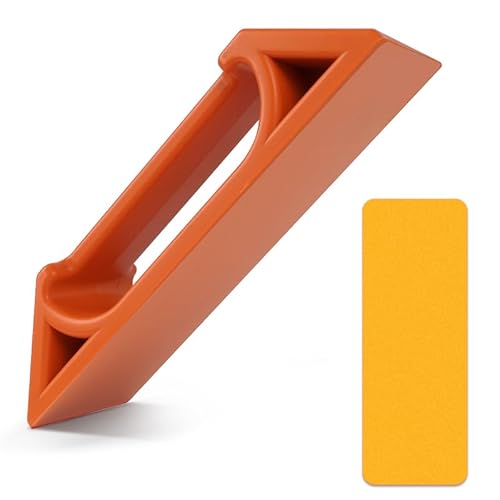 Floor Gap Fixer Tool for Laminate, Vinyl & Hardwood Floors – Heavy-Duty Nylon Plank Puller with Reusable Washable Adhesive Pad, DIY Floor Gap Repair Tool (Plank Grabber Only, Hammer Not Included)
 BRING IT ON! CLEANER Professional Hard Water Stain Remover & Glass Shield Sealant, Tiles, grout, Windows, Fiberglass, Chrome, Tubs, Toilets