How to Get Urine Smell Out of Leather Furniture
Urine smell soaks into leather because leather is porous — the liquid seeps below the surface before the ammonia-producing compounds break down, which is why wiping the surface alone never fully works. Waiting even a day lets the odor set deeper and makes it far harder to remove without professional help. This guide covers blotting and surface cleaning, the three stain and odor removal methods that actually work (vinegar, baking soda, enzyme cleaner), and which one to skip depending on your leather type.
Why Urine Smell Sticks to Leather
Leather is a porous, natural material — that porosity is exactly why urine smell is so hard to remove. When urine lands on leather, it doesn’t sit on the surface; it soaks into the tiny pores — the same reason urine smell is so hard to remove from a mattress, another porous surface. As it dries, the odor-causing compounds (mainly ammonia and, if the urine has aged, bacteria byproducts) get trapped below the surface. Wiping the top with a damp cloth cleans what you can see but leaves the source of the smell untouched — which is why the odor often returns a few days later even after the leather looks clean.
Acting Fast: The First Step to Success
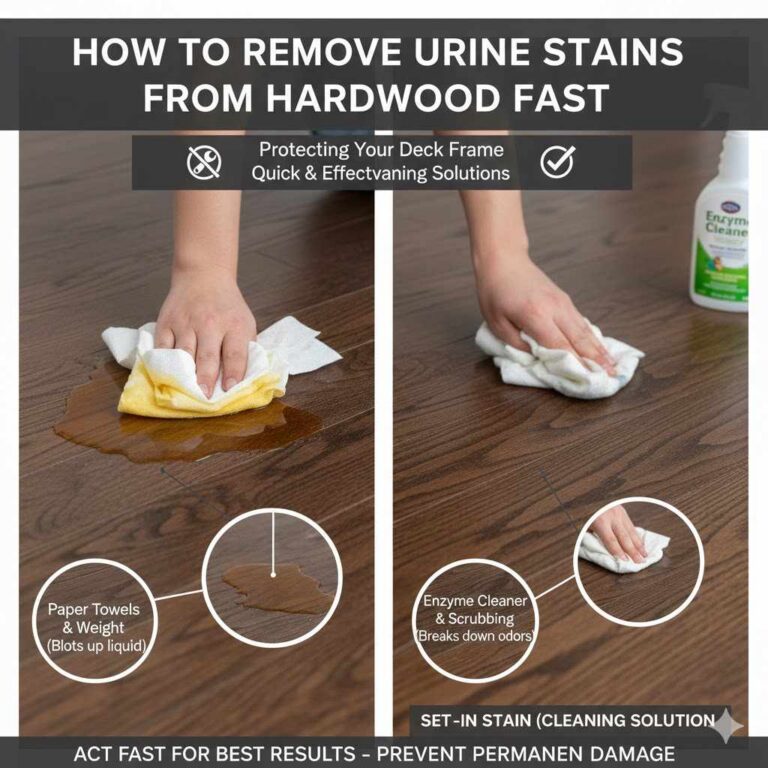
Time matters more than any product you use afterward. The sooner you blot up the liquid, the less chance it has to soak deep into the leather. Grab a stack of paper towels or a clean, absorbent cloth and press down firmly to soak up the urine — don’t rub, since that spreads it and pushes it deeper into the pores. Keep blotting until the area feels mostly dry. If the spot is already dry when you find it, you can still treat it, but expect to repeat the odor-neutralizing steps below more than once.
Cleaning the Surface Without Damaging Leather
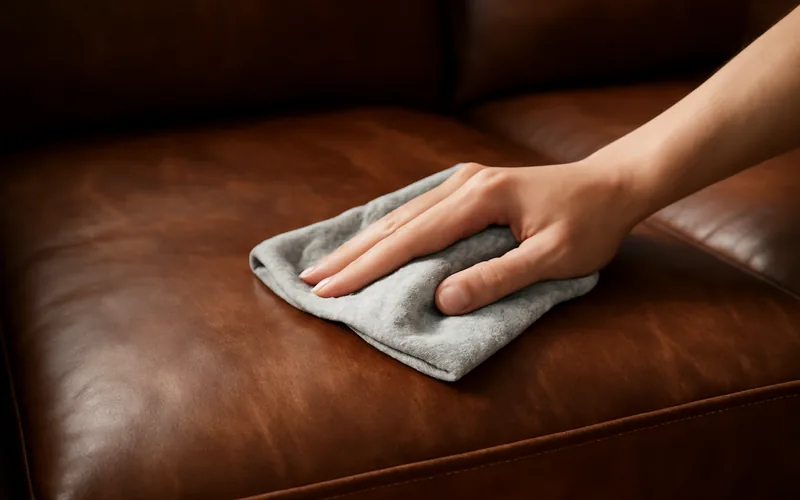
Leather can’t handle all-purpose cleaner or a soaking-wet cloth — both can strip the finish or leave a faded patch. Mix a small amount of mild dish soap with warm water, dip a soft cloth into the mixture, wring it out well, and gently wipe the affected area. The cloth should be damp, not wet. After wiping, dry the area with a clean cloth — the same damp-cloth-then-dry approach covered in our guide to removing water stains from furniture. This step removes surface residue, but it does not reach the odor trapped deeper in the leather — that’s what the neutralizing methods below are for.
Neutralizing the Odor: Methods That Actually Work
Surface cleaning alone won’t remove a set-in smell — you need to neutralize the odor at its source. These three methods, in order of how deep they reach, are what actually work on leather.
White Vinegar Solution
White vinegar breaks down the ammonia in urine and is safe for most finished leather. Mix equal parts white vinegar and water in a spray bottle, lightly mist the area — don’t soak it — let it sit about 10 minutes, then wipe it off with a clean, damp cloth. The vinegar smell fades as it dries and takes the urine odor with it.
Baking Soda Paste
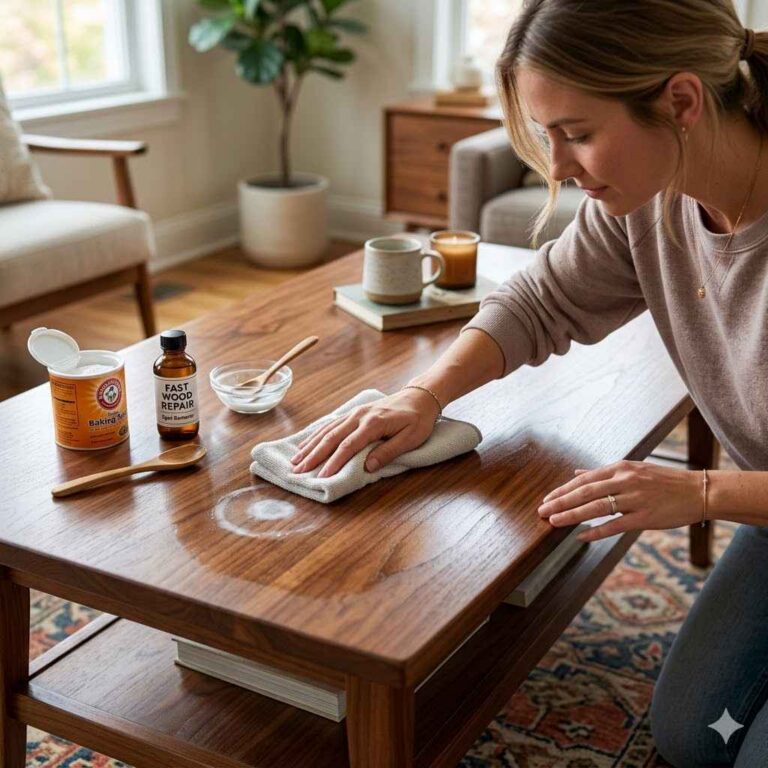
Baking soda absorbs odors rather than masking them — see our guide to baking soda for couch stains for the technique on fabric upholstery too. Make a paste with baking soda and a little water, apply it to the spot, let it sit for a few hours (or overnight for tough smells), then wipe it away with a damp cloth. Test on a small, hidden area first — baking soda paste can be mildly abrasive on some finishes.
Enzyme-Based Cleaners
For stubborn, set-in smells, an enzyme cleaner reaches what vinegar and baking soda can’t — the enzymes break down the organic compounds in urine at a molecular level instead of just masking them. Always confirm the product is labeled safe for leather before using it (many enzyme cleaners are formulated for carpet and fabric only). Enzymes are sensitive to heat and light, so apply the cleaner and let it work in a cool, shaded spot rather than direct sun, and leave it on as long as the label allows before wiping it away.
📊 Fresh urine has only a mild odor. Bacteria on the surface produce an enzyme (urease) that breaks urea down into ammonia over time — which is why an older, set-in accident smells far stronger than a fresh one. — Source: urease/urea decomposition chemistry, general microbiology reference
Deodorizing for Long-Lasting Freshness
Once the odor source is neutralized, keep it from coming back. Sprinkle a thin layer of baking soda over the area, let it sit for a day, then vacuum it up with a soft brush attachment. Placing a bowl of activated charcoal near the furniture for a few days also absorbs lingering odors without leaving residue. Finish with a leather conditioner made for your leather type (finished or unfinished) — it doesn’t just mask odor, it helps reseal the surface and prevent smells from settling in again.
Best Odor-Removal Products for Leather Furniture
Griot’s Garage Odor Neutralizing Leather Cleaner – $13.99
Formulated specifically for leather rather than general fabric — a safer first choice than a fabric-only enzyme spray for the surface cleaning step this guide covers.
- Best for: Finished leather sofas, chairs, and car seats
- Why we picked it: Made for leather specifically, not a repurposed carpet cleaner
- Main drawback: Milder than a dedicated enzyme cleaner on deeply set-in odors
Compare more odor-removal and care options
 Option 1 Rocco & Roxie Enzyme Cleaner – $23.92
|
 Option 2 Leather Honey Conditioner – $19.99
|
 Option 3 Biokleen Bac Out Enzyme Cleaner – $34.98
|
As an Amazon Associate we earn from qualifying purchases.
Protecting Your Leather Furniture for the Future
Once the smell is gone, a few habits keep it from happening again:
- Use a leather protector: apply a leather sealant every six months to create a barrier against liquids.
- Cover high-risk areas: a washable throw over the seat helps if you have pets or young kids.
- Train pets early: house-training or a pet-proof cover when you’re not home reduces repeat accidents.
- Clean spills immediately: the faster you blot, the less the leather absorbs.
Common Mistakes to Avoid
- Don’t use harsh chemicals: bleach or ammonia-based cleaners can strip or crack leather. Stick to mild, leather-safe products.
- Avoid over-wetting: too much water can stain or crack leather — always use a damp, not soaked, cloth.
- Don’t skip the test patch: always test any cleaning solution on a hidden area first.
- Don’t stop at “it looks clean”: if you still catch a whiff, the odor is likely still trapped in the leather — repeat the neutralizing step.
Choosing the Right Products for Your Leather Type
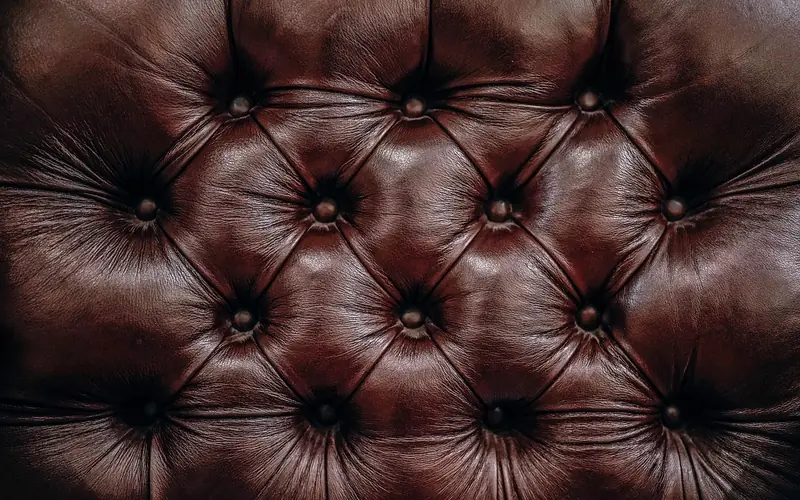
Not all leather is the same. Finished leather (the shiny, protected kind) is more forgiving and can handle most of the methods above. Unfinished or aniline leather is more delicate and needs extra care. Check your furniture’s care label or contact the manufacturer if you’re not sure which one you have.
| Leather Type | Best Cleaning Method | Precautions |
|---|---|---|
| Finished Leather | Vinegar solution, mild soap, enzyme cleaner | Avoid over-wetting; test products first |
| Unfinished/Aniline Leather | Mild soap only, leather-specific cleaner | Use minimal liquid; avoid vinegar and enzyme sprays |
| Suede/Nubuck | Dry cleaning methods, suede-specific products | Never use water; consult a professional for tough odors |
When to Call a Professional
Sometimes the smell is too stubborn, or the leather is too delicate to risk a DIY method — high-end, antique, or unfinished/aniline leather is where a professional is worth the cost. A leather-upholstery specialist has equipment and products that go further than a spray bottle without harming the finish. Ask for references or reviews specific to leather (not just general upholstery cleaning) before booking.
Keeping Leather Fresh Long-Term
Air out the room regularly by opening windows — it helps prevent odors from building up in the first place. Vacuum leather furniture weekly with a soft brush attachment to remove dust and pet hair, which can trap smells. Every few months, wipe the leather down with a damp cloth and apply a conditioner to keep it soft and protected. These small habits do more for long-term freshness than any single deep clean.
“The first time our dog had an accident on a leather sofa, wiping it down with a damp cloth seemed to work — until the smell came back a few days later. Blotting immediately and treating with an enzyme cleaner overnight is what actually got rid of it for good.”
— Our team, from direct experience treating a pet urine accident on a leather sofa
Frequently Asked Questions
Does Urine Make Leather Smell Even After It Dries?
Yes. Once urine soaks into leather’s pores, the odor-causing compounds remain trapped even after the surface looks and feels dry. A dried stain still needs the vinegar, baking soda, or enzyme treatment described above — wiping it once it’s dry is not enough on its own.
Can I Use Regular Household Cleaners on Leather Furniture?
No. Bleach or ammonia-based cleaners can strip the finish or dry out the material. Stick to mild dish soap, white vinegar, a leather-specific cleaner, or a leather-safe enzyme cleaner, and always test on a small hidden area first.
How Long Does It Take to Remove Urine Smell From Leather?
It depends on how fresh the stain is and how deep it soaked in. Fresh accidents can be cleaned in a few hours. Older, set-in smells may take a day or two with repeated treatments — be patient and repeat the enzyme or vinegar step rather than assuming one pass is enough.
Will Vinegar Damage My Leather Furniture?
White vinegar diluted with water is generally safe on finished leather. It’s too harsh for unfinished or aniline leather and suede, where mild soap or a leather-specific cleaner is the safer choice. Always test on a hidden spot first and avoid over-wetting.
What Is the Most Effective Spray for Human or Pet Urine Odor on Leather?
A leather-safe enzyme cleaner is the most effective option for a set-in smell, since it breaks down the odor-causing compounds rather than masking them. For a fresher accident, a diluted white vinegar spray often works just as well and is gentler on the finish.
Can I Prevent My Pet From Urinating on My Furniture Again?
Yes, with effort. House-train with positive reinforcement, use a pet-proof cover, or apply a leather protector to make cleanups easier. Keeping pets off the furniture when you’re not home also reduces the chance of a repeat accident.
Conclusion
Urine smell on leather furniture is manageable if you act fast: blot immediately, clean the surface gently, then neutralize the odor at its source with vinegar, baking soda, or an enzyme cleaner rather than stopping at a surface wipe-down. Finish with a leather conditioner to reseal the surface, and test any product on a hidden spot first — especially on unfinished or aniline leather. Your leather sofa or chair doesn’t have to be a lost cause.
Sponsored / affiliate links. As an Amazon Associate I earn from qualifying purchases. I may earn additional commission from eligible campaigns.