How to Repair Swollen Wood After Water Exposure
If the finish or a thin surface layer is swollen, dry it fully, then sand or refinish. If the wood fibers feel soft, raised, or crumbly, patch or replace the part. Waiting can trap warping, stain rings, mold, and a repair bill that grows fast. This guide shows how to separate finish-only damage from structural swelling and what to do next for furniture, floors, and cabinets.
What swollen wood means
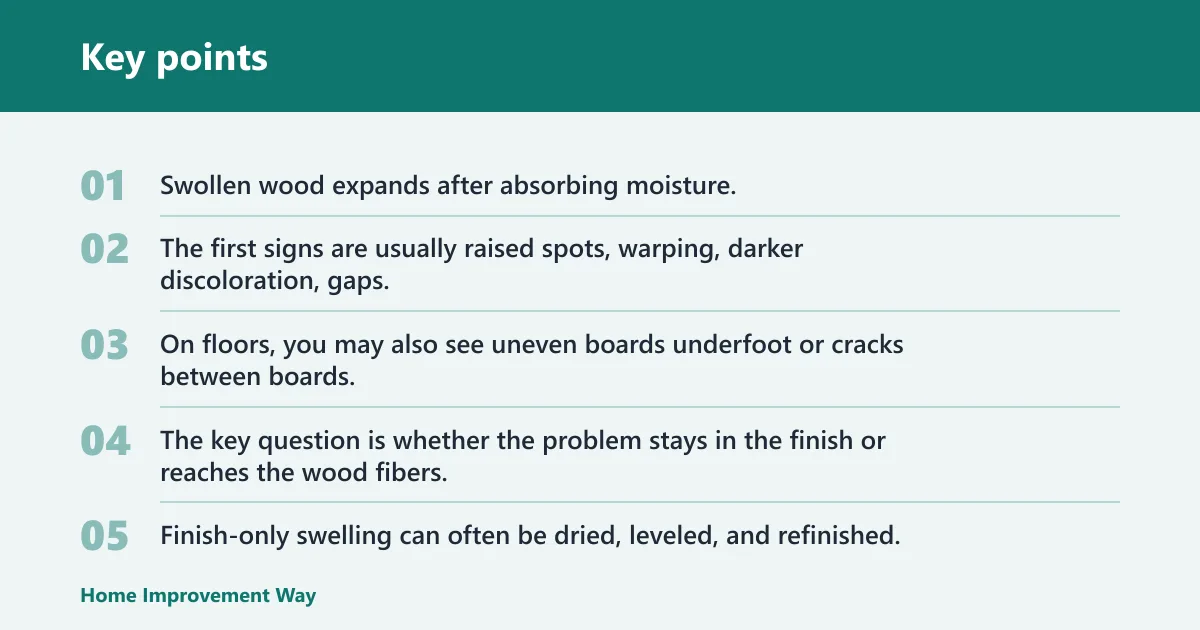



Swollen wood expands after absorbing moisture. The first signs are usually raised spots, warping, darker discoloration, gaps, or soft areas. On floors, you may also see uneven boards underfoot or cracks between boards; on furniture and cabinets, the problem may show up as sticking doors, lifted veneer, or swollen edges.
The key question is whether the problem stays in the finish or reaches the wood fibers. Finish-only swelling can often be dried, leveled, and refinished. Fiber damage changes the plan, because wood that feels spongy, crumbly, or split has already lost shape and strength.
Mold risk changes the plan too. If wood stays wet, smells musty, or shows dark staining that does not improve with drying, it may point to a deeper problem, so move toward removal, patching, or replacement sooner.
Signs that point to deeper damage
Look for cupping, puffed edges, lifted veneer, open joints, or seams that keep widening after drying. Those signs mean the moisture reached more than the surface finish. In cabinets, swelling often starts at toe-kicks, sink bases, and bottom edges where leaks sit longest.
What you’ll need
- Clean towels or absorbent cloths
- Fans
- Dehumidifier
- Moisture meter
- Fine-grit sandpaper
- Wood glue
- Clamps
- Wood filler
- Putty knife
- Refinishing supplies matched to the project
- Water-resistant sealant or wax
Repair or replace?
| Severity level | Symptoms | Safe drying method | Sanding limits | Repair materials | Replacement triggers |
|---|---|---|---|---|---|
| Surface-only swelling | Raised spots, slight roughness, dark discoloration in the finish, no soft feel | Blot water, run fans toward the area, and use a dehumidifier until dry | Very light sanding only after the wood is fully dry | Fine-grit sandpaper, refinishing products, water-resistant sealant or wax | Replace if the surface keeps lifting after drying or the panel is no longer flat |
| Localized fiber swelling | Small soft spots, open joints, small cracks, slightly raised grain, minor gaps | Same drying steps, plus a moisture meter to confirm hidden wet spots are gone | Light sanding after full drying, with care not to thin the surface too much | Wood glue, clamps, wood filler, fine-grit sandpaper, refinishing supplies | Replace if the wood stays soft, the crack keeps reopening, or veneer begins to lift |
| Structural swelling | Warping, cupping, broad swelling, strong musty smell, repeated gaps, soft or crumbly wood | Dry only to assess; do not rely on drying alone to restore shape | Do not sand for repair if the shape has failed | Replacement section, new panel, or pro-grade rebuild materials | Replace when MDF or particleboard has puffed, when veneer has lifted widely, or when the piece stays distorted |
How do you dry swollen wood safely?
Dry the wood in place first. Blot standing water, move air across the damp area, and keep a dehumidifier running until a moisture meter suggests the piece is fully dry. That order matters because sanding or gluing damp wood can trap moisture and make the damage worse.
- Blot or wipe up standing water right away.
- Set fans to point at the damp areas, not straight across the whole room.
- Open windows or add ventilation if outdoor air is not humid.
- Run a dehumidifier until the surrounding air feels dry.
- Check hidden damp spots with a moisture meter, especially at seams, edges, and undersides.
- Stop drying only after the meter reads consistently dry across the affected area.
A common first-timer mistake is to assume a cabinet door is fine just because the veneer still looks smooth. Say your oak cabinet door looks dry on the outside but still feels cool near the bottom rail; that edge can hold moisture long after the face looks normal.
Can you use heat to dry swollen wood safely?
Use heat cautiously, if at all. High heat can dry the surface too fast, which can split the finish or worsen warping. If you use a hair dryer, keep it six inches away from the surface and avoid steam. Heat should never replace airflow, a dehumidifier, or a moisture-meter check.
How do you repair minor swelling after it dries?
Once the wood is fully dry, you can sand, fill, or reglue depending on what changed. Use fine-grit sandpaper lightly on raised areas only, then move to filler or glue if the damage includes small gaps or separated joints. If the wood stays soft after drying, replacement is usually the safer option.
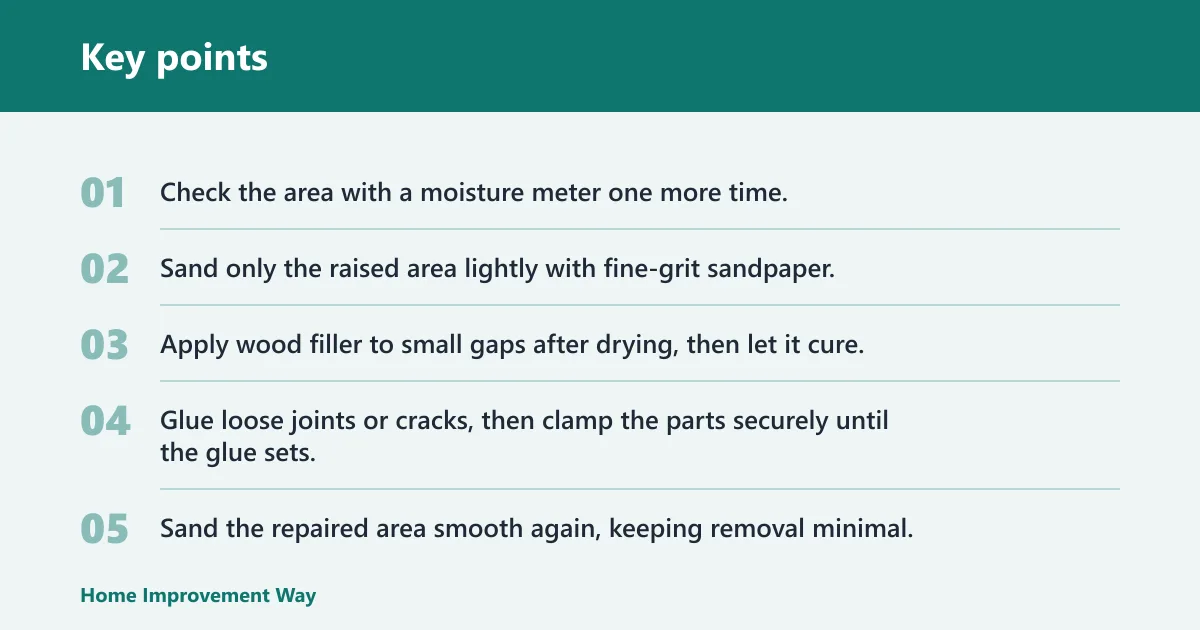
- Check the area with a moisture meter one more time.
- Sand only the raised area lightly with fine-grit sandpaper.
- Apply wood filler to small gaps after drying, then let it cure.
- Glue loose joints or cracks, then clamp the parts securely until the glue sets.
- Sand the repaired area smooth again, keeping removal minimal.
- Refinish the surface and add a water-resistant sealant or wax if the project calls for one.
Suppose a furniture side panel has a 3-inch raised patch near the back edge and the rest stays flat. Light sanding may level that patch after drying. If the same panel bows across its full width, sanding will not restore the original shape.
Should you sand swollen wood after it dries?
Yes, but only after the wood is fully dry and only on the raised area. Fine-grit sandpaper is best for furniture damage because it removes less material. If the panel is veneer, or the surface layer is already thin, sanding too much can cut through the finish and expose the substrate.
When should you replace damaged wood?
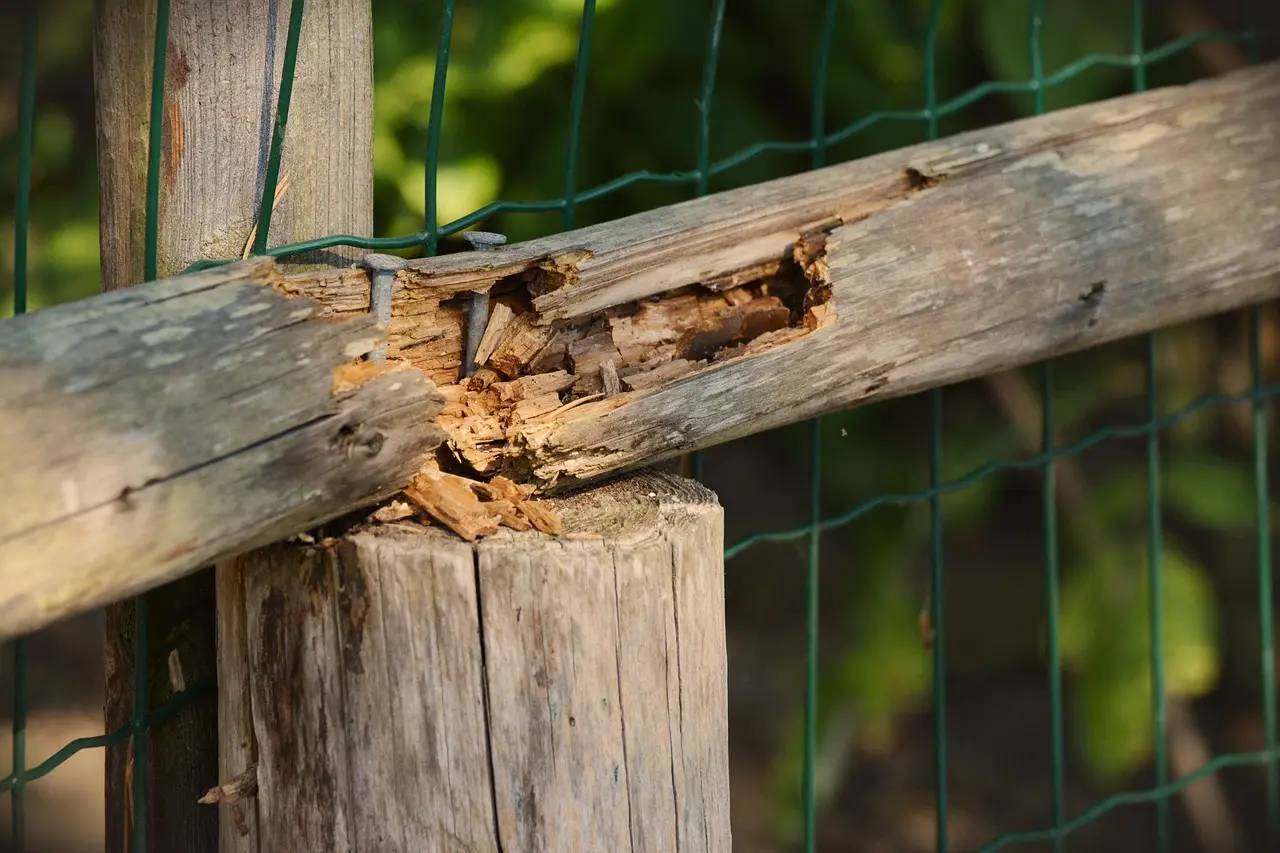
Replace the part when swelling has changed the shape, strength, or structure of the wood. Cupped boards, warped panels, lifted veneer, edge delamination, and swollen MDF or particleboard often do not recover well enough for a lasting repair. If the piece still feels soft after drying, replacement is usually the safer choice.
On floors, raised or bumpy spots that remain uneven after drying often point to boards that will not lie flat again. On cabinets and furniture, swollen bottoms, broken corners, or joints that keep opening are signs that repair materials would only hide the problem for a short time.
How do you fix water damaged swollen wood furniture?
For furniture, dry it first, then decide whether the damage is only on the surface or into the fibers. Minor swelling can often be sanded lightly and refinished after drying. If veneer has lifted, joints have opened, or the substrate is swollen, use glue, filler, or replacement parts instead of forcing a cosmetic fix.
How do you fix swollen wood from water damage?
Fix it by matching the repair to the depth of the damage. Start with drying and moisture checks, then sand only if the wood is fully dry and the surface is still sound. Use glue for cracks or loose joints, filler for small gaps, and replace the part when the wood remains warped or soft.
How do you treat wood after water damage?
After drying, level the surface if needed, fill small defects, and refinish the wood so moisture cannot enter as easily next time. A water-resistant sealant or wax can help after repairs, but it should go on dry, repaired wood only. Do not seal over damp fibers or a musty smell.
Common mistakes
- Using heat first. Heat can distort the finish and leave the core damp.
- Sanding while the wood is still damp. That can tear fibers and lock in damage.
- Sealing wet wood. A finish or wax can trap moisture inside.
- Skipping the moisture meter. Surface dryness does not prove the inside is dry.
- Trying to save puffed MDF or particleboard. Once it softens, repair is usually short-lived.
Picture a kitchen toe-kick with a faint musty smell, a dark stain, and a soft spot near the sink cabinet. Dry it in place first with towels, fans, and a dehumidifier. If the board stays soft after it dries, replacement is safer than sanding or filler.
Frequently asked questions
How do you dry out wood from water damage?
Remove standing water, aim fans at the damp area, and keep a dehumidifier running until the meter shows dry readings throughout the piece. If the wood is thick, check edges, undersides, and joints. Hidden moisture often stays behind after the visible surface looks dry.
When should swollen wood be replaced instead of repaired?
Replace it when the wood stays soft, warped, or badly cupped after drying, or when veneer and edges have separated over a wide area. MDF and particleboard that have puffed are especially poor candidates for repair. A lingering musty odor is another reason to stop and replace.
Sponsored / affiliate links. As an Amazon Associate I earn from qualifying purchases. I may earn additional commission from eligible campaigns.