How To Stop Toilet Overflowing: Genius Fix
Quick Summary:
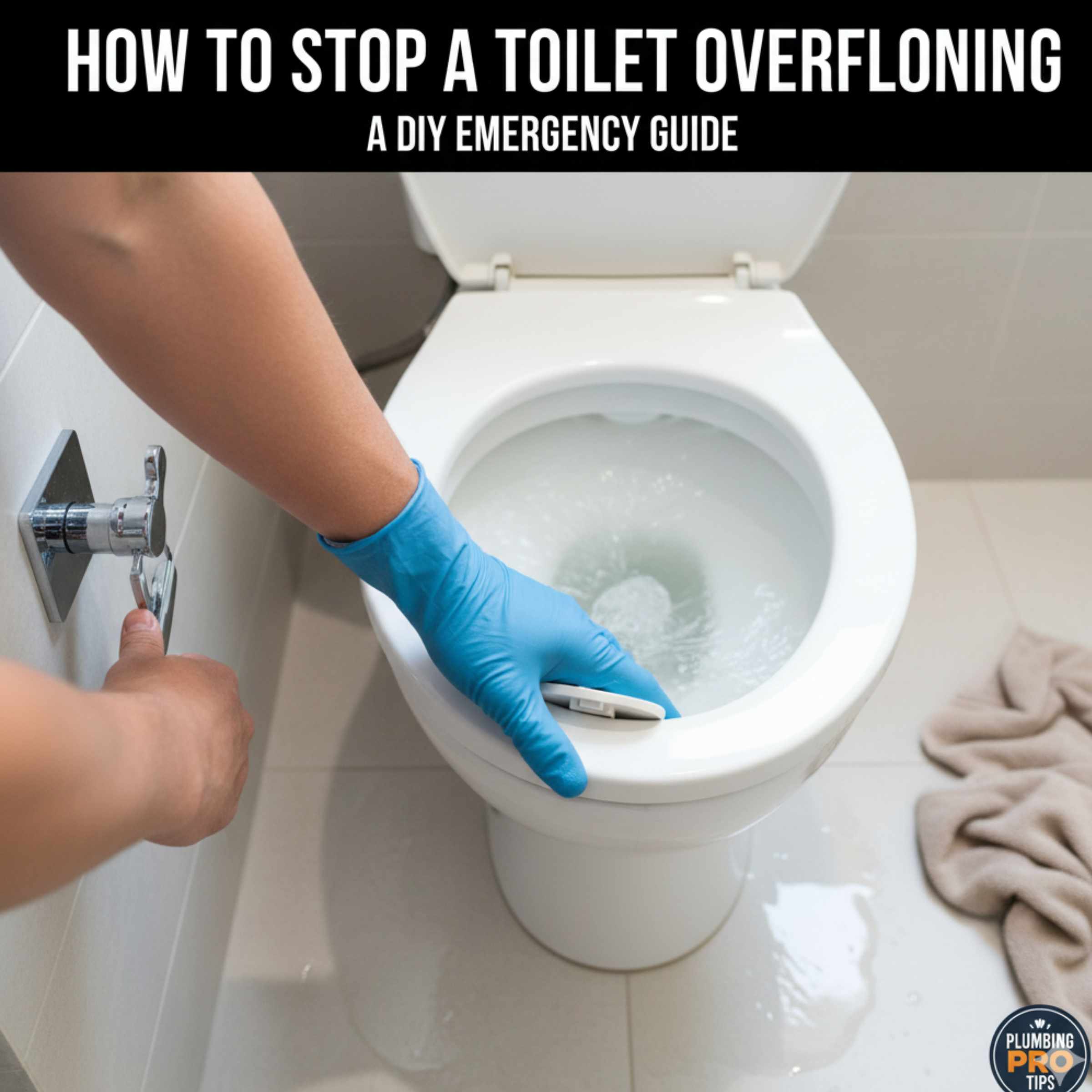
To stop a toilet from overflowing, act fast by lifting the float ball in the tank to shut off the water supply. Then, gently push the flapper down to stop the water flow. This simple, immediate fix prevents a messy disaster.
We’ve all been there. You flush the toilet, and then… disaster strikes. The water level keeps rising, threatening to spill onto your bathroom floor. It’s a common, yet incredibly stressful, home plumbing problem. But don’t panic! With a few simple steps, you can quickly get control of the situation and prevent a flood. This guide will walk you through exactly what to do, step-by-step, so you can handle an overflowing toilet like a pro.
Understanding Why Toilets Overflow
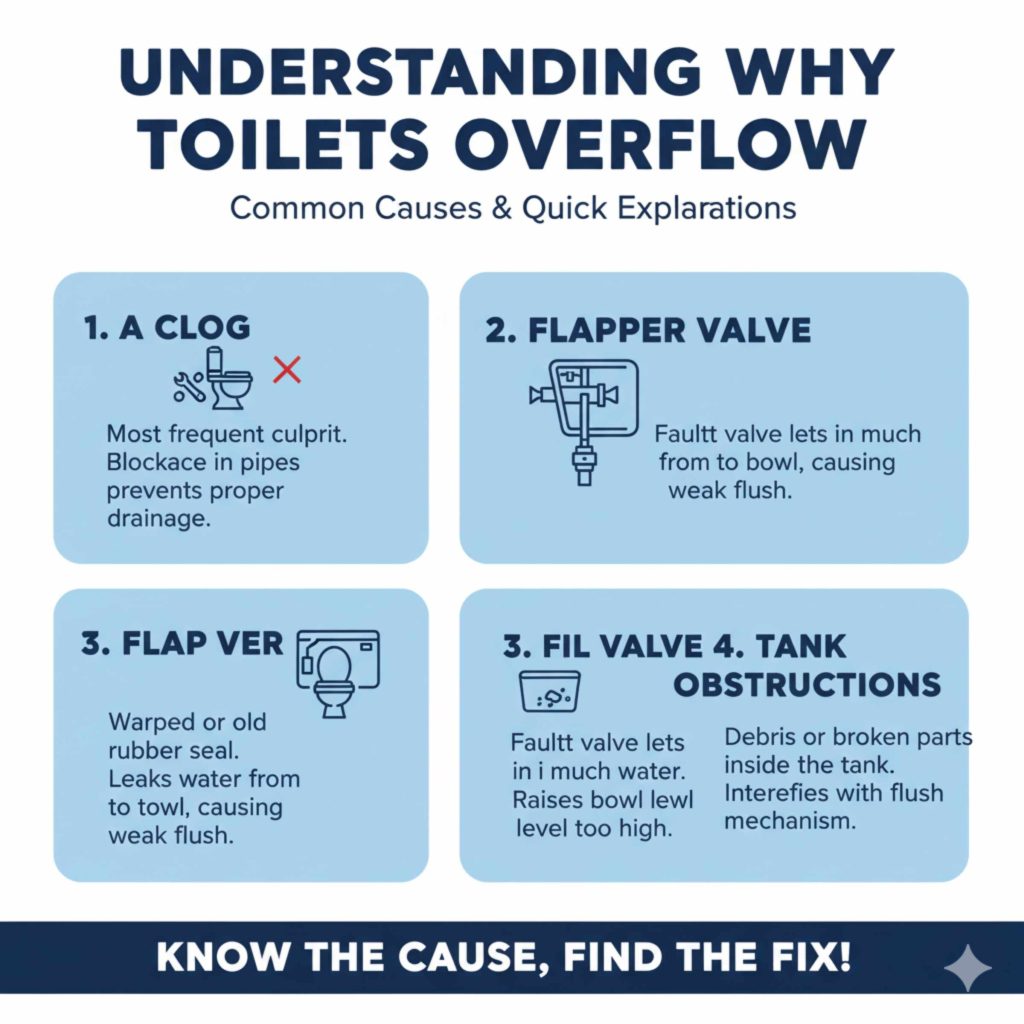
Before we jump into the fix, it’s helpful to know why a toilet might overflow. Most of the time, it’s because the toilet isn’t flushing properly. This means the water from the tank isn’t draining into the bowl, or it’s draining too slowly, causing the bowl to fill up past its usual level. Several things can cause this:
- A Clog: This is the most frequent culprit. Something is blocking the passage of water through the pipes.
- The Flapper Valve: This rubber seal inside the tank might not be working correctly. If it’s old, warped, or not seating properly, water can leak from the tank into the bowl, preventing a full flush.
- The Fill Valve: If the fill valve is faulty, it might let too much water into the tank, raising the water level too high and potentially causing it to overflow.
- Obstructions in the Tank: Sometimes, a piece of debris or a malfunctioning part inside the tank can interfere with the flushing mechanism.
Immediate Action: The Genius Fix for an Overflowing Toilet
When you see the water rising, your first instinct might be to panic, but the most effective solution is surprisingly simple and requires no tools. This is your go-to method for stopping the water flow instantly.
Step 1: Locate the Toilet Tank Handle
This is the lever on the side of your toilet tank that you normally push to flush. You’ll find it on the exterior of the tank.
Step 2: Lift the Tank Lid
Carefully lift the lid off the toilet tank. It might be a little heavy, so be gentle. Set it aside on a safe, flat surface where it won’t be damaged.
Step 3: Find the Float Ball (or Cup) and Flapper
Inside the tank, you’ll see a few components. The float ball (it looks like a red or blue ball on an arm) or a float cup (a cylindrical piece that moves up and down the fill valve) controls the water level. The flapper is the rubber stopper at the bottom of the tank that lifts when you flush and seals the drain when the tank refills. It usually has chains attached to the flush lever arm.
Step 4: Lift the Float Ball/Cup
Gently lift the float ball or float cup upwards. This action signals the fill valve to stop adding water to the tank, effectively shutting off the water supply. You should see the water level stop rising.
Step 5: Close the Flapper Valve
With the water supply stopped, you need to prevent any remaining water in the tank from entering the bowl. Carefully press the flapper down to seal the drain at the bottom of the tank. You might hear a slight suction sound as it seals.
Step 6: Stop Flushing!
Until you’ve resolved the underlying issue, do not flush the toilet again. Flushing will simply refill the tank and cause it to overflow once more.
By performing these quick steps, you’ve successfully stopped the immediate overflow and prevented water damage to your bathroom. Now, let’s look at how to address the root cause.
Diagnosing the Underlying Problem
Once the immediate overflow is handled, it’s time to figure out why it happened. This will guide you on how to fix it permanently.
1. Check for a Clog
A clog is the most common reason for a toilet to overflow. If the water rose quickly and didn’t drain much, a clog is likely.
Tools You Might Need:
- Toilet Plunger (a flange plunger is best for toilets)
- Old Towels or Rags
- A Bucket
Steps to Plunge a Clog:
- Protect the Area: Lay down old towels or rags around the base of the toilet to catch any splashes.
- Ensure Enough Water: The plunger needs to be submerged in water to create a seal. If the water level in the bowl is low, you might need to add some water from a bucket.
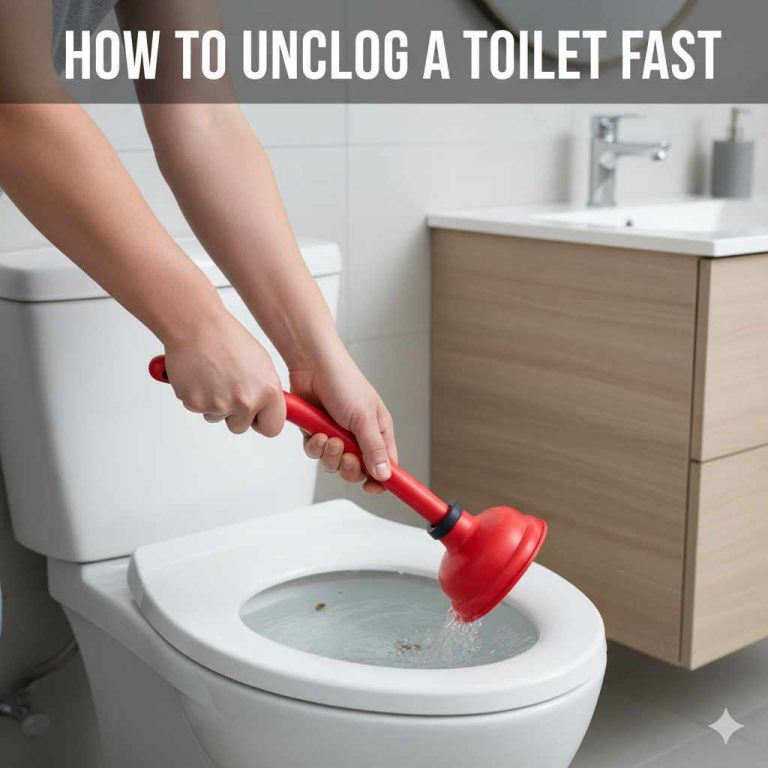
- Position the Plunger: Place the plunger cup firmly over the toilet drain opening, ensuring a good seal.
- Plunge Vigorously: Push down and pull up with steady, forceful strokes for about 15-20 seconds. The goal is to create pressure and suction to dislodge the clog.
- Check the Water Level: Remove the plunger and see if the water level in the bowl recedes. If it does, you’ve likely cleared the clog.
- Flush Cautiously: If the water drains, you can try a small flush to test. Lift the float ball slightly to let a little water into the tank, then let the flapper close. If the water drains normally, you can then do a full flush. If it still looks like it might overflow, stop and try plunging again or move to a toilet auger.
When to Use a Toilet Auger (Closet Auger):
If plunging doesn’t work, a toilet auger (also known as a closet auger) is the next step. This tool is designed to reach deeper clogs and break them up or pull them out. It has a protective sleeve to prevent scratching your toilet bowl. You feed the auger’s cable into the drain, turn the handle to extend the auger head, and twist to break up or hook onto the obstruction.
For more information on using tools like plungers and augers, resources like This Old House offer great visual guides.
2. Inspect the Flapper Valve
The flapper is a crucial part of your toilet’s flushing mechanism. If it’s worn out or not sealing correctly, water can constantly leak from the tank into the bowl. This can lead to weak flushes or, in some cases, cause the tank to keep refilling, potentially leading to an overflow if the fill valve isn’t set correctly.
Signs of a Bad Flapper:
- The toilet runs constantly or makes a gurgling sound after flushing.
- You can hear water trickling into the bowl.
- The flapper looks warped, cracked, or brittle.
- The chain connecting the flapper to the flush lever is too long, preventing a good seal.
Replacing a Flapper:
Replacing a flapper is a straightforward DIY task. You’ll need a new flapper (make sure it’s compatible with your toilet model – take the old one to the store if unsure) and a pair of pliers (sometimes needed to adjust the chain). You can find universal flappers at most hardware stores.
- Turn off the Water: Locate the shut-off valve on the wall behind the toilet and turn it clockwise until it stops.
- Flush to Empty the Tank: Flush the toilet to drain most of the water from the tank.
- Remove the Old Flapper: Most flappers attach to the flush valve (the large pipe in the center of the tank bottom) with two ears. Simply unhook these ears. There might also be a chain to detach.
- Attach the New Flapper: Hook the ears of the new flapper onto the flush valve.
- Adjust the Chain: Ensure the chain has just a little slack – about half an inch. Too much slack means it won’t lift properly; too little means it won’t seal. You may need to use the provided clip or pliers to adjust the chain length.
- Turn Water Back On: Turn the shut-off valve counter-clockwise.
- Test: Let the tank fill, then flush. Check for leaks and ensure a strong flush.
3. Examine the Fill Valve (Ballcock)
The fill valve is responsible for refilling the tank after each flush. If it’s malfunctioning, it can cause the water level to get too high.
Signs of a Bad Fill Valve:
- The toilet keeps running after flushing, and the water level is too high.
- The fill valve doesn’t shut off completely, leading to a constant trickle of water.
- The water level in the tank is too high, even when the float is set correctly.
Adjusting or Replacing a Fill Valve:
Most modern fill valves have an adjustment screw or mechanism to set the water level. If your water level is too high, check your fill valve’s manual (or look for markings on the valve itself) for instructions on how to lower the water level. Usually, this involves adjusting the float arm or screw.
If adjusting doesn’t work, or if the fill valve is old and corroded, it might need replacement. This is a slightly more involved DIY task but is very doable. You’ll need a new fill valve (again, check for compatibility), a wrench, and a bucket.
- Turn off the Water: Shut off the water supply valve.
- Flush to Empty the Tank: Flush the toilet to drain the tank.
- Disconnect Water Line: Use a wrench to disconnect the water supply line from the bottom of the fill valve. Have a bucket ready for any residual water.
- Remove Old Fill Valve: There’s usually a nut at the bottom of the tank holding the fill valve in place. Unscrew this nut from inside the tank. Lift the old fill valve out.
- Install New Fill Valve: Follow the instructions that come with your new fill valve. Typically, you’ll place it in the tank, secure the nut underneath, reconnect the water line, and then adjust the float to the desired water level.
- Turn Water Back On: Slowly turn the water supply valve back on and check for leaks.
- Test: Let the tank fill and flush to ensure it works correctly.
For detailed installation guides, manufacturers like Fluidmaster offer excellent video tutorials and articles.
Preventative Maintenance Tips
The best way to avoid the stress of an overflowing toilet is to perform regular maintenance. A little proactive care can save you from a big mess.
Regular Inspections
Once a month, lift your tank lid and take a quick look inside. Check for:
- Water Level: Is it consistently too high or too low?
- Flapper Condition: Does it look cracked or worn? Is the chain too long or too short?
- Fill Valve Operation: Does it shut off promptly when the tank is full?
- Leaks: Are there any drips or signs of water around the tank or bowl base?
Listen to Your Toilet
Pay attention to the sounds your toilet makes. A toilet that runs for a long time after flushing, or one that makes unusual gurgling noises, might be trying to tell you something is wrong.
Don’t Flush Non-Flushable Items
This might seem obvious, but many toilet overflows are caused by attempts to flush items that shouldn’t go down the drain. Remember, the only things that should go down your toilet are human waste and toilet paper.
- Avoid flushing:
- Wipes (even “flushable” ones can cause issues)
- Paper towels
- Feminine hygiene products
- Cotton balls or swabs
- Dental floss
- Cat litter
- Grease or oil
The EPA provides guidance on responsible flushing practices.
Know Your Shut-Off Valve
Familiarize yourself with the location of your toilet’s water shut-off valve. It’s usually a small knob or lever on the wall behind the toilet. Knowing how to turn it off quickly is essential in an overflow emergency.
When to Call a Professional Plumber
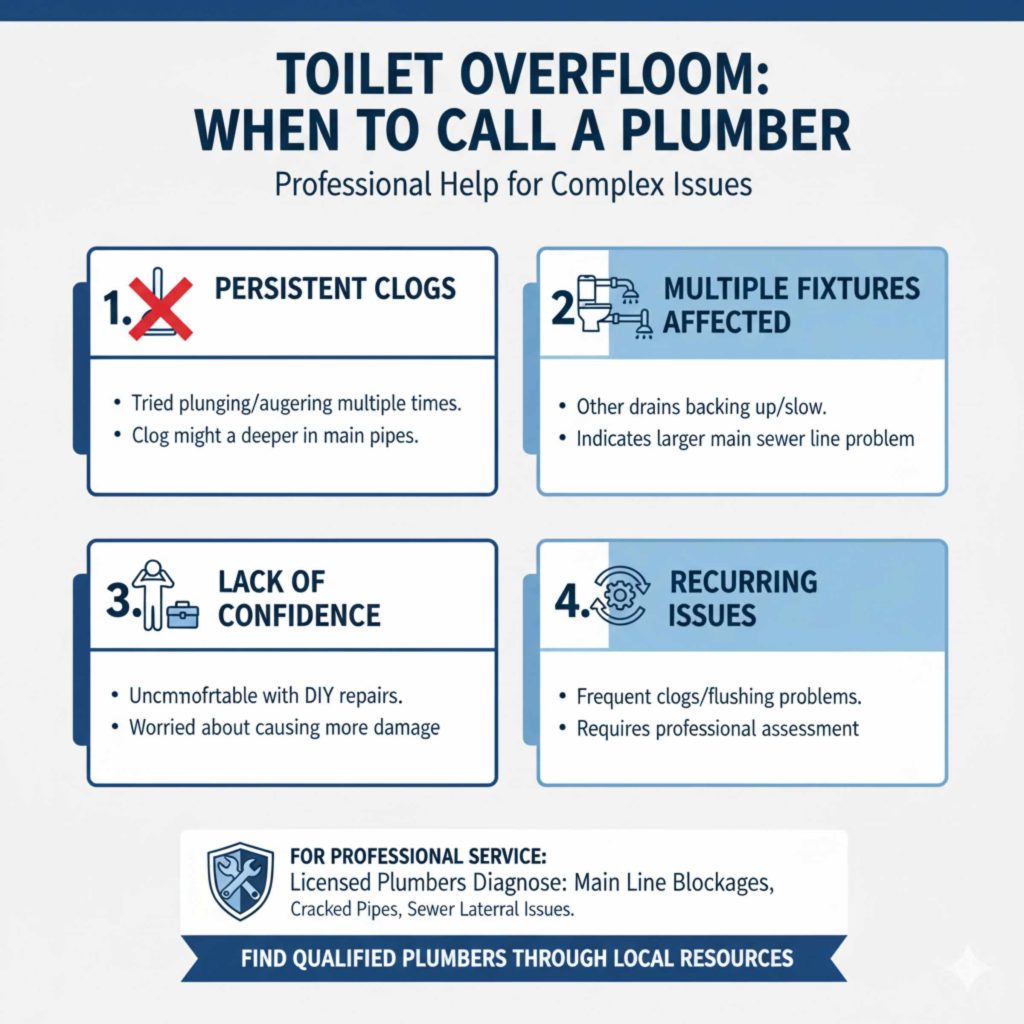
While many toilet overflow issues are simple DIY fixes, there are times when it’s best to call in the experts:
- Persistent Clogs: If you’ve tried plunging and augering multiple times without success, the clog might be deeper in your home’s plumbing system.
- Multiple Fixtures Affected: If other drains in your house are also backing up or slow to drain, it indicates a larger main sewer line problem.
- Lack of Confidence: If you’re uncomfortable performing the repairs or worried about making the problem worse, a plumber has the tools and expertise to fix it quickly and correctly.
- Recurring Issues: If your toilet seems to overflow or have flushing problems frequently, there might be an underlying issue with your plumbing that needs professional assessment.
A professional plumber can diagnose complex issues like main line blockages, cracked pipes, or problems with your sewer lateral. You can find qualified plumbers through resources like the California Contractors State License Board (or your local equivalent) to ensure you hire a licensed and reputable professional.
Troubleshooting Common Scenarios
Let’s break down some common overflow scenarios and their likely causes and solutions.
| Symptom | Likely Cause | Immediate Fix | Permanent Solution |
|---|---|---|---|
| Toilet water rises rapidly and doesn’t drain much. | Severe clog in the trap or drain line. | Lift float ball, push flapper down. Turn off water supply. | Plunge vigorously. Use a toilet auger. If unsuccessful, call a plumber. |
| Toilet runs constantly, and water level is too high. | Faulty fill valve not shutting off; or float set too high. | Lift float ball to stop water flow temporarily. | Adjust or replace the fill valve. Ensure float is set to the correct water level (usually about 1/2 to 1 inch below the overflow tube). |
| Toilet flushes weakly, or doesn’t refill properly. | Partially clogged drain, or flapper not sealing/opening correctly. | Lift float ball, push flapper down if needed. | Check for clogs. Inspect and potentially replace the flapper and adjust chain. |
| Toilet overflows only when other fixtures are used. | Main sewer line clog or blockage in the main drain. | Lift float ball, push flapper down. Turn off water supply immediately. Avoid using other plumbing fixtures. | Call a professional plumber. This is a significant issue requiring their expertise. |
Frequently Asked Questions (FAQ)
Q1: What’s the absolute fastest way to stop a toilet from overflowing?
The fastest way is to immediately lift the float ball inside the tank to shut off the water supply, and then gently push the flapper down to seal the drain.
Q2: Can I just turn off the water at the main house valve if my toilet overflows?
Yes, you can turn off the main water supply to your house, but it’s much faster and easier to use the small shut-off valve located on the wall behind the toilet. This valve only stops water to that specific toilet.
Q3: How do I know if my toilet overflow is due to a clog or a faulty part?
If the water rises very quickly and doesn’t go down at all, it’s likely a clog. If the toilet runs constantly, or the water level is consistently too high, it’s more likely a faulty fill valve or flapper.
Q4: Will plunging always fix an overflowing toilet?
Plunging is very effective for many clogs, but it won’t fix problems with the fill valve, flapper, or more severe blockages further down the line.
Q5: How often should I check the parts inside my toilet tank?
A quick visual check once a month is a good practice. Listen for running water or unusual sounds, and if you notice anything, inspect the flapper and fill valve.
Q6: Are “flushable” wipes really safe to flush?
No. Even wipes labeled “flushable” often do not break down quickly enough in your pipes and can cause clogs and toilet overflows. It’s safest to dispose of them in the trash.
Q7: If my toilet overflows, do I need to call a plumber right away?
If you can stop the overflow quickly using the steps above and then clear a minor clog yourself, you might not need a plumber. However, if you can’t stop the overflow, the clog is stubborn, or multiple fixtures are affected, it’s time to call a professional.
Conclusion
Dealing with an overflowing toilet can be a daunting experience, but as you’ve learned, it’s a problem you can often manage yourself. By knowing the quick fix of lifting the float and closing the flapper, you can prevent a messy disaster in seconds. Understanding the common causes – clogs, faulty flappers, and malfunctioning fill valves – empowers you to tackle the root of the problem with simple tools like a plunger or a toilet auger. Regular maintenance and mindful flushing habits will go a long way in preventing future overflows.
Remember, you have the power to diagnose and often fix common toilet issues. Take a deep breath, follow these steps, and build your confidence as a homeowner. If at any point you feel overwhelmed or the problem seems beyond your comfort level, don’t hesitate to call a trusted plumber. They are there to help when you need them most. Happy fixing!