Range Hood Recirculating vs Vented: Which Fits?
A vented range hood fits frequent high-heat cooking and moisture control better; choose a recirculating hood when ducting outside is not possible. A poor match leaves grease, odors, and humidity in the kitchen, which can stain surfaces and stress cabinets. This guide compares airflow, installation limits, upkeep, and when each type fits a remodel or replacement.
| Decision factor | Range hood recirculating | vented | Winner |
|---|---|---|---|
| Smoke, grease, odors | Filters air through grease and charcoal or carbon filters, then sends it back to the room. | Expels extracted air outside through ductwork. | vented |
| Moisture control | Helps with odor control, but does not remove heat or moisture as effectively. | Better at reducing humidity and condensation. | vented |
| Installation | Easier when you cannot add exterior ducting. | Needs a route to a wall or roof and more planning. | Range hood recirculating |
| Maintenance | Needs grease filter cleaning and charcoal filter replacement or regeneration. | Needs less filter upkeep, though grease filters still need cleaning. | vented |
| Best fit for heavy cooking | Can work for light everyday cooking. | Stronger for frying, searing, spices, and fish. | vented |
Range hood recirculating vs vented at a glance
A recirculating hood is the practical choice when you cannot run ductwork outside. Vented is the stronger option when you can route air through a wall or roof, especially if you fry often, cook with a gas range, or want better moisture control.
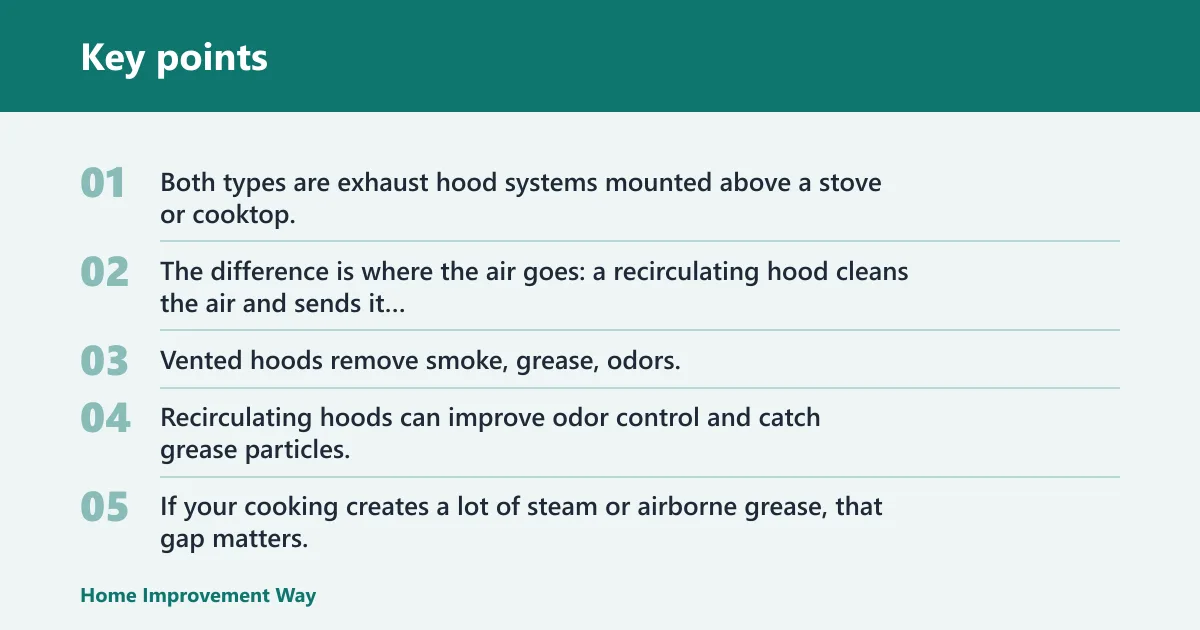
Both types are exhaust hood systems mounted above a stove or cooktop. The difference is where the air goes: a recirculating hood cleans the air and sends it back to the kitchen, while vented sends it outdoors.
What each type does with smoke, grease, odors, and moisture
Vented hoods remove smoke, grease, odors, and moisture more effectively because they exhaust air outside. Recirculating hoods can improve odor control and catch grease particles, but they do less for humidity and condensation.
If your cooking creates a lot of steam or airborne grease, that gap matters. A hood that handles smells but leaves damp air behind can still leave windows foggy and cabinets more exposed to residue.
Quick verdict by kitchen type
For apartments, condos, and tight retrofit jobs, a recirculating hood often makes more sense because it avoids exterior ducting. For open-plan kitchens, gas ranges, and frequent frying, vented is usually the better match.
If you have an apartment kitchen with no nearby exterior wall, a purpose-built recirculating hood is often a practical option. A purpose-built recirculating hood is often the cleanest install. Suppose the kitchen opens to a living room and you sear steak twice a week; vented usually handles the smell and heat better.
Should my range hood vent outside or recirculate?
Vent outside if you can run ductwork to a wall or roof and you cook often enough to create smoke, grease, or steam. Choose a recirculating hood when that route is blocked by the building layout, lease rules, cabinetry, or budget.
When vented makes more sense
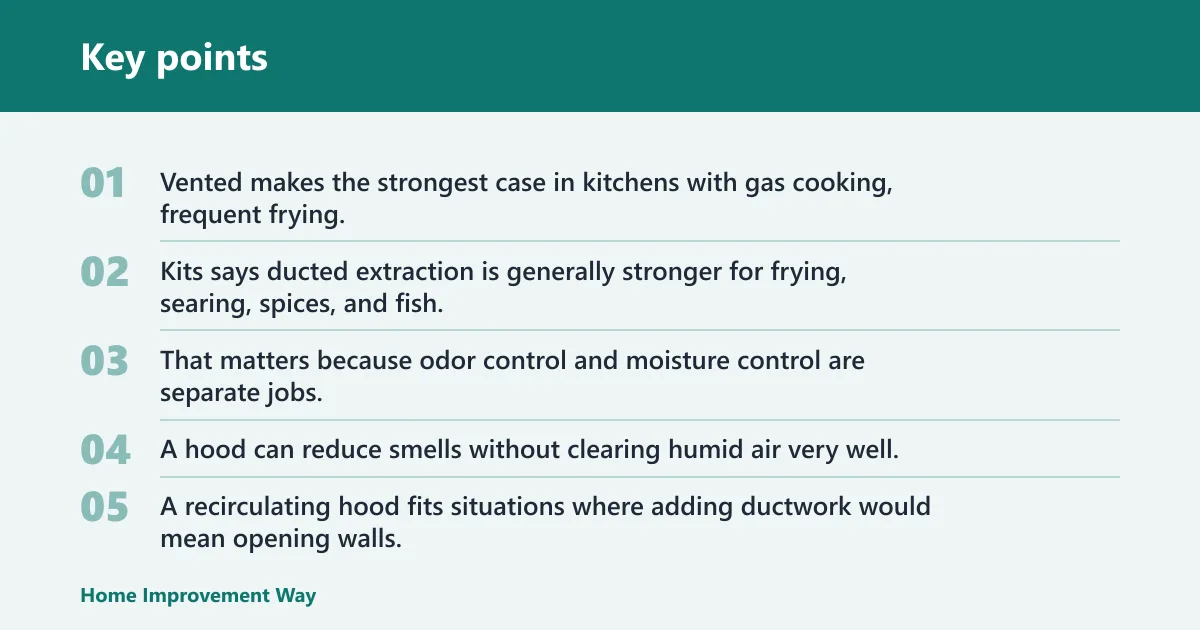
Vented makes the strongest case in kitchens with gas cooking, frequent frying, or a need to reduce condensation. Kits says ducted extraction is generally stronger for frying, searing, spices, and fish, and SINDA says vented hoods provide better moisture control.
That matters because odor control and moisture control are separate jobs. A hood can reduce smells without clearing humid air very well.
When Range hood recirculating is the practical option
A recirculating hood fits situations where adding ductwork would mean opening walls, changing cabinets, or cutting through a roof. MyAppliances notes that recirculating hoods use activated charcoal or carbon filters, which makes them suitable for kitchens that need a simpler install.
For everyday boiling, reheating, and light sautéing, a good ductless model can be enough. The key is matching the hood to the cooking load, not assuming every kitchen needs the same setup.
Where installation limits change the answer
Existing duct routes matter more than many buyers expect. Ductwork that is long, full of bends, or narrowed by poor planning can reduce performance, and Summit says converting a standard hood to recirculating can reduce airflow efficiency, raise operating noise, and add strain on the fan motor.
That is why planning should happen before cabinets or plaster work. If the exterior route is hard, a properly designed recirculating setup can be the better fix than forcing a weak duct path into place.
How each hood handles cooking byproducts
Vented handles smoke, grease, and moisture better. A recirculating hood works more like odor control plus grease capture, with some help on airborne particles, but less impact on humidity and heat.
Smoke and grease capture
Both types use grease filters, usually metal, to catch oil and grease particles. The difference is what happens next: vented removes that air from the home, while a recirculating hood sends filtered air back into the room.
Heavy frying and searing create more particulate load, so the air path matters more. A hood that only recirculates can still leave the room feeling hazy after a long cooking session.
Odor control
Charcoal filter systems can reduce cooking smells, especially from onions, garlic, fish, and spices. The same source says recirculating hoods use activated charcoal or carbon filters, and those filters need regular replacement or cleaning.
That is why a recirculating hood can be fine for a breakfast-and-pasta kitchen, yet frustrating in a home where fish or wok cooking is common. Odor control is real, but it depends on upkeep and cooking intensity.
Moisture control and condensation
Moisture is where vented has the clear edge. The same source says recirculating hoods do not remove heat or moisture as effectively, and SINDA says vented hoods provide superior air purification and better moisture control.
That difference shows up most when you boil water often, simmer covered pots, or cook under a gas flame. If your kitchen windows fog easily, vented is the better fit.
Can you add ductwork without a major remodel?
Sometimes, but not always. If the hood can connect to an exterior wall or roof with a short, direct run, ducted installation may be straightforward; if the path crosses cabinets, joists, or finished surfaces, the project can become much larger.
Exterior wall and roof routes
A short wall route is usually simpler than a roof run, but both need planning. Ducted range hoods release extracted air outside the property through metal ductwork, so the route has to make physical sense before finishes go in.
That planning step is why ducted upgrades can be awkward in completed kitchens. The appliance choice affects carpentry, drywall, and sometimes permits or contractor coordination.
How long or restrictive duct runs hurt performance
Long runs and sharp turns increase resistance. That can cut capture performance, especially when the hood is already working hard over a gas range or during frying.
If the best duct path is compromised, the advantage of vented shrinks. In that case, a well-sized recirculating hood may outperform a poorly routed ducted one.
Why planning comes before cabinets or plaster
Once cabinetry and finishes are in place, duct options narrow fast. That is why the hood decision should happen before the kitchen is closed up, not after the tile is set and the soffit is built.
A common first-timer mistake is assuming a vented hood can always be added later. Sometimes it can. Often, the cleanest route is to decide early whether the building will support it.
Range hood decision matrix
This matrix compares the two options by kitchen type and cooking pattern. The recommendation column follows the same logic used above: vented wins when smoke, grease, and moisture control matter most; a recirculating hood wins when building constraints or budget make ducting impractical.
| Scenario | Range hood recirculating | vented | Recommendation | Maintenance-cost note |
|---|---|---|---|---|
| Apartment | Best fit when exterior ducting is not allowed. | Often impractical because the duct route is blocked. | Range hood recirculating | Plan for charcoal filter replacement every few months, depending on use. |
| Condo | Often the easier path if building rules limit exterior work. | Best only when the building already provides a legal duct route. | Range hood recirculating | Grease filters need regular cleaning; charcoal filters add ongoing cost. |
| Interior wall | Works without opening a long new duct path. | Can work only if a short, direct exterior route is available. | Range hood recirculating | Lower install complexity, but repeat filter upkeep continues. |
| Open-plan kitchen | Helps, but odors and heat can travel farther than the hood can clear. | Better at pulling smoke and heat away before they spread. | vented | Less filter replacement, but installation may cost more up front. |
| Gas range | Can be acceptable for light cooking, less so for frequent heavy use. | Better match for stronger ventilation and moisture control. | vented | Ongoing upkeep is usually lower than a ductless filter schedule. |
| Heavy frying | Can leave lingering grease and odor if filters are not maintained closely. | Generally stronger for frying, searing, spices, and fish. | vented | Expect less filter spending, though grease filters still need cleaning. |
| Light cooking | Usually sufficient for boiling, reheating, and occasional sautéing. | More than needed if the kitchen rarely creates smoke or steam. | Range hood recirculating | Budget impact comes from periodic charcoal filter replacement. |
| Remodel budget | Often lower at install because no exterior ducting is required. | Higher if the build needs wall or roof penetrations. | Range hood recirculating | Lower upfront cost, but factor in filter replacements over time. |
What maintenance will each option need?
A recirculating hood needs more routine filter attention. Vented still needs grease filter cleaning, but it avoids the recurring charcoal filter cycle that adds cost and reminders over time.
Grease filter cleaning
Both systems rely on grease filters, usually metal, and those should be cleaned regularly. If grease buildup is ignored, airflow drops and the hood has a harder time capturing what rises from the cooktop.
For light cooking, monthly cleaning may be enough, depending on the model and manufacturer guidance. For frying or searing, a tighter cleaning schedule makes more sense.
Charcoal filter replacement or regeneration
Charcoal filters absorb odors, but they have a limited service life. The same source says carbon filters may need replacing every few months, and the exact cadence depends on the model and how hard the hood is used.
Some systems allow regeneration instead of replacement. Even then, the maintenance burden stays with the homeowner, which is part of the cost of going ductless.
Maintenance cost notes by use level
Light cooking usually keeps filter costs modest. Heavy frying, fish, and spice-heavy cooking wear through charcoal filters faster and make replacement or regeneration more frequent.
That is why a recirculating hood can be economical in the short term yet more expensive over a busy year. Vented shifts more of the cost into installation and less into recurring filter purchases.
Choose Range hood recirculating if… / Choose vented if…
Choose a recirculating hood if ducting outside is blocked, if you live in an apartment or condo with building limits, or if your cooking is mostly light and occasional. Choose vented if you cook often on a gas range, fry or sear regularly, or need the best control over smoke, grease, heat, and moisture.
Choose Range hood recirculating if…
You cannot add a legal or practical exterior duct route. You cook mostly by boiling, reheating, or gentle sautéing. You want a simpler install and can accept recurring filter maintenance.
Choose vented if…
You have a clear route to a wall or roof. You cook with high heat, fry often, or want stronger moisture removal. You are remodeling and can plan the duct path before the kitchen is closed up.


Frequently asked questions
Is a recirculating range hood good enough for everyday cooking?
Yes, for many everyday tasks such as boiling, reheating, and light sautéing. It is less satisfying for heavy frying, frequent searing, or rooms that trap humidity. For light use, the key is keeping the grease and charcoal filters in good shape.
What are the downsides of a ductless range hood?
The main drawbacks are weaker moisture removal, recurring filter costs, and less effective smoke handling than vented systems. A ductless hood can also be a poor match for open-plan rooms or heavy cooking because odors and heat spread farther.
When is a vented range hood worth the extra installation work?
It is worth it when you can add ductwork without major structural disruption and you cook often with high heat. If you fry, sear, or use a gas range, the stronger removal of smoke and moisture usually justifies the extra installation effort.
Can I use a recirculating hood in an apartment or condo?
Yes, and in many apartments or condos it is the most practical choice. Building rules may limit exterior vents, and a recirculating setup avoids wall or roof penetrations. Just plan for filter upkeep and accept that moisture control will be less effective.
How often do charcoal filters need to be replaced?
It depends on the hood model and how often you cook, but Kits says carbon filters may need replacing every few months. Heavy frying, fish, and spice-heavy cooking usually shorten that interval. Some models allow regeneration instead of replacement.
Does vented extraction handle smoke, grease, and moisture better?
Yes. Vented hoods remove smoke, grease, odors, and moisture more effectively because the air leaves the home through ductwork. That is why they are the better choice for greasy cooking, open-plan kitchens, and kitchens that fog up easily.
What should I choose if I cook with high heat or a gas stove?
Choose vented if you can. The same source notes that ducted extraction is generally stronger for frying, searing, spices, and fish, and SINDA says vented hoods are ideal for frequent or greasy cooking. A recirculating hood can work, but it is the weaker match for that load.
Sponsored / affiliate links. As an Amazon Associate I earn from qualifying purchases. I may earn additional commission from eligible campaigns.