Squeaky Hardwood Floors Upstairs: Find Joist, Subfloor, or Board Movement
Squeaky hardwood floors upstairs almost always come from one of three sources moving against each other: the subfloor panel rubbing loose nails as it flexes, the floor joists themselves deflecting under weight, or individual tongue-and-groove boards rubbing against their neighbors as they’ve shrunk from seasonal humidity changes. Second-floor squeaks are more common than ground-floor ones because upper-floor joists typically span farther with less structural mass beneath them. This guide explains how to tell which layer is actually moving and the fix that matches each cause.
Identifying the Source Before You Fix Anything
Have someone walk slowly over the squeaky area while you kneel and listen closely, or watch and feel for movement yourself. A squeak isolated to a narrow line, right where two boards meet, usually means the boards are rubbing against each other, this is common in solid hardwood where seasonal humidity swings shrink the wood slightly and open tiny gaps. A squeak over a broader area, several square feet, that seems to move with your foot pressure points to the subfloor panel flexing against the nails or screws holding it to the joists below. If the floor also feels noticeably springy or bouncy underfoot, not just noisy, the joists themselves may be under-spanned or need additional support.
Fixing Subfloor Panel Movement From Above
When the subfloor plywood or OSB panel has worked loose from the joist and rubs against old nails as it flexes, the standard fix is driving trim-head screws down through the finished floor, through the subfloor, and into the joist at a slight angle. Purpose-made kits use a screw with a scored breakaway head that snaps off just below the wood surface once set to the correct depth, so no screw head is visible on the finished floor. Locating the actual joist first with a stud finder or by drilling a small pilot hole is essential, driving the screw into open subfloor without hitting a joist won’t stop the movement.
Fixing It From Below, If the Ceiling Underneath Is Accessible
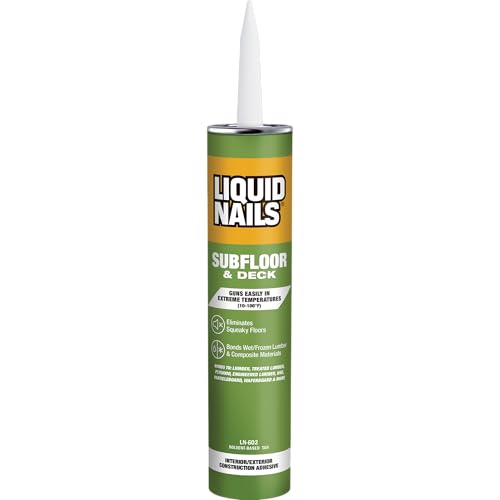
If you have access from an unfinished ceiling below, such as a basement ceiling under a first-floor squeak, or an accessible space below a second floor, you can drive screws up through the subfloor into the finished floorboards without any visible repair on top. Where the subfloor has actually separated from the joist with a visible gap, inserting shims coated in wood glue, or using a construction adhesive designed for subfloor bonding, closes the gap permanently rather than just tightening a fastener that can work loose again.
When It’s Board-to-Board Movement, Not the Subfloor
If the squeak is coming from the tongue-and-groove joint between two hardwood floor boards rubbing together rather than the subfloor beneath, working a small amount of powdered graphite or talc into the seam with a stiff card can quiet it by reducing friction between the boards, without needing to drive any fasteners. This is a common approach for solid hardwood, since engineered flooring’s plywood core tends to move less with humidity than solid wood boards do, and squeaks in engineered floors more often trace back to the subfloor or an uneven installation rather than the boards themselves.
When Joist Deflection Means a Bigger Repair
A floor that feels bouncy in addition to squeaking, especially over a longer span, may have joists that are undersized for the span or have been notched or drilled excessively for plumbing or wiring, weakening them. Adding blocking or bridging between joists, or sistering a new joist alongside a weak one, addresses the structural cause, but this is a job worth having a contractor evaluate rather than diagnosing purely by ear.
Frequently Asked Questions
Will squeaky floors get worse over time?
Board-to-board and subfloor-nail squeaks tend to worsen gradually as fasteners continue to loosen and wood continues its seasonal movement, but they rarely indicate structural danger on their own. A sudden increase in bounce or sagging alongside the noise is a different situation worth having inspected.
Can I fix a squeaky floor without removing the flooring?
Yes, breakaway screw kits and powdered graphite treatments are both designed to fix squeaks from the top surface without pulling up any boards, which is why they’re the standard first approach before considering a more invasive repair.
Does humidity control help prevent squeaks?
Keeping indoor humidity relatively stable, generally in the 35 to 55 percent range, reduces the seasonal expansion and contraction that opens gaps between solid hardwood boards, which can reduce how often board-to-board squeaks develop or worsen.
Sponsored / affiliate links. As an Amazon Associate I earn from qualifying purchases. I may earn additional commission from eligible campaigns.