What Is The Stuff Called To Loosen Door Lock: Proven Fix
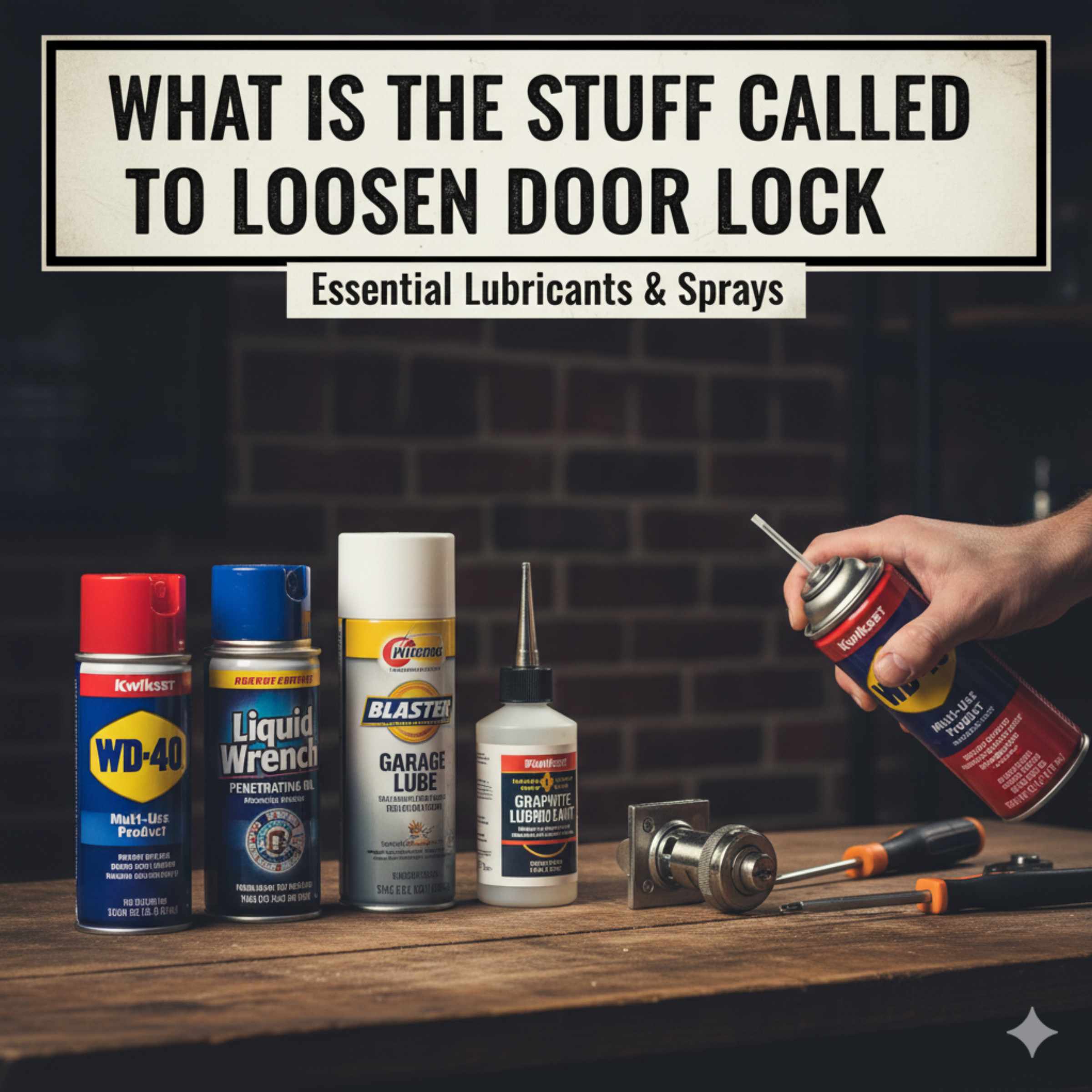
The best stuff to loosen a stuck door lock is usually a penetrating oil like WD-40 or a graphite powder lubricant. These products dissolve rust and grime, allowing the internal mechanisms to move freely again. We will explore the safest and most effective options for your specific lock type.
We’ve all been there: you turn the key, push the handle, and nothing happens. That frustrating, stuck door lock can ruin your whole day! Whether it’s an old exterior deadbolt or a sticky interior doorknob, the problem is usually just dirt, rust, or dried-up lubrication inside the mechanism. Don’t worry, you don’t need to call a locksmith right away. With the right “stuff,” you can get that lock moving smoothly again. This guide will show you exactly what to use and how to apply it safely. Let’s unlock the secrets to fixing that sticky door lock!
When we talk about the “stuff” needed to loosen a door lock, we are generally referring to a lubricant or a penetrating agent. The right choice depends on whether the lock is rusty, just sticky, or completely frozen. Think of your lock mechanism like a tiny machine—it needs cleaning and fresh oil to work well.
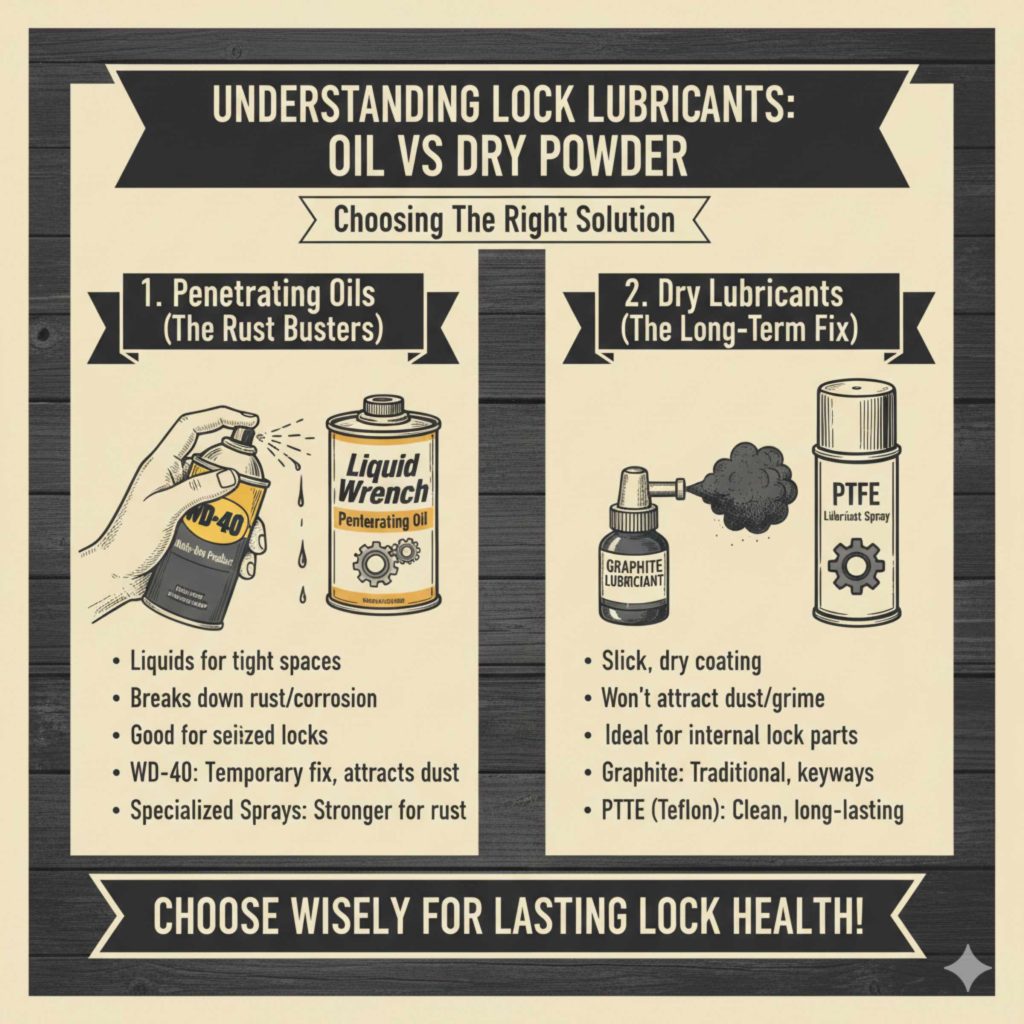
Understanding Lock Lubricants: Oil vs Dry Powder
For beginners, the biggest confusion comes from choosing between wet lubricants (oils) and dry lubricants (powders). Using the wrong kind can actually make things worse over time, especially on exterior locks exposed to weather.
1. Penetrating Oils (The Rust Busters)
These are liquids designed to seep into tight spaces and break down corrosion and old, gummy residue. They are excellent for locks that are completely seized up, often due to moisture or long-term neglect.
- WD-40 (Water Displacement, 40th formula): This is the most famous product and often the first thing people grab. It works great for temporary loosening and displacing moisture. However, it’s not the best long-term lubricant for locks because it can attract dust and dirt over time, leading to future stickiness. Use it to free a stuck lock, but follow up with a proper lubricant if possible.
- Specialized Penetrating Fluids: Products designed specifically for breaking rust, like Liquid Wrench or PB Blaster, are stronger than standard WD-40 for severely rusted hardware.
2. Dry Lubricants (The Long-Term Fix)
These lubricants leave behind a slick, dry coating that won’t attract dust or grime. They are the preferred choice for the internal workings of most residential locks, especially those exposed to the elements.
- Graphite Powder: This is the traditional, gold standard for lock lubrication. Graphite is a dry, natural mineral that creates a slippery barrier inside the cylinder. It cleans slightly and lubricates effectively without gunking up the works. It is highly recommended for keyways.
- PTFE (Teflon) Sprays: Polytetrafluoroethylene, or PTFE, is a synthetic dry lubricant. Sprays containing PTFE are clean, last a long time, and resist moisture. They are excellent for general lock mechanisms.
The Best “Stuff” for Specific Problems
To choose wisely, you need to know what is causing the lock to stick. Is it just the key slot (the keyway), or is the whole handle stiff?
Problem A: The Key Won’t Turn (Keyway Issues)
If the key goes in but won’t rotate, the problem is almost always in the cylinder where the pins are located. This area needs a dry lubricant.
The Fix: Graphite Powder.
- Use a very small amount. You only need a tiny puff of graphite powder.
- Gently blow or tap the powder directly into the keyway. You can use a small straw or the applicator nozzle that comes with the container.
- Insert the key several times, turning it back and forth gently to work the powder around the internal pins.
Problem B: The Latch or Bolt is Sticky (Mechanism Issues)
If the key turns fine, but the bolt won’t retract smoothly, or the handle feels stiff, the issue is likely with the internal gears or the latch mechanism itself, often suffering from rust or old grease.
The Fix: Light Oil or PTFE Spray.
- For exterior locks, a silicone spray or PTFE spray is best as they resist water better than graphite.
- For interior locks, a light application of a quality spray lubricant (like WD-40 used sparingly, or better yet, a silicone spray) applied directly to the moving parts outside the keyway can help.
- Apply the spray to the bolt that slides in and out, and any visible hinges or springs near the handle. Work the mechanism repeatedly.
Safety Note: Never spray excessive amounts of any lubricant into a lock. Too much liquid lubricant will drip down onto the bolt housing and attract debris, making the lock stickier in the long run. Less is always more when lubricating locks.
Step-by-Step Guide: How to Loosen a Stuck Deadbolt or Knob
As your DIY guide, I want to give you confidence. This process is simple if you follow the steps carefully. We will start with the gentlest method and move up if needed.
Tools and Materials You Will Need
Gathering your supplies first makes the job much faster. You likely have most of these items already!
| Tool/Material | Purpose | Why It Matters |
|---|---|---|
| Graphite Powder Lubricant | For the keyway (cylinder) | Keeps pins moving without attracting dirt. |
| Silicone or PTFE Spray | For external moving parts (bolt/latch) | Repels water and lubricates gears cleanly. |
| Canned Compressed Air (Optional) | To clean out debris before lubricating | Removes loose dust and grit. |
| Soft Cloth or Rag | Wiping excess lubricant | Keeps the lock face clean and professional. |
| Key | To test and work the mechanism | Essential for manipulating the pins. |
Phase 1: Cleaning and Preparation (Crucial First Step)
Before adding any new “stuff,” you must remove the old, sticky gunk. This is where many beginners skip a step, leading to repeated failures.
- Inspect the Lock: Look closely at the keyway and around the strike plate (the metal piece on the door frame where the bolt enters). See any obvious rust, dirt clumps, or old, oily residue?
- Use Compressed Air (If Available): Hold the nozzle of the compressed air can close to the keyway and give it a few short bursts. This blows out loose dust and debris that might be blocking the pins. This step is fantastic for older locks.
- Clean the Bolt Surface: If the bolt (the metal piece that slides in and out) is stiff, wipe it down thoroughly with a dry rag. If it looks rusty, you can lightly scrub the visible parts with fine steel wool (0000 grade) to remove surface corrosion, then wipe clean.
Phase 2: Lubricating the Keyway (The Cylinder)
This step is for the key slot only. Remember, we want dry lubrication here for the best long-term performance.
- Apply Graphite: Take your graphite powder. Aim the applicator tip right at the opening of the keyway. Give it one very short, gentle puff. You should see a tiny bit of black powder enter the slot.
- Insert the Key: Put your key all the way in. Do not force it.
- Wiggle and Turn: Gently wiggle the key up and down, then slowly try to turn it clockwise and counter-clockwise. You might feel resistance at first. The graphite needs time to coat the internal components (the pin tumblers).
- Repeat Gently: Pull the key out halfway, push it back in, and repeat the turning motion about 10 to 15 times. This action spreads the lubricant evenly.
Phase 3: Lubricating the Bolt and Moving Parts
Now we address the parts that physically move when you turn the key or handle.
- Identify Moving Parts: Look at the edge of the door where the bolt slides out. Also, check the area where the handle or deadbolt thumb-turn connects to the main body.
- Apply PTFE/Silicone Spray: Use a silicone or PTFE spray for this step. Hold the nozzle close and spray a very short burst directly onto the bolt surface and any visible springs or joints around the handle.
- Cycle the Lock: Use the key to extend and retract the bolt fully, perhaps 5 to 10 times. If it’s a knob, turn the knob back and forth repeatedly. This distributes the fresh lubricant onto the moving surfaces.
- Wipe Clean: Take your clean rag and wipe off any excess lubricant that squeezed out. You want the exterior of the lock looking clean, not greasy.
Phase 4: Testing and Troubleshooting
Test the lock operation slowly. If it still sticks, repeat Phase 2 and 3, focusing on the area that seems to be binding the most.
If the lock still won’t budge after using graphite and a light spray, the problem might be more serious, such as internal breakage or severe corrosion. At this point, you might need to consider removing the lockset for a deeper clean or replacement. For more detailed lock disassembly, resources from organizations like the Door and Access Control Manufacturers Association (DHI) offer excellent technical insights, though for most DIYers, lubrication is the intended fix.
When Penetrating Oil (Like WD-40) Is Necessary
While graphite is king for long-term maintenance, there are times when you need the heavy-duty dissolving power of a penetrating oil like WD-40. This is usually reserved for emergency situations where the lock is completely frozen due to rust.
The Rust Emergency Protocol
If you have a padlock, an exterior gate lock, or an old lock that hasn’t been used in years and shows visible orange rust, a dry lubricant might not penetrate deep enough to dissolve the corrosion.
When to Use WD-40 (or similar penetrants):
- The key cannot enter the keyway at all.
- The key turns slightly but locks up immediately due to visible rust buildup around the keyhole.
- You are trying to free a lock temporarily before replacing it.
How to Apply Penetrating Oil Safely
- Minimal Application: Use the thin straw applicator that comes with the can. Apply just one or two very short bursts directly into the keyway. You want just enough to soak the rust, not enough to drown the mechanism.
- Wait Time: Let the penetrating oil sit for at least 15 to 30 minutes. This gives the chemicals time to wick into the tight spaces and break down the rust bonds.
- Gentle Manipulation: After waiting, insert the key and gently try to turn it. If it moves slightly, work it back and forth slowly until it cycles smoothly.
- Clean Up Immediately: This is the most critical part after using penetrating oil. Once the lock moves freely, you must clean out the residual oil and follow up with a proper dry lubricant (graphite or PTFE). If you skip this, the oil will attract dust and turn into sticky sludge very quickly. Wipe down the exterior mechanism thoroughly.
Remember, think of WD-40 as a strong medicine: great for a severe illness (rust), but not something you should take every day (long-term maintenance).
DIY Confidence: Avoiding Common Lubrication Mistakes
As a DIY guide, my goal is to help you avoid frustration. Many people accidentally make their locks worse by using the wrong products or too much of the right product. Here are the top pitfalls to avoid.
Mistake 1: Using Cooking Oils or Household Grease
Never use olive oil, vegetable oil, butter, or heavy grease in your locks. These substances become sticky, gummy, and rancid over time, especially with temperature changes. They will eventually turn your smooth lock into a solid block of grime, often requiring a full replacement.
Mistake 2: Over-Lubricating with Spray Cans
If you spray a lock until it drips, you have used far too much. Excess lubricant runs down inside the door and frame, attracting dust and moisture. This creates a perfect environment for dirt to settle and form abrasive sludge, which damages the internal pin tumblers.
Mistake 3: Lubricating Only the Exterior Surface
If the key turns but the bolt doesn’t move, simply spraying the outside of the bolt won’t fix the problem. The issue is inside the housing. You must target the keyway (with graphite) or the internal linkage points (with a light spray).
Mistake 4: Forcing a Stiff Key
If the key won’t go in smoothly or won’t turn, forcing it can bend or break the key inside the lock cylinder, turning a simple lubrication job into an expensive extraction job. Always apply lubricant before you apply significant turning force.
If you are dealing with a high-security lock or a very complex mechanism, you can sometimes find manufacturer-specific recommendations. For example, some high-end lock manufacturers recommend only their proprietary lubricants to maintain warranty integrity.
When Lubrication Fails: Next Steps for a Stuck Lock
If you have tried cleaning, graphite, and a light PTFE spray, and the lock still won’t operate smoothly, it’s time to consider that the issue might be mechanical failure rather than just dirt.
1. Check the Door Alignment
Sometimes the lock isn’t the problem—the door is! If the door has settled or warped (especially common with exterior wood doors due to humidity changes), the bolt might be scraping against the strike plate on the frame, making it impossible to turn the key.
- Test: Try opening the door slightly (pulling or pushing it while turning the key). If pulling the door slightly allows the key to turn, the issue is alignment, not lubrication.
- Fix: You will need to slightly adjust the strike plate screws on the door frame to give the bolt more clearance.
2. Inspecting the Key Itself
A worn or damaged key can cause major binding, even in a perfectly lubricated lock. Check your key for:
- Bends or kinks.
- Worn-down “teeth” (the cuts).
- Cracks, especially near the shoulder (the part that stops the key from going in too far).
If the key looks damaged, try a known good copy. If the good copy works, replace the damaged key.
Professional Intervention (Lock Replacement)
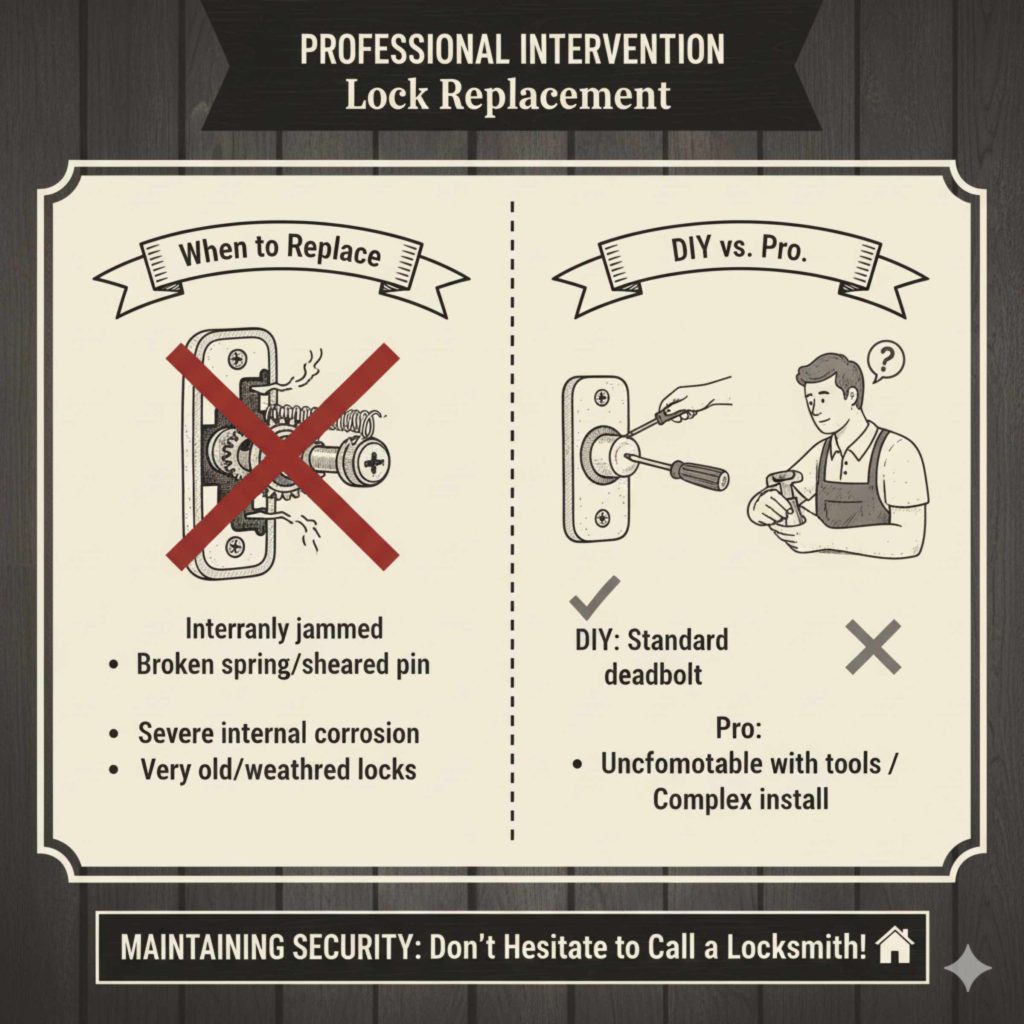
If the mechanism is internally jammed due to a broken spring, a sheared pin, or severe internal corrosion that lubrication cannot penetrate, the lock needs to be replaced. This is common with very old brass locks or locks that have been subjected to extreme weather.
Replacing a standard deadbolt or knob is a very achievable DIY project, but if you are uncomfortable with screwdrivers or measuring backsets, calling a professional locksmith is a safe bet to ensure the new lock is installed correctly and securely. For reference on standard hardware measurements, the American College of Mortgage Realtors often references standard door hardware specs during property assessments, which can help you shop for a replacement size.
Frequently Asked Questions (FAQ) for Beginner Lock Fixes
Q1: Can I use cooking oil to lubricate my door lock?
No. Cooking oils (like vegetable or olive oil) go rancid and turn into a thick, sticky substance that gums up the lock pins quickly. Stick to specialized graphite powder or PTFE/silicone sprays for the best, long-lasting results.
Q2: How often should I lubricate my exterior door locks?
For exterior locks exposed to rain and sun, lubricating the keyway with graphite once or twice a year is ideal. If you live in a very humid or coastal area, check them every six months.
Q3: My key is stuck halfway in the lock. What should I do?
First, stop pulling hard. Apply a tiny puff of graphite powder into the keyway. Gently wiggle the key up and down while slightly twisting. Do not force it. If it doesn’t move within a minute, stop and consider calling a professional, as the key might be broken internally.
Q4: Is WD-40 safe for long-term use in a deadbolt?
WD-40 is excellent for penetrating rust, but it is generally not recommended as a long-term lubricant for the internal workings of locks because it attracts dust. Use it only to free a very stuck lock, and then clean out the residue by lubricating again with graphite or PTFE spray.
Q5: What is the difference between lubricating the keyway and the latch?
The keyway (where the key goes) needs dry lubrication (graphite) to keep the tiny pins moving. The latch or bolt (the part that slides into the door frame) needs light oil or silicone spray to reduce friction against the metal frame.
Q6: Can I use WD-40 on a padlock?
Yes, WD-40 is often used on padlocks because they are often exposed to the elements and suffer from rust. However, for frequent use, a quality graphite powder is still preferred for the keyhole.
Conclusion: Keeping Your Locks Smooth and Secure
Dealing with a stuck door lock is never fun, but as you now know, the solution is usually simple maintenance rather than an expensive replacement. The “stuff” you need is either graphite powder for the keyway to keep the internal pins happy and dry, or a PTFE/silicone spray for the external moving parts to keep them slick and weather-resistant.
Remember the core lesson: keep the keyway dry, and the moving parts lightly oiled. By performing this simple lubrication routine once or twice a year, you are investing just a few minutes of easy DIY work to prevent hours of frustration later. You have the knowledge now to tackle sticky knobs and stiff deadbolts with confidence. Go ahead, grab that can of graphite, and enjoy the satisfying click of a smoothly operating lock!