Appliance Repair vs Replace: Age, Cost, and Part Failure
Use the 50% rule as a starting line: if a repair quote tops half the cost of a comparable replacement, or the appliance is past its typical service life and the failed part is major, replacement usually makes more sense. Skip that check, and you can pay twice for the same unit. This guide shows how age, repair cost, and the exact failed part point you toward repair, replacement, or a second quote.
This guide is part of our Appliance repair: diagnose, fix, and maintain series.
| Decision factor | Appliance repair | Replace: how to decide by age, cost, and part failure | Winner |
|---|---|---|---|
| Up-front cash outlay | Usually lower if the failed part is minor and the quote stays well below half of replacement cost. | Higher at checkout because you pay for the unit, delivery, installation, haul-away, and any warranty you choose to include. | Repair |
| Risk of another failure soon | Higher when the appliance is near end of life, has repeat faults, or the damaged part points to hidden wear. | Lower if the new unit has a full warranty and all major components start fresh. | Replace |
| Best use case | Good fit for a machine under its typical lifespan, with a minor component failure and no history of repeated breakdowns. | Better fit for an older, inefficient machine with a major fault or a repair quote near the replacement price. | Tie |
| Energy cost over time | Can stay acceptable if the appliance is already efficient and the repair is small. | Often better for older low-efficiency units that cost more to run every month. | Replace |
| Repairability and parts | Depends on spare parts availability, lead times, and whether the brand still supports the model. | A new model usually resets parts availability and warranty coverage. | Replace |
Should you repair or replace your appliance?
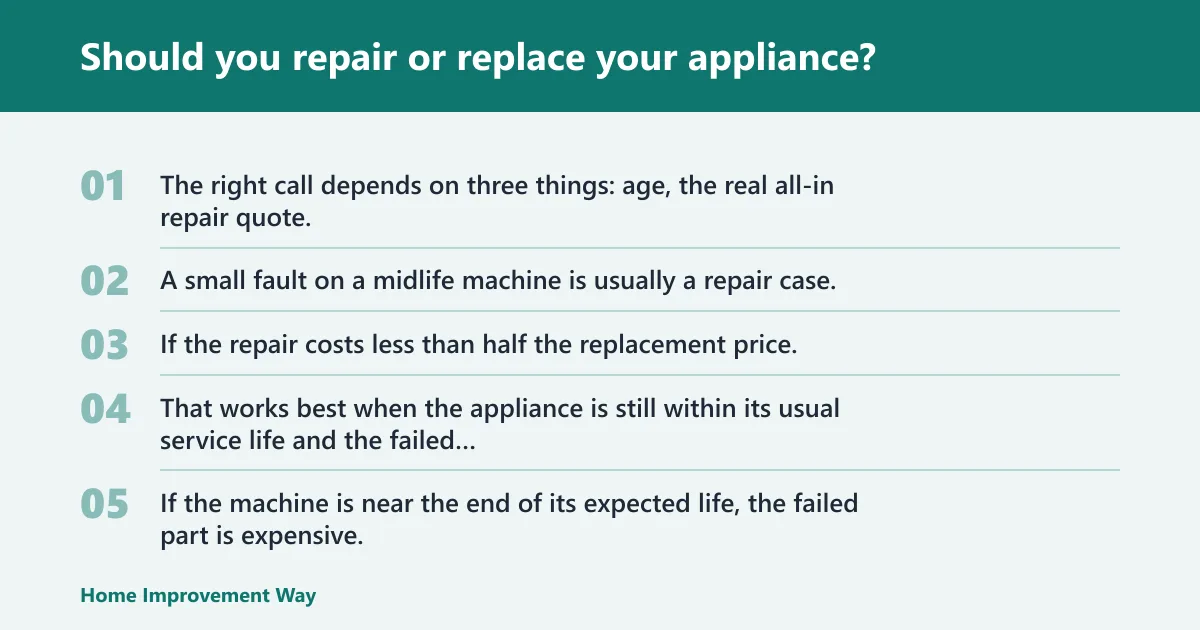
The right call depends on three things: age, the real all-in repair quote, and what actually failed. A small fault on a midlife machine is usually a repair case, while a major failure on an older appliance often points to replacement or a second quote if the estimate is vague.
The fast answer based on age, cost, and fault type
If the repair costs less than half the replacement price, repair is usually the better financial choice. That works best when the appliance is still within its usual service life and the failed part is minor, such as a switch, seal, belt, latch, pump, or thermostat.
If the machine is near the end of its expected life, the failed part is expensive, or there have been repeated breakdowns, replacement usually wins. A cheap repair can still lose if the unit is inefficient or likely to fail again soon.
When a second quote makes sense
Ask for a second quote when the first one is mostly labor, includes a large diagnostic fee, or names a costly part without proof that it is the only fault. A second opinion is also smart when the appliance is still young, under warranty or guarantee, or the first estimate does not separate parts, labor, and trip charge.
How to use the 50% rule without overtrusting it
The 50% rule is a common starting point, not a hard formula. It helps you avoid putting money into a unit that is already near the end of its useful life, but it does not replace a check of age, fault severity, parts availability, and running cost.
A repair worth doing can cost 20 to 30 percent of replacement cost on a machine in decent shape. That range is where repair often looks strongest, especially if the appliance is still inside its normal lifespan and the failed component is a common wear part.
A common mistake is assuming a 12-year-old dryer with a failed heating element should always be repaired just because the part looks inexpensive. If the appliance is old, inefficient, and already had similar failures, even a modest bill can be a poor use of money.
How old is too old for repair?
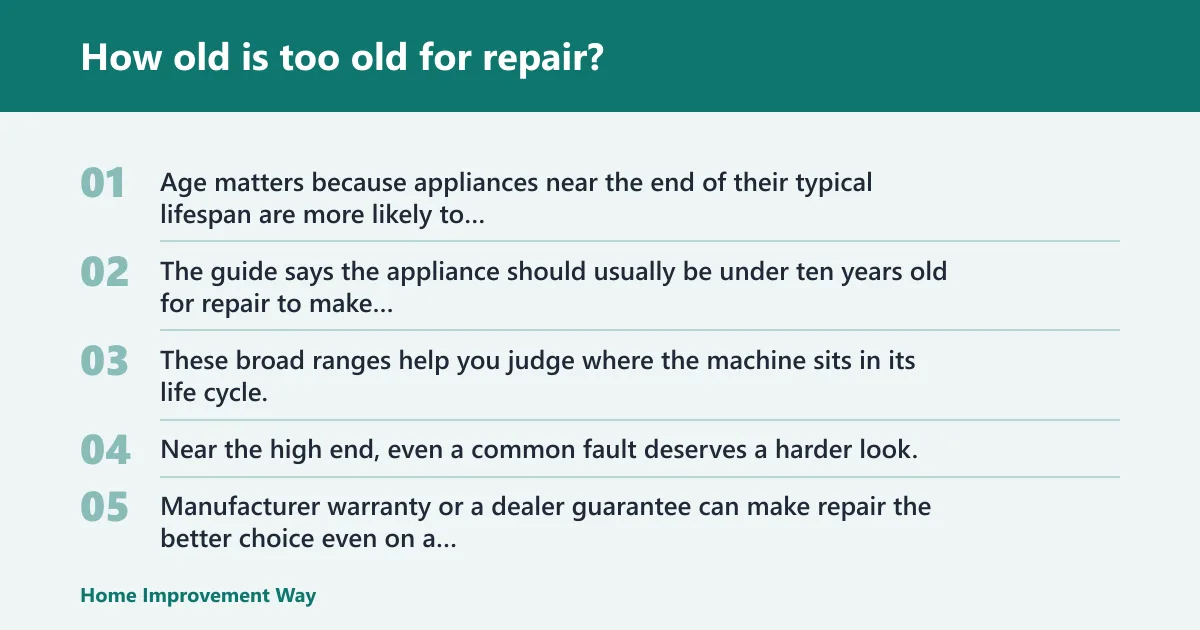
Age matters because appliances near the end of their typical lifespan are more likely to need another costly fix soon. The guide says the appliance should usually be under ten years old for repair to make sense, though warranty or guarantee coverage can change that call in your favor.
Typical lifespan ranges by appliance type
These broad ranges help you judge where the machine sits in its life cycle. Near the low end, repair value falls faster. Near the high end, even a common fault deserves a harder look.
| Appliance category | Typical lifespan | Repair value tends to decline when… |
|---|---|---|
| Washing machine | 8 to 12 years | It is already near or beyond that range and the fault affects the drum, motor, or control system. |
| Tumble dryer | 8 to 12 years | The unit is older and the repair involves heating, drum drive, or electronics. |
| Dishwasher | 9 to 12 years | Pumps, control boards, or leaks show up on an older machine. |
| Fridge freezer | 10 to 15 years | The sealed system, compressor, or repeated temperature faults are involved. |
| Cooker or oven | 10 to 15 years | Heating faults are tied to major components or control electronics on an aging unit. |
| Washer dryer | 6 to 10 years | The appliance is already close to the lower end of its life and repairs touch multiple systems. |
When warranty or guarantee coverage changes the call
Manufacturer warranty or a dealer guarantee can make repair the better choice even on a newer but expensive appliance. If the part, labor, or both are covered, the financial comparison shifts hard toward repair, as long as the failure is not caused by misuse or excluded damage.
Why age matters more near end of life
Older appliances are less worth repairing because wear is usually spread across several parts, not just the one that failed first. That means a fresh fix may only delay the next breakdown by a short time, especially on units with dated controls or hard-to-source components.
What repair quote details should you compare?
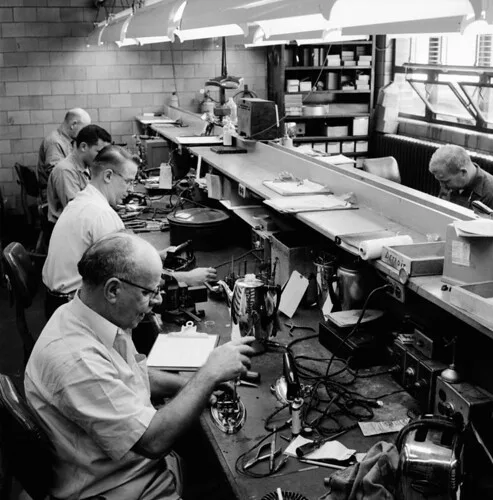
Compare the whole repair quote, not a single number. The useful breakdown is diagnostic fee, parts cost, labor cost, trip charge, and a written quote that names the failed part and any extra work the technician expects.
Diagnostic fee, parts, labor, and trip charge
The diagnostic fee pays for fault finding. Parts cost covers the component itself, labor covers the fitting, and the trip charge covers the visit. A low parts price can still turn into a bad deal if labor and travel fees push the total above half the price of replacement.
Why you need a written quote
A written quote lets you compare like with like. It also helps you see whether the technician is recommending a single part swap or warning about hidden damage, such as a leaking seal, corroded wire bundle, or water-damaged control board that could raise the final bill.
How to compare repair cost with replacement cost
Use the price of a comparable new appliance, not the cheapest model on the shelf. Add delivery, installation, haul-away of the old unit, and any warranty included with the replacement. That total is the true number the repair quote has to beat.
- Write down the repair quote with separate lines for diagnostic fee, parts, labor, and trip charge.
- Collect the price of a comparable new model, then add delivery and installation.
- Add haul-away fees if the retailer or installer charges them.
- Check whether the new price includes a warranty that changes the value gap.
- Compare the full repair total to the full replacement total, not just sticker price to sticker price.
Which part failures are worth repairing?
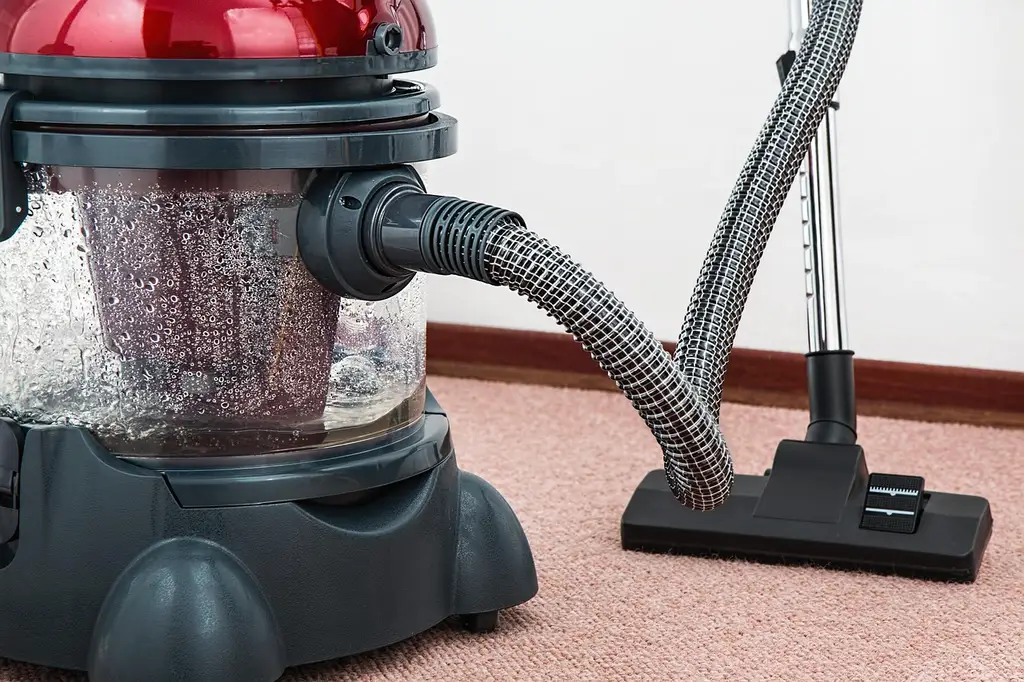
Minor component failures are usually worth repairing; major component failures often are not, especially on older machines. The exact part matters because some faults are isolated wear items, while others signal broader wear, water damage, or expensive labor that can repeat.
Minor components versus major components
Minor parts such as door latches, belts, filters, thermostats, sensors, gaskets, and inlet valves often justify repair when the rest of the appliance is in good shape. Major failures such as compressors, control boards, sealed-system faults, drum assemblies, and transmission issues are harder to justify on older units.
Repeated breakdowns weaken the repair case even when the current fix is cheap. If the machine has already had several service visits, one fault may be masking another problem, such as water damage to electronics or wear in a linked assembly.
Say your dishwasher is 10 years old, stops mid-cycle, and the quote only replaces a circulation pump. If the technician also notes leak staining near the base and worn wiring, the hidden damage can turn a fair repair into a short-term patch.
Common failure patterns by appliance class
On a washing machine, a lid lock, hose, or drain pump is usually more repairable than a drum bearing or control board on a unit near the end of its life. On a tumble dryer, a belt or thermostat is easier to defend than repeated heating faults or a motor on an older machine.
Dishwashers often make sense to repair for spray arm, inlet valve, or pump issues, but a cracked tub or recurring leak is a poor sign. Fridge freezers are trickier: door seals and fans can be sensible repairs, while sealed-system trouble or compressor failure often pushes the decision toward replacement.
Cookers and ovens are often worth repairing for igniters, elements, knobs, or switches. Washer dryers have the shortest typical lifespan in this group, so once a major fault appears, the repair case is weaker sooner than it is for a separate washer or dryer.
Does energy efficiency change the decision?
Yes. An older low-efficiency appliance can cost more to run than the repair saves, especially if the fault is modest but the unit is already drawing more power or water than a modern model. Energy cost over time matters most when the machine is used often.
When older low-efficiency units become costly to keep
If the appliance has a poor energy rating, a low repair bill may not be enough to justify keeping it. Modern A or B rated appliances usually cost less to run than older D, E, F, or G rated models, so the monthly operating difference can matter over several years.
How operating cost can outweigh a low repair bill
A cheap repair on an inefficient appliance can still be a weak choice if daily use is high. That is especially true for fridges, freezers, and washing machines, which run often enough for power and water savings to add up.
Why replacement can win even after a modest fix
Replacement can beat repair when the new machine cuts utility costs, includes a warranty, and removes the risk of another near-term failure. That does not mean every older appliance should go; it means the lower running cost should be part of the comparison, not an afterthought.
Use this decision matrix before you choose
Score the appliance on age, repair percentage, part failure type, repeat breakdown history, and energy efficiency. If the total points are low, repair usually wins. If the score is high, replacement usually wins. If the score lands in the middle, get a second quote before you commit.
| Factor | Low risk for repair | High risk for repair | Score |
|---|---|---|---|
| Age | Under the typical lifespan for that appliance | At or beyond the typical lifespan, or above ten years on most units | 0 or 2 |
| Quoted repair percentage | Under 50% of replacement cost, especially near 20 to 30 percent | Over 50% of replacement cost | 0 or 2 |
| Part failure type | Minor component failure | Major component failure or hidden damage | 0 or 2 |
| Repeat breakdowns | No recent repeat faults | One or more recent breakdowns or service visits | 0 or 2 |
| Energy efficiency | Comparable to current efficient models | Older low-efficiency unit with higher operating cost | 0 or 2 |
How the matrix returns repair, replace, or get a second quote
a lower score, roughly 0 to 3 points, generally suggests repairing it. a mid-range score, roughly 4 to 6 points, generally suggests getting a second quote or comparing replacement more carefully. a higher score, roughly in the 7 to 10 range, generally suggests replacing it. The middle range matters because a quote can look acceptable on price while still failing on age, fault severity, or efficiency.
Checklist for the numbers you need before deciding
Before you decide, collect the appliance age, the exact failed part, the full written repair quote, the price of a comparable new appliance, and any warranty or guarantee details. Then add delivery, installation, haul-away, and expected warranty coverage to the replacement side so the comparison is fair.
Verdict: Appliance repair or replace: how to decide by age, cost, and part failure?
Choose Appliance repair if the machine is under its typical lifespan, the quote stays well below half the cost of a comparable replacement, and the failed part is a minor component like a switch, seal, belt, latch, pump, thermostat, or door lock; for example, a washing machine with a lid lock or drain pump failure, or a dishwasher with an inlet valve issue, is usually a repair case.
Choose replace: how to decide by age, cost, and part failure if the appliance is near the end of its expected life, the repair quote is near the replacement price, or the failure involves a major part like a compressor, control board, drum assembly, or sealed-system fault; for example, a 12-year-old dryer with a heating fault, or an older dishwasher with a circulation pump quote plus leak staining and worn wiring, usually points to replacement.
Frequently asked questions
How old is too old to repair a refrigerator or dishwasher?
A fridge freezer is often past the point where repair is attractive once it is near the top of its 10 to 15 year lifespan. Dishwashers often become weaker repair candidates as they approach 9 to 12 years, especially if the fault involves pumps, control boards, or leaks.
Is the 50% repair rule a good rule of thumb?
Yes, as a starting point. If repair costs less than half of replacement price, repair is usually the better financial choice. It still needs a check against age, fault severity, parts availability, and whether the appliance is likely to fail again soon.
What repair cost means I should replace the appliance?
If the repair quote is more than half the cost of a comparable new unit, replacement often makes more sense. That is especially true once you add delivery, installation, haul-away, and warranty to the replacement side, because the real price gap may be smaller than it first looks.
Which appliance faults are worth repairing and which are not?
Small, isolated faults are usually worth repairing, such as latches, belts, valves, seals, thermostats, and some sensors. Major faults, such as compressor problems, sealed-system issues, control board failures, drum bearings, and recurring leaks, often point to replacement on older units.
What if the appliance has had repeated breakdowns?
Repeated breakdowns weaken the case for repair even when the current fix is cheap. A machine that keeps needing service is telling you that wear is not limited to one part. In that case, replacement often gives a cleaner reset, especially if the appliance is also inefficient.
Sponsored / affiliate links. As an Amazon Associate I earn from qualifying purchases. I may earn additional commission from eligible campaigns.