How to Know If a Sealed System Appliance Repair Is Worth It
A sealed-system repair is usually worth it only if the appliance is relatively new and the quote is well below replacement cost; after about 10 years, or if the compressor is the problem, replacement usually makes more sense. If you guess wrong, you can spend hundreds on a fix that does not restore cooling or only postpones the next failure. This guide shows how to confirm a real sealed-system fault, compare repair and replacement costs, and judge whether the repair resets reliability or buys only limited time.
What counts as a sealed-system problem?
A sealed-system problem is a fault in the refrigerant circuit, not a failed fan, defrost part, sensor, or control. That circuit includes the compressor, refrigerant, tubing, evaporator, condenser, and filter-drier. Because refrigerant handling requires certified work, you need a correct diagnosis before you order any parts.
What the sealed refrigeration system includes
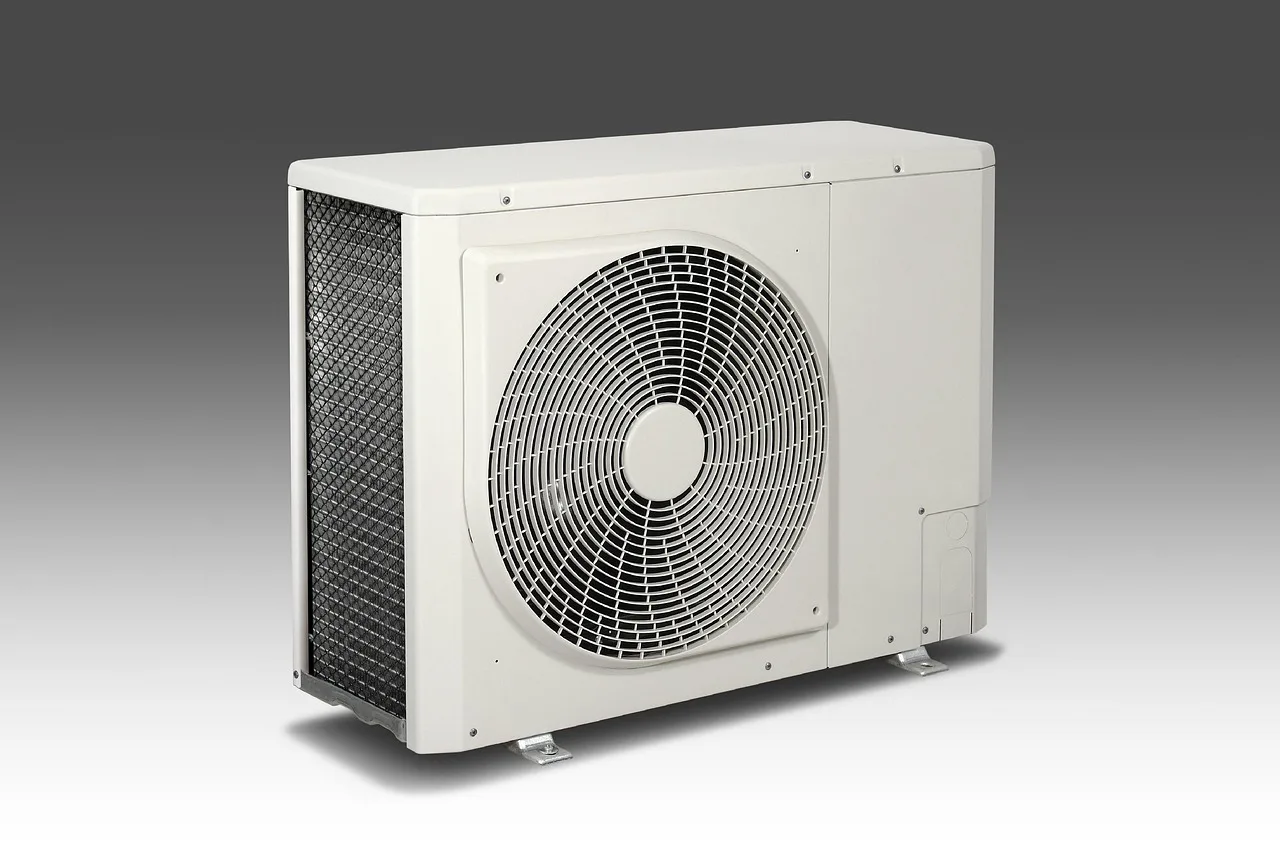
The compressor pumps refrigerant through a closed loop. The rest of the circuit moves heat out of the cabinet and back into the room. If a leak, restriction, contamination, or compressor failure stops that loop, cooling drops across the fresh-food and freezer sections.
That is why sealed-system labor differs from ordinary appliance repair. It often requires leak detection, brazing, refrigerant recovery or recharge, and time spent checking that the repair actually restored the circuit.
Signs that point outside the sealed system
Many “not cold enough” complaints are not sealed-system failures at all. Weak airflow, a frosted evaporator, a clogged condenser, a bad evaporator fan, a failed defrost heater, or a control issue can all mimic a refrigerant problem.
- The compressor runs, but a fan is silent or weak.
- Heavy frost appears on the back panel or evaporator cover.
- The freezer is cold, but the fresh-food section is warm from airflow trouble.
- The unit clicks, trips, or cycles oddly after a power issue.
- Condenser coils are dirty enough to reduce heat removal.
Simple checks often solve the wrong-problem cases before a costly diagnosis. Many service calls trace back to filters, vents, hoses, or power, not a sealed-system failure.
When a cooling symptom needs a technician diagnosis
If the refrigerator is warm in both sections, the compressor is hot or short-cycling, or frost patterns look abnormal, a technician should confirm the fault before you buy parts. Diagnostic fees are commonly $35-$120 before you decide on repairs, and that is usually the best first spend because a wrong diagnosis can leave you with the wrong part and no fix.
- Confirm airflow and power basics.
- Look for frost, fan, or defrost clues.
- Get the exact failure point in writing.
- Ask for the installed repair price, not just the part price.
- Compare that total to full replacement cost.
When is a sealed-system repair worth it?
A sealed-system repair is usually worth it when the total installed price stays well below replacement cost, the refrigerator is not near the end of its expected life, and the failure is a one-off problem rather than a repeat pattern. The decision gets harder as age rises and the repair shifts from a small leak to a compressor or contamination job.
Compare repair cost to full replacement cost
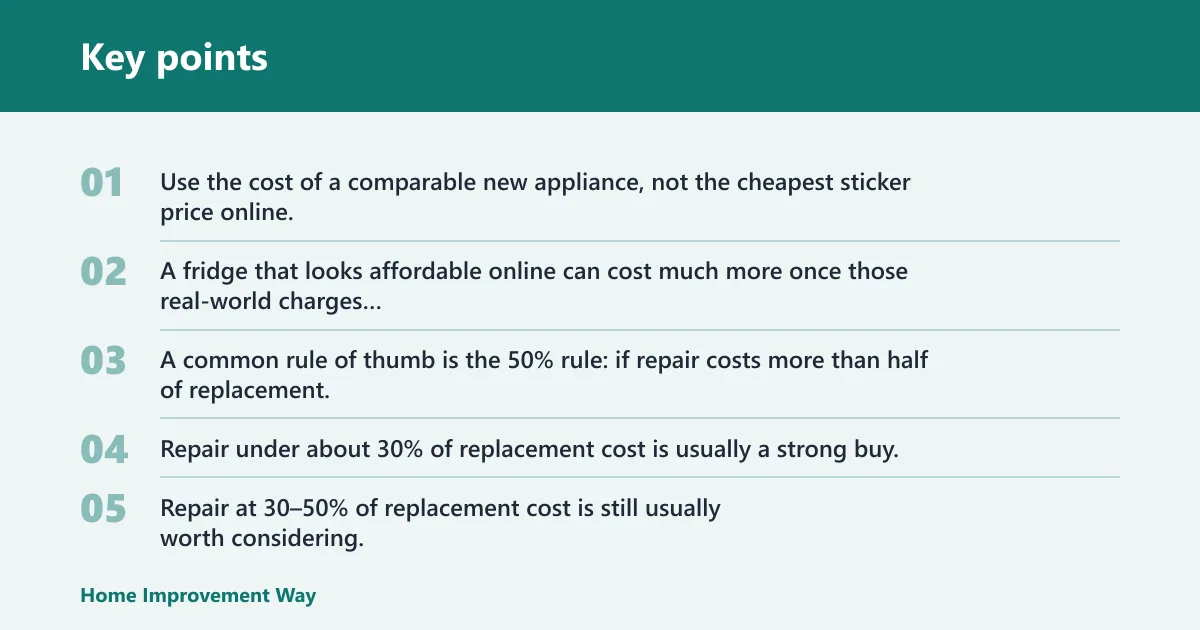
Use the cost of a comparable new appliance, not the cheapest sticker price online. Add delivery, installation, and haul-away. A fridge that looks affordable online can cost much more once those real-world charges are included.
A common rule of thumb is the 50% rule: if repair costs more than half of replacement, replacement usually makes sense. Repair under about 30% of replacement cost is usually a strong buy. Repair at 30–50% of replacement cost is still usually worth considering.
For sealed-system work, that means a repair in the low four figures can be reasonable on a higher-value unit, but not usually on a low-cost top-freezer refrigerator that is already well into its service life.
Use age and remaining service life together
Appliance age matters because older machines carry higher repeat-failure risk. A repair on a 4-year-old refrigerator often buys more value than the same repair on a 12-year-old unit, even if the quoted price is identical.
Say your 6-year-old refrigerator has a sealed-system leak and the full repair quote is $900 on a replacement cost of $2,600. That sits near 35%, so repair can be reasonable if the cabinet, controls, and fans are otherwise solid. Now suppose the same repair shows up on a 13-year-old unit. The same dollar amount is much harder to justify because the rest of the appliance is already in the higher-risk age band.
Why one failure matters less than repeat failures
One failed part does not mean the whole refrigerator is finished. Repeated repairs do matter. Multiple breakdowns in a short period point to an appliance that is moving toward end of life, and a third repair in 18 months is a strong replacement signal.
A sealed-system fix that follows repeated electrical, fan, or defrost failures deserves extra scrutiny. If several systems have failed close together, the repair may only buy time.
Why sealed-system repairs cost so much
Sealed-system repairs are expensive because the job is more complex than swapping a relay, sensor, or fan. The bill reflects diagnosis time, specialized tools, refrigerant handling, leak work, and the chance that the technician must open and reseal the system before the appliance cools normally again.
What the diagnostic fee covers
The diagnostic fee pays for the time needed to separate a real refrigerant fault from an airflow or control problem. That often includes access panels, temperature checks, frost pattern checks, pressure or temperature readings, and sometimes follow-up testing after a restart. The goal is to avoid ordering the wrong part.
Some technicians will not warranty labor on a customer-supplied part. That matters when a homeowner tries to save money by buying a compressor, drier, or control board before the diagnosis is finished. A wrong part from a wrong diagnosis can be unrecoverable.
Special tools and certified refrigerant handling
Sealed-system labor is not suitable for casual DIY. Refrigerant work needs specialized tools and certified handling of refrigerant. That certification is not optional, and it is part of why labor costs more than ordinary appliance repair.
Minor tasks like cleaning coils or checking the airflow path are homeowner-friendly. Opening the refrigerant circuit is not. Natural gas should only be turned back on by a professional, and sealed-system refrigerant work follows the same basic safety boundary: if the job involves certified handling, stop at diagnosis and hire the right technician.
Why compressor and leak work cost more than common parts
Compressor replacement sits near the top of the cost ladder because the part is expensive, access is difficult, and the system usually needs evacuation, brazing, new refrigerant handling, and verification afterward. Leak repair can be cheap only when the leak is easy to find and easy to reach. Once the leak is hidden or the system is contaminated, the bill rises fast.
Restriction or contamination problems are especially frustrating. The visible symptom may be warm shelves, but the real fault can be debris or moisture in the circuit, which takes more time to identify and correct than a simple part swap.
Sealed system decision matrix
This matrix helps you sort the common patterns. It is not a diagnosis by itself. Use it after a technician has confirmed the failure point or after basic non-sealed checks have ruled out obvious fan, frost, vent, hose, and power problems.
| Symptom pattern | Likely non-sealed-system causes | Sealed-system likelihood | Typical repair class | Replacement risk | Keep or replace |
|---|---|---|---|---|---|
| Freezer warm, fresh food warm, compressor running | Dirty coils, failed condenser fan, defrost failure | Medium | Diagnostic first; possible leak test | Moderate | Keep if diagnosis is not sealed-system |
| Freezer cold, fresh food warm | Evaporator fan, blocked air channel, damper issue | Low | Fan or airflow repair | Low | Keep |
| Compressor clicks, then stops repeatedly | Start relay, control board, low line voltage | Medium to high | Compressor test, start device check | High if compressor is confirmed bad | Replace if compressor failure is confirmed on an older unit |
| Heavy frost on rear panel or evaporator cover | Defrost heater, timer, sensor, blocked drain | Low | Defrost-system repair | Low | Keep |
| Running constantly, little cooling, no visible frost | Dirty condenser, door seal leak, thermostat error | Medium | System diagnosis and leak search | Moderate | Keep if non-sealed cause is found |
| Cabinet warms after a recent power outage | Control reset issue, fan not restarting, ice buildup | Low | Electrical or airflow repair | Low | Keep |
| Oil stain near tubing or compressor area | Physical damage, prior service leak, corrosion | High | Leak repair and recharge | Moderate to high | Keep only if the unit is still relatively young |
| No cooling after prior refrigerant work | Bad fan, wrong part, unresolved defrost issue | Medium | Full re-diagnosis | High | Replace if the same fault keeps returning |
| Short cycling and poor cooling on an older fridge | Relay, thermostat, condenser airflow | Medium | Compressor test and sealed-system inspection | High | Replace if compressor or leak work is confirmed |
| Warm fridge with ice maker still producing some ice | Airflow failure, damper problem, partial defrost issue | Low to medium | Airflow or control repair | Low | Keep |
| Repeated refrigerant recharge requests | Underlying leak not fixed | High | Leak search, repair, recharge | High | Replace if leak source is hard to access or unit is old |
| Multiple failed repairs in 18 months | System-wide wear, unrelated aging parts | Mixed | Full diagnostic review | Very high | Replace |
How age and appliance type change the call
Age changes the value of a repair because a sealed-system fix does not reset the rest of the refrigerator. A younger appliance can justify a higher bill if the cabinet, compressor, fans, and controls are still in good shape. An older one carries more risk that something else will fail next.
Older refrigerators and higher repeat-failure risk
Once a refrigerator is past its middle years, the odds of another costly breakdown rise. That matters even more when the repair touches the compressor or refrigerant circuit, because those are the expensive parts that usually trigger the repair-versus-replace decision.
Is a compressor or sealed system repair worth it on an older refrigerator? Usually only if the rest of the unit is in unusually good condition and the installed price is still well below replacement. Otherwise, the repair often buys a short extension rather than a durable fix.
Built-in refrigerators cost more to replace, and removal or installation can be disruptive. That often makes repair more practical than it would be on a freestanding top-freezer model. Premium brands named as exceptions include Sub-Zero, Wolf, Viking, Thermador, and Miele.
Those brands often clear a higher repair threshold because replacement cost is higher and kitchen fit matters more. If the unit is built-in, matches custom cabinetry, or would require carpentry to replace, a repair that looks expensive on paper can still be the better choice.
Picture a built-in refrigerator in a finished kitchen with paneling that matches the cabinets. A sealed-system quote may still be easier to justify there than on a basic freestanding refrigerator, because replacement includes the appliance cost plus the hassle of fitting a new unit into the opening.
When does replacement make more sense?
Replacement makes more sense when the repair is a large share of full replacement cost, the refrigerator is older, or the unit has a pattern of failures. It also makes more sense when the cabinet fit, delivery timing, or kitchen layout turns replacement into a straight swap instead of a major project.
High repair cost versus appliance value
If the sealed-system quote lands near or above half of replacement cost, replacement usually wins. That is especially true when the quote includes compressor work, leak hunting, or repeated refrigerant loss. A refrigerator that costs $900 to repair and $1,800 to replace is not a good repair candidate unless it has special value as a built-in or premium model.
Multiple recent repairs
A repeated pattern matters more than one broken part. If you are already looking at a second or third service visit in a short window, the refrigerator is telling you something. The best money may be the money you do not spend on another temporary fix.
Long lead time or kitchen fit problems
Replacement also becomes harder when the current unit is a built-in, panel-ready, or size-specific refrigerator. Long lead times, limited opening clearances, or cabinet changes can push the decision toward repair even when the repair is not cheap.
What to ask before you pay
Before you approve a sealed-system repair, ask for the exact failure point, the full installed price, and whether the fix addresses the symptom or the cause. Those three questions cut down expensive guesswork and help you compare repair to replacement on real numbers.
- What part of the sealed system failed?
- Is this a leak, a restriction, or a compressor failure?
- What is the total installed price, including labor and refrigerant handling?
- Will the repair be warranted if the same problem returns?
- What is the full replacement cost for a comparable refrigerator?
Frequently asked questions
How do I know if a sealed system repair is worth it?
It is usually worth it when the refrigerator is relatively new and the installed repair is under 40% of replacement cost, and the diagnosis points clearly to the refrigerant circuit. If the unit is older or the compressor is the problem, replacement often makes more sense.
Is a sealed system repair on a refrigerator worth fixing?
Yes, sometimes. It is most defensible on a younger refrigerator, a built-in unit, or a premium model with a high replacement cost. If the problem is minor and the quote is modest relative to replacement, repair can be the better value.
How much does a sealed system refrigerator repair cost?
A sealed-system refrigerator repair can run $800-$1,200. The final bill depends on the exact failure, whether the compressor is involved, how hard the leak is to find, and how much labor is needed to recover, repair, and recharge the system.
When should I replace a refrigerator instead of repairing the sealed system?
Replace it when the repair is more than half of replacement cost, the refrigerator is older, or you have had several breakdowns in a short span. That third repair in 18 months is a strong warning sign that the next failure is not far away.
What counts as a sealed system problem on a fridge?
Problems in the refrigerant circuit count: compressor failure, refrigerant leaks, restrictions, and contamination that stops the loop from moving heat. Warm food alone does not prove a sealed-system issue, because airflow, defrost, fan, or control faults can create the same symptom.
Why are sealed system repairs so expensive?
They cost more because they require special tools, certified refrigerant handling, leak detection, and more labor than an ordinary part swap. Compressor and leak repairs also take more diagnosis time, and the technician may need to open and reseal the circuit before cooling returns.
Sponsored / affiliate links. As an Amazon Associate I earn from qualifying purchases. I may earn additional commission from eligible campaigns.