3 Best Hardwood Cleaners for Oiled vs Sealed Wood: research shows
For sealed hardwood, choose a pH-neutral hardwood cleaner with low residue. For oiled wood, use the finish maker’s soap or maintenance oil, not a standard floor spray.
This guide is part of our Hardwood floor care guide series.
Using the wrong cleaner can leave slick residue, dull the finish, or shorten the life of the oil layer.
This guide separates oiled from sealed wood and ranks cleaner types by residue risk, moisture load, and upkeep needs.


Best hardwood floor cleaner for oiled vs sealed wood
The finish decides the cleaner first. Sealed wood, including polyurethane-treated floors, is built for ready-to-use sprays and diluted concentrates that protect the coating. Oiled wood needs a finish-safe cleaner with low moisture and a pH-safe formula, because residue and excess water can darken or build up in the surface.
For most sealed floors, a fast-drying spray is the simplest pick. For oiled floors, stay close to the finish system itself, and keep the floor only lightly damp. A standard all-purpose wood spray is a risky default on oil-treated boards.
Quick comparison
| Factor | Best Hardwood Floor Cleaner for Oiled | Sealed Wood | Winner |
|---|---|---|---|
| Recommended cleaner type | Use the finish maker’s soap or maintenance oil; a finish-safe cleaner with low moisture and a pH-safe formula. | Use a pH-neutral hardwood cleaner with low residue; ready-to-use sprays or diluted concentrates. | Tie |
| Residue risk | Higher sensitivity to residue because buildup can darken or change the way the finish looks and feels. | Lower residue concern than oiled floors, though residue control still matters. | Sealed Wood |
| Moisture tolerance | Needs low moisture and the floor should be kept only lightly damp. | Can handle low to moderate moisture depending on format; fast-drying sprays are simplest. | Sealed Wood |
| Maintenance needs | Must stay close to the finish system itself and avoid using a standard floor spray. | Cleaner choice is more flexible and easier for day-to-day maintenance. | Sealed Wood |
| Performance / finish protection | Best at protecting the oil layer when the label and finish maker both allow it. | Designed to protect the coating on polyurethane-treated and other surface-finished floors. | Tie |
| Best-fit use | Best for oiled hardwood that needs finish-safe, low-moisture care. | Best for sealed hardwood, especially polyurethane-treated floors. | Tie |
| Use with a single product in mixed homes | May work only if the label says it is safe for oiled floors. | May work if the label says it is safe for sealed floors. | Tie |
| Overall convenience | Narrower choice set and stricter finish matching. | More cleaner options and simpler ready-to-use options. | Sealed Wood |
The core trade-off is simple: sealed hardwood gives you more cleaner options, while oiled hardwood narrows the field to lower-moisture, finish-safe formulas. Residue control matters on both, but it matters more on oiled floors because buildup can change the way the finish looks and feels.
How we chose
We compared cleaners first by finish compatibility, then by residue and streak control. Moisture load and drying speed came next, because those two factors decide whether a cleaner fits day-to-day maintenance or creates avoidable risk.
We also separated ready-to-use sprays from concentrates. That matters for cost per cleaning and for dilution mistakes, especially in homes with mixed floors.
Good Housekeeping tested hardwood floor cleaners for stain removal, ease of use, and drying time. That matches the questions homeowners actually ask: does it clean, does it streak, and does it dry fast enough for normal traffic?
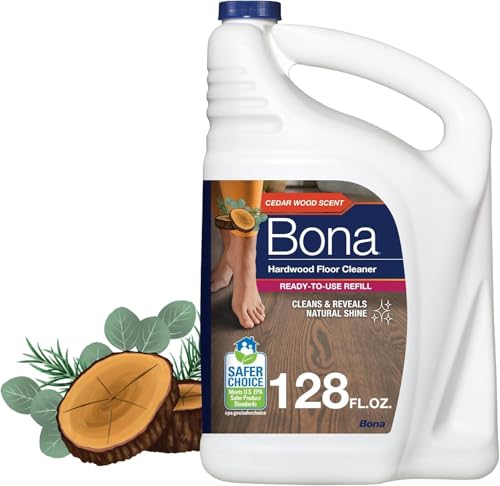
Bona hardwood floor cleaner spray: best for sealed floors

Bona Hardwood Floor Cleaner Spray fits sealed floors, especially polyurethane-treated wood, because it is ready to use and requires no dilution. Bona’s formula is EPA Safer Choice-certified, and This Old House identifies Bona Refill Hardwood Floor Cleaner for unwaxed, unoiled, and polyurethane-finished floors. (thisoldhouse.com)
The fast-drying spray format works well when you want light cleaning without mixing a concentrate. A microfiber pad mop pairs well with this kind of cleaner because it helps limit excess moisture and keeps the pad from pushing dirty liquid back across the floor.
The drawback is finish fit: this is not the cleaner to treat as a universal answer for oiled hardwood. On oil-finished boards, a ready-to-use spray can leave the wrong kind of residue if the formula is not made for that maintenance system.
Murphy concentrated wood cleaner: best for value cleaning
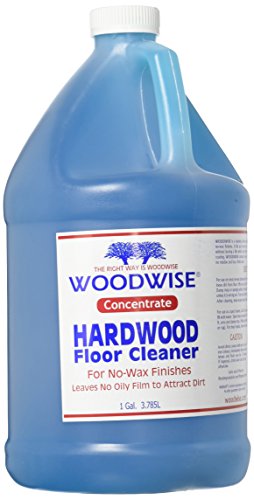
Murphy Concentrated Wood Cleaner makes sense when you clean sealed floors often and want a concentrate that stretches farther. Murphy is a liquid concentrate that must be diluted, and This Old House lists Murphy Oil Soap as a best concentrate option. It can also be used beyond floors, including cabinets and furniture.
The value angle comes from the mix ratio, not from using it stronger than directed. For hardwood, follow the label dilution exactly, because concentrated product left too strong can leave film and can make rinse-free cleaning harder to manage.
The drawback is moisture management. Even a properly diluted concentrate can still leave too much liquid for oiled floors, and that is where the finish risk climbs. If your floor is oil-finished, a concentrate belongs only if the label and the finish maker both allow it.
Weiman hardwood floor cleaner: best for streak control
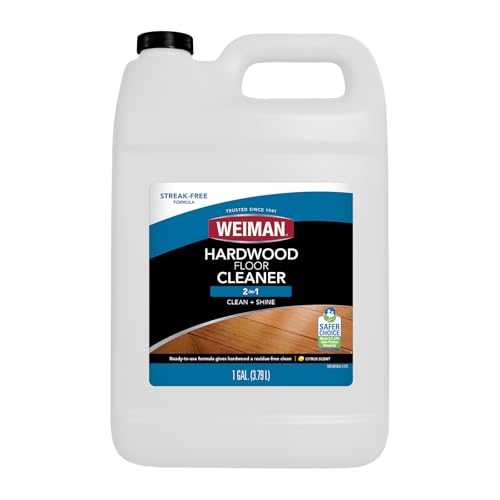
Weiman Hardwood Floor Cleaner is a ready-to-use option with EPA Safer Choice certification, plant-based ingredients, and strong streak control. Weiman left behind no streaks in Lab tests, which matters on sealed wood where dulling and haze are easy to spot after repeated cleaning.
This is a sensible pick if you want a simple spray for quick cleanup and you care about residue control. Plant-based ingredients can be a plus for shoppers thinking about kids and pets, but that does not make every plant-based cleaner right for every finish.
The drawback is the same one that applies to most ready-to-use sprays: it is mainly a sealed-floor tool. Oiled hardwood needs the cleaner that matches the finish system, not just a gentle label.
Can you use the same cleaner on both oiled and sealed wood?
Sometimes, but only when the label and the finish type line up. A pH-neutral spray can be the safest overlap for light cleaning on sealed wood and some maintenance routines on oiled wood, yet many homes need separate cleaners because residue tolerance and moisture tolerance are not the same.
Think finish first, brand second. If the floor is sealed, the cleaner has more room to be convenient. If the floor is oiled, the cleaner has to protect the oil layer and avoid buildup, which is a tighter standard.
Finish-first decision rule
If the floor is polyurethane or another surface finish, use a cleaner made for sealed wood. If the floor is oiled, use the finish maker’s recommended soap or maintenance product. If you cannot verify the finish, test in a small hidden area and stop if you see darkening, hazing, or tacky residue.
When one cleaner can cover both
A pH-neutral spray with low residue may be acceptable across both rooms only when the label says it is safe for each finish type. That is common in mixed homes where one area is sealed and another is oiled, but the cleaner still has to pass the finish-specific instructions.
Say your kitchen has polyurethane floors and the hallway has oil-finished oak. The kitchen can take a ready-to-use spray and microfiber pad mop, while the hallway should stay on the oil-system cleaner so the finish does not darken over time.
A common first-timer mistake is using one “wood floor” bottle everywhere. That can work on the sealed room and fail quietly on the oiled room, where residue builds up first and dullness shows later.
Finish-safe selector for oiled vs sealed hardwood
| Finish type | Cleaner format | Residue risk | Moisture level | Dilution needs | Use on oiled hardwood? | Use on sealed hardwood? | Winner |
|---|---|---|---|---|---|---|---|
| Oiled hardwood | Finish-maker soap or pH-safe low-moisture cleaner | High if the wrong spray is used | Low | Only if label allows it | Yes, when finish-safe | No, if it is an oil-only maintenance product | Oiled hardwood-specific cleaner |
| Sealed hardwood | Ready-to-use spray or diluted concentrate | Medium, mainly from overuse or buildup | Low to moderate | Sprays: no. Concentrates: yes | Sometimes, only if label approves | Yes | Sealed hardwood cleaner |
| Polyurethane-treated floors | pH-neutral spray or diluted concentrate | Low to medium | Low | Depends on format | No, unless the label allows mixed use | Yes | Sealed hardwood cleaner |
| Mixed homes with both finishes | Two finish-specific products | Lowest when matched correctly | Low | Depends on product | Yes, with the right bottle | Yes, with the right bottle | Two-cleaner setup |
60-second rule: If the floor is sealed, pick a pH-neutral spray or a diluted concentrate that says it is safe on surface-finished wood. If the floor is oiled, stop at the finish maker’s maintenance product or a clearly labeled low-moisture cleaner made for oiled wood. If the label is unclear, do not assume it is safe.
Spot cleaning scuffs without leaving buildup
For scuff marks, start with the mildest option that matches the finish. This Old House lists Black Diamond Stoneworks as best for spot cleaning, and that type of use case matters because spot work should remove the mark without adding more liquid than needed.
Use a microfiber pad or cloth and keep the pass localized. On sealed floors, that helps prevent a hazy patch. On oiled floors, it limits the chance of feeding residue into the finish layer.
What cleaner is best for oiled hardwood floors?
The best cleaner for oiled hardwood floors is the finish maker’s soap or a pH-safe, low-moisture cleaner made for oiled wood. Oiled floors are more sensitive to residue and water than sealed floors, so the safest choice is the one designed to clean without stripping or darkening the oil layer.
Avoid treating oil-finished boards like polyurethane floors. A standard spray that works well on sealed wood may leave buildup on oiled wood, and that can make the floor look dull or uneven.
What cleaner is best for sealed hardwood floors?
The best cleaner for sealed hardwood floors is a pH-neutral, low-residue formula that preserves the coating. Ready-to-use sprays are a good fit here because sealed and polyurethane-treated floors can handle light cleaning without the same risk of oil-layer damage you see on unfinished or oil-finished boards.
Bona and Weiman fit this lane well, and Murphy works as a concentrate when you want a budget-friendly dilution routine. The main job is to clean grime and scuff marks without leaving a film that dulls the surface.
What ingredients should I avoid on oiled wood floors?
Avoid harsh alkalines, heavy waxes, and any cleaner that leaves a visible film on oiled wood floors. You also want to avoid excess water, steam, and anything marketed for deep stripping unless the finish maker specifically calls for it, because oiled wood needs a maintenance-minded routine.
Plant-based ingredients can still be too much if the formula is wrong for the finish, so do not use that label as a shortcut. The safer question is whether the product is made for oiled wood and approved for low-moisture cleaning.
Do hardwood floor cleaners leave residue or dull the finish?
Yes, some do. Residue and streak control are core buying criteria because haze, stickiness, and dulling often come from using too much product, the wrong dilution, or a formula that is not matched to the floor finish.
On sealed floors, residue tends to show up as a streaky sheen or a sticky feel underfoot. On oiled floors, it can build more quietly and change the color or depth of the finish before it becomes obvious.
How do I dilute a concentrate like Murphy Oil Soap for hardwood floors?
Use the label directions and avoid making the mix stronger for extra cleaning. Murphy Concentrated Wood Cleaner must be diluted, and that step matters because hardwood floors do not benefit from an aggressive solution. Too much concentrate raises residue risk; too much water raises finish risk.
If the bottle gives a fill line or a specific ounce-to-water ratio, follow that ratio for the surface type listed on the label. For oiled floors, dilution still may not make the formula acceptable, so the finish compatibility check comes before the mix step.
Which hardwood floor cleaners dry fastest?
Ready-to-use sprays usually dry fastest because they are built for quick application and light moisture. Bona Hardwood Floor Cleaner Spray is a good example: it is ready to use, requires no dilution, and is built for fast-drying cleanup on sealed floors.
For any cleaner, a microfiber pad mop helps you apply less liquid and move it off the surface faster. That matters more on wood than on tile, especially when you want to avoid standing moisture or streaky film.
Are plant-based hardwood floor cleaners safe for kids and pets?
Plant-based ingredients can be part of a kid- and pet-aware shopping list, but they are not a blanket safety pass for every floor. A cleaner still has to be appropriate for the finish, and it still needs to dry fully before normal traffic returns.
Weiman is a strong example of how those claims may appear together on a label, but the finish match still decides the real-world fit. On hardwood, safer ingredients and correct finish compatibility need to go together.
What cleaner works best for polyurethane-finished hardwood floors?
Polyurethane-treated floors need a cleaner that preserves the protective coating, so a pH-neutral, low-residue spray is usually the safest fit. Bona is a good match here, and This Old House specifically lists Bona Refill Hardwood Floor Cleaner for polyurethane-finished floors.
Because the coating is surface-level, residue stands out quickly. That is why streak control matters just as much as cleaning power on this type of floor.
Which one should you buy?
Buy Bona if your floors are sealed, polyurethane-finished, or you want the easiest ready-to-use option with fast drying and no dilution. Buy Weiman if residue control matters most and you want a ready-to-use cleaner with EPA Safer Choice certification and plant-based ingredients.
Buy Murphy if you want a value concentrate for sealed floors and do not mind mixing it correctly every time. For oiled hardwood, skip the general-purpose spray logic and use the finish maker’s soap or a clearly approved low-moisture cleaner instead.
If your home has both finish types, keep two cleaners. That is the cleanest answer, and it avoids forcing one product to do two jobs it was not designed to do.
Verdict: Best Hardwood Floor Cleaner for Oiled or Sealed Wood?
Choose Best Hardwood Floor Cleaner for Oiled if your floor is oil-finished and you need the finish maker’s soap or maintenance oil to protect the oil layer and avoid residue buildup.
Choose Sealed Wood if your floor is polyurethane-treated or another surface-finished floor and you want a pH-neutral, low-residue, fast-drying spray for routine cleaning.
Frequently asked questions
What cleaner is best for oiled hardwood floors?
The best cleaner for oiled hardwood floors is the finish maker’s soap or a low-moisture, pH-safe cleaner made specifically for oiled wood. Oiled floors are more sensitive to residue and excess water, so the safest choice is the product designed for that maintenance system.
What cleaner is best for sealed hardwood floors?
The best cleaner for sealed hardwood floors is a pH-neutral, low-residue formula that protects the surface coating. Ready-to-use sprays work well here, and diluted concentrates are fine when the label says they are safe for finished wood.
Can I use the same hardwood floor cleaner on both oiled and sealed wood?
Sometimes, but only if the label says it is safe on both finishes. A pH-neutral spray may cover light cleaning in a mixed home, yet many floors need separate products because oiled wood tolerates less residue and less moisture than sealed wood.
What ingredients should I avoid on oiled wood floors?
Avoid harsh cleaners, heavy waxy films, and anything that leaves a sticky or glossy buildup on oiled wood. You should also avoid excess water and steam, because oiled floors are more vulnerable to finish damage and darkening than sealed floors.
Do hardwood floor cleaners leave residue or dull the finish?
They can, especially if you overapply product or use the wrong formula for the finish. Residue shows up as haze, streaks, stickiness, or a dull patch, and it is one of the main reasons finish compatibility matters so much on hardwood.
How do I dilute a concentrate like Murphy Oil Soap for hardwood floors?
Follow the bottle directions exactly and do not guess at strength. Murphy Concentrated Wood Cleaner must be diluted, and the safest approach is to use the label’s hardwood-floor mix rather than making the solution stronger in hopes of getting faster cleaning.
Sponsored / affiliate links. As an Amazon Associate I earn from qualifying purchases. I may earn additional commission from eligible campaigns.