5 Best Mop Heads for Hardwood Floor Cleaning (2026): We Compared
For finished hardwood, the best mop heads are flat microfiber pads with a tight weave and low water retention. Choose machine-washable pads for routine dusting and lightly damp mopping, and avoid cotton string mops for everyday use. Too much water or a gritty pad can leave streaks, dull the finish, and, over time, force costly refinishing. This guide matches mop head types to polyurethane, oil-based, and waxed finishes, plus dust, sticky spots, and pet messes.
What mop head is best for hardwood floors?
For most finished hardwood floors, a flat microfiber mop head is the safest all-around choice. It handles dry pickup and light damp mopping, keeps moisture low, and is less likely than string mops to push grit around. For pet hair, start with a dry dusting pad; for sticky spots, follow with a lightly damp pad.
Best overall for finished hardwood
Microfiber flat pads are the default pick for sealed wood, including polyurethane and most factory-finished engineered hardwood. They clean dust, fine grit, and light spills without soaking the floor, which matters because water can swell boards and cloud the finish. Use a pH-neutral cleaner only when the floor maker allows it.
Best for pet hair and dry grit
Electrostatic dusting pads and microfiber dust pads are the best first pass for pet hair, lint, and dry grit. They reduce the chance of scratching because you remove abrasive debris before any wet cleaning. On textured grain or entryways, a dry pass matters more than the mop head shape.
Best for quick cleanup versus full-room mopping
For a spill near the sink, a spray mop is the fastest low-moisture option. For a full room, a flat microfiber system usually gives better coverage and more even pressure. A spin mop can work in larger rooms, but only if the head is wrung to damp, not wet.
Quick comparison
| Product | Badge | Best for | Price | ||
|---|---|---|---|---|---|
 |
18" Professional Microfiber Mop Floor Cleaning System, FlatConliwell | Our pick | 18" flat mop · Conliwell · 4 pads | $26.99
Price as of 23 Oct 2026
|
View |
 |
NICEMOVIC 5 Pack Spin Mop Replacement Head for 360° SpinNICEMOVIC | Budget pick | 6.1-6.3" spin heads · NICEMOVIC · 5 pack | $14.99
Price as of 23 Oct 2026
|
View |
 |
KeFanta 36" Commercial Dust Mops,Industrial Heavy DutyKeFanta | Also great | 36" dust mop · KeFanta · heavy duty | $29.96
Price as of 23 Oct 2026
|
View |
 |
16.5" Microfiber Mop Pads Refills, 3 Pack ReusablePanda Grip | Pair with it | 16.5" pads · Panda Grip · 3 pack | $14.99
Price as of 23 Oct 2026
|
View |
 |
12 Pack of 18 inch Microfiber Pad Universal forGeneric | Upgrade pick | 18" pads · Generic · 12 pack | $29.99
Price as of 23 Oct 2026
|
View |
The main trade-off is moisture control versus coverage. Flat microfiber heads give the best balance for most hardwood floors, spin mops help when you need stronger wringing control in larger rooms, spray mops are fastest for touch-ups, and dusting pads are best before any damp pass.
Finish compatibility is where many shoppers go wrong. Sealed hardwood is the most forgiving. Oiled and waxed floors need stricter caution, and steam is a poor fit for all of them.
How we chose
This comparison centers on four things: moisture control, grit pickup, finish compatibility, and ownership cost. That means the right head for a sealed great room is not always the right head for an older waxed hallway.
We also weighed pad wash life, replacement cadence, and how easily each system keeps water off the floor. A head that cleans well but stays too wet is a bad fit for hardwood.
Cleaner compatibility matters too. Some systems are made for refill cartridges, while others work best with plain water or a pH-neutral formula approved by the floor maker.
Room size and mess type change the answer. Entryway grit, pet hair, and kitchen residue do not call for the same mop head.
Microfiber mop heads: best for everyday cleaning
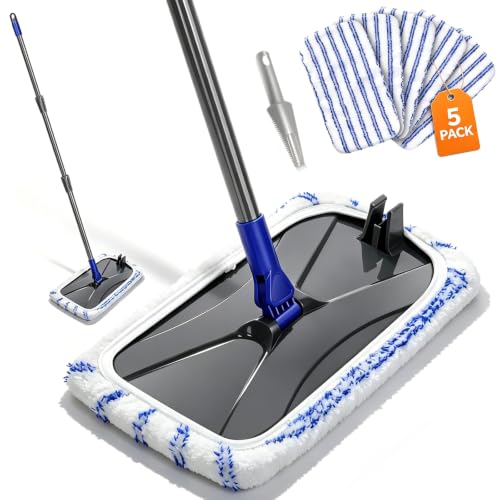
Conliwell’s 18-inch microfiber flat mop is the best fit for routine cleaning on finished hardwood. It is a strong match for homeowners who want one tool for dry pickup, lightly damp mopping, and quick turns under furniture. The four reusable pads make it practical for regular use.
What stands out is the wide head and washable pad set. A flat microfiber pad is nonabrasive on sealed wood when used dry or only slightly damp, and the large base helps cover open areas faster than a narrow pad.
The drawback is the same one that affects most flat systems: if you load it with too much liquid, it can leave streaks. It works best when you wring or pre-dampen the pad so it feels barely moist, not slick.
Why microfiber is the safest all-around option
Microfiber is the safest all-around mop head material for finished hardwood because it traps dust and grit instead of dragging it. That lowers scratch risk on polyurethane and factory-finished engineered floors. It also dries fast, which helps avoid film.
Pad density and streak control
Tighter weave and moderate pad density usually work better than plush, thirsty pads on wood. A dense pad can grab fine soil, but if it holds too much cleaner it may smear residue. For daily maintenance, dry pickup first and use a lightly damp pad second.
Flat mop systems: best for under-furniture cleaning
Generic’s 18-inch microfiber pad pack suits flat mop systems where you want a wide head, even contact, and quick pad changes. It is a good choice for larger rooms, edges, and under-furniture cleaning when paired with a compatible flat frame. The twelve-pad count is useful for households that rotate pads often.
These pads are especially practical when you want a chemical-light routine. The no-streak microfiber loop construction and machine-washable design make them a solid fit for sealed hardwood and other finished floors.
The downside is compatibility. These are replacement pads, not a complete system, so the frame fit has to match. Also, flat pads still need moisture discipline; a wide head can spread too much liquid if you over-wet it.
Wide rectangular head and swivel reach
Flat mop systems are strong on edges, baseboards, and low-clearance furniture because the head stays low and turns easily. That makes them better than heavier bucket systems in tight rooms, especially when you are cleaning around chair legs or along cabinet toe-kicks.
When flat pads beat heavier bucket systems
Use a flat system when the floor has light daily soil, not caked-on residue. If the room is mostly dust, pet hair, and small kitchen drips, a flat pad is enough. If the floor is very dirty, you may need a dry pass first and a second damp pass.
Spin mop buckets: best for larger rooms

NICEMOVIC’s microfiber spin mop heads are the best fit for homeowners who already have a standard spin mop bucket and want replacement heads that stay gentle on hardwood. They are machine-washable and made for moisture control, which matters in larger rooms where wringing quality affects finish safety.
The main strength here is flexibility. A spin system can move from one room to another without dragging a saturated pad. That makes it useful for long hallways, open-plan living spaces, and homes where the bucket stays parked in one place.
The weakness is that a spin mop can still be too wet if it is not wrung down enough. The head shape is round, so it is also less efficient along baseboards and in tight corners than a flat mop.
Foot-pedal wringing and moisture control
Spin buckets help because the wringing step is built in. The O-Cedar RinseClean system, for example, uses a foot pedal to control how wet the mop is and keeps clean and dirty water separate. That style of design is useful when you want to avoid reapplying dirty water to hardwood.
When a spin mop is too wet for wood floors
If the pad leaves a visible trail, drips at the bucket, or feels saturated after wringing, it is too wet for hardwood. A damp-not-wet rule is the safe standard. Oversaturation is what causes streaking, cloudy residue, and water getting into seams.
Dusting pads: best for pet hair pickup
KeFanta’s 36-inch dust mop is the best fit when dry pickup is the main job and the room is large. It is aimed at sweeping dust, pet hair, and loose grit before any damp mopping begins. The extra-large head is a plus in open areas and long runs.
This style is useful for maintenance between deeper cleans. On hardwood, removing dry debris first is often the step that prevents scratches later. The large head also helps in garages and utility spaces where you need width more than precision.
The drawback is that it is not the most controlled choice for damp mopping on finished wood. The product is marketed for wet and dry use, but hardwood owners should keep it mostly in the dry category unless the floor maker allows a lightly damp pass.
Electrostatic pads and grit pickup
Electrostatic or dusting-style pads are good at grabbing pet hair and fine grit because they hold debris instead of sweeping it into corners. That makes them a smart pre-clean before microfiber damp mopping. They are especially useful near entries and feeding areas.
Best use cases for edges and entryways
Use a dust mop in high-traffic entryways, around litter boxes, and along baseboards where loose debris collects. If the floor has sand or tracked-in grit, start dry. A damp mop used first can turn that grit into a mild abrasive paste.
Spray mops: best for quick cleanup
Panda Grip’s 16.5-inch microfiber refill pads suit spray mops for fast, low-moisture cleanup. They are a practical choice for quick kitchen drips, fingerprints near the dining area, or spot cleaning around a pet bowl. The hook attachment makes pad swaps simple.
Spray mop heads work well when you want controlled liquid delivery rather than a bucket. That is useful on finished hardwood because you can apply just enough solution to loosen residue without soaking the surface.
The downside is coverage and capacity. Spray systems are slower for large rooms, and refill bottles or cartridges need regular attention. They are best for touch-ups, not heavy soil.
Trigger-controlled liquid delivery
A spray mop puts cleaner exactly where you need it. That helps with moisture control in small areas, since you can mist a section and wipe it immediately. For hardwood, that is safer than flooding the floor and waiting for evaporation.
Refillable bottles and cartridge systems
Some spray mops use a refillable bottle, while others use a brand-specific cartridge. Bona’s Premium Spray Mop, for example, is listed for unwaxed, unoiled wood floors and uses a 34 oz refillable cartridge. That kind of system can be convenient, but it ties you to the maker’s refills.
Hardwood mop selection matrix
Use this matrix to match mop head type to finish, room size, and mess severity. The biggest divider is finish compatibility: sealed wood is more forgiving, while oiled and waxed floors need stricter limits on water and cleaner choice.
| Mop head type | Best hardwood finish | Room size | Mess severity | Do not use | Ownership cost notes |
|---|---|---|---|---|---|
| Microfiber flat pad | Sealed hardwood, most finished engineered wood | Small to medium rooms | Daily dust, light spills, sticky spots | Waxed floors if the pad is wet; oiled floors with heavy liquid; steam risk | Reusable pads often last for many wash cycles; replacement cadence is lower if you rotate pads and air-dry them |
| Spin mop microfiber head | Sealed hardwood, larger finished rooms | Medium to large rooms | Light to moderate soil | Any wet-mop approach on waxed floors; oiled floors with oversaturation; steam risk | Pad replacement depends on fiber wear; wash-life is good if the head is fully wrung and not overloaded with cleaner |
| Spray mop microfiber pad | Sealed hardwood, unwaxed/unoiled wood only if manufacturer allows | Small rooms, kitchens, entries | Quick cleanup, tracked prints, small spills | Waxed floors if the cleaner is not approved; steam risk; any heavy-wet use | Refill pads are usually easy to swap; cost per use stays lower when pads are machine-washable and reused often |
| Dusting pad | All finished wood before damp cleaning | Any room size | Dry grit, dust, pet hair | Wet-mop risk; steam risk; pushing grit around with a damp pad | Disposable versions cost more over time; reusable versions are cheaper if washed promptly and not overloaded with debris |
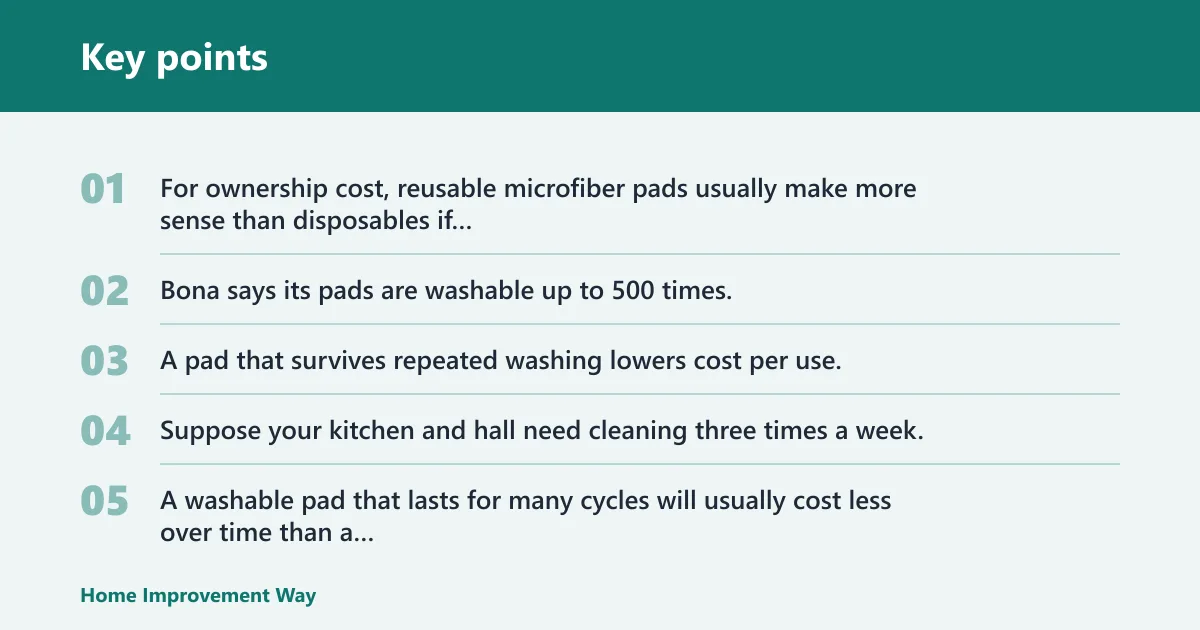
For ownership cost, reusable microfiber pads usually make more sense than disposables if you clean often. Bona says its pads are washable up to 500 times, which shows why wash life matters more than the sticker price alone. A pad that survives repeated washing lowers cost per use.
Suppose your kitchen and hall need cleaning three times a week. A washable pad that lasts for many cycles will usually cost less over time than a disposable head that gets replaced after a handful of uses. The trade-off is laundry effort and the need to keep the pad lint-free.
Do not use on waxed or oiled floors
Waxed and oiled floors are less forgiving than sealed polyurethane. Keep moisture very low and follow the floor maker’s instructions closely. If the finish is old, patchy, or soft, a more aggressive mop head can leave a dull film or disturb the coating.
Which one should you buy?
For most homes with finished hardwood, buy a flat microfiber mop first. It is the best balance of dust pickup, damp cleaning, and finish safety. If your home has larger open rooms and you value controlled wringing, a spin system is the next best choice.
Best choice by hardwood finish
For sealed hardwood, use microfiber flat pads or a well-wrung spin head. For engineered hardwood with a factory finish, the same rule usually applies. For oiled or waxed floors, choose the gentlest dry or slightly damp pad and avoid any system that encourages heavy moisture.
Best choice by mess type
For pet hair and dry grit, start with a dusting pad. For sticky kitchen spots and entryway prints, a spray mop is faster. For a whole-room clean, microfiber flat pads or a spin mop give better coverage than a small spray head.
Best choice by budget and upkeep tolerance
If you want the lowest long-term cost, reusable microfiber pads make the most sense because they can be washed many times. If you want the fastest cleanup and least prep, a spray mop is convenient but often costs more per use. For a wide-area clean, a flat system is the most efficient compromise.
Choose Conliwell 18-inch flat mop if…
Choose the Conliwell flat mop if you clean finished hardwood often, want one tool for dry pickup and light damp mopping, and prefer a wide head that covers more floor per pass. It also makes sense if you want reusable pads and a simple routine under furniture.
Choose NICEMOVIC spin heads if…
Choose the NICEMOVIC spin heads if you already own a standard spin bucket and need replacement pads that stay soft on hardwood. This option fits larger rooms, homes that depend on wringing control, and anyone who wants a washable microfiber head with lower scratch risk than rougher fabrics.
Frequently asked questions
Are microfiber mop heads safe for hardwood floors?
Yes, microfiber mop heads are generally the safest all-around choice for finished hardwood when used dry or only slightly damp. They pick up dust and grit instead of dragging it, which lowers scratch risk. The main caution is moisture: a saturated microfiber pad can still leave film or seep into seams.
Should I use a flat mop or spin mop on hardwood?
A flat mop is usually better for routine hardwood cleaning because it gives even contact and works well under furniture and along edges. A spin mop is a good choice for larger rooms if you can wring it until it is only damp. Either option fails if it leaves visible water behind.
How damp should a mop head be for hardwood floors?
A hardwood mop head should be damp, not wet. If you can feel water transfer to your hand or see dripping when you lift it, it is too wet. The pad should glide without leaving a trail, and the floor should dry quickly after each section.
Can I use a steam mop on hardwood floors?
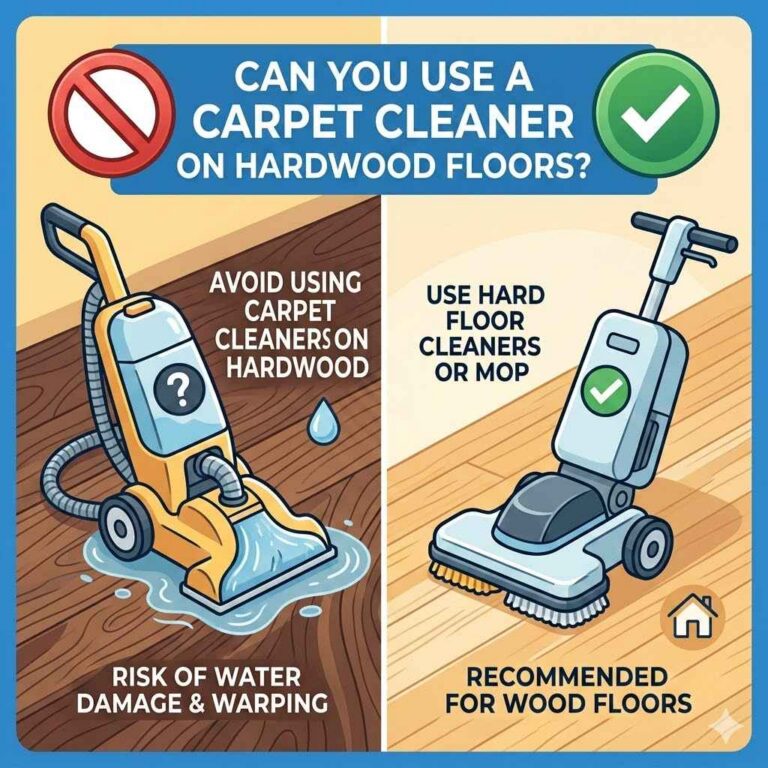
Steam mops are generally discouraged on hardwood floors because heat and moisture can stress the finish and board seams. Even sealed wood can react badly over time. Most floor makers prefer dry dusting or a slightly damp microfiber cloth instead. Check the manufacturer’s instructions before using any steam device.
How often should I change or wash a hardwood floor mop head?
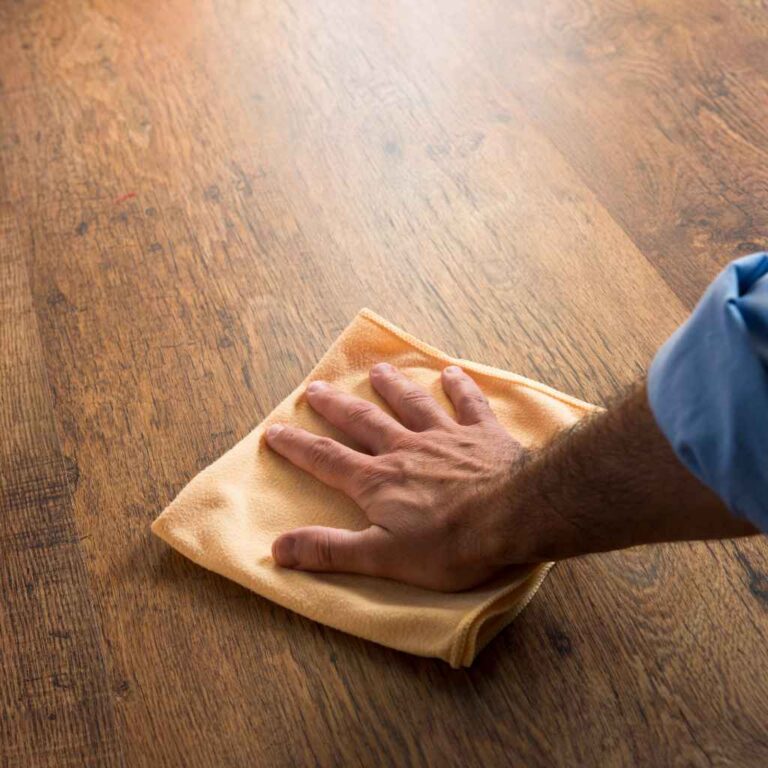
Wash the pad when it looks loaded with dust or begins to smear rather than pick up soil. For frequent use, rotate pads so one can dry fully between cleanings. Reusable pads should be replaced when the fibers flatten, fray, or stop grabbing grit effectively.
What kind of mop is safest for oiled or waxed wood floors?
For oiled or waxed wood floors, the safest choice is a very lightly damp or dry microfiber pad used exactly as the floor maker allows. Avoid wet mopping, steam, and harsh cleaners. These finishes are more sensitive to excess water, and a heavy-wet mop can cloud or soften the surface.
Sponsored / affiliate links. As an Amazon Associate I earn from qualifying purchases. I may earn additional commission from eligible campaigns.