How to Choose a Hardwood Floor Cleaner by Finish Type
Choose a pH-neutral cleaner matched to your floor’s finish: polyurethane and prefinished floors usually need a water-based neutral cleaner, waxed floors need a wax-safe cleaner, and oil-finished floors need a product made for oil finishes. The wrong cleaner can haze the finish, strip wax, leave residue, and shorten the floor’s life. This guide shows what cleaner to buy for each finish, what to avoid, and what to do if the finish is unknown or mixed.

Hardwood finish decision table
Start with the finish, then match the cleaner type and moisture level to it. That order matters because the same bottle can be safe on one floor and wrong on another.
| Finish | Safe cleaner type | Tools | Moisture level | Red-flag ingredients | If unsure |
|---|---|---|---|---|---|
| Polyurethane | pH-neutral hardwood cleaner | Barely damp microfiber mop | Low, with quick drying | Vinegar, steam, bleach, ammonia, abrasives | Use only dry dusting until the finish is confirmed |
| Oil-finished | Oil-based hardwood soap or finish-compatible cleaner | Microfiber mop made for wood care | Low, with minimal wipe-down | Standard polyurethane cleaner, strong alkaline cleaners | Pause wet cleaning and confirm the finish label or maker guidance |
| Wax-finished | Wax-compatible cleaner | Dry cloth or dry buff pad | Very low, dry buff preferred | Water-based cleaners that can strip wax | Stick to dry cleaning until you know the wax system in place |
| Unfinished | Dry cleaning only | Broom, dust mop, vacuum with hard-floor setting | No liquid at all | Water, spray cleaners, steam, wet mops | Do not apply liquid; dry clean only |
How do you identify your finish?
Look for the finish before you buy a cleaner. A simple water-drop check can help, but it is not the only clue. If water beads and sits on the surface, the floor is more likely sealed. If it darkens quickly, the wood may be oil-finished, waxed, or unfinished.
Simple checks that point you in the right direction
Polyurethane is the most common modern finish. It often has a smoother sheen and resists light surface water better than bare wood. Oil-finished floors usually look more natural and may show a matte or low-sheen surface with less film on top. Waxed floors often feel softer under a cloth and may respond to buffing. Unfinished wood absorbs moisture quickly.
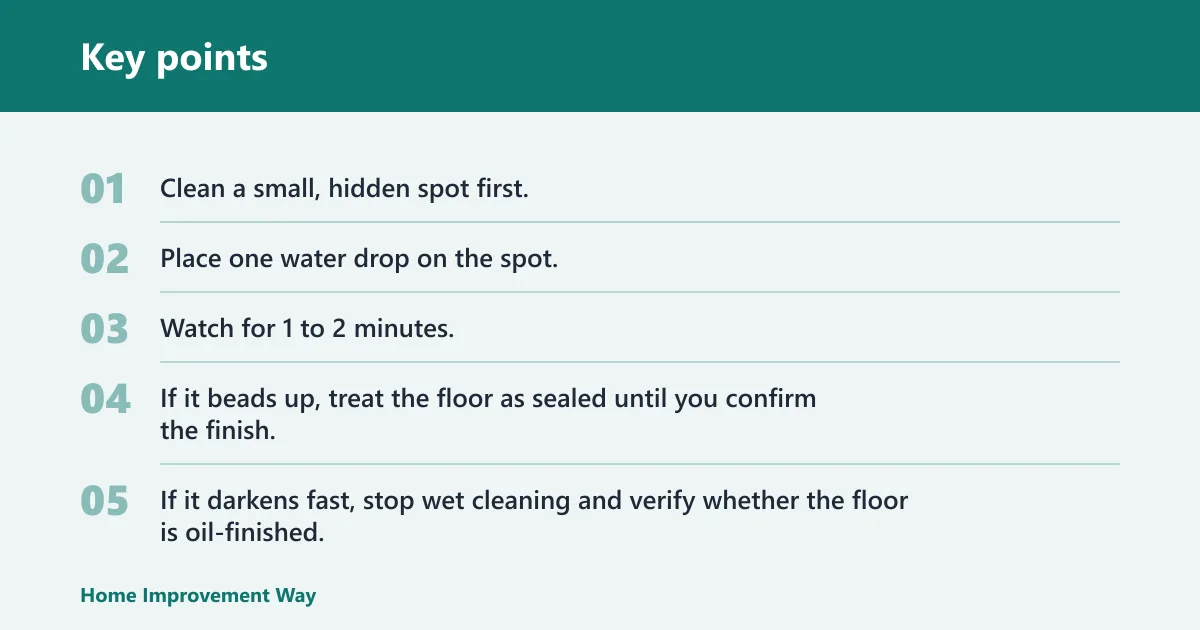
- Clean a small, hidden spot first.
- Place one water drop on the spot.
- Watch for 1 to 2 minutes.
- If it beads up, treat the floor as sealed until you confirm the finish.
- If it darkens fast, stop wet cleaning and verify whether the floor is oil-finished, waxed, or unfinished.
Suppose a 2-inch test spot on a hallway board beads water after a minute, but a bedroom board darkens almost right away. That split result points to mixed finish history, old spot repairs, or patchy wear. In that case, clean only with dry methods until the surface is identified board by board.
What to do with mixed or unknown finish history
Mixed finishes need the safest approach, not the strongest cleaner. Old surface seals, prefinished boards, and spot repairs can react differently across the same room. If you do not know the finish, dry dust first and avoid any liquid until you can identify the main finish or confirm a manufacturer recommendation.
What is a good hardwood floor cleaner for my finish?
The best answer depends on finish type. For most sealed hardwood, a pH-neutral cleaner made for hardwood is commonly recommended as a safe starting point. For oil-finished floors, use an oil-based or finish-compatible soap. Waxed floors need a wax-compatible cleaner. Unfinished wood needs dry cleaning only.
Polyurethane and sealed floors
Use a pH-neutral cleaner made for hardwood. That is the main match for polyurethane, the most common modern finish. A barely damp microfiber mop is the right tool for dust and light soil. Avoid vinegar, steam, bleach, ammonia, and abrasive powders because they can dull the finish or leave residue.
Oil-finished floors
Choose an oil-based hardwood soap Or another finish-compatible cleaner made for oiled floors. Standard polyurethane cleaners can be the wrong choice because they are built for a sealed film, not an oil-treated surface. Keep moisture low and follow the label closely. If the cleaner says it is for varnish or polyurethane only, skip it.
Wax-finished floors
Use a wax-compatible cleaner and dry buff only. Water-based products can strip wax or leave patchy spots, especially if the floor has older buildup. On waxed wood, the goal is maintenance, not a wet wash. Dry buffing is the safer first step.
Unfinished floors
Unfinished hardwood should get dry cleaning only. No liquid. Not even plain water. Moisture can cause swelling and warping, and unfinished wood absorbs it fast. Sweep, vacuum with a hard-floor setting, and use a dry dust mop. If soil is stuck, do not reach for a spray cleaner before the finish is verified.
Our picks by need
These picks are based on published product details, manufacturer specs, and buyer feedback. They are not universal fits for every finish. Use the cleaner that matches your floor, then choose the product that fits your cleaning style and household needs.
Best for sealed floors: Bona Hardwood Floor Cleaner

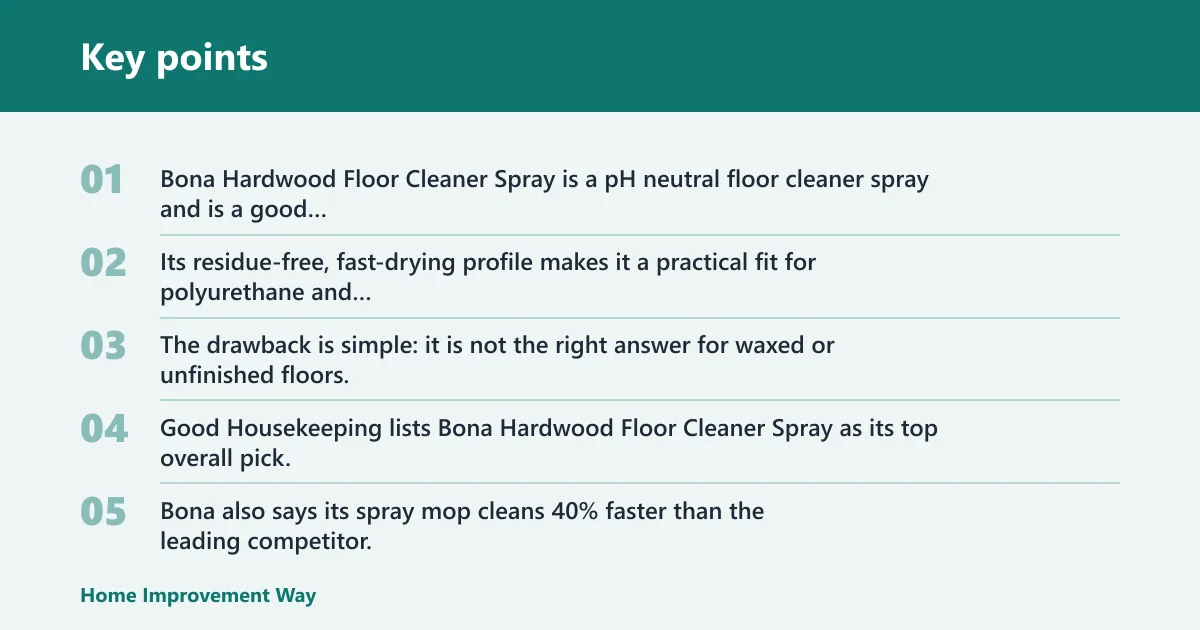
Bona Hardwood Floor Cleaner Spray is a pH neutral floor cleaner spray and is a good benchmark for sealed hardwood care. Its residue-free, fast-drying profile makes it a practical fit for polyurethane and other finished wood floors. The drawback is simple: it is not the right answer for waxed or unfinished floors.
Good Housekeeping lists Bona Hardwood Floor Cleaner Spray as its top overall pick, and that lines up with the product’s hardwood-specific design. Bona also says its spray mop cleans 40% faster than the leading competitor, but that claim applies to Bona’s mop system, not the bottle alone. The cleaner still depends on proper finish matching and a light application.
Best for sticky soil: Murphy Concentrated Wood Cleaner

Murphy Concentrated Wood Cleaner is the better fit when you need a concentrated liquid for scuffs or sticky soil on finished wood. Good Housekeeping names it best value. It must be diluted, so the main drawback is user error: too much concentrate can leave residue, and the citronella scent will not suit every home.
Based on the product details, Murphy is meant for finished wood floors and can leave a natural shine. That makes it useful for heavier spot cleaning on sealed floors. It is still not a substitute for a wax-safe cleaner on waxed floors or a dry method on unfinished wood.
Best for low-residue daily cleaning: Zep Hardwood and Laminate Floor Cleaner

Zep Hardwood and Laminate Floor Cleaner is a practical daily cleaner for varnish, acrylic, and polyurethane finishes. The fast-drying, no-rinse setup fits regular maintenance on sealed floors. Its drawback is compatibility: laminate and many sealed floors are fine, but it is not a catch-all for oil-finished, waxed, or unfinished wood.
For households that want straightforward spot cleanup without a heavy film, this type of cleaner can make sense. It is still a finish-specific product, so check the floor first and keep the mop only barely damp.
Best for homes with pets, kids, or hard-water streaks: Bona Hardwood Floor Cleaner
For homes that need quick cleanup and less streaking, Bona is a strong fit because it is pH neutral and residue-free. That matters when you are cleaning frequent spills, pet tracking, or the mineral film that hard water can leave behind. Its main limit is the same as above: it is for finished wood, not waxed or unfinished boards.
Bona microfiber cleaning and dusting Pads can be washed and reused up to 500 times, which makes the system practical for repeated dusting and light cleaning. That is useful for busy households that clean often and want fewer disposable pads.
Can you use vinegar on hardwood floors?
Vinegar is a poor fit for hardwood, especially polyurethane. It has a pH of 2 to 3, which is acidic enough to dull some finishes over time. Advice that recommends vinegar usually comes from tile or general household cleaning, not hardwood care. For sealed wood, a pH-neutral hardwood cleaner is safer.
Why vinegar is a bad trade on sealed wood
Vinegar may cut some grime, but it can leave a dull look on polyurethane and may not rinse cleanly if too much is used. It is also easy to overapply in a spray bottle. On hardwood, that trade is not worth it when finish-safe cleaners are widely available.
Safer alternatives for daily cleaning
For sealed floors, reach for a pH-neutral cleaner made for hardwood. Pair it with a barely damp microfiber mop and let the floor dry fast. That is the cleaner path for daily dust, paw prints, and light kitchen soil. If the floor is waxed or oil-finished, choose the product made for that finish instead.
Should you use a microfiber mop or a wet mop on hardwood?
Use a microfiber mop, not a wet mop, on hardwood. The mop should be barely damp, never soaking wet. That gives you enough moisture to lift dust and light dirt on sealed floors without leaving standing water, which can seep into seams and damage the finish.
Why barely damp is the right target
Microfiber picks up dust well and spreads cleaner in a thin, even film. A wet mop leaves too much liquid behind, especially in board gaps and around edges. On polyurethane floors, that extra water is unnecessary. On unfinished wood, it is outright risky.
Picture a kitchen floor with pet footprints and a few sticky drops near the sink. A barely damp microfiber mop can clear the surface and dry quickly. A wet mop can push water into seams, raise the grain, and leave streaks that show up after the floor dries.
How much moisture is too much?
If the floor looks shiny with standing liquid after mopping, that is too much. If you can wring the mop head lightly and it still drips, it is too wet. The floor should look clean and dry within a short time, not need towel work to remove puddles.
Mistakes to avoid
The safest cleaning plan is often about what you skip. Steam, bleach, ammonia, abrasive powders, and the wrong cleaner can do more damage than dirt. The biggest errors come from using a product that does not match the finish or from using too much liquid.
Steam mops
Steam mop use is commonly discouraged on hardwood. Heat plus moisture can damage finishes over time, and repeated exposure can make seams and surface coatings fail sooner. Even if the floor looks fine right after cleaning, that does not make steam a safe long-term method.
Bleach, ammonia, and abrasives
Bleach and ammonia are harsh for hardwood finishes. Abrasive powders can scratch or haze the surface. These products may be useful on other materials, but hardwood needs a gentler approach. If a bottle is labeled for general household disinfection, that does not make it safe for your floor.
Too much cleaner or wrong dilution
Residue and streaks often come from overuse, not from the cleaner itself. Concentrated products such as Murphy need proper dilution. If you spray more than the label calls for, you can leave a film that attracts dust and makes the floor look cloudy. Extra product is not extra clean.
Using the wrong cleaner on an unknown finish
If the finish is unknown, do not guess with a wet cleaner. Start with dry cleaning only, then identify the surface type. That matters most on old floors, mixed-finish rooms, and prefinished boards with spot repairs. One wrong cleaner can create a bigger cleanup problem than the original dirt.
Frequently asked questions
How do I know if my hardwood floor is polyurethane or oil-finished?
Start with a small water-drop check in a hidden spot. If water beads, the floor is more likely sealed with polyurethane or another film finish. If it darkens fast, the floor may be oil-finished, waxed, or unfinished. When the result is mixed, stop wet cleaning and verify the surface type.
What cleaner is safe for oiled hardwood floors?
Use an oil-based hardwood soap or a cleaner that the finish maker says is compatible with oiled wood. Standard polyurethane cleaners can be the wrong match because they are made for a film finish. Keep moisture low and avoid anything that leaves a hard residue.
Can I use steam on hardwood floors?
Steam is usually a poor choice for hardwood. The mix of heat and moisture can damage finishes over time and can stress seams and edges. Even if the floor looks clean right away, repeated steam exposure can shorten the life of the finish.
Do hardwood floor cleaners leave residue or streaks?
They can, especially if you use too much product or the cleaner is not right for the finish. pH-neutral cleaners made for hardwood are designed to limit residue buildup, but they still need correct application. A barely damp microfiber mop and proper dilution are the best way to avoid streaks.
What should I avoid using on hardwood floors?
Avoid vinegar, steam mops, bleach, ammonia, abrasive cleaners, and wet mops. Also avoid any liquid cleaner on unfinished wood. If the finish is unknown, do not start with a spray cleaner. Dry dust first, then confirm the finish and choose the matching product.
Sponsored / affiliate links. As an Amazon Associate I earn from qualifying purchases. I may earn additional commission from eligible campaigns.