How Often Should You Clean Hardwood Floors?
Sweep or dry-mop hardwood floors daily in busier homes, weekly in average homes, and deep-clean them about monthly; damp-mop only when needed, and more often for sealed floors than waxed or oil-finished ones. Too much pressure, too much water, or a dirty mop can dull the finish, swell boards, and leave grit that scratches wood. This guide gives a practical daily, weekly, monthly, and as-needed schedule by household type and floor finish.
How often should you clean hardwood floors?


The right schedule depends on traffic, spills, grit, pets, and finish type, not one universal rule. A floor can look clean and still feel gritty in an entryway or kitchen, which is why dusting, vacuuming, spot cleaning, damp mopping, and deep cleaning each need their own cadence.
For most homes, a daily dry clean and a weekly wet clean are a solid baseline. Homes with heavier use generally need more frequent attention. Low-traffic rooms can stretch some tasks longer, especially if the finish is sound and the floor stays free of sand, mud, and food residue.
What counts as daily, weekly, and monthly care?
Daily care means removing loose grit before it gets ground into the finish. Weekly care means a light damp mop or equivalent routine cleaning for the whole floor. Monthly care is for spot cleaning trouble areas, checking residue, and handling buildup before it turns into a dull film or sticky patch.
That separation matters. A floor can need dry dusting every day, a vacuum every few days, and a damp mop only once a week or every other week. Those are different jobs, and each one removes a different kind of debris.
What changes the schedule?
Traffic is the biggest factor, but it is not the only one. Kids, pets, rentals, low-traffic rooms, and seasonal grit all change how often you need to clean. Finish type matters too, because polyurethane or surface-sealed floors tolerate routine damp cleaning differently than waxed floors or older shellac, lacquer, or varnish finishes.
Household type
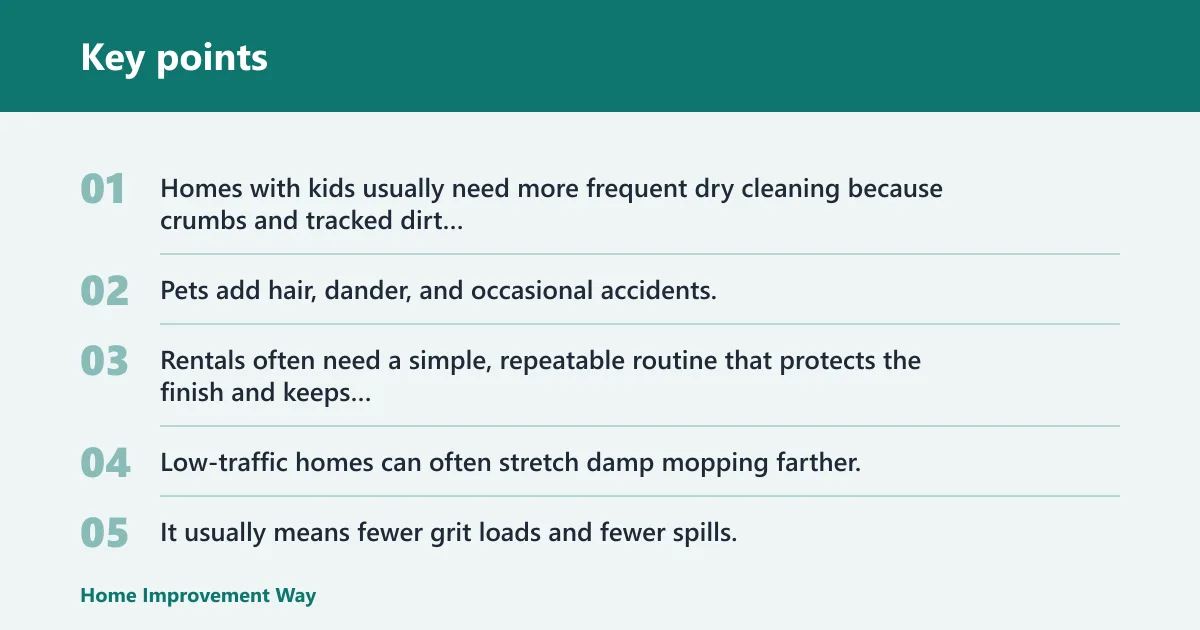
Homes with kids usually need more frequent dry cleaning because crumbs and tracked dirt spread fast. Pets add hair, dander, and occasional accidents, so dusting and vacuuming usually need to happen more often. Rentals often need a simple, repeatable routine that protects the finish and keeps turnover cleaning predictable.
Low-traffic homes can often stretch damp mopping farther, but dusting should still stay regular. Less foot traffic does not mean less dust. It usually means fewer grit loads and fewer spills.
Floor finish
Polyurethane or surface-sealed floors are the easiest to maintain with routine dusting, vacuuming, and a damp microfiber mop. Waxed floors need gentler product choices and less liquid. Older shellac, lacquer, or varnish finishes can be more sensitive, so compatibility matters before you apply any cleaner or polish.
That finish difference is why the same bottle is not right for every floor. A cleaner that works well on a sealed floor may leave residue on waxed wood or dull an older finish.
Seasonal grit, mud, and road salt
Cold-weather messes change the schedule. Sand, slush, and road salt near entries can call for more frequent dry cleaning and more frequent spot cleaning. Homes in muddy seasons often need faster attention at thresholds, dog paths, and kitchen routes where grit collects first.
Picture a front hall that looks fine in daylight but feels rough underfoot after a snowy week. That is the kind of place where daily dusting and more frequent vacuuming pay off, even if the rest of the floor looks clean.
Hardwood floor cleaning frequency table
Use this table to match the routine to the room, the finish, and the amount of foot traffic. The goal is to keep grit off the floor, avoid excess moisture, and choose products that fit the finish.
| Household type | Finish type | Traffic level | Daily dusting | Weekly vacuuming | Damp mopping | Monthly spot cleaning | Seasonal deep cleaning | Common mistake to avoid |
|---|---|---|---|---|---|---|---|---|
| Kids and pets | Polyurethane or surface-sealed | High | Yes | Yes | Weekly | Yes | Every 2-3 weeks in heavy-use zones | Using too much water near bowls, doors, and play areas |
| Rental or busy family home | Polyurethane or surface-sealed | Medium to high | Yes | Yes | Weekly or biweekly | Yes | Every 2-3 weeks in entryways and kitchens | Letting grit sit until it turns the floor dull |
| Low-traffic home | Polyurethane or surface-sealed | Low | Yes | Weekly or as needed | Biweekly | Yes | Every 6-12 months | Over-wetting a floor that only needs dusting |
| Older home | Waxed, shellac, lacquer, or varnish | Low to medium | Yes | Weekly | Only with a finish-safe product and very light moisture | Yes | As finish allows, often less often than sealed floors | Using a standard hardwood cleaner without checking compatibility |
| Entryway-heavy home | Any finish that permits damp cleaning | High at thresholds | Yes | Yes | Weekly in entry zones, biweekly elsewhere | Yes | More often in winter and wet months | Ignoring grit at the door and cleaning the rest only |
How to read the table: start with the household type that looks closest to yours, then adjust for finish and traffic. If the entryway gets sandy but the bedrooms stay clean, give the entryway the heavier schedule and keep the rest of the home on the lighter one.
- Dust mop or microfiber mop the floor before any wet cleaning.
- Vacuum with the hard-floor setting, with the brush roll or beater bar off.
- Use the flat attachment for corners, edges, and under furniture.
- Dampen a microfiber mop with a hardwood-safe cleaner.
- Keep the mop damp, not wet, and never leave standing water behind.
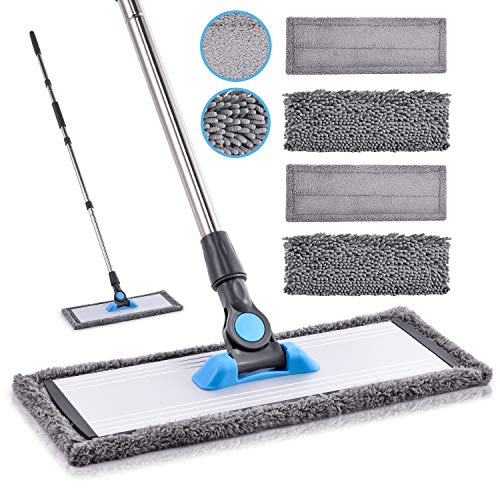
Microfiber is the better daily tool because it traps dirt, hair, and allergens while reducing scratch risk from grit. Bona says a microfiber mop with a microfiber dusting mop pad is ideal for daily dusting, and it also says microfiber mops use about 20 times less liquid. That lower liquid load matters on wood.
Common mistakes to avoid
Do not use a soaking wet mop. Do not let cleaning solution pool around baseboards or seams. Do not use a brush roll that is still spinning on a hardwood setting. And do not assume that a floor that feels smooth is free of grit.
A common first-timer mistake is to mop the whole floor after a short sweep and stop there. Fine dust and pet hair often stay behind in corners and along cabinet toe-kicks, where they keep scratching every time someone walks through.
What should you do every day and every week?
Daily care should remove loose grit, and weekly care should remove the film that dusting leaves behind. For most homes, that means a dust mop or microfiber mop most days, a vacuum with the hard-floor setting once or more each week, and a damp microfiber mop when the surface starts to feel tacky or dull.
Dust mop or microfiber mop
Use a dust mop or microfiber mop for the daily pass. It is the safest way to lift grit, hair, and light dust before it gets pressed into the finish. Focus on entryways, kitchens, and pet paths first, because those spots collect debris fastest.
Vacuum with the hard-floor setting
Vacuuming is useful for fine particles that a dry mop can miss. Turn off the brush roll or beater bar, or choose a hard-floor setting that keeps rotating bristles from contacting the wood. A flat attachment helps around edges and under cabinets without scratching.
Damp mop without leaving standing water
For routine wet cleaning, use a damp microfiber mop, not a cotton mop. Homes & Gardens recommends a damp, not drenched, mop for hardwood floors, and that is the right standard here too. Use a pH-neutral hardwood floor cleaner for routine cleaning, then let the floor dry quickly.
Say your kitchen has a polyurethane finish and three people cross it before breakfast. A daily dry pass plus a weekly damp mop usually keeps the surface from looking cloudy, while still limiting moisture near seams and appliance edges.
How often should you deep clean hardwood floors?
Deep cleaning is for buildup that routine dusting and damp mopping cannot remove. For heavier traffic, Bona recommends deep cleaning about every couple of weeks. AVS Floor Care recommends deep cleaning hardwood floors every 6 to 12 months, which fits lower-traffic homes or floors that stay cleaner between regular sessions.
When routine cleaning is not enough
Deep cleaning is the next step when the floor feels slick, hazy, or sticky after mopping, or when dust keeps returning quickly in the same lanes. It also helps when the floor shows tracked film near entries, kitchen work zones, or pet feeding areas.
Heavier traffic and colder months
More grit means more deep cleaning. Winter sand and road salt can push some homes toward the 2-3 week cadence for problem zones, especially at doors and mudroom transitions. In milder seasons, the same home may only need occasional deep cleaning in those zones.
What deep cleaning should and should not mean
Deep cleaning should still use wood-safe methods. It does not mean soaking the floor, scrubbing with harsh pads, or flooding seams with water. If a cleaner leaves residue or haze, the floor may need a gentler product and a cleaner microfiber pad rather than more liquid.
How often should you clean hardwood floors with Bona?
Bona’s published guidance points to daily dusting and sweeping, weekly mopping, deep cleaning every 2-3 weeks, and polishing on a traffic-based schedule. That gives you a workable baseline if you are using Bona products or following a Bona-style care routine for a finished hardwood floor.
What Bona says about cleaning frequency
Bona recommends hardwood floor dusting and sweeping on a daily schedule and hardwood floor mopping on a weekly schedule. It also says a microfiber mop with a microfiber dusting mop pad is ideal for daily dusting. Those recommendations line up well with homes that want a simple routine.
What Bona says about polish timing
Bona says polishing every 2-6 months for high traffic and every 6-12 months for low traffic. Treat polish as optional maintenance, not a required weekly step. It is meant to refresh sealant and micro-scratches on floors and finishes that accept that product.
How to fit those ranges into your own schedule
If your home has pets, kids, or a busy entry, start with the shorter end of the ranges. If the floor is low traffic and the finish still looks even, the longer end may be enough. Finish compatibility still matters, so older shellac, lacquer, varnish, or waxed floors may need a different product or no polish at all.
What should you avoid on hardwood floors?
Avoid steam mops, excess moisture, vinegar, harsh chemicals, and soaking wet mops. Also avoid cleaning so often or with so much product that the finish starts to look hazy, sticky, or worn. Those are signs the routine has crossed from maintenance into damage.
Steam mops and excess moisture
Architectural Digest cites experts who advise against steam on hardwood floors, and that caution makes sense. Steam can drive vapor into gaps and can damage wood floors. Standing water and heavy liquid use create a similar risk, especially along seams and at board edges.
Vinegar, harsh chemicals, and soaking wet mops
Vinegar and harsh cleaners can dull some finishes or leave a film that attracts more dust. A pH-neutral hardwood floor cleaner is the safer routine option. Pair it with a microfiber mop so you control liquid use and avoid dragging dirty water around the room.
Cleaning too often or using too much product
Over-cleaning can be as much of a problem as under-cleaning. If the finish looks dull sooner than expected, or if the floor feels tacky after mopping, the routine may be too aggressive. Cut back the liquid, switch to microfiber, and check whether the finish needs a compatible maintenance product instead of more washing.
Frequently asked questions
How often should you clean wood floors?
Wood floors should be dusted often enough that grit never builds up, usually daily in busy homes and several times a week in quieter ones. Wet cleaning should stay lighter than dry cleaning, with a damp microfiber mop used only as needed and never with standing water.
How often should you steam clean hardwood floors?
You should not steam clean hardwood floors. Experts cited by Architectural Digest advise against steam on wood because vapor can enter gaps and damage the floor. If the floor needs more than dry cleaning, use a damp microfiber mop with a hardwood-safe cleaner instead.
How often should you wash your wood floors?
Most wood floors need washing with a damp mop weekly or biweekly, depending on traffic and finish. Busy kitchens, entryways, and homes with pets may need more frequent damp cleaning. Use a pH-neutral hardwood cleaner and keep the mop damp, not wet.
How often should you clean engineered hardwood floors?
Engineered hardwood floors usually follow the same basic dusting and damp-mopping schedule as other sealed hardwood floors, but the finish still controls product choice. Start with daily dry cleaning in busy homes, weekly vacuuming, and weekly or biweekly damp mopping if the manufacturer allows it.
Sponsored / affiliate links. As an Amazon Associate I earn from qualifying purchases. I may earn additional commission from eligible campaigns.