Best Range Hood Venting for Older Homes: Research Shows
For older homes with hard exterior access, the best range hood venting is usually the shortest straight duct to an exterior wall or roof, using rigid metal duct and a proper exterior termination; if that route is not practical, a ductless hood is the fallback. Bad vent routing raises grease buildup, noise, condensation, and moisture damage. This guide compares wall, roof, soffit, and floor options, plus the decision rules that fit older-house framing and trim.
Quick comparison
| Product | Badge | Best for | Price | ||
|---|---|---|---|---|---|
 |
SNDOAS 30 inch Range Hood Ducted/Ductless ConvertibleSNDOAS | Our pick | 30 inch · ducted/ductless · under cabinet | $74.09
Price as of 23 Oct 2026
|
View |
 |
Broan-NuTone 41F Replacement Charcoal Filter for DuctlessBroan-NuTone | Pair with it | Charcoal filter · ductless · replacement | View | |
 |
CT Copper Tailor 700 CFM Inline Blower Unit for RangeCT Copper Tailor | Upgrade pick | 700 CFM · inline blower · 6-inch duct | $259.00
Price as of 23 Oct 2026
|
View |
 |
6 Inch Roof Vent Cap – Heavy Duty Steel Removable RoofPOOWEE | Also great | 6 inch · roof vent cap · steel | $30.99
Price as of 23 Oct 2026
|
View |
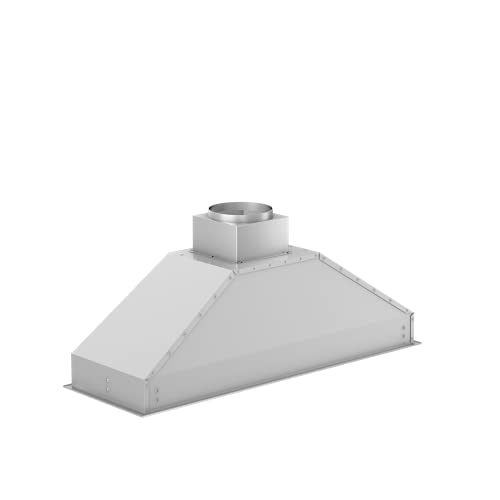 |
ZLINE 46" Remote Blower Ducted Range Hood Insert inZLINE Kitchen and Bath | Also great | 46 inch · remote blower · ducted insert | $1,189.99
Price as of 23 Oct 2026
|
View |
Older homes usually fail on access, not theory. The best route is the one that clears framing, limits holes, and still lets you seal the termination correctly in cold weather.
Use the table below as a structure-first filter, then verify local code and the hood manufacturer’s instructions before you cut.
How we chose
We compared routes by four factors that matter in retrofit work: framing layout, finished surfaces, exterior termination access, and the amount of demolition needed to reach it. A route that looks short on paper can become destructive once plaster, masonry, or a crowded joist bay enters the picture.
We also weighed duct length, elbow count, blower support, and backdraft control. Then we looked at leak risk, condensation, winter drafts, and whether service access would still exist after the job is done.
Roof vent cap: best for direct roof exits
This roof cap fits older homes where a vertical route is the cleanest way out and the wall path is blocked by joists, cabinets, or masonry. Based on the manufacturer details, the back-draft damper is the key feature here because it helps limit reverse airflow and outside air entry.
It is a practical match for a roof run that must stay code-compliant and weather-resistant. The drawback is obvious: roof penetrations demand careful flashing, and old roofing can make leak control harder than a wall termination.
Inline blower: best for constrained runs
This is aimed at longer or indirect retrofit runs where hood-to-exit routing is cramped. Based on the published specs, the 6-inch round duct format gives you a straightforward path for a system that needs help moving air through a difficult route.
The tradeoff is service planning. An inline blower can reduce kitchen noise, but it needs access space and a layout that still allows maintenance without tearing into finished ceilings or a crowded atticless chase.
Ductless hood: best when exterior access is impractical
This is the fallback when no physical duct path exists or when cutting into the house would do more damage than the cooking setup justifies. It uses filters and recirculates air, so it can help with grease capture while avoiding new exterior openings.
That convenience has limits. A ductless hood does not remove heat and humidity outdoors, and its charcoal or carbon filters need routine replacement if you cook often.
Remote blower: best for noisy or difficult duct paths
This is for homeowners who want the blower moved away from the cooktop and can support a planned duct path. Based on the product details, the remote blower setup is meant to keep noise away from the cooking area while still exhausting outdoors.
The drawback is cost and complexity. A remote blower can help on long runs, but it adds planning, installation steps, and service access concerns that do not bother a short wall vent.
Charcoal filter: best for ductless upkeep
This is not a vent route. It is the maintenance piece that keeps a ductless system functional when exterior venting is not realistic. It is designed for non-duct installations and works with select Broan-NuTone hoods that recirculate air.
The drawback is ongoing replacement. If the filter is neglected, odor control falls off quickly, and the hood becomes less useful even though the fan still runs.
Older home vent route matrix
This matrix gives you the route choice that usually causes the least damage for the house condition in front of you. It is not a code substitute; it is a triage tool for older framing, finish work, and access limits.
| Home condition | Feasible route | Disruption level | Leak risk | Winter performance | When to choose ductless instead |
|---|---|---|---|---|---|
| Plaster wall over framed cavity | Exterior wall termination if a clear cavity path exists | Medium to high | Low if sealed correctly; higher if patching is rough | Good with insulation and a backdraft damper | Choose ductless if cutting plaster would trigger major finish repair |
| Balloon framing with open stud bays | Wall route, then roof or basement chase only if continuous and sealed | Medium | Moderate if the chase crosses unconditioned space | Fair unless the run is insulated | Choose ductless if the chase cannot stay fully ducted |
| Masonry wall with no easy core path | Roof route or nearby framed wall route | High | Moderate to high at any new penetration | Good if the termination is well sealed | Choose ductless if coring masonry would be too destructive |
| Atticless layout with crowded joist bays | Floor to basement or crawlspace, or short wall run | Medium to high | Moderate because bends and long runs add joints | Fair to poor if the duct passes through cold space | Choose ductless if the route needs too many elbows |
| Finished ceiling with limited chase access | Short roof route or adjacent wall route | High | Moderate at roof penetration points | Good if insulated and properly flashed | Choose ductless if opening the ceiling would be major demolition |
| Home with hidden chimney or uncertain framing | Only after opening a small inspection area and verifying the path | High | Moderate | Depends on route | Choose ductless if the chimney chase or framing blocks a safe duct path |
Failure checklist for older houses
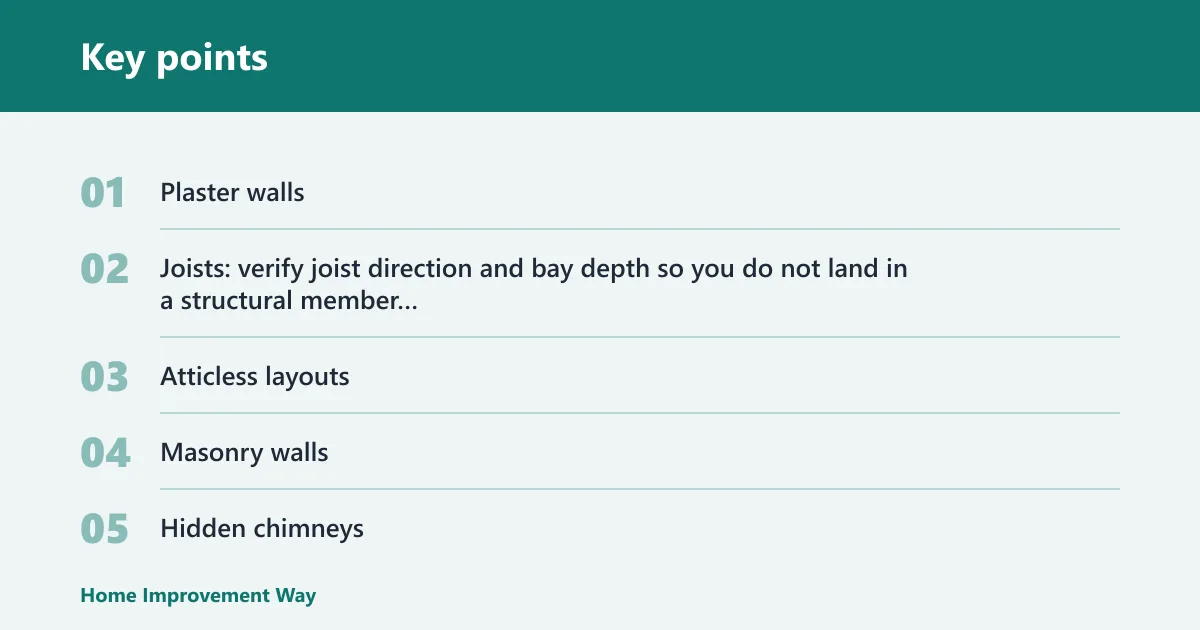
- Plaster walls: confirm where the studs and blocking run before cutting; brittle plaster can spread damage beyond the opening.
- Joists: verify joist direction and bay depth so you do not land in a structural member or create a crushed duct path.
- Atticless layouts: check whether a full duct path still exists through cabinets, soffits, a basement, or a crawlspace before you buy parts.
- Masonry walls: inspect for hidden flue liners, old patches, and moisture paths that make a wall cap harder to seal.
- Hidden chimneys: confirm that an abandoned chimney chase is truly abandoned and not tied to another venting system.
- Old electrical hazards: look for knob-and-tube wiring, junction boxes, or overloaded circuits before opening finished walls or ceilings.
- Termination clearance: verify local code and manufacturer instructions for exact opening and separation rules; do not use a one-size-fits-all number.
Can you vent a range hood through the roof in an older house?
Yes, if the roof path is the least destructive code-compliant route and the roof assembly can be flashed and sealed properly. Roof venting is a common solution when no exterior wall works, but the roof construction, weather exposure, and inspection requirements should be checked first.
Roof venting becomes more attractive when joist direction blocks a wall exit or when the hood sits far from an exterior wall. It becomes a poor choice when the roof is aged, the attic space is hard to service, or freeze-thaw exposure makes leak control harder.
What to verify before you cut
Confirm the roof can accept a proper termination cap, not just a hole. That means a roof vent cap with a backdraft damper, compatible duct size, and flashing that fits the roof slope and roofing material.
Also check whether permits or inspection are required in your jurisdiction. Many jurisdictions require both for roof vent installs.
Why flashing matters so much
Roof termination flashing protects the penetration from water entry, which is critical in older homes with worn shingles, brittle underlayment, or repeated freeze-thaw cycles. The seal has to survive movement and seasonal temperature swings.
Suppose a 36-inch hood in a 1920s house can reach the roof through a direct chase, but the roof has patchwork shingles and signs of past leaks. In that case, the roof route may still be feasible, yet the repair burden could outweigh the benefit of exterior venting.
Can you use a soffit route?
Sometimes. A soffit vent route can work when the framing supports it and the termination clearances are correct, but it is not suitable in every layout. Poorly done soffit venting can send moisture back toward the house or create recirculation problems near the intake zone.
That risk is higher in older homes where the soffit is shallow, the attic is cramped, or the hood discharge would travel too close to the intake opening. The route should be treated as a structural option, not a default shortcut.
When a soffit route fits
It fits best when you have a framed soffit with enough depth for rigid metal duct, a short run, and a clean path to a proper exterior termination. It can be useful when wall access is blocked and roof work would be more destructive.
It fits poorly when the soffit is decorative only, when the run would require multiple bends, or when the termination cannot be placed with the needed clearances for local code.
Which one should you buy?
Choose rigid metal duct and an exterior wall cap when the wall route is short, clear, and less destructive than opening the roof or ceiling. That is the cleanest retrofit path in many older homes, and it keeps maintenance straightforward.
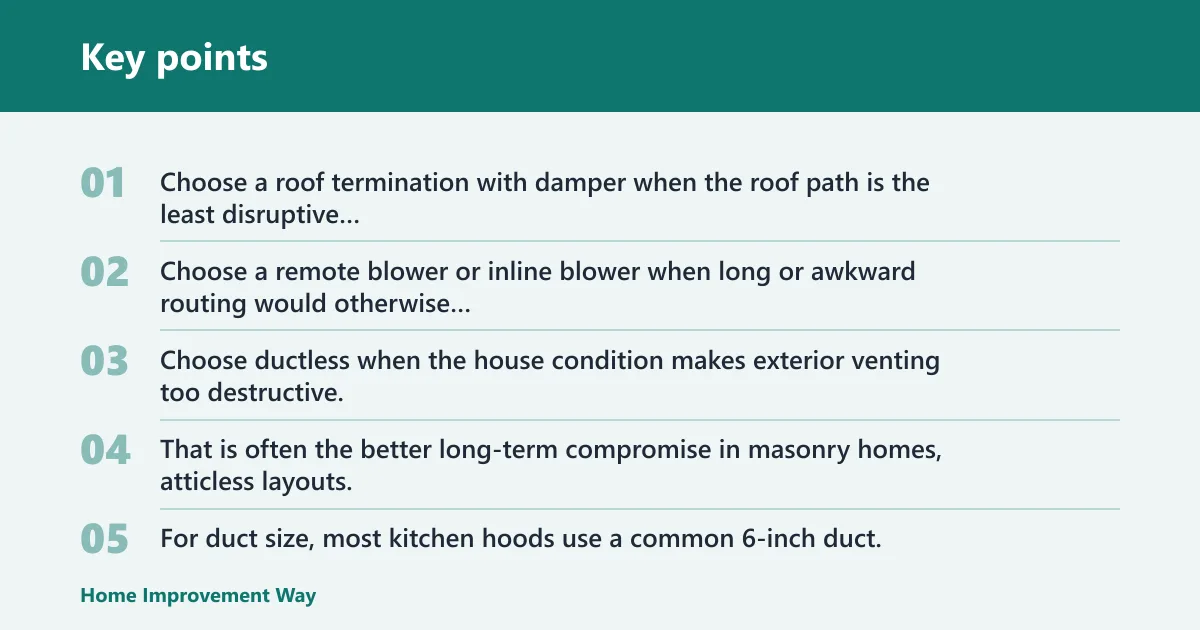
Choose a roof termination with damper when the roof path is the least disruptive code-compliant route and the roof assembly can be flashed well. Choose a remote blower or inline blower when long or awkward routing would otherwise crush airflow or add too much noise near the cooktop.
Choose ductless when the house condition makes exterior venting too destructive, too leaky, or too risky to service. That is often the better long-term compromise in masonry homes, atticless layouts, or finished spaces where cutting major assemblies would cost more than the hood itself.
For duct size, most kitchen hoods use a common 6-inch duct, but the correct size depends on the hood and blower. A short, straight run performs better than a long route with many elbows. Every elbow adds resistance, so keep turns to the minimum the layout allows.
Flexible duct is a poor fit for most permanent kitchen exhaust runs. Rigid metal duct with sealed joints is the better choice because it reduces turbulence and buildup. Insulate duct runs in unconditioned space so the system is less likely to sweat in cold weather.
Say your kitchen is on the first floor of a 1940s house, with plaster walls and a basement below. A short drop to the basement and out through a nearby wall may be less destructive than cutting the finished ceiling for a roof run.
Frequently asked questions
What is the best way to vent a range hood in an older home with no easy exterior access?
The best route is usually the shortest straight duct to an exterior wall or roof, using rigid metal duct and a proper termination. If neither route is realistic without major demolition, ductless becomes the practical fallback. The house framing, finish condition, and leak risk should decide the route, not preference alone.
Can a range hood be vented through a soffit in an older home?
Sometimes, if the soffit is framed for it and the termination can meet local clearance rules. It is a poor fit when the soffit is shallow, the run is long, or the discharge could lead to moisture or recirculation problems. Verify the route before opening finished work.
Is a ductless range hood the best option if I can’t reach an outside wall?
It is often the best fallback, not the best exhaust system. Ductless hoods recirculate filtered air and avoid new exterior cuts, but they do not remove heat and humidity outdoors. They work best when exterior venting would be too destructive or impossible to route safely.
How long can a range hood duct run in an older home?
The safe answer is that longer runs reduce performance, especially when elbows are added. Most manufacturers specify maximum equivalent run guidance for their own hoods and blowers, so you should check that sheet before deciding on a route. In older homes, short and straight usually wins.
Do I need a remote or inline blower for a long range hood vent run?
Often, yes, if the run is long, indirect, or crowded by framing. A remote blower moves noise away from the cooktop, while an inline blower fits within the duct path and can help where the route is constrained. Both need planning for access, sound, and service space.
What should I check before cutting into plaster, joists, or old framing for venting?
Check joist direction, hidden chimneys, old electrical wiring, and the exact path to the termination point. Confirm that the route stays fully ducted, that the termination can be sealed, and that the location meets local code and manufacturer instructions. In older homes, the hidden hazard is usually in the opening, not the hood.
Sponsored / affiliate links. As an Amazon Associate I earn from qualifying purchases. I may earn additional commission from eligible campaigns.