Kitchen Pantry Cabinet vs Base Cabinet: What to Use Where?
Use base cabinets for daily prep zones, sink, cooktop, trash, and heavy cookware, and pantry cabinets for tall, dry, or bulk storage. Put the wrong cabinet type in the wrong zone and you waste reach, floor space, and time. This guide maps common kitchen items and layout zones to the cabinet type that fits best.
Pantry cabinet vs base cabinet
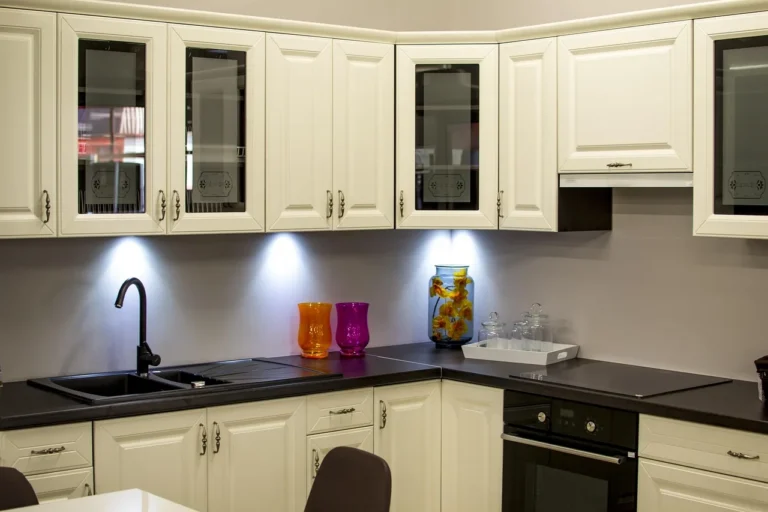
The trade-off is simple: a base cabinet keeps working items low, close to the countertop, while a pantry cabinet moves storage upward and out of the active work zone. If you need frequent reach, a base cabinet usually wins. If you need vertical storage for dry goods or overflow stock, a pantry cabinet fits better.
| Decision factor | pantry cabinet | base cabinet | Winner |
|---|---|---|---|
| Best use | Dry goods, bulk items, tall packaged items | Daily prep storage, cookware, sink support | tie |
| Reach and access | Items stack vertically; lower shelves can require more bending and upper shelves more reaching | Items stay near hip height, especially with drawers | base cabinet |
| Workflow near counters | Usually off the main work surface | Supports countertops and keeps tools at point of use | base cabinet |
| Bulk food storage | Better for multiple packages, back stock, and tall containers | Possible, but limited by height and depth | pantry cabinet |
| Small-kitchen fit | Can feel visually heavier and tighter in narrow aisles | Usually easier to integrate without crowding traffic paths | base cabinet |
Best use
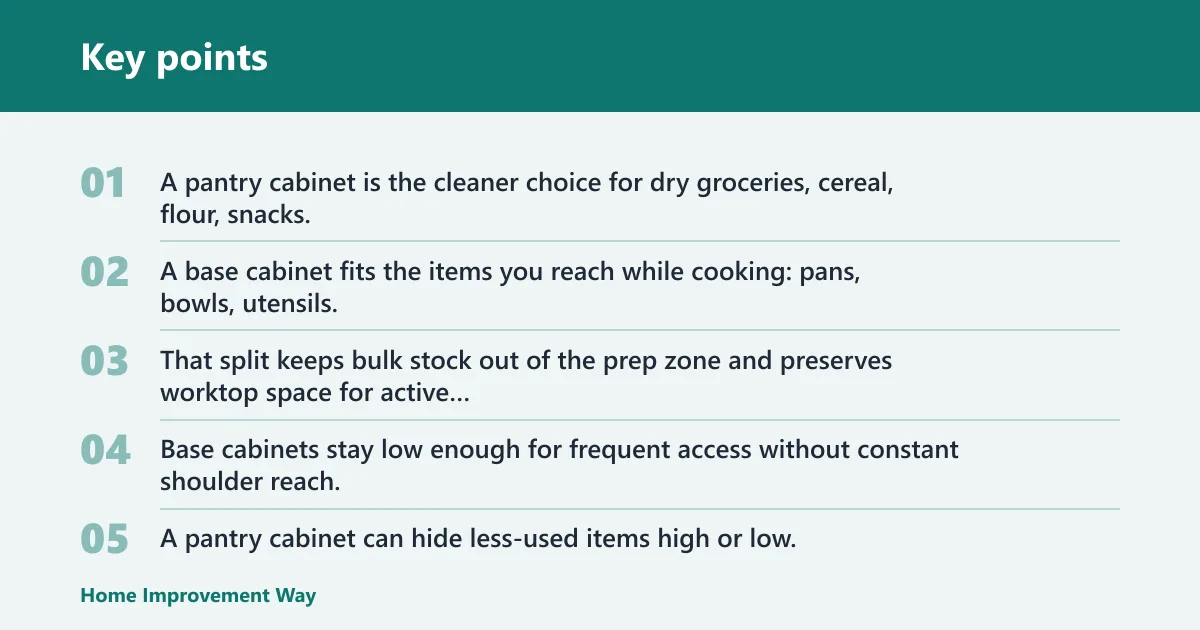
A pantry cabinet is the cleaner choice for dry groceries, cereal, flour, snacks, and backup paper goods. A base cabinet fits the items you reach while cooking: pans, bowls, utensils, trash pull-outs, and sink storage. That split keeps bulk stock out of the prep zone and preserves worktop space for active tasks.
Reach and access
Base cabinets stay low enough for frequent access without constant shoulder reach. A pantry cabinet can hide less-used items high or low, though the upper and lower zones are often slower to access unless a pull-out larder mechanism brings contents toward you. That mechanism matters when a tall cabinet would otherwise turn into a deep, forgotten shelf stack.
Workflow near counters
Base cabinets belong under counters because they support the countertop and keep the work triangle compact. If you keep knives, mixing bowls, and prep tools in a base cabinet near the cutting area, you cut down on cross-kitchen trips. A pantry cabinet is better slightly outside that active zone, where it will not interrupt prep flow.
Bulk food storage
A pantry cabinet often handles more volume because it uses height from floor to ceiling. That makes it the stronger choice for back stock, oversized packages, and grouped dry goods. A base cabinet can store some food items, but it works better when those items need to live beside a work surface.
Small-kitchen fit
In a narrow kitchen, a tall pantry cabinet can make the room feel tighter if it sits beside a door swing, refrigerator door, or main traffic path. Base cabinets are usually easier to place along a run without closing off movement. In a compact layout, a tall pantry works best only when it sits on an end wall or in a spot that does not pinch the aisle.
How size and reach change the choice
Base cabinets and pantry cabinets are not interchangeable dimensions with different labels. Their height, depth, and position in the room change what they are good for. For layout planning, think in terms of reach, floor space, and whether the cabinet sits in an active work zone or a storage zone.
Base cabinet dimensions to plan around
A base cabinet is typically 34.5 inches high before countertop thickness. A base cabinet depth can range from 12 to 24 inches, and a standard base cabinet is typically 24 inches deep for best storage. That size works well under counters, on islands, and beneath sinks.
Pantry cabinet dimensions to plan around
A tall pantry cabinet ranges from 84 to 96 inches high and is typically 24 inches deep. Many pantry cabinets extend from floor to ceiling. That height is useful when you want vertical storage without giving up an entire floor area to extra footprint.
Reach height and daily access
Daily-use items belong between shoulder and hip height. That is where base cabinets, especially drawer base cabinets, tend to work best. Pantry cabinets move storage up and down, so they fit items you do not need every few minutes.
Picture a galley kitchen with a fridge at one end. A tall pantry beside the fridge can hold cereal, pasta, and backup cans, while the opposite prep run can use base cabinets for pans, spatulas, and mixing bowls. That split keeps the cooking side open and the storage side organized.
What should go in each cabinet?
Use the cabinet that matches how often you reach for the item and how awkward it is to handle. Put daily cooking items in base cabinets, especially where you prep and cook. Put dry goods, bulk stock, and seldom-used items in pantry cabinets, especially if they are tall, boxed, or grouped by category.
Daily cooking items for base cabinets
Base cabinets are often a good fit for pots, pans, sheet trays, mixing bowls, cutting boards, colanders, serving platters, dish soap, trash bins, and sink accessories. Drawer base cabinets are especially useful because they reduce bending and let you see the contents at a glance. That makes them better than shelf-only bases for heavy cookware.
Dry goods and bulk items for pantry cabinets
Pantry cabinets are often better for flour, sugar, rice, pasta, cereal, chips, canned goods, extra oils, paper towels, and bulk packaging. If your household buys in larger quantities, the vertical format keeps like items together without crowding countertop storage. It also leaves the base cabinets free for tools and cookware.
Heavy items, awkward items, and seldom-used items
Heavy but frequently used items usually belong in a base cabinet, not a high shelf. Seldom-used items can move into the upper part of a pantry cabinet. A pull-out larder mechanism helps here because it brings contents toward the user instead of forcing a deep reach into the back.
Cabinet decision matrix
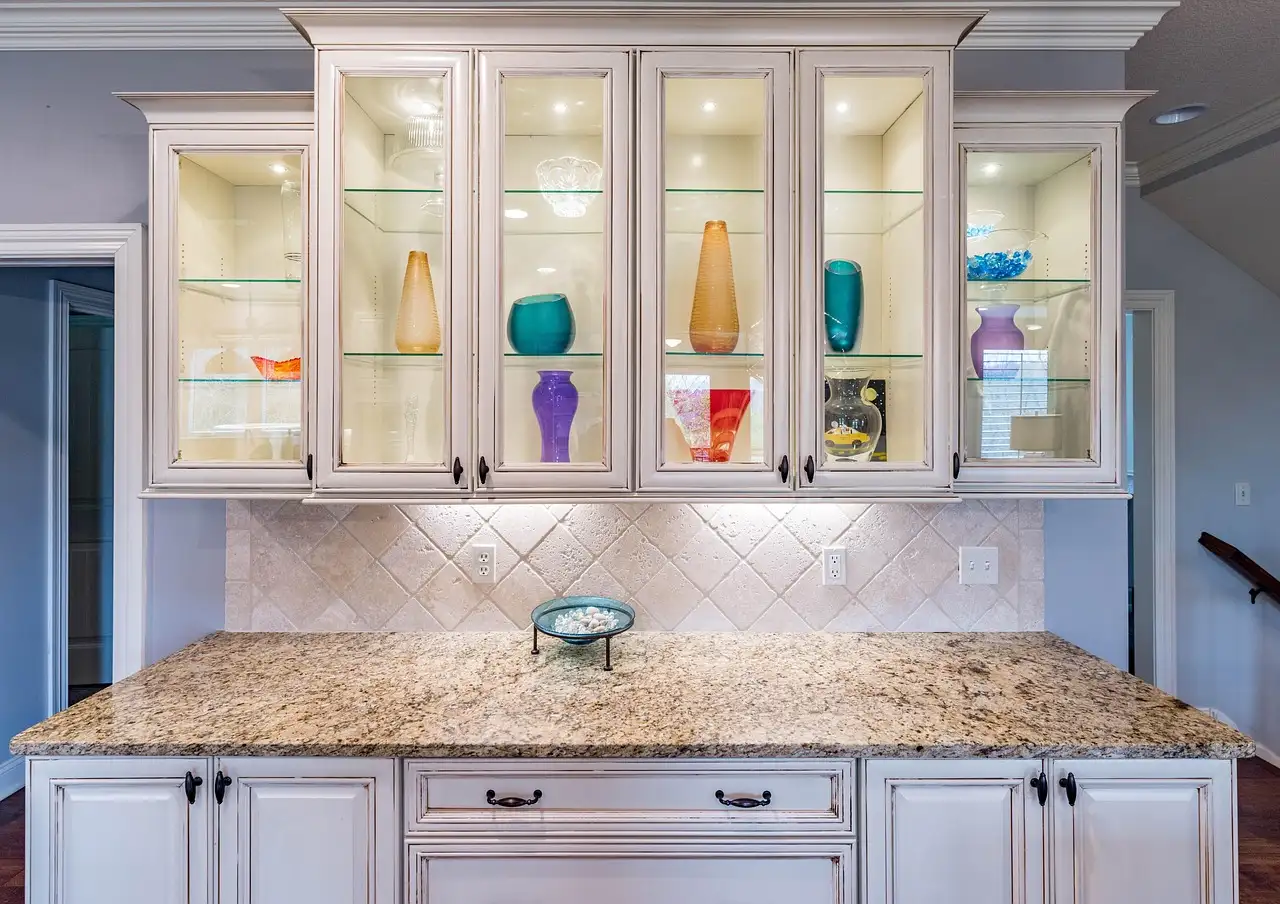
Use this matrix to match a common kitchen item to the cabinet type that fits its reach height, weight, and use pattern. The reason column matters as much as the cabinet choice. It tells you whether the item belongs near a counter, near the fridge, or inside tall vertical storage.
| Item type | Recommended cabinet type | Reason |
|---|---|---|
| Pots and pans | base cabinet | Heavy, frequent access, best near cooktop |
| Mixing bowls | base cabinet | Often used during prep and better at hip height |
| Baking sheets | base cabinet | Flat items fit well in drawers or dividers |
| Cutting boards | base cabinet | Used at the counter and easy to reach low |
| Utensils | base cabinet | Daily prep tools belong in active work zones |
| Trash bins | base cabinet | Best under counter near sink or prep area |
| Dish soap and cleaning caddies | base cabinet | Used at the sink and should stay low |
| Spices for cooking | base cabinet | Kept close to prep or cooktop for quick reach |
| Flour | pantry cabinet | Dry staple, often stored with other baking goods |
| Sugar | pantry cabinet | Dry staple that groups well with baking supplies |
| Rice | pantry cabinet | Bulk dry item that benefits from vertical storage |
| Pasta | pantry cabinet | Easy to stack with other dry goods |
| Cereal | pantry cabinet | Tall boxes fit well in vertical storage |
| Canned goods | pantry cabinet | Best grouped by type and rotated by date |
| Paper towels | pantry cabinet | Bulky backup item that does not need counter access |
| Snack bins | pantry cabinet | Useful for household bulk snacks and grab items |
| Small appliances | pantry cabinet | Stored off the counter when not used daily |
| Bread and packaged breakfast items | pantry cabinet | Fits the dry-goods zone near the fridge |
| Extra dishware | pantry cabinet | Good for overflow storage if daily dishes stay elsewhere |
| Serving platters | base cabinet | Large flat pieces are easier to reach low |
| Bottle oils and vinegars | base cabinet | Often used during cooking and should stay near prep |
A common first-timer mistake is placing cereal, pasta, and snacks in a base cabinet under the counter because the space is free. That usually pushes cookware into a tall pantry later, which slows cooking. Put the active items where your hands already work, and put the stock where vertical space does the heavy lifting.
Where should each cabinet go in a kitchen layout?
Cabinet placement should follow workflow, not symmetry. Put base cabinets where cooking, washing, and chopping happen. Put pantry cabinets where they support storage without blocking the aisle, appliance doors, or work zones.
Prep run and cooking zone
The prep run should favor base cabinets, especially drawer base cabinets. Keep knives, boards, bowls, pans, and utensils under the section of counter where you actually prep food. That shortens reach and keeps the worktop clear.
Sink run
The sink run almost always suits base cabinets because the cabinet has to support the sink and plumbing. Under-sink storage is best for trash, cleaning supplies, sponges, and spare dish soap. A pantry cabinet near the sink is usually wasteful unless it is offset from the work area and used for back stock.
Fridge zone
Tall pantry cabinets are often placed near the fridge. That pairing works because groceries can move from the fridge into the pantry and back without crossing the whole kitchen. It is especially useful for breakfast foods, snacks, and dry staples.
End wall and corner placement
End walls are a strong spot for pantry cabinets because the tall mass has room to stand without crowding a work path. Corners usually favor base cabinets with corner solutions or drawers because a tall pantry in a corner can create a dead, awkward edge. If the corner is already hard to use, a pantry cabinet can make it worse.
When a pantry cabinet makes a small kitchen feel tighter
A pantry cabinet can be the wrong choice in a small kitchen when it sits beside a tight traffic path, a swinging appliance door, or a narrow aisle. The cabinet may still hold more, but the room can feel more closed in and harder to move through. In compact layouts, placement matters as much as capacity.
Traffic paths and door swing
If a pantry cabinet sits where people pass through often, it can slow movement and make the kitchen feel blocked. Door swing from the pantry itself matters too, especially if a fully loaded door needs clearance. Keep tall storage out of the most active path whenever possible.
Narrow aisles
Narrow aisles leave less room for a tall cabinet depth of 24 inches plus door clearance. In that setting, a base cabinet run is often easier to live with because it keeps the storage line lower and less visually heavy. A pantry cabinet can still work if it sits at the end of the run rather than in the middle.
Appliance clearance and visual bulk
Next to a refrigerator or wall oven, a pantry cabinet can crowd the appliance zone if the opening is already tight. It can also make the wall feel taller and denser. If the kitchen already has plenty of tall fronts, base cabinets may create a calmer layout.
Choose base cabinet if… / Choose pantry cabinet if…
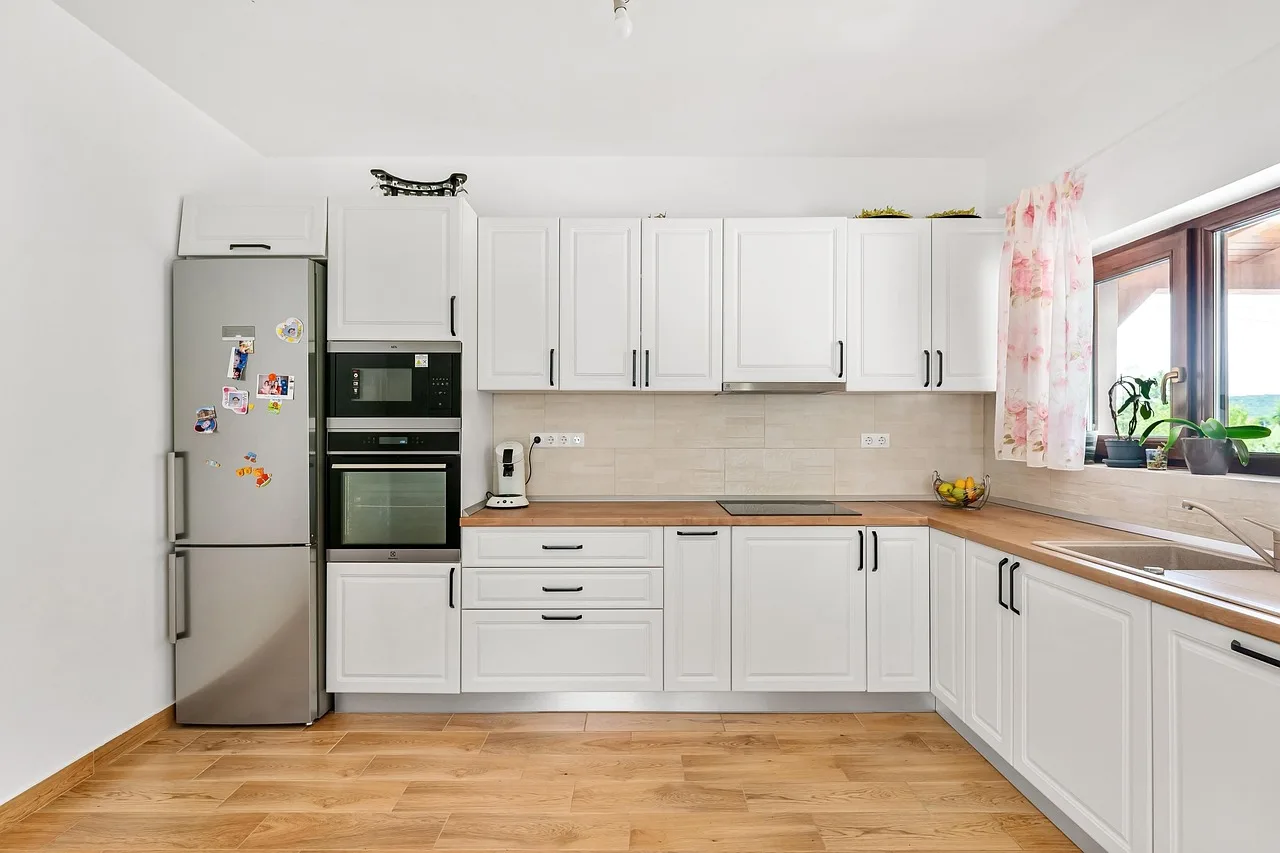
Choose the cabinet that fits the item, the reach, and the zone. For most cooking-heavy kitchens, base cabinets handle the active tasks while pantry cabinets handle the stock. A mixed layout often works best when both daily cookware and bulk food storage matter.
Choose base cabinet if…
- You need storage under the sink or under a countertop.
- You want pots, pans, bowls, and prep tools close to the cooktop.
- You want daily-use items at hip height, not up in a tall cabinet.
- You want better ergonomics from drawers instead of shelf-only storage.
Choose pantry cabinet if…
- You need room for dry goods, bulk packages, and overflow groceries.
- You have a fridge zone or end wall where a tall cabinet will not block traffic.
- You want to store lesser-used items above and below the main work zone.
- You plan to use pull-out larder hardware to reduce rummaging at the back.
Suppose your kitchen is 10 feet wide and the main aisle already feels tight. A tall pantry on the busiest wall can make the room feel smaller, while two drawer base cabinets keep prep tools close and leave the walking path open. In that case, the base cabinet wins for the active side, and a smaller pantry solution can move to a quieter wall.
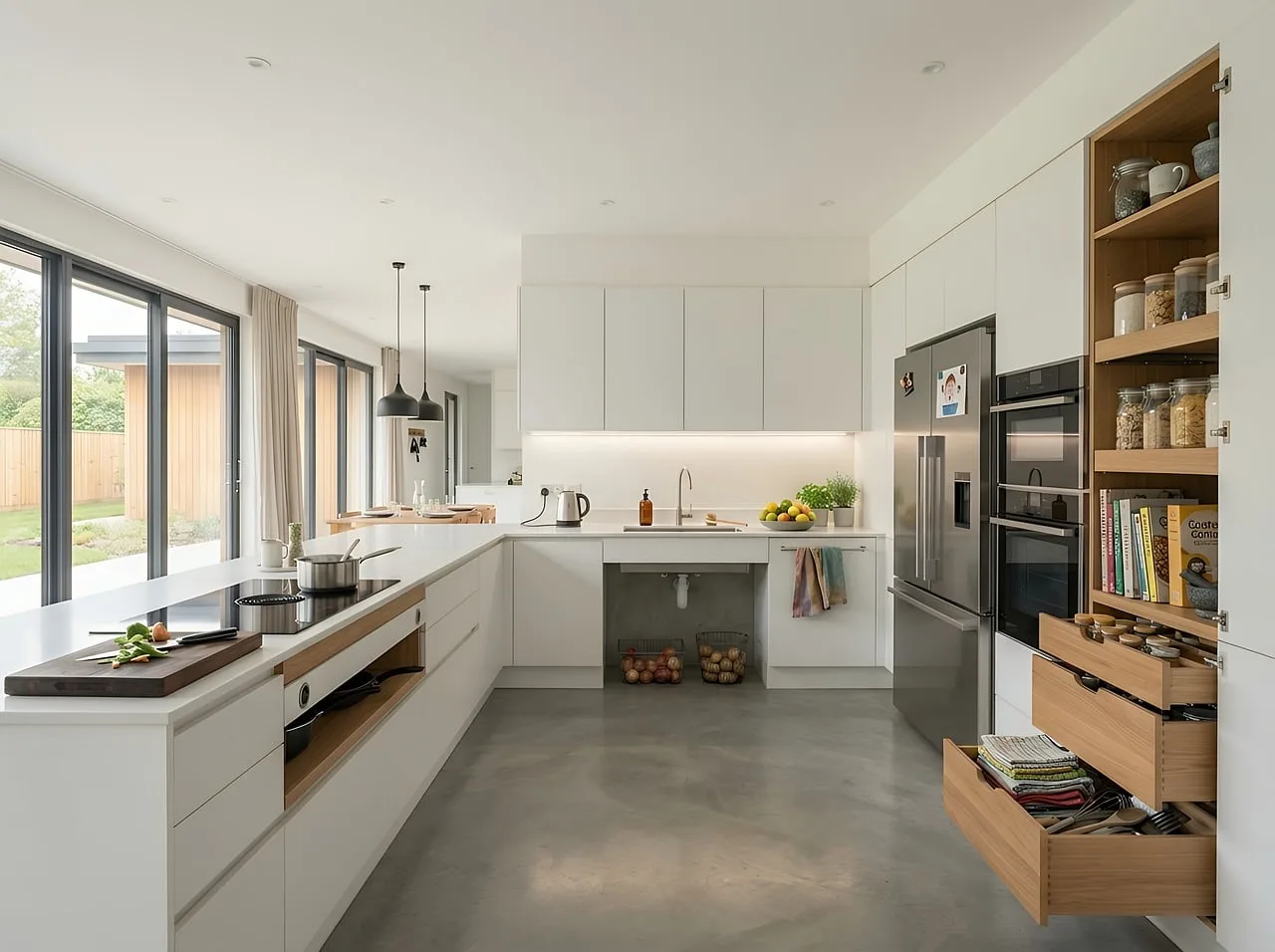
Can you combine pantry cabinets and base cabinets in one kitchen? Yes, and that is often the strongest layout. Use base cabinets for the sink run, prep run, and cooktop area, then place a pantry cabinet near the fridge or on an end wall for dry goods, back stock, and seldom-used items.
Frequently asked questions
Should I use a pantry cabinet or a base cabinet for a kitchen?
Use a base cabinet for the sink, cooktop, trash, and daily cooking tools. Use a pantry cabinet for dry goods, bulk storage, and items you do not need at arm’s length while cooking. If the kitchen is small, the layout and door clearance matter as much as the storage type.
What is the difference between a pantry cabinet and a base cabinet?
A base cabinet sits on the floor under a countertop and is typically 34.5 inches high before countertop thickness. A pantry cabinet is a tall full-height unit, usually 84 to 96 inches high, that uses vertical space for dry goods and overflow storage. One supports work; the other supports stock.
Where should a pantry cabinet go in a kitchen layout?
A pantry cabinet fits best near the fridge or on an end wall where it will not block a traffic path. It should stay out of the main prep run unless the kitchen is large enough to absorb the added bulk. Tall storage works best where door swing and aisle width are already comfortable.
Where should base cabinets go in a kitchen layout?
Base cabinets belong under countertops in the prep run, sink run, and cooking zone. They also work on islands and beneath sinks. Put your most-used items in the drawers or front sections so you can reach them without bending deep or crossing the kitchen.
Are pantry cabinets deeper than base cabinets?
Not always. A tall pantry cabinet is typically 24 inches deep in some systems, which is similar to a standard base cabinet depth of 24 inches for best storage. The bigger difference is height, not depth. That height changes reach, visual bulk, and how the cabinet affects the room.
Which cabinet type is better for pots, pans, and daily cooking items?
Base cabinets are better for pots, pans, and daily cooking items because they keep heavy pieces close to the worktop. Drawer base cabinets are especially useful since they reduce bending and make contents easier to see. A pantry cabinet can hold cookware, but it is usually a slower fit for active kitchen use.
Sponsored / affiliate links. As an Amazon Associate I earn from qualifying purchases. I may earn additional commission from eligible campaigns.