Best Kitchen Cabinets for Durability (2026): We Compared
The best kitchen cabinets for durability usually pair plywood boxes, dovetail or dado joinery, a moisture-resistant finish, and full-extension soft-close hardware; for busy or damp kitchens, choose plywood over particleboard. Cheap construction can swell, sag, peel, and loosen fast, turning a remodel into earlier repairs or replacement. This guide shows how to judge cabinet durability by box material, joinery, finish, hardware, and installation.
Quick comparison
| Product | Badge | Best for | Price | ||
|---|---|---|---|---|---|
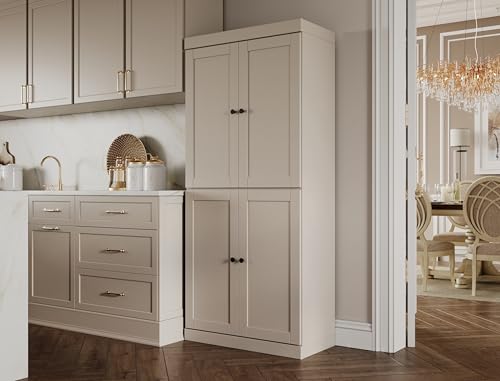 |
Palace Imports Solid Wood Kitchen Pantry Cabinet – 71.5"Palace Imports | Our pick | 71.5"H × 32"W · 100% solid Brazilian wood · Shaker style, beige | $647.99
Price as of 15 Oct 2026
|
View |
 |
Blum CLIP top BLUMOTION Soft-Close Hinges, 110 degree, SelfBlum | Pair with it | Blum CLIP top · 110° inset · 4-pack with mounting plates | $33.98
Price as of 15 Oct 2026
|
View |
 |
Ourshom 12 Inch Drawer Slides 1 Pairs (2pcs) Side MountOurshom | Pair with it | 12" side-mount · full-extension ball bearing · 100 lb capacity | $8.99
Price as of 15 Oct 2026
|
View |
Plywood is often the stronger all-around choice for cabinet boxes because it tends to balance moisture resistance, fastener holding, and edge durability better than particleboard or MDF. Solid wood still matters for doors and face frames, but the longest-lived cabinet depends on the whole system, not one material alone.
How we chose
We compared cabinet durability using four checks: box material, core construction, finish type, and hardware quality. We also weighed location risk near sinks, dishwashers, and trash pullouts, because those areas fail first when moisture or heavy use is present.
For buying decisions, we favored cabinet setups that use thicker panels, strong joinery, adjustable hinges, and hardware with clear load ratings. Warranty terms and installation quality were included because both can shorten or extend service life.
Plywood cabinet box durability scorecard
| Cabinet option | Box material score | Door and face-frame score | Finish score | Hardware score | Sink zone risk | Dishwasher risk | High-traffic drawer risk |
|---|---|---|---|---|---|---|---|
| Plywood box, solid wood doors, conversion varnish, quality hardware | 5 | 5 | 5 | 5 | Low | Low | Low |
| Plywood box, MDF painted doors, painted lacquer, soft-close hardware | 5 | 3 | 4 | 4 | Low | Low | Medium |
| MDF panels, painted finish, standard hardware | 3 | 3 | 4 | 3 | Medium | Medium | Medium |
| Particleboard box, laminate wrap, budget hardware | 1 | 2 | 2 | 2 | High | High | High |
This scorecard reflects a practical pattern: plywood cabinets usually resist edge damage and moisture better than fiberboard, while solid wood helps most on visible parts that take dents. Hardware and finish can move a cabinet up or down a full tier in real use.
Which cabinet material lasts longest?
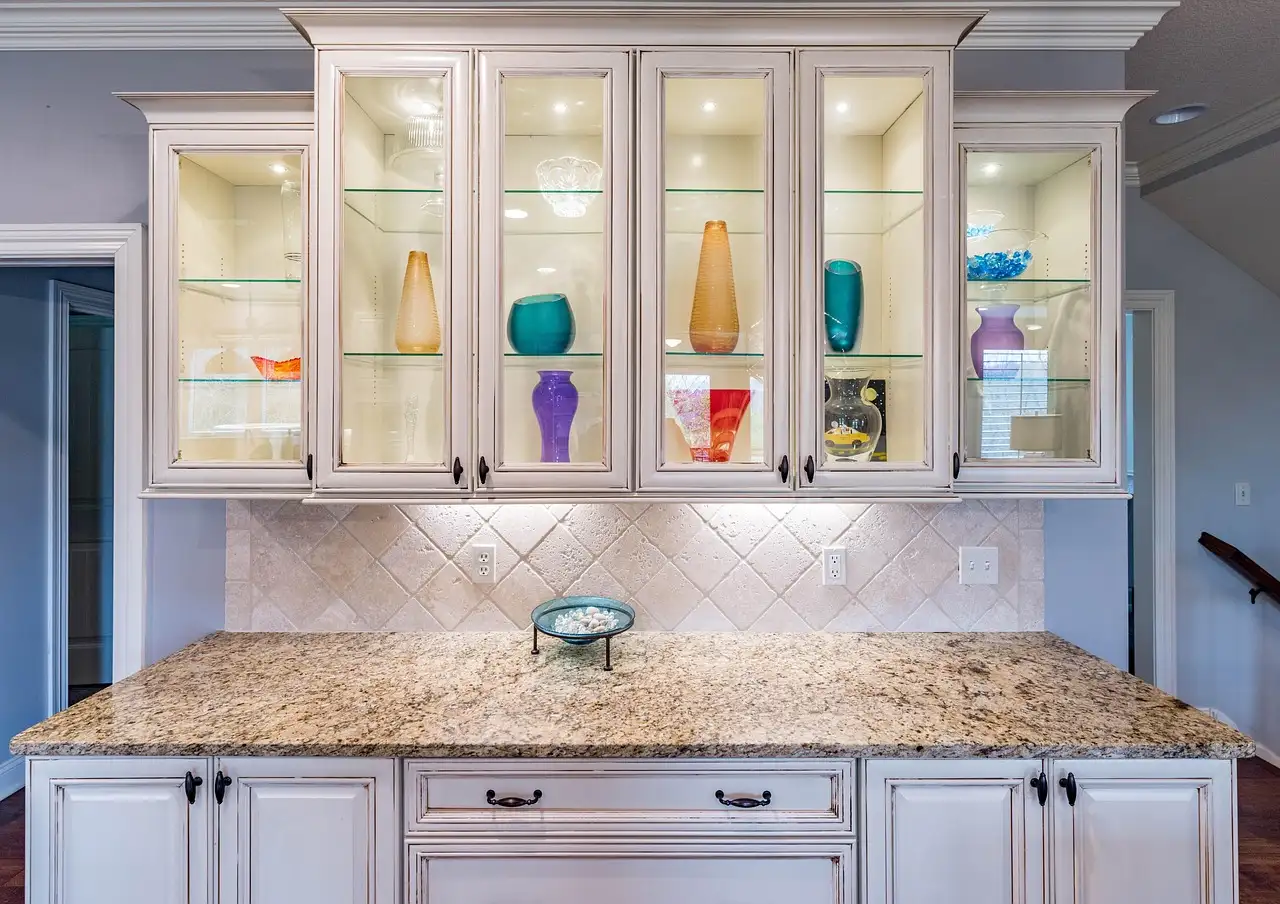
Plywood usually lasts longest for cabinet boxes because its multi-ply construction holds screws well, resists edge damage, and handles moisture better than particleboard or MDF. Solid wood can last longer on doors and face frames, but it is not always the best choice for large cabinet boxes that need stability.
Why plywood usually leads for cabinet boxes
Plywood is built from thin layers with alternating grain, which helps reduce splitting and improves strength at edges and fasteners. That matters at shelf pins, hinge screws, and toe-kick areas. In mid-range to premium cabinets, plywood boxes are common because they balance cost and durability better than solid wood panels.
Compared with fiberboard, plywood is less likely to swell at exposed edges after minor moisture exposure. It is not waterproof. It still needs sealed cut edges and careful installation near sinks and dishwashers.
Where solid wood belongs and where it does not
Solid wood belongs in doors and face frames, especially in maple, oak, birch, or cherry. Those species offer good dent resistance, and a quality finish helps them age well. The tradeoff is movement: wood expands and contracts with humidity, so large solid-wood panels can shift if the design does not allow for it.
Solid wood is less attractive as a full cabinet box material in kitchens that see humidity swings, because movement can affect alignment and joints. It is strong, but strength alone does not solve seasonal movement or water exposure.
When MDF is a smart painted-surface choice
MDF works well for painted doors and panels because it has a smooth surface that takes paint cleanly and resists grain telegraphing. It can look very good in a painted kitchen, and it often costs less than solid wood. Its weak points are sag, edge damage, and moisture exposure.
MDF is best where water contact is limited and the design avoids long unsupported spans. It is a practical choice for budget-conscious projects that still want a smooth painted finish, especially on doors rather than cabinet boxes.
Why particleboard is usually the weakest option
Particleboard usually sits at the budget end of the market. It is often laminated, which helps the face look clean, but its fastener holding is weaker and it can swell quickly if water reaches raw edges or damaged laminate. Sink bases and dishwasher-adjacent boxes are common failure points.
For short-term use, rentals, or low-cost projects, particleboard can be acceptable if the exposure risk is low and the price matters most. For long-term wear, it is usually the first material to show trouble.
What construction details matter most?
Cabinet durability depends on more than the label on the box. Box thickness, back panel thickness, joinery, and screw-holding strength often decide whether cabinets stay square and tight after years of use. Weak cores fail first at corners, hinges, and drawer runners.
Box thickness and back panel thickness
Thicker box panels generally resist rack and twist better than thin panels, and thicker backs help the cabinet stay square when it is fastened to the wall. Thin backs can flex, which makes door gaps uneven and stresses hinge screws. The problem shows up first in tall pantry units and wide sink bases.
Joinery and screw-holding strength
Dado, dowel, and dado-plus-glue construction usually holds up better than simple stapled or brad-fastened joints. The reason is straightforward: better joinery spreads load across more surface area. Screw-holding strength matters at hinges, drawer slides, and wall anchors, especially where cabinets are opened dozens of times a day.
Edge banding and exposed panel edges
Edge banding is not cosmetic only. It protects raw panel edges from moisture and impacts. Exposed edges near sinks, dishwashers, trash pullouts, or toe kicks fail faster because they get bumped and wiped repeatedly. A cabinet can have a strong face and still age badly if its edges are thinly finished.
How to spot weak cabinet cores in a spec sheet
Look for vague language such as “engineered wood construction” without panel thickness, back thickness, or joinery details. Stronger specs usually name plywood thickness, back panel thickness, soft-close hinge type, and slide load rating. If the sheet hides those details, durability is harder to trust.
Say your kitchen has a sink base next to a dishwasher and a trash pullout. A box with thin particleboard sides, a stapled back, and minimal edge sealing may look fine on day one, but one minor leak can start swelling at the cut edge and loosen the hinge screws within a short time.
Finish and hardware: the durability multipliers
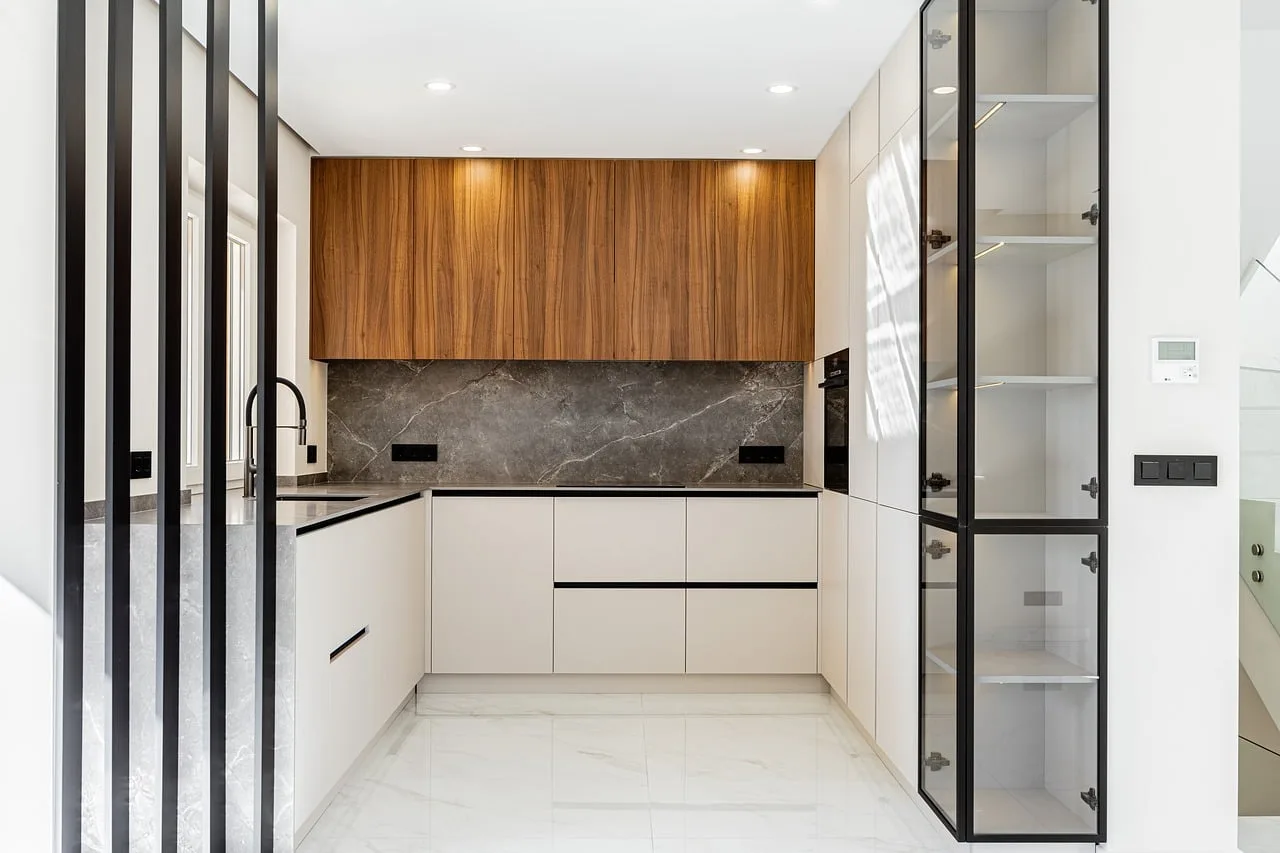
Finish and hardware often decide how cabinets age in a busy kitchen. A strong box can still look worn fast if the finish chips, softens near heat, or scratches easily. Good hinges and slides keep doors aligned and drawers from slamming or sagging.
Thermofoil vs painted lacquer vs conversion varnish
Thermofoil gives a smooth, uniform surface and is easy to clean, but it can lift or peel near heat, steam, or damaged edges. Painted lacquer gives a clean painted look and can be repaired more easily than foil, though it may scratch and chip with heavy use. Conversion varnish usually offers stronger chemical and moisture resistance than basic paint systems.
In a busy kitchen, conversion varnish is often the best finish choice when the budget allows. It is still not immune to damage, but it usually handles wiping, spills, and repeated contact better than many lower-cost painted or foil finishes.
Scratch, chip, and heat resistance in busy kitchens
Scratches show first on high-touch doors and around drawer pulls. Chips often appear at corners, especially on painted MDF or poorly sealed edges. Heat from ovens, toasters, and dishwashers can affect foil wraps and nearby adhesives, so cabinet placement matters as much as finish type.
Soft-close hinges and full-extension slides
Soft-close hinges reduce slam wear at doors and help keep alignment from drifting as hard impacts repeat. Full-extension drawer slides reduce side load and let you reach the back of deep drawers without forcing them. That matters for utensils, pots, and heavy pantry loads.
Load ratings and adjustability to check before buying
For drawer slides, check the load rating and whether it is per pair. A 100 lb rating is a common high-duty figure for kitchen drawers, though the actual need depends on what you store. For hinges, look for six-way adjustability or similar fine-tuning so doors can be aligned after installation and seasonal movement.
Picture a 36-inch base drawer loaded with cast-iron pans, bags of rice, and small appliances. If the slide rating is modest, the drawer may sag or bind before the cabinet box itself fails. Strong hardware can extend useful life, but only if the cabinet core is also stiff enough to support it.
How much does installation affect cabinet life?
Installation affects cabinet life more than many buyers expect. Even good plywood cabinets can rack, twist, or pull loose if the wall is crooked, the units are not leveled, or the fastening points are weak. Moisture protection matters most at sinks and dishwashers.
Leveling and wall straightness
Cabinets need a flat, level base so doors and drawers stay aligned. If the floor slopes or the wall bows, installers usually have to shim carefully before fastening. Without that work, door gaps change and hinges carry uneven load.
Fastening points that prevent rack and twist
Cabinets last longer when they are anchored through solid blocking or wall studs at enough points to hold the load. The cabinet should not hang on a few screws. Tall units, pantry cabinets, and wall cabinets need secure fastening so repeated opening does not shift the box.
Moisture protection at sink and dishwasher runs
Seal exposed edges, protect cutouts, and keep the toe-kick area dry where possible. Around the sink and dishwasher, small leaks often go unnoticed until swelling starts. A thin bead of sealant in the right place is cheaper than replacing a ruined base cabinet.
Why good cabinets can fail early if installed poorly
Good materials do not protect against poor alignment or water exposure. If the box twists during installation, hinges work harder. If the dishwasher vent or sink line leaks onto raw edges, even a premium cabinet can show damage early. Installation is part of durability, not an afterthought.
Best cabinet type by use case
The best cabinet choice depends on how hard the kitchen will be used. Busy family kitchens need the strongest mix of box, finish, and hardware. Rentals and short-term spaces can accept lower-cost construction if the wear risk is lower and replacement is expected sooner.
Busy family kitchen
Choose plywood boxes, solid wood doors or face frames, conversion varnish or another high-durability finish, and full-extension soft-close hardware. This setup handles daily opening, heavier drawer loads, and more moisture exposure better than budget boxes. If you cook often, this is the safest long-term choice.
Rental property
Choose a cabinet that balances price and replacement risk. Plywood boxes are still worth considering in sink bases and trash pullouts, but painted MDF doors or simpler finishes can be acceptable if the unit will not face hard wear. Avoid the cheapest particleboard where leaks are likely.
Resale-focused remodel
Pick durable plywood boxes with a clean painted or stained finish and dependable soft-close hardware. Buyers notice doors that close quietly, drawers that glide well, and consistent gaps. You do not need the absolute top tier everywhere, but visible quality matters.
Budget renovation
If the budget is tight, spend on the cabinet box and hardware before decorative extras. A modest plywood box with decent slides usually outlasts a prettier particleboard cabinet with weak hardware. In very low-cost projects, reserve the cheapest materials for dry, low-load storage areas.
Quick picks
For durability alone, start with plywood boxes and upgrade the finish and hardware before adding decorative extras. If the kitchen is busy or wet, spend most attention on sink bases, dishwasher-adjacent cabinets, and drawers that carry heavy loads.
- Longest-lasting: plywood box, solid wood doors, conversion varnish, soft-close hardware.
- Best painted look: plywood or stable core with MDF painted doors and quality paint system.
- Best budget compromise: plywood box with simpler doors and decent hardware.
- Lowest durability: particleboard box with basic laminate and weak slides.
Palace Imports solid wood pantry cabinet: best for dry storage
This cabinet is for buyers who want solid wood construction and adjustable shelving in a freestanding pantry-style unit. Based on the published details, the kiln-dried solid Brazilian wood and adjustable shelves are the main durability strengths, especially where moisture exposure is limited and heavy pantry items need stable support.
The drawback is that it is not a full kitchen cabinet system, so it does not solve sink-base or drawer hardware concerns. As a storage cabinet, it can fit well in a dry area, but the beige finish and cabinet style may not match every kitchen layout.
Blum CLIP top BLUMOTION hinges: best for door alignment
These hinges are for cabinet doors that need soft-close action and fine alignment. Based on the manufacturer’s specs, the built-in BLUMOTION soft-close feature and six-way adjustability are the main advantages, especially when doors need a precise fit after installation or seasonal movement.
The drawback is that hinges alone do not fix weak cabinet boxes or poor wall mounting. They are a hardware upgrade, not a cure for flimsy construction, and the four-pack format may not cover a full kitchen without buying more sets.
Ourshom drawer slides: best for heavy drawers
These side-mount slides are for drawers that need full extension and heavier load support. Based on the published details, the 100 lb capacity per pair and full-extension design make them useful for deep kitchen drawers, pantry drawers, and storage that sees frequent opening.
The drawback is that slide quality is only part of drawer durability. If the drawer box is poorly built or the cabinet sides are thin, even strong slides will not prevent racking, binding, or premature wear.
How to choose cabinets that last
Start with the box, then check the finish, hardware, and installation details. A durable cabinet choice is usually a plywood box with sealed edges, strong joinery, decent back thickness, soft-close hinges, and full-extension slides with a clear load rating. In wet zones, moisture protection matters as much as the material itself.
- Check the box material first. Plywood is usually the safest choice for long-term wear.
- Inspect the panel thickness and back panel thickness in the spec sheet.
- Ask how the cabinet is joined. Dado or similar mechanical joinery is better than loose stapling.
- Match the finish to the room. Conversion varnish and quality paint systems age better than low-grade foil near heat.
- Confirm the hardware. Look for soft-close hinges, full-extension slides, and a stated load rating for drawers.
- Read the warranty. Water damage, finish wear, and hardware coverage are often excluded or limited.
- Check installation details. Leveling, wall fastening, and sink-area sealing affect service life.
What cabinet construction details affect durability the most? The biggest differences usually come from panel thickness, joint type, edge sealing, and hardware quality. A well-built box with poor installation can still fail early, while a simple but well-installed cabinet with plywood construction and good hardware can last far longer than expected.
What should you check in a cabinet warranty before buying? Look for the coverage length, what counts as normal wear, and whether water damage is excluded. Hardware coverage is worth checking separately, because hinges and slides often carry different terms than the cabinet box and finish.
Frequently asked questions
What is the most durable wood for kitchen cabinets?
For doors and face frames, maple is often the best all-around choice because it balances dent resistance, stability, and a clean painted or stained appearance. Oak is also durable and more open-grained. Cherry looks refined but dents more easily than maple or oak in rough use.
What is the most durable material for kitchen cabinets?
For cabinet boxes, plywood is usually the most durable material in standard kitchen construction because it resists moisture better than particleboard, holds fasteners well, and stays more stable at edges. For doors and frames, solid wood can be the better wear surface, especially with a strong finish.
Are ikea kitchen cabinets worth it?
IKEA cabinets can be worth it for cost-conscious projects if the design is dry, the installation is careful, and the user accepts a lower ceiling on durability than premium plywood systems. They are usually most attractive when budget, modularity, and replacement parts matter more than maximum long-term toughness.
How long are kitchen cabinets good?
Well-built cabinets can last 15 years or more, and many last longer if moisture is controlled and the hardware is maintained. Lifespan drops quickly when boxes swell, hinges loosen, drawer slides bind, or finish wear spreads at sink and dishwasher areas. Installation quality matters throughout that span.
Which cabinet finish holds up best in a busy kitchen?
Conversion varnish usually holds up best among common finishes because it resists moisture, chemicals, and routine wiping better than many standard paints or foil wraps. Painted lacquer can still look good, but it tends to show chips and scratches sooner in high-traffic kitchens.
Are plywood cabinets more durable than MDF?
Yes, plywood cabinets are usually more durable than MDF for boxes and moisture-prone areas because plywood handles edges, screws, and minor water exposure better. MDF can work well for painted doors and panels, but it is less forgiving where sag, impact, and moisture are likely.
Sponsored / affiliate links. As an Amazon Associate I earn from qualifying purchases. I may earn additional commission from eligible campaigns.