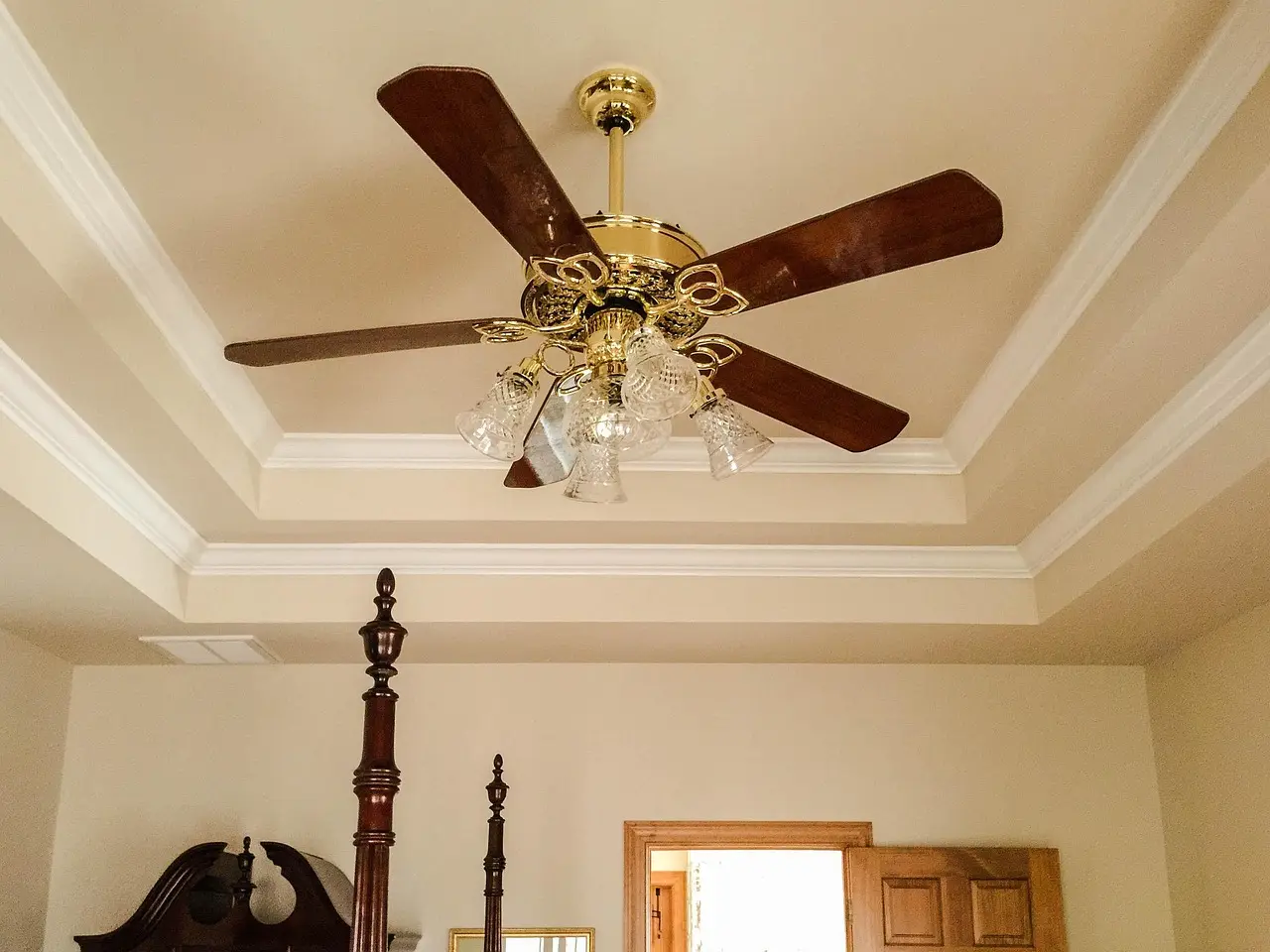
Crown Molding vs Trim: Choose the Right Finish for Rooms
Choose crown molding when ceilings are around 8 feet or higher and the room already has substantial baseboards and casing. Use simpler trim when the ceiling is lower, the room is small, or the existing trim is plain. Pick poorly and the room can feel top-heavy or mismatched. This guide gives a room-proportion decision matrix for matching ceiling height, baseboards, casing, and finish goals.
This guide is part of our Crown molding guide series.
Crown molding vs trim: the basic trade-off
Crown molding is the top trim at the wall-ceiling line. It can hide small cracks, uneven drywall, and rough corners while adding shadow lines. Trim is the finish element used around openings and transitions. The main trade-off is a stronger ceiling edge versus quiet continuity.
| Decision factor | Crown molding | Trim: How to Choose the Right Finish | Winner |
|---|---|---|---|
| Wall-ceiling impact | Creates a defined top edge and stronger shadow line | Frames openings and transitions without drawing much attention upward | Crown molding |
| Visual weight in small rooms | Can feel crowded if the profile is deep or ornate | Usually reads cleaner and less distracting | Trim: How to Choose the Right Finish |
| Fit with existing trim packages | Works best when baseboards and casing already have some presence | Easier to keep consistent with plain or modest trim | Trim: How to Choose the Right Finish |
| Room character | Adds more classical detail and formality | Can stay restrained or even disappear visually | Tie |
Wall-ceiling impact
Crown molding changes the top edge of the room right away. Because it sits where the wall meets the ceiling, it reads as a finished cap, not just a transition. Trim around doors, windows, and built-ins matters too, but it affects the room in a quieter way.
Visual weight in small rooms
Simple trim usually wins when the room is compact or the ceiling is low. Deep projection, tall drop, and busy profile detail all pull the eye upward and can make the upper wall feel heavier. A lighter edge lets the room read calmer.
Fit with existing trim packages
If your baseboards and casing are modest, crown can look out of scale. If they are already tall or layered, crown may fit naturally. The safest choice is the one that matches the visual weight already in the room instead of introducing a new look.
Room character
Crown creates more finish detail at the perimeter, so it tends to suit rooms that already lean formal or traditional. Trim can be shaped to disappear into the architecture, especially when you want the walls, ceiling, and openings to stay visually quiet.
Side-by-side: what each finish changes in the room
Crown molding changes how you read the top of the wall; trim changes the edges of openings and transitions. That makes crown the stronger choice when the ceiling line needs definition, while trim works better when you want the room to feel cleaner and less layered. Profile, projection, and drop decide how much attention each finish gets.
Visual weight and perceived room height
A broader or deeper crown adds more visual mass near the ceiling, which can make a room feel lower if the proportions are off. A simpler trim package leaves more plain wall visible and usually reads taller. The effect is subtle, not magical.
How profile depth affects shadow lines
Shadow lines are where crown earns its keep. A cove profile creates a simple concave curve with low visual weight, while an ogee profile adds an S-shaped curve that feels more classic. Dentil profiles add repeating blocks and more detail, so they pull the eye more strongly.
How much detail the eye notices at normal viewing distance
At typical room distance, profile complexity matters as much as size. Craftsman profiles stay restrained and direct, so they suit quieter rooms. Dentil is the most visually detailed of the common styles listed here, which is useful only when the room can support that level of ornament.
Suppose a 12-by-14-foot living room has an 8-foot ceiling, 5-inch baseboards, and wide casing around every opening. A heavy crown profile can make the upper wall feel crowded. A cove or craftsman profile keeps the room finished without adding another loud trim layer.
How should ceiling height change the choice?
Ceiling height sets the upper limit for visual weight. For 8-foot ceilings, consider 3 to 5 inches overall size. For 9-foot ceilings, consider 4 to 6 inches. For 10-foot ceilings, consider 5 to 7 inches. Bigger does not always look better; proportion still controls the result.
8-foot ceilings and low-visual-weight profiles
With 8-foot ceilings, simple cove or craftsman crown is usually the safest bet if you want crown at all. Keep the profile modest so the wall-ceiling junction stays calm. This is the height where no crown can also be the cleanest answer.
9-foot ceilings and moderate projection
At 9 feet, the room can usually support a broader profile without feeling top-heavy. Ogee works well here because it adds a classic shape without needing the extra detail of dentil. This is also where a more substantial trim package can finally look balanced.
When taller ceilings can handle deeper crown
With 10-foot ceilings and above, deeper projection and a more visible drop make more sense. The room has enough height to absorb the detail. Even then, the best result still matches the room style instead of filling space just because it is available.
How should existing baseboards and casing affect the choice?
Existing trim should steer the decision more than personal preference alone. Crown needs to match the visual scale of the baseboards and casing, or it can look pasted on. If the room already has bold openings and thick baseboards, simpler crown or no crown often reads better than adding another large profile.
Matching the trim package instead of starting over
During a partial remodel, keep the new finish in the same family as the existing trim package. If the casings are narrow and the baseboards are plain, a restrained crown keeps the room consistent. If you replace only one element, the mismatch is obvious.
When tall baseboards make crown feel crowded
Tall baseboards compete with crown for attention. Add wide casing and the room can start to feel overtrimmed. In that situation, a lighter crown profile, or no crown at all, often produces a better result than forcing a more ornate look.
How to simplify a mixed-trim remodel
If some rooms already have different trim profiles, use the least distracting common denominator. A cove crown or plain finish trim can bridge styles better than a decorative profile. That approach keeps the house from feeling patched together.
Which profile fits your room style?
Profile choice should follow the room’s tone, not just the ceiling height. Cove is the simplest and cleanest. Ogee is the most widely available classic option. Dentil is more formal and visibly detailed. Craftsman is restrained and works well when you want structure without ornament.
Cove for a plain, clean edge
Cove profile uses a simple concave curve. It is often the lowest-visual-weight option and works well when you want the ceiling line to finish quietly. It is a strong match for modern, transitional, and pared-back interiors.
Ogee for a classic look
Ogee has an S-shaped profile and is commonly available. It fits traditional spaces without looking overly busy. If you want crown that reads clearly as crown but still stays familiar, ogee is a practical middle ground.
Dentil for a more formal room
Dentil uses a repeating block pattern, so it is the most detailed of the common profiles listed here. It belongs in rooms that can support stronger ornament, such as formal dining rooms or traditional libraries. In a small room, it can read heavy fast. (en.wikipedia.org)
Craftsman for restrained detail
Craftsman profiles are a good fit when you want definition without decorative excess. They pair well with plain casing and straightforward millwork. This is often the best choice for homeowners who want finish lines, not decoration.
Which material fits the finish: MDF, wood, polyurethane, or PVC
Material choice should separate paint-grade from stain-grade work. MDF is smooth, paintable, budget-friendly, and consistent, but it should be avoided in damp areas. Solid wood can give crisp detail and work well for stain-grade projects, though it expands and contracts with humidity. Polyurethane or polystyrene is lightweight and pre-primed, and PVC is moisture-proof for wet spaces.
MDF for painted interior work
MDF is a strong fit when you plan to paint the crown and want consistent dimensions. It cuts predictably and is usually budget-friendly. Use it in dry rooms, not in bathrooms or laundry areas where moisture is a concern.
Solid wood for crisp stain-grade detail
Choose solid wood when the finish will stay natural or stained. It gives sharp detail and a premium look, but it moves with humidity. Wood trim should acclimate for 48 to 72 hours in the space before installation.
Polyurethane or polystyrene for lighter DIY installs
Polyurethane or polystyrene crown is lightweight and pre-primed, which makes it easier to handle on a ladder and easier to paint afterward. It is useful when you want a DIY-friendly product with less weight on the wall. It also helps when the room has some humidity but does not need full moisture-proof material.
PVC for damp rooms like baths and laundry areas
PVC crown is moisture-proof and belongs in bathrooms and laundry rooms. That makes it the most practical choice when humidity is part of normal use. Most PVC trim is paintable, so it can still match the rest of the room.
Crown-vs-trim decision matrix: choose crown molding if… / choose trim if…
Use the room’s proportions, not habit, to decide. Crown molding works best when the room can absorb extra detail at the ceiling line and the rest of the trim package already has some visual weight. Simple trim wins when the room needs calm, continuity, or a cleaner finish. No crown is valid when the room is already balanced and the ceiling junction does not need help.
| Input | Choose crown molding if… | Choose trim if… | Choose no crown if… |
|---|---|---|---|
| Ceiling height | You have 9-foot ceilings or higher, or 8-foot ceilings with a very light profile | You have 8-foot ceilings and want a modest finish line | The ceiling is low enough that any added projection feels crowded |
| Room style | The room is classic, traditional, or needs a formal edge | The room is modern, transitional, or restrained | The room already feels complete and quiet without extra detail |
| Existing baseboard/casing size | Baseboards and casing already have substantial visual weight | The package is plain and needs only a modest finish | The baseboards and casing are already busy enough |
| Finish goal | You want a defined wall-ceiling line and can accept more shadow detail | You want the least distracting finish that still looks complete | You want the cleanest possible junction and minimal ornament |
Choose crown when the room needs a finished ceiling line and the rest of the millwork can support it. Choose trim when the room is small, the ceiling is low, or the existing package is plain. Choose no crown when simplicity is the best design choice, not a compromise.
Choose crown molding if…
Choose crown molding if the ceiling is at least 8 feet and the room can handle a visible top-edge detail. It also works when the baseboards and casing already carry some presence, or when you want to hide small drywall flaws and add shadow lines. A cove or craftsman profile is often the safest starting point.
Choose trim if…
Choose simple trim if the goal is the least distracting finish profile that still looks intentional. It is the better fit when the room is small, the style is modern, or the trim package is already busy. In those cases, restraint usually beats ornament.
Choose no crown if…
Choose no crown when the room already reads balanced and the wall-ceiling junction does not need help. That can be the right answer in compact rooms, plain remodels, or spaces where tall baseboards and wide casing already define the perimeter. Leaving the line clean can be the strongest finish of all.
How do I choose a finish if I want a modern vs traditional look?
Modern rooms usually want the lowest-visual-weight profile that still completes the wall. Traditional rooms can handle more curve, more depth, and more detail. As a rule, cove and craftsman lean modern or transitional, while ogee and dentil lean more traditional.
Modern rooms
For a modern look, start with cove or a simple craftsman profile. Keep the projection modest and avoid deep decorative shapes that pull focus upward. The goal is a finish line that supports the architecture instead of competing with it.
Traditional rooms
For a traditional look, ogee is the safest broad fit, and dentil is the most formal. These profiles add more shadow and surface detail, which suits rooms with larger moldings, paneling, or other classic elements. The finish should feel coordinated, not random.
How do I choose the right finish if I want a modern vs traditional look?
If you want modern, pick the simplest profile that completes the room and match it to plain casing and baseboards. If you want traditional, allow more curve and more shadow line, but keep the size proportional to the ceiling height. The finish should reinforce the room’s language, not overwrite it.
What trim details hide gaps or uneven drywall best?
Crown molding hides small cracks, uneven drywall, and imperfect corners better than plain trim because it bridges the wall-ceiling junction and creates a softer transition. Flexible profiles can help at slight irregularities, but fit and fastening still matter. Caulk and paint finish the job after installation.
Details that cover imperfections
A profile with more body gives you more forgiveness at the top edge. Crown is better than bare drywall for disguising minor waviness, and a cove profile can be more forgiving than a sharper ornamental shape. For long runs, a 30- to 45-degree scarf joint can help manage alignment.
Installation basics that matter
Stock crown often uses a 38/52 or 45/45 spring angle, so the saw setup must match the profile and orientation. Outside corners use matching miters. Inside corners can be coped for a tighter fit. Install crown on a stud, then caulk and paint after fastening.
Frequently asked questions
What is the difference between crown molding and trim?
Crown molding is the decorative top trim that bridges the wall and ceiling, while trim is a broader term for finish pieces around openings and transitions. Crown changes the room’s upper edge and can hide minor wall imperfections. Trim’s main job is to frame and finish.
Should I use crown molding or simple trim for an 8-foot ceiling?
For an 8-foot ceiling, simple trim is often the safer choice unless the room is large and the rest of the millwork is already substantial. If you do add crown, keep it in the 3 to 5 inches overall size range and favor low-visual-weight profiles like cove.
When does crown molding look too heavy in a small room?
Crown looks too heavy when the ceiling is low, the room is compact, or the profile is deep and ornate. Tall baseboards and wide casing can make the effect worse because the trim package starts to stack visually. In that case, simplify the profile or skip crown.
Can crown molding and other trim styles work together in the same room?
Yes, but they should belong to the same visual family. Crown can work with plain casing and baseboards if the crown is restrained, and it can also sit beside more detailed trim if the proportions are consistent. The key is keeping one element from overpowering the others.
What crown molding size looks right with standard baseboards and casing?
With standard baseboards and casing, a modest crown usually looks best because it keeps the top of the wall in scale with the rest of the room. For 8-foot ceilings, 3 to 5 inches overall is the common starting point. Larger sizes suit taller ceilings and heavier trim packages.
Is MDF or wood better for painted crown and trim?
MDF is usually the better painted option because it is smooth, paintable, and consistent. Solid wood is better when you want crisp detail or a stain-grade finish, but it moves with humidity. If the room is damp, avoid MDF and consider PVC or another moisture-resistant choice.
Sponsored / affiliate links. As an Amazon Associate I earn from qualifying purchases. I may earn additional commission from eligible campaigns.