
How to Choose a Ceiling Light Fixture for Bathrooms
Choose a damp-rated ceiling fixture for most bathrooms, use a wet-rated fixture inside shower zones, and match the mount to ceiling height: flush is commonly recommended for about 8-foot ceilings, and semi-flush for taller ones. The wrong rating or the wrong size can lead to glare, weak light, corrosion, or an unsafe install. This guide explains bathroom zones, ceiling height, brightness, beam spread, and the style choices to make after safety and performance are set.
Bathroom lighting decision matrix
Start with the task, then pick the fixture. A bathroom ceiling fixture can provide general light, but the right choice depends on ceiling height, room size, and whether the fixture sits near steam, shower spray, or the vanity.
| Bathroom condition | Best fixture type | Why it fits | Watch for |
|---|---|---|---|
| Low ceiling, compact bath | Flush mount | Mounts directly to the ceiling and keeps headroom clear | Glare if the lens is too bright or too exposed |
| Higher ceiling, medium bath | Semi-flush mount | Hangs slightly below the ceiling and can spread light more comfortably | Too much drop in a tight room |
| Shower zone or shower-adjacent ceiling | Wet-rated recessed light | Recessed lighting can be used over showers | Rating must match the exposure |
| Room needs overall light plus mirror support | Ceiling fixture plus vanity lighting | Bathroom lighting often needs more than one source | One overhead fixture may leave mirror shadows |
| Large primary bath | Ceiling fixture plus recessed or accent lights | Better coverage across zones and fewer dark corners | Underlighting if only one center fixture is used |
Match ceiling height to fixture type
Flush mount ceiling lights are the safest default for lower ceilings and compact baths. Semi-flush mount ceiling lights hang slightly below the ceiling and typically extend no more than 12 inches, so they work better only when you have enough headroom.
If the ceiling is low, a semi-flush fixture can become a clearance problem and a cleaning problem. If the ceiling is taller, a flush mount may still work, but it may feel visually flat unless the lens and output are chosen well.
Match room size to light spread
A single ceiling lamp can work as the main bathroom light in a small room, but only when the spread is wide enough. A larger bathroom often needs more than one source so the toilet area, entry, and vanity do not fall into shadow.
Picture a 5-by-8-foot hall bath with one centered flush mount. That can work if the output is strong enough and the lens spreads light evenly. Now picture a larger primary bath with a separated vanity and tub area. One center fixture usually leaves the edges dim.
Match location to rating and placement
Damp-rated or wet-rated suitability depends on where the fixture sits, how much steam reaches it, and how close it is to a shower or tub. Do not assume every bathroom ceiling fixture belongs in every zone. A ceiling lamp in the main room may only need a damp rating, while a fixture inside a shower area needs wet-rated protection.
The same rule applies to cleaning access. A fixture that sits too close to a shower spray path or too high above a cluttered vanity can be hard to maintain and may age faster in humid air.
What ceiling light works best for your bathroom?
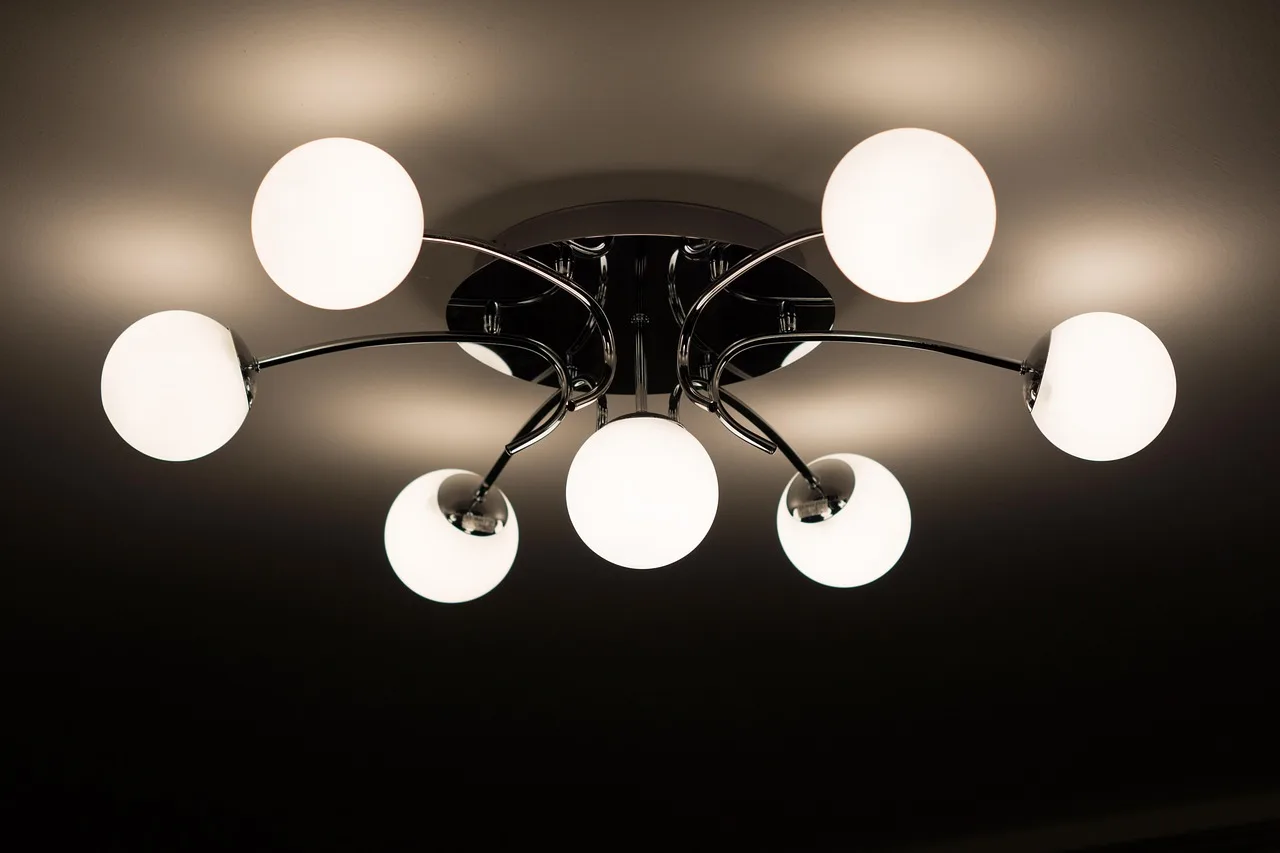
For most bathrooms, the best ceiling fixture is the one that matches the room’s height and the light job first. Flush mount fits low ceilings and small rooms. Semi-flush fits taller ceilings. Recessed lighting works when you want the light source to stay out of the way or when the shower needs a different type of fixture.
Flush mount for low ceilings and smaller rooms
Flush mount ceiling lights mount directly to the ceiling and are a common bathroom fit for lower ceilings. They are the safest default when headroom is limited and when you want general illumination without any hanging drop.
This is the right starting point for many hall baths and compact powder rooms. The drawback is simple: if the lens is harsh, it can feel bright without feeling even. In that case, choose a diffuser that spreads light across the room instead of aiming a bare source downward.
Semi-flush for more headroom
Semi-flush mount ceiling lights hang slightly below the ceiling and typically extend no more than 12 inches. They are a better fit when the room has more headroom and the fixture can hang without interrupting movement.
They can make a taller bath feel less flat, but they are not the right answer for low ceilings. If the room is tight, the drop can become awkward fast. Use this type when ceiling height gives you room to spare and when you want softer distribution than a flat disk often provides.
Recessed when the ceiling fixture should stay out of the way
Recessed lighting can provide general illumination, accent lighting, and task lighting, and it can be used over showers. That makes it a strong choice when you want a clean ceiling plane or need safe coverage in a wet area.
Recessed fixtures do not solve everything by themselves. They can miss mirror support unless they are placed with care, and too few cans can leave a room patchy. Use them as part of a layout, not as a style-first substitute for a full plan.
Bathroom ceiling fixture ratings and placement
Safety and placement come before finish color or glass shape. The fixture has to match the room’s exposure, and it has to sit where it can deliver light without creating a clearance issue or a maintenance headache.
Damp-rated versus wet-rated fixtures
Do bathroom ceiling lights need to be damp rated? In most bathrooms, yes. Damp-rated fixtures are appropriate for humid indoor spaces, while wet-rated fixtures are for locations exposed directly to water, such as inside shower zones.
Do not blur the two. Damp-rated means moisture resistance for humidity and steam. Wet-rated means the fixture can handle direct water exposure. A bathroom ceiling light outside the shower may not need wet rating, but a fixture in the shower area does.
Shower-adjacent placement rules
Can you put any light fixture in a bathroom? No. A fixture near a shower or tub needs the right rating, and a standard decorative ceiling light is often the wrong choice in that zone. Recessed lighting is commonly used over showers because it stays compact and can be specified for wet conditions.
A common first-timer mistake is placing a pretty flush mount just outside the shower curtain line and treating it like any other room light. Steam and splash exposure are part of the decision. If the fixture sits where water can reach it, the rating has to match that exposure.
Headroom and cleaning access
Ceiling fixture placement should account for headroom, room size, ceiling height, and coverage so the light spreads evenly. A low ceiling needs a flatter fixture. A taller ceiling can tolerate a semi-flush design. A cramped room also needs a fixture that is easy to wipe down, because humid bathrooms collect dust and residue faster.
That matters more than many shoppers expect. Decorative glass and layered details can look fine in a dry hall, but they become annoying if they trap moisture or make cleaning difficult every few weeks.
How bright should a bathroom ceiling light be?
Choose brightness for the room size and the job. A ceiling light should give enough ambient lighting to move safely and clean the room, but it should not be so intense that it creates glare or harsh reflections. For most bathrooms, one overhead fixture is only part of the answer.
Choose brightness for room size
How bright should a bathroom ceiling light be? Bright enough to cover the room without leaving corners dim. Small bathrooms can often work with a single centered fixture if the spread is broad. Larger rooms usually need more output or more than one source.
Bathroom lighting often needs more than one source. That is the real rule. A ceiling fixture gives ambient light, but a vanity fixture and, in some layouts, recessed lights keep the room usable across different tasks.
Use glare control to keep the fixture comfortable
Glare control matters because bare or harsh lamps can make a bathroom feel bright in a bad way. A diffuser, frosted lens, or shaded design often gives more comfortable light than an exposed source in a low room.
Suppose the bathroom is narrow and the fixture sits close to the entry path. A glare-heavy light can feel uncomfortable every time you walk in. The room may be lit, but it will not feel easy to use.
Pick color temperature and dimming support
Bathroom bulb choice should account for color temperature, brightness, glare control, and dimming compatibility. A dimmable wall lamp can create a spa-like bathroom feel, but only if the fixture and control are compatible. Dimming also helps a bright overhead light work for both morning routines and evening use.
For ceiling fixtures, dimming is useful when the same room has multiple jobs. Bright for cleaning. Lower for a calmer feel. Just make sure the bulb, integrated LED, and switch all work together before you buy.
Our picks by need
Best for low ceilings: Lithonia Lighting 13-inch Round LED flush mount

Based on the manufacturer’s specs and published product details, this flush mount is a strong fit for lower ceilings and compact bathrooms. It is a 13-inch integrated LED fixture, it is dimmable with compatible dimmer switches, and it is UL certified for damp locations. The 3000K light is a middle-of-the-road color that works well for general use.
The drawback is size-related more than quality-related: a 13-inch disk may be larger than some small powder rooms need, and flush mounts can still produce glare if the lens is too direct. It is a better choice when you want broad ambient light and a low-profile shape, not a decorative drop.
Best for a tighter budget: Progress Lighting 7.25-inch LED flush mount light

Based on the manufacturer’s specs and published product details, this smaller flush mount is wet-rated and dimmable down to low brightness, which makes it useful for bathrooms that need a simple ceiling light near moisture. The integrated LED design also keeps bulb changes out of the routine.
The tradeoff is output and scale. A 7.25-inch fixture may be a better fit for smaller rooms or as part of a layered layout than as the only light in a larger bath. Its compact size helps low ceilings, but it may not cover every corner on its own.
Best for higher ceilings: semi-flush with enough drop
There is no product marker here because the rule matters more than the finish. For a higher ceiling, choose a semi-flush mount only if the room can spare the drop and the light spread improves from a slightly lowered position. That is where semi-flush outperforms a flat ceiling disk.
Use this type when the bathroom is tall enough that the fixture will not feel close to your head or visually heavy. If the room is short or narrow, flush mount usually wins on clearance and ease of cleaning.
Best for shower-adjacent areas: wet-rated recessed lighting
Recessed lighting is the safer and cleaner-looking choice when the ceiling fixture needs to sit over a shower or near direct moisture exposure. Because recessed lighting can be used over showers, it avoids the exposed-body problem that many decorative ceiling lights have in wet zones.
If the shower and vanity are separate, recessed light can handle the wet side while a flush mount or vanity light handles the rest of the room. That split is often better than forcing one fixture to do everything.
Best when the vanity needs extra support: ceiling light plus side lighting
Bathroom vanity lighting does the work a ceiling fixture cannot, especially for shadow reduction at the mirror. Side-mount fixtures are the strongest choice for grooming tasks because they spread light across the face more evenly than a centered overhead light.
Good mirror lighting should spread light evenly across the bathroom. If you only use a ceiling fixture above the sink, the mirror can cast shadows under the eyes, chin, and hands. Add side lights or a well-placed over-mirror option when the bathroom is used for shaving, makeup, or detailed grooming.
Mistakes to avoid
Style is the last step. If you pick finish and shape before zone, ceiling height, and output, you can end up with a fixture that looks right and performs poorly.
- Choosing style before safety. A bathroom fixture must match damp or wet exposure first.
- Using semi-flush in a low ceiling room. Semi-flush lights are better for rooms with higher ceilings, not tight ones.
- Underlighting a larger bath. One ceiling fixture can be enough only when the room is small and the spread is correct.
- Ignoring mirror shadows. A ceiling light alone often leaves the face in shadow at the vanity.
- Forgetting humid-room maintenance. Decorative parts that trap moisture are harder to clean and can age faster.
Say your bathroom has an 8-foot ceiling, a single center fixture, and a mirror that always looks dim. The fix is not a fancier shade first. The fix is better task light at the mirror, then a ceiling fixture that gives even ambient light across the room.
Frequently asked questions
Can you put any light fixture in a bathroom?
No. A bathroom fixture has to match the room’s moisture exposure, and some locations need damp-rated or wet-rated equipment. A decorative light that works in a hallway may fail in a bathroom if it sits too close to steam or shower spray.
Can you use any light fixture in a bathroom?
No, not safely. The fixture must be suitable for the zone where it is installed. Main-room ceiling lights often need damp rating, while shower-adjacent placements need wet-rated protection. The right rating matters as much as the style.
What ceiling light fixture is best for a bathroom with low ceilings?
A flush mount is usually the best fit for a bathroom with low ceilings. It mounts directly to the ceiling, keeps headroom clear, and provides general illumination without hanging down. Semi-flush usually makes less sense in a low room because of the extra drop.
Should a bathroom ceiling light be flush mount or semi-flush?
Choose flush mount for low ceilings and compact rooms. Choose semi-flush when you have more headroom and want a fixture that hangs slightly below the ceiling. The better choice depends on clearance, room height, and how much light spread you need.
What type of ceiling light works best over a bathroom vanity?
Over a vanity, the best answer is usually not the ceiling fixture alone. Side-mount or over-mirror vanity lighting does a better job of reducing shadows for grooming. A ceiling light can support the space, but mirror work needs task lighting placed for the face.
Sponsored / affiliate links. As an Amazon Associate I earn from qualifying purchases. I may earn additional commission from eligible campaigns.
 ASD 2 Inch Trimless LED Recessed Ceiling Light Fixture, Mud-in Canless Downlight with Junction Box, 5CCT Selectable 2700K-5000K, 8W 643 Lumens, CRI90+, Anti-Glare, Dimmable, IC & Wet Rated, ETL
 ASD 6 Inch Trimless LED Recessed Ceiling Light Fixture, Mud-in Canless Downlight with Junction Box, 5CCT Selectable 2700K-5000K, 24W 2075 Lumens, CRI90+, Anti-Glare, Dimmable, IC & Wet Rated, ETL