Deck Screws vs. Wood Screws: Key Differences for DIYers
Use deck screws outdoors, in treated lumber, and anywhere moisture may reach the joint; use wood screws for dry indoor joinery, furniture, and cabinetry. Pick deck screws when corrosion or seasonal movement matters, and choose wood screws when the joint stays dry and stable. The wrong screw can leave rust stains, loosen a joint, split the wood, or fail at the head. This guide compares both by project, wood type, and exposure.
| Decision factor | Deck screws | Wood screws | Winner |
|---|---|---|---|
| Moisture and outdoor exposure | Built for exterior use, with corrosion-resistant coatings or stainless steel options | Best for dry indoor work; standard versions are not the first pick for wet exposure | Deck screws |
| Treated lumber compatibility | Common choice for pressure-treated wood because coatings and stainless options resist chemical attack | Standard interior wood screws are a poor match for treated lumber outdoors | Deck screws |
| Drive and strip resistance | Often Torx/star or square/Robertson, which helps reduce cam-out | Often Phillips or square; fit quality matters more, and Phillips can cam out sooner | Deck screws |
| Wood movement and outdoor durability | Coarse threads and outdoor coatings handle seasonal movement better | Tapered shafts work well in stable indoor joints, but corrosion protection is limited outdoors | Deck screws |
| Indoor furniture and cabinetry | Works, but usually more than the job needs | Designed for this kind of joinery and general carpentry | Wood screws |
Moisture, thread, and drive styles that shape screw choice
The core trade-off is simple: deck screws are made for moisture, treated lumber, and more movement, while wood screws are the general-purpose pick for dry indoor joinery. In practice, the wrong screw usually fails one of four ways: rust staining, split ends, cam-out, or pull-out.
Moisture and exposure
Deck screws win where water, humidity, and weather are part of the job. Wood screws are better when the joint stays dry and finished, such as inside a house or cabinet carcass.
Thread, tip, and shank shape
Wood screws usually have a tapered shaft and a sharp point that starts easily in furniture and cabinetry. Deck screws more often use coarse threads and a self-tapping or self-drilling point, which helps them bite into framing lumber and decking boards with less prep.
Drive style and bit fit
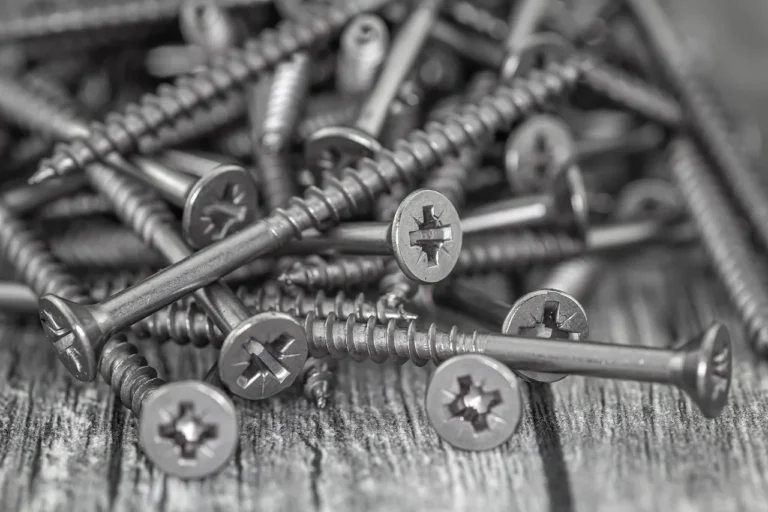
Deck screws often use Torx/star drives because they hold the bit better and resist cam-out under torque. Wood screws are often sold with Phillips or square/Robertson recesses, and the bit fit matters more than the label on the box.
What makes wood screws the indoor default?
Wood screws are the standard choice for dry indoor carpentry because their tapered body, sharp point, and general-purpose threading fit furniture, cabinets, trim, and other assemblies that do not face constant wetting. They are easy to place, easy to source in common lengths, and well matched to stable interior wood.
Common indoor uses
Use wood screws for cabinet face frames, furniture rails, drawer parts, and ordinary carpentry where the pieces stay indoors. Kreg pocket-hole screws listed at 1-1/4 inch are a good example of how wood-screw styles get tailored to joinery jobs rather than exterior exposure.
Where standard wood screws fail outdoors
Standard wood screws can rust, stain surrounding boards, and lose grip when used in wet or treated lumber. They are also more likely to suffer drive damage if you force them into dense stock without the right pilot hole or bit size.
Say your cabinet face frame is made from 3/4-inch pine and the screws stay hidden inside a conditioned kitchen. A wood screw is the clean fit because you want holding power, not a weather coating that adds cost without solving a real exposure problem.
What makes deck screws different outdoors?
Deck screws are the outdoor-specialist fastener. They use corrosion-resistant coatings or stainless steel options, and many versions use coarse threads with a point that cuts or starts cleanly in softwood, treated lumber, and deck boards.
Corrosion resistance
Modern deck screw coatings can be stainless steel or coated systems, including ceramic, polymer, epoxy, and hot-dip galvanized finishes. That matters because treated lumber is chemically aggressive toward metal, and ACQ-treated lumber is described as five to ten times more aggressive toward metal than untreated wood.
Why the drive style matters
Many deck screws use Torx/star drives because the recess holds the bit better under higher torque. The GRK R4 listing says the star drive resists cam-out, and that is exactly what DIYers want when driving long screws into framing or decking.
Points and threads
Type 17 points are standard on many deck screws, and that style helps them start without excessive splitting in softwood. Coarse threads help pull boards tight, while self-tapping or self-drilling points reduce the need for extra prep in many exterior jobs.
Drive types and cam-out risk
Drive recess choice changes how often the bit slips, strips the head, or chews up the board around the screw. Torx/star generally gives the best grip, square/Robertson is also strong, and Phillips is the easiest to cam out when torque rises.
Phillips
Phillips was designed to cam out under high torque. That can be useful in some assembly lines, but for DIY work it often means stripped heads when the bit is worn, the screw is long, or the material is dense.
Square and Torx/star
Square/Robertson drives hold well and are common on furniture and general carpentry screws. Torx/star usually resists cam-out even better, which is why it shows up so often on deck screws and construction screws such as GRK R4 #9 x 2-1/2 inch and SPAX #10 x 3-inch fasteners.
What to choose for power tools
If you are using an impact driver, Torx/star is usually the safest pick for repeat driving without chewing up the recess. For hand driving, choose the drive that gives the tightest bit fit, not the one that looks most familiar.
When do you need pilot holes?
Pilot holes are needed any time splitting risk matters more than speed. They are especially helpful in hardwoods, near board ends, and in tight grain where screw torque can open a split before the head seats.
- Mark the screw location and keep clear of the edge when possible.
- Select a bit that matches the screw core, not the outside thread diameter.
- Drill a pilot hole in hardwoods, near ends, or whenever the board looks prone to splitting.
- Drive the screw until the head seats cleanly, then stop before crushing the fibers.
Pressure-treated lumber and softwood
With many deck screws in softwood, a pilot hole may be optional because the point is meant to start and cut cleanly. That does not mean pilot holes are never needed; close to the end of a board, or in dense treated lumber, they still help keep the joint from splitting.
Hardwoods and end grain
Hardwoods usually deserve a pilot hole. The same is true at board ends and in narrow trim, where the screw can wedge the fibers apart before it has a chance to bite.
Deck screw materials and coatings
Choose the coating for the exposure, not just for the label. A sheltered porch, a fully exposed deck, and a coastal railing put very different demands on the fastener, and a generic coating may not be enough in the wettest settings.
Hot-dip galvanized, ceramic, polymer, and epoxy
Hot-dip galvanized screws are common for exterior work and offer a corrosion-resistant layer suited to many outdoor projects. Ceramic, polymer, and epoxy coatings are also used on deck screws, and they are part of the reason modern exterior screws survive weather better than standard interior fasteners.
When stainless steel is worth it
Use stainless steel when the exposure is wet, the project is highly visible, or the lumber chemistry is especially aggressive. That is the better choice for many coastal or persistently damp projects, and it is often the safest option where long-term stain control matters most.
Why treated lumber needs more protection
Pressure-treated wood contains chemicals that attack unprotected metal faster than dry interior pine does. If you use a standard wood screw there, rust stains and loss of holding power are both realistic failure modes.
Choose deck screws or wood screws by project
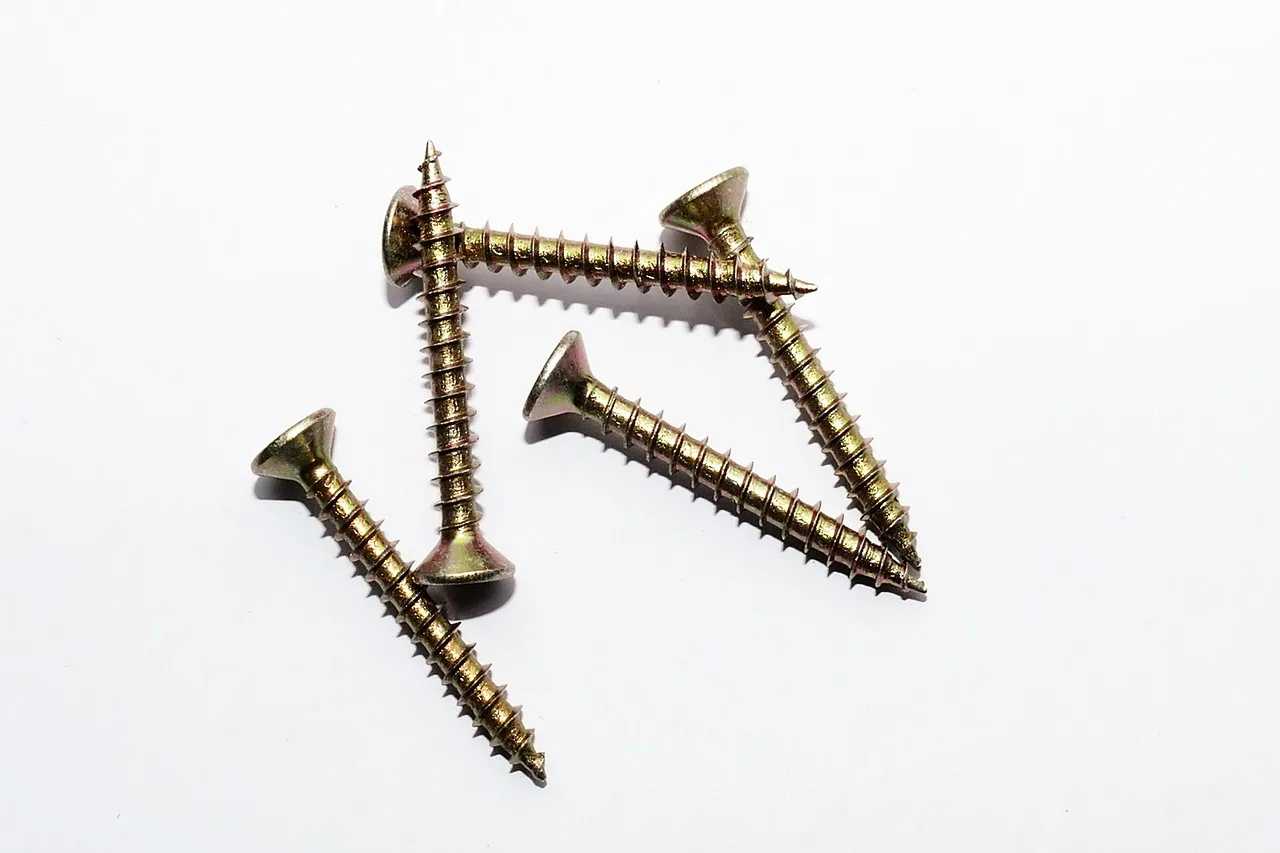
The right choice changes with the board, the exposure, and the failure you want to avoid. Use the matrix below as a project filter, not a blanket rule.
| DIY scenario | Right screw type | Drive style | Coating or material | Pre-drill? | Wrong screw failure |
|---|---|---|---|---|---|
| Indoor furniture | Wood screws | Phillips or square/Robertson | Standard interior finish is fine | Usually yes in hardwood; optional in softwood | Cam-out or splitting if the bit fit is poor or the stock is dense |
| Cabinet face frames | Wood screws | Square/Robertson or Phillips | Standard interior finish | Often yes near ends | Pull-out or split ends if the screw is too large or the hole is too dry |
| Pressure-treated deck boards | Deck screws | Torx/star | Hot-dip galvanized, ceramic, polymer, epoxy, or stainless steel | Often no in softwood, but yes near ends or in dense areas | Rust staining or head failure if you use a standard wood screw |
| Cedar fence boards | Deck screws | Torx/star or square/Robertson | Corrosion-resistant coating or stainless steel | Helpful near ends | Splitting or staining if the screw is too large or uncoated |
| Hardwood outdoor trim | Deck screws | Torx/star | Stainless steel or a heavy-duty corrosion-resistant coating | Yes | Pull-out, splitting, or rust if you use a standard interior screw |
Suppose you are fastening cedar fence boards with #8 screws and the board ends sit close to the post. A deck screw with a Torx drive and a corrosion-resistant coating is the safer call, because cedar can split and outdoor moisture can punish a standard wood screw.
Size guidance
#8, #9, and #10 are commonly used screw sizes for both categories, and 2-inch, 2-1/2-inch, and 3-inch lengths are often used in DIY work. Choose the length from the material thickness and joint demand, not from the package label alone; GRK R4 screws are sized as #9 x 2-1/2 inch multi-purpose screws, SPAX construction screws in this article are #10 x 3-inch, and Deck Plus deck screws are presented as #10 x 3-inch.
Choose Deck screws if…
Choose Deck screws if the project sits outdoors, touches pressure-treated lumber, or has repeated wetting and drying. They are also the better pick when you want lower cam-out risk from a Torx/star drive, or when a corrosion-resistant coating or stainless steel is needed for longer service life.


Choose wood screws if…
Choose wood screws if the joint is dry, indoor, and meant for cabinetry, furniture, or general carpentry. They are the cleaner choice for face frames, interior trim, and other stable woodwork where a tapered shaft and sharp point help the screw start cleanly without outdoor-grade corrosion protection.
Frequently asked questions
What is the difference between deck screws and wood screws?
Deck screws are made for outdoor exposure, treated lumber, and more movement, so they usually have corrosion-resistant coatings, coarse threads, and often a Torx/star drive. Wood screws are the indoor generalist, with a tapered shaft and sharp point that suit furniture, cabinets, and dry carpentry.
Can you use wood screws on a deck?
You can, but it is a poor choice for long-term outdoor use. Standard wood screws can rust, stain boards, and weaken faster when exposed to moisture or pressure-treated lumber. For deck boards, framing repairs, and fences, a deck screw is the safer option.
Are deck screws better than wood screws for treated lumber?
Yes, usually. Pressure-treated lumber is chemically harsher on metal, so deck screws with hot-dip galvanized, ceramic, polymer, epoxy, or stainless steel protection are the better match. Standard wood screws are more likely to corrode or stain when used in treated wood outdoors.
Do deck screws need pilot holes?
Not always. Many deck screws can go into softwood without a pilot hole, especially when the point is self-tapping or Type 17. You still should pre-drill in hardwoods, near board ends, and anywhere splitting risk is high or the board is especially dense.
What drive type is best for deck screws?
Torx/star is usually the best drive type for deck screws because it resists cam-out and keeps the bit seated under torque. Square/Robertson also works well, but Phillips is the least forgiving when the screw is long, the wood is hard, or the bit fit is imperfect.
When should I use stainless steel screws instead of coated screws?
Use stainless steel when the exposure is severe, the project is highly visible, or stain control matters most. Coastal air, persistently wet locations, and demanding exterior trim are common reasons to spend more on stainless rather than relying on a coated fastener.
Sponsored / affiliate links. As an Amazon Associate I earn from qualifying purchases. I may earn additional commission from eligible campaigns.