Door Hinge Squeaking Fix: What to Lubricate and When to Replace a Hinge
A squeaky hinge is usually a friction problem at the hinge pin, but the sound can also come from a latch rubbing the strike or a door that has begun to sag. Identify the sound and movement before applying lubricant so the repair does not hide a larger alignment issue.
Make sure the hinge is actually the noise source
Open and close the door slowly while listening at each hinge. A true hinge squeak usually changes as the hinge rotates. A scrape or click near the latch side can instead be a latch rubbing against the strike plate, which needs an alignment check rather than more lubricant.
Ask someone to move the door while you lightly touch each hinge leaf. Do not put fingers between moving parts. Identifying the exact hinge helps you avoid spraying every part of the door and makes it easier to notice a loose screw or cracked leaf.
Clean before you lubricate
Dust, old residue, and paint can hold grit around the pin. Protect nearby finishes, remove loose debris with a dry cloth, and use only a small amount of suitable lubricant. Excess spray attracts more dust and can stain a painted door or floor.
For a removable pin, support the door before attempting removal and work carefully. On a heavy exterior door, do not remove multiple hinge pins at once. The door’s weight and the hinge arrangement determine what is safe to service without assistance.
Apply lubricant to the moving surfaces
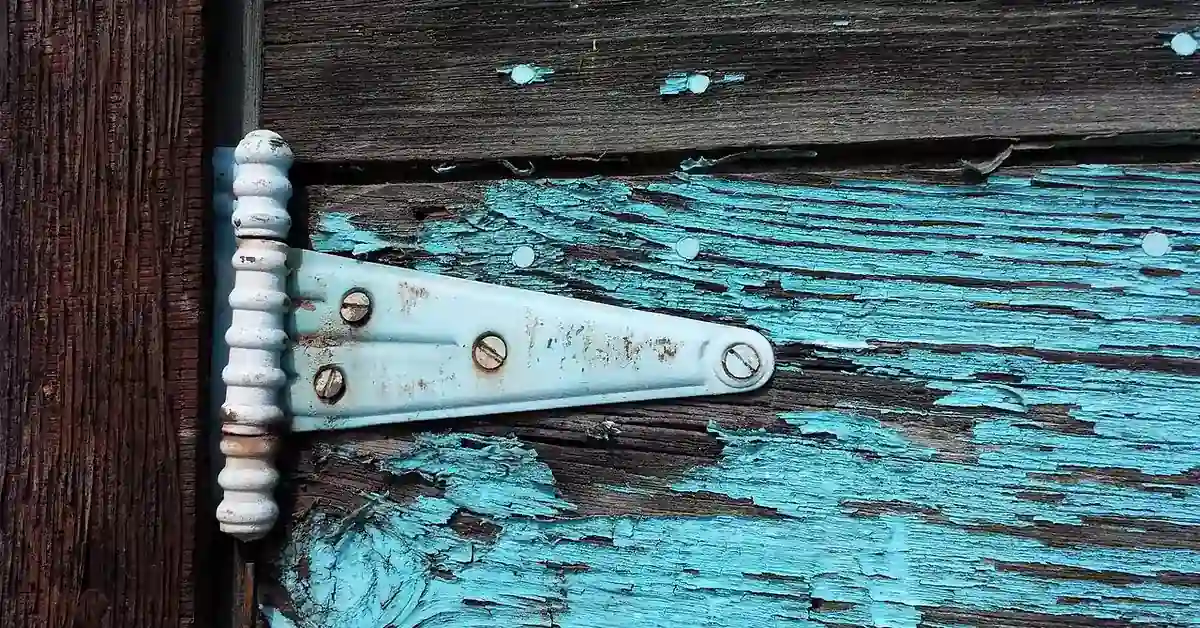
Target the pin and knuckles where metal moves against metal. Move the door through its normal travel to distribute a small amount, then wipe away excess. The goal is quiet, smooth movement, not a visibly wet hinge.
If the hinge was painted over, the pin may be partially bonded by paint. Forcing it can damage the finish or bend hardware. Score paint carefully only if appropriate, or replace the hinge when corrosion, paint buildup, or damage makes a clean repair impractical.
Check screws, sag, and hinge wear
A hinge can squeak because the door is carrying load unevenly. Look for loose screws, enlarged holes, a gap that has changed around the door, or a hinge barrel that moves more than the others. These are support issues, not simply lubrication issues.
If the door rubs the frame or latches only when lifted, solve the alignment problem too. A lubricated hinge may sound quieter but will not restore proper geometry. Repairing the support first protects the latch, strike, and finish from repeated stress.
Know when replacement is the cleaner fix
Replace a hinge if it is bent, cracked, badly corroded, worn through, or repeatedly noisy after cleaning and proper lubrication. Match the hinge size, leaf shape, finish, pin type, and door weight rating; a mismatched hinge can create new alignment problems.
For a fire-rated or exterior entry door, confirm the correct replacement hardware before changing it. Some doors require listed components, self-closing performance, or corrosion-resistant hardware. When in doubt, use the door manufacturer’s guidance.
Avoid common quick fixes
Avoid pouring household oils onto a hinge without checking residue and finish compatibility. Avoid loosening all hinges together, and never remove every pin from a standing door. These shortcuts can turn a minor squeak into a misaligned or unsafe door.
This article adds a useful diagnostic split: hinge friction, latch rub, and door sag create different sounds and need different repairs. That check prevents the common cycle of repeatedly lubricating a noise that is actually an alignment warning.
Document the fit before making a permanent change
Take a few photos of the gap, hinge position, and contact point before sanding wood, moving a strike, or replacing hardware. A simple before-and-after record helps show whether the correction changed the door support, the latch engagement, or only the visible symptom.
Make one controlled adjustment at a time and retest the full door operation: open, close, latch, lock, and unlock. That method is slower than changing several parts together, but it keeps a small repair reversible and makes a recurring issue easier to diagnose.
Use normal force during the test. A door that closes only when pushed hard, lifted, or pulled toward the jamb is not fully corrected even if the latch finally clicks. Recheck the gaps and hardware rather than accepting a repair that hides a continuing alignment or security problem.
For an exterior opening, test the weather seal and deadbolt after the latch works. A correction that changes the door’s position can affect both. The finished result should close smoothly, latch without force, lock fully, and maintain a consistent reveal around the opening. Repeat the check the following day before considering the repair complete.
Use a repair boundary that protects the door system
Do not modify a fire-rated assembly, shared-building entry, exterior security hardware, or visibly damaged frame based on a quick internet fix. Those situations can involve listed components, life-safety requirements, or concealed damage that needs the right professional assessment.
For ordinary interior hardware, keep the original screws and parts until the repair is verified. Comparing the changed part with the original makes it easier to reverse a poor fit and prevents a simple adjustment from becoming a permanent compatibility problem. Label parts as you work and test every function before leaving the area unsecured.
Frequently asked questions
What is the best lubricant for a squeaky door hinge?
Use a small amount of a lubricant suitable for metal hinge pins and follow its label. Clean loose debris first and wipe away excess so it does not collect dust or damage nearby finishes.
Why does my door still squeak after lubrication?
The noise may come from latch-to-strike contact, loose screws, hinge wear, paint buildup, or door sag. Recheck the source while the door moves slowly.
Do I need to remove the hinge pin to stop squeaking?
Not always. A small amount of lubricant can sometimes reach the pin in place. Remove a pin only when the door is safely supported and the hinge design allows it.
The practical next step
A quiet door starts with identifying the moving part that is actually complaining. Clean and lubricate a sound hinge, but repair alignment or worn hardware when the noise points to something deeper.
Sponsored / affiliate links. As an Amazon Associate I earn from qualifying purchases. I may earn additional commission from eligible campaigns.