Floor Underlayment vs Subfloor: What Each Layer Does
Subfloor is the structural base below the finish floor. Underlayment is the thin layer above it, used only when the finish floor or substrate needs smoother support, sound control, or moisture separation. Skip the right layer, and you can get squeaks, bounce, telegraphed seams, swelling, or a failed finish floor. This guide breaks down what each layer does, how plywood, OSB, and concrete fit in, and how to choose the right material before you buy.
This guide is part of our Floor underlayment guide: types, thickness and installation series.
| Decision factor | Floor underlayment | subfloor: what each layer does | Winner |
|---|---|---|---|
| Structural support | Non-structural; sits above the base layer | Structural base that carries the finish floor and loads | subfloor: what each layer does |
| Noise and feel underfoot | Can reduce sound and vibration; may add cushioning | Can affect stiffness, but is not the layer made for acoustic control | Floor underlayment |
| Moisture management | May include a moisture-blocking film or integrated barrier | Must stay dry, but does not usually act as a vapor-control layer | Floor underlayment |
| Fixing squeaks, bounce, or soft spots | Cannot correct structural movement or damaged panels | Gets inspected, repaired, or replaced when the floor feels weak | subfloor: what each layer does |
| Compatibility with finish flooring | Often required or recommended for laminate, vinyl, tile, and floating floors | Acts as the base for those systems, but does not solve every compatibility issue | Floor underlayment |
What the subfloor does and why it matters first


The subfloor is the structural base below the finish floor. Floors usually have a subfloor for support and a floor covering for the walking surface, and modern subfloors can also hold electrical wiring, plumbing, and other services. If this layer is soft, swollen, delaminated, or uneven, the finish floor inherits the problem.
How joists support the subfloor
Joists are the framing members under the subfloor. They control stiffness and bounce, so a squeak or springy feel can start below the panel layer instead of in the finish floor. That is why a top-side patch rarely solves a joist problem.
Why plywood and OSB subfloors need to be sound and flat
Plywood and OSB are common wood-panel subfloor materials, and they must be flat, sound, and dry before finish flooring goes down. A panel can look fine from above and still have a weak seam, a dip, or water damage at the edge. Floors must meet strict building codes in some regions, so local requirements matter too. (en.wikipedia.org)
What to look for: softness, delamination, gaps, and dips
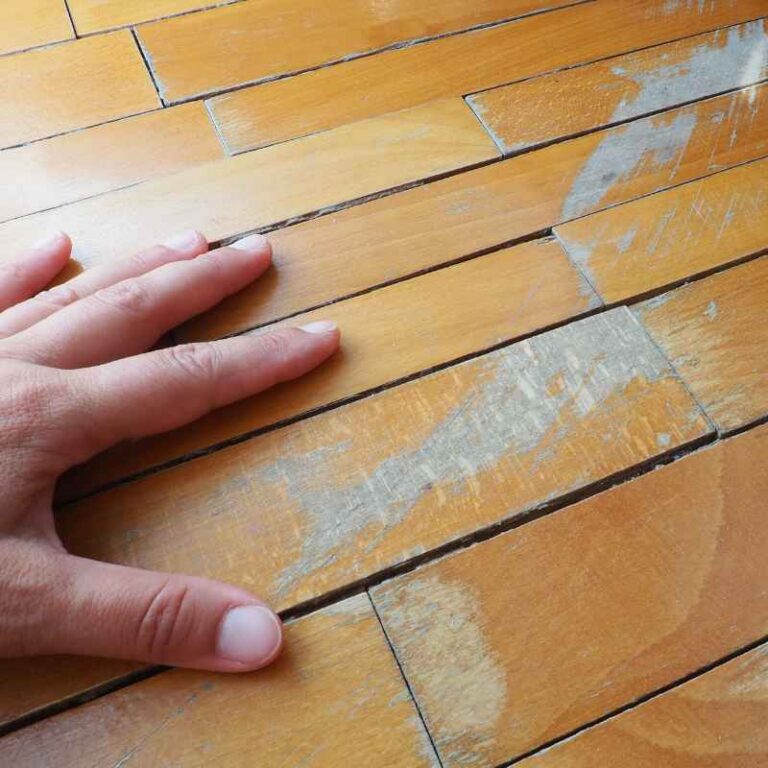
Press near seams and fasteners. A soft spot can mean panel damage, fastener failure, or a problem below the panel. Delamination, visible gaps, cupping, and low spots usually need panel repair or replacement before any underlayment is installed.
Picture a bedroom with a low ridge across two plywood sheets. Underlayment will not flatten the ridge enough for a click-lock floor, and it will not stop that seam from telegraphing through a rigid finish surface. The subfloor needs correction first.
What underlayment does under the finish floor
Underlayment is a non-structural layer installed above the subfloor. Cabinet & Floor Direct describes it as the first layer below floors, with the subfloor as the second layer below floors and joists below that. Underlayment can add cushioning, cut sound and vibration, and sometimes include a moisture-blocking film.
Cushioning, noise reduction, and vibration control
Some foam products are made to help absorb vibration, and foam underlayment is often used to reduce noise. That matters most when you want a quieter feel or when an upstairs room needs less footstep noise. Published STC/IIC ratings in product data matter more than broad marketing claims.
Moisture-blocking film and integrated barriers
Standard foam underlayment is often paired with a moisture barrier, and some combo products are rated for installation over concrete subfloors or plywood. That barrier may be built in or added separately. Either way, moisture control is a product choice, not something you should assume is always there.
Which finish floors usually need it
Laminate and many floating floor systems often use underlayment. Vinyl and tile may need a different layer package depending on the product and substrate. Concrete slabs often need moisture management before the finish floor goes down, which may mean a combo underlayment or a separate membrane.
Does underlayment replace subfloor?
No. Underlayment does not replace a subfloor because it is not structural. It can improve surface performance, add sound control, and help with moisture separation, but it cannot carry loads, stiffen joists, or fix a rotten or badly uneven base.
What underlayment can fix
It can smooth minor surface variations within the limits allowed by the flooring manufacturer, lower footstep noise, and separate some finish floors from a substrate that needs vapor control. It can also improve compatibility between a floating floor and the base below it.
What underlayment cannot fix
It cannot stop bounce from undersized joists, remove a structural squeak caused by movement, or make a damaged panel sound again. If a subfloor is soft underfoot, underlayment just hides the symptom for a while. The failure remains below the surface.
Which layer solves which floor problem?
Use the floor assembly as a troubleshooting map. Structural problems point to the subfloor or joists. Surface-performance problems point to underlayment. That split keeps you from spending money on the wrong fix.
Squeaks and bounce
Squeaks and bounce usually point to the joists, fasteners, or subfloor panels. Underlayment may slightly change sound transmission, but it does not stop movement between framing members and panels. If the floor flexes, inspect below the finish layer.
Moisture and vapor
Moisture control is often an underlayment or membrane job, especially over concrete. On wood subfloors, the goal is usually dry materials and the right vapor layer for the finish floor system. A moisture barrier may be separate from underlayment or built into it, depending on the product.
Flatness and telegraphing
Floor flatness is a tolerance issue, not a cushioning issue. Dips, humps, and panel seams can telegraph through vinyl, laminate, and tile, so they often need patching, sanding, or panel replacement before underlayment or finish flooring goes down. Underlayment is not a substitute for a flat substrate.
Decision checklist: inspect, patch, replace, or add underlayment
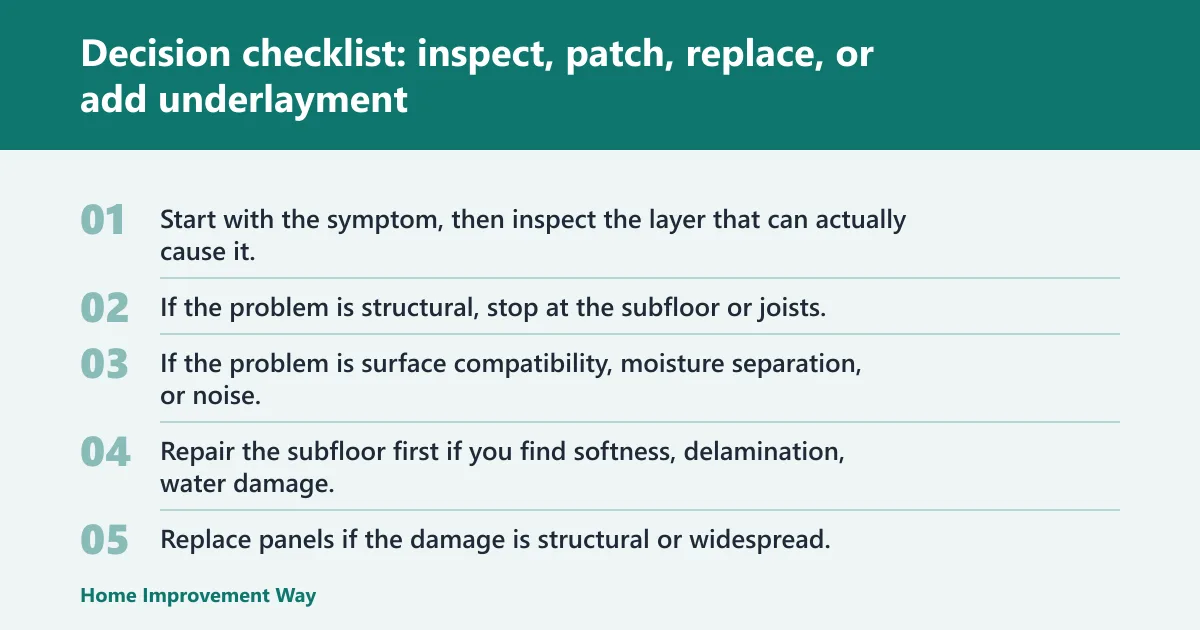
Start with the symptom, then inspect the layer that can actually cause it. If the problem is structural, stop at the subfloor or joists. If the problem is surface compatibility, moisture separation, or noise, underlayment may be the right fix.
| Observed floor problem | Squeaks | Bounce | Moisture | Flatness | Noise | Finish-floor compatibility | Inspect / fix / replace |
|---|---|---|---|---|---|---|---|
| Floor feels springy or bouncy | Often yes | Yes | No | Maybe | Maybe | Usually not the main issue | Inspect joists and subfloor fastening |
| Soft spot near a seam or appliance | Sometimes | Sometimes | Often yes | Maybe | No | No | Replace damaged subfloor panel |
| Minor footsteps sound loud upstairs | No | No | No | No | Yes | Maybe | Add sound-control underlayment |
| Concrete slab has vapor concerns | No | No | Yes | Maybe | Maybe | Depends on floor type | Use barrier or combo underlayment |
| Ridges, dips, or seam lines telegraph through flooring | No | No | Maybe | Yes | No | Yes | Patch, sand, or replace subfloor panels |
| Floating floor calls for smoother support | No | No | Maybe | Maybe | Maybe | Yes | Add the specified underlayment |
When to repair the subfloor before any underlayment goes down
Repair the subfloor first if you find softness, delamination, water damage, failed fasteners, or a dip that exceeds the flooring maker’s flatness limits. Replace panels if the damage is structural or widespread. Patch only when the problem is localized and the panel remains sound around it.
When to choose a barrier, combo underlayment, or no underlayment at all
Choose a barrier or combo product when the floor system calls for moisture control and a smooth interface in one layer. Choose no underlayment when the finish floor is designed to sit directly on the subfloor or slab and the manufacturer does not call for it. More layers are not automatically better.
Concrete slab, plywood subfloor, and other common bases

The base under the floor changes the decision. Concrete behaves differently from wood framing, and plywood behaves differently from particleboard or OSB. The finish floor manufacturer’s requirements should always govern the layer stack.
What changes over concrete
Concrete slab installations often need some moisture management. A floating floor may need underlayment with an integrated barrier, while other products may need a separate membrane or no underlayment at all. If moisture is the risk, do not guess; verify the product stack for that flooring type.
What changes over plywood or OSB
Over plywood or OSB, the first job is to verify that the subfloor is sound, flat, and dry. Underlayment may still be needed for acoustic control or finish-floor compatibility, but it is never a substitute for damaged wood panels. Plywood subfloor inspection should include seams, gaps, dips, water damage, and fastener issues.
Why floor type changes the underlayment choice
Laminate and many floating floors often need a specific cushion layer. Tile needs a base that meets stiffness and flatness requirements. Vinyl may need a very smooth surface, sometimes with a manufacturer-approved pad, while concrete usually shifts the focus to moisture control first.
A common first-timer mistake is buying sound-control foam for a vinyl floor over a slab with hairline cracks and moisture history. The foam may address footsteps, but it does not solve vapor movement or a substrate that needs repair. That is a subfloor or slab decision first.
What is the difference between floor underlayment and subfloor?
Underlayment is the thin, non-structural layer above the subfloor. The subfloor is the structural base that supports the finished floor and the loads above it. In practical terms, underlayment changes how the floor performs; the subfloor determines whether the floor is strong, flat, and stable enough to build on.
Which layer is structural: underlayment or subfloor?
The subfloor is structural. Underlayment is not. Joists provide the framing support below the subfloor, and they also influence stiffness and bounce. That means structural failures usually trace downward through the assembly, while performance issues are more likely solved at the underlayment level.
Do I need underlayment over plywood subfloor?
Sometimes, but not always. You need it when the finish floor calls for sound reduction, moisture separation, or a specific interface over plywood. You do not need it simply because plywood is present. Follow the flooring manufacturer’s requirements and check that the plywood is flat, dry, and firmly fastened first.
Can underlayment help with noise and moisture?
Yes, within limits. Sound-control underlayment can help reduce footstep noise and vibration, especially in upstairs rooms or shared buildings where sound ratings may matter. Moisture-blocking film may also be built in or added separately, but that barrier does not replace proper subfloor dryness or slab prep.
What happens if the subfloor is uneven or damaged?
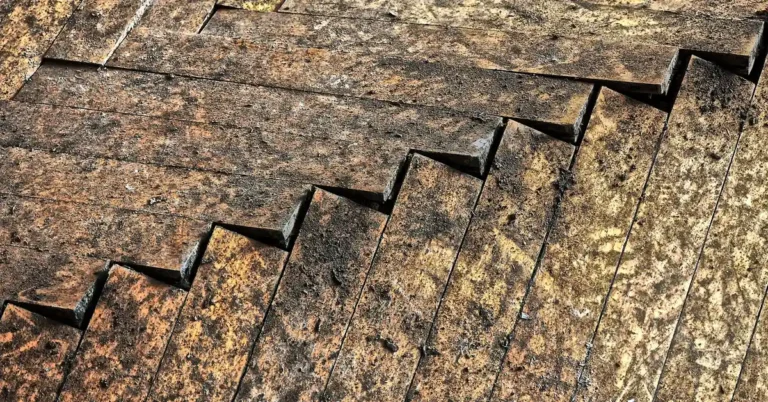
Uneven or damaged subfloor panels can telegraph through the finish floor, create hollow spots, cause movement, and shorten the life of the installation. Minor flaws may be patched or sanded, but soft, delaminated, or water-damaged panels usually need replacement. If the floor feels weak, stop and inspect the structure below.
Is underlayment the same as a moisture barrier?
No. A moisture barrier controls vapor movement; underlayment is the broader performance layer that may or may not include that function. Some products combine both, especially for floating floors or over concrete, but many do not. Check the product description and the flooring instructions before assuming the barrier is included.
What is the role of joists under the subfloor?
Joists are the framing members that support the subfloor and control how stiff or bouncy the floor feels. If joists are undersized, damaged, or poorly fastened, the problem shows up as bounce or squeak above. Underlayment cannot correct that; the fix belongs in the framing and subfloor layers. (en.wikipedia.org)
Verdict: Floor underlayment or subfloor: what each layer does?
Choose Floor underlayment if you need the quieter feel of foam underlayment to reduce footsteps upstairs, or if a concrete slab has vapor concerns and the finish floor calls for a moisture-blocking film or integrated barrier.
Choose subfloor: what each layer does if the floor feels springy or bouncy, or if you find a soft spot, delamination, water damage, or a low ridge across plywood sheets that has to be repaired or replaced before the finish floor goes down.
Sponsored / affiliate links. As an Amazon Associate I earn from qualifying purchases. I may earn additional commission from eligible campaigns.
 63PCS Laminate Wood Flooring Installation Kit, Vinyl/LVP Flooring Tools, Tapping Block with Double-Sided Notches, Pull Bar, Floor Spacers, Rubber Mallet
 WXINOYU Laminate Wood Flooring Installation Kit, Vinyl/LVP Flooring Tools,Tapping Block with Handle,Pull Bar,Rubber Mallet,Floor Spacers,12-Pack Upgraded Spacers,Contour Scribe Tool,Floor Gap Fixer