How to Build a Barn Door With Hinges Step by Step
Building a barn door can seem like a big project, especially if you’re new to DIY. Many people wonder How to Build a Barn Door With Hinges Step by Step, feeling a bit unsure where to start. You might worry about getting the measurements right or choosing the best materials.
But it doesn’t have to be complicated! This guide will break down the whole process into easy, manageable steps. You’ll see how to create a beautiful, functional barn door for your home.
Build Your Own Barn Door Easy Steps
This section covers the basics of building your very own barn door. We’ll go through the essential tools and materials you will need to get started. You’ll learn about choosing the right wood and how to cut it to size.
This part is all about setting up for success before you even start assembling. Getting this right makes the rest of the project much smoother.
Gathering Your Barn Door Building Supplies
Before you can build, you need your supplies. Think of this like gathering ingredients for a recipe. Having everything ready means you won’t have to stop midway to run to the store.
This saves time and frustration. It’s also smart to have safety gear handy. Working with wood can involve sharp tools, so protection is key.
- Lumber for the Door: This is your main material. You can use pine, cedar, or even reclaimed wood. Pine is affordable and easy to work with. Cedar has a nice smell and is more resistant to bugs and rot. Reclaimed wood gives a rustic, unique look. Aim for boards that are straight and free of large knots. You’ll need enough to build the frame and panels of your door. For a standard door, you might need around 40-60 feet of 1×6 or 1×8 boards, depending on your design.
- Wood Screws: These hold your door together. Use good quality screws that won’t strip easily. Wood screws designed for furniture or general construction work well. You’ll need various lengths, perhaps 1 1/4 inch and 2 inch screws, depending on the thickness of your lumber. Buying a box of assorted sizes can be helpful for future projects too.
- Wood Glue: Glue adds strength to your joints. When you screw pieces together, glue helps them bond even better. This makes your door sturdier and last longer. Use a good wood glue that dries clear or a color that matches your wood. Apply it to the edges before screwing them together.
- Sandpaper: You’ll need sandpaper to make the wood smooth. Start with a coarser grit, like 80 or 100, to remove any rough spots. Then, move to a finer grit, like 150 or 220, for a silky finish. Smooth wood makes painting or staining much easier and looks much better.
- Finishing Supplies: This includes primer, paint, or stain, and a sealant like polyurethane. Choose a finish that matches your home’s decor. For a rustic look, a dark stain can be great. For a modern farmhouse style, white paint often works well. A sealant protects the wood from moisture and wear.
- Safety Gear: Always wear safety glasses to protect your eyes from sawdust and flying debris. Gloves can protect your hands from splinters. A dust mask is also a good idea when sanding.
Essential Tools for Barn Door Construction
Having the right tools makes the job much easier and safer. You don’t need a professional workshop, but a few key tools will make a big difference in the quality of your finished door. Make sure you know how to use each tool safely before you begin.
- Measuring Tape: For accurate measurements. Always double-check your marks.
- Pencil: To mark your cuts and assembly points.
- Saw: A circular saw or a miter saw is best for clean, straight cuts. A handsaw can work but requires more effort and precision.
- Drill and Drill Bits: For pre-drilling holes and driving screws. Pre-drilling prevents wood from splitting.
- Sander: An orbital sander makes smoothing the wood much faster than sanding by hand.
- Clamps: To hold pieces together while glue dries or while you’re screwing them.
- Level: To ensure your door and hardware are installed straight.
Designing Your Barn Door Structure
Once you have your supplies and tools, it’s time to think about the design of your barn door. There are many styles, but most follow a similar basic structure. We will focus on a simple, classic design that is easy for beginners.
This design typically involves a sturdy frame with panels that fill the space within the frame. Understanding this structure helps you visualize the finished product and plan your cuts.
Understanding Basic Barn Door Designs
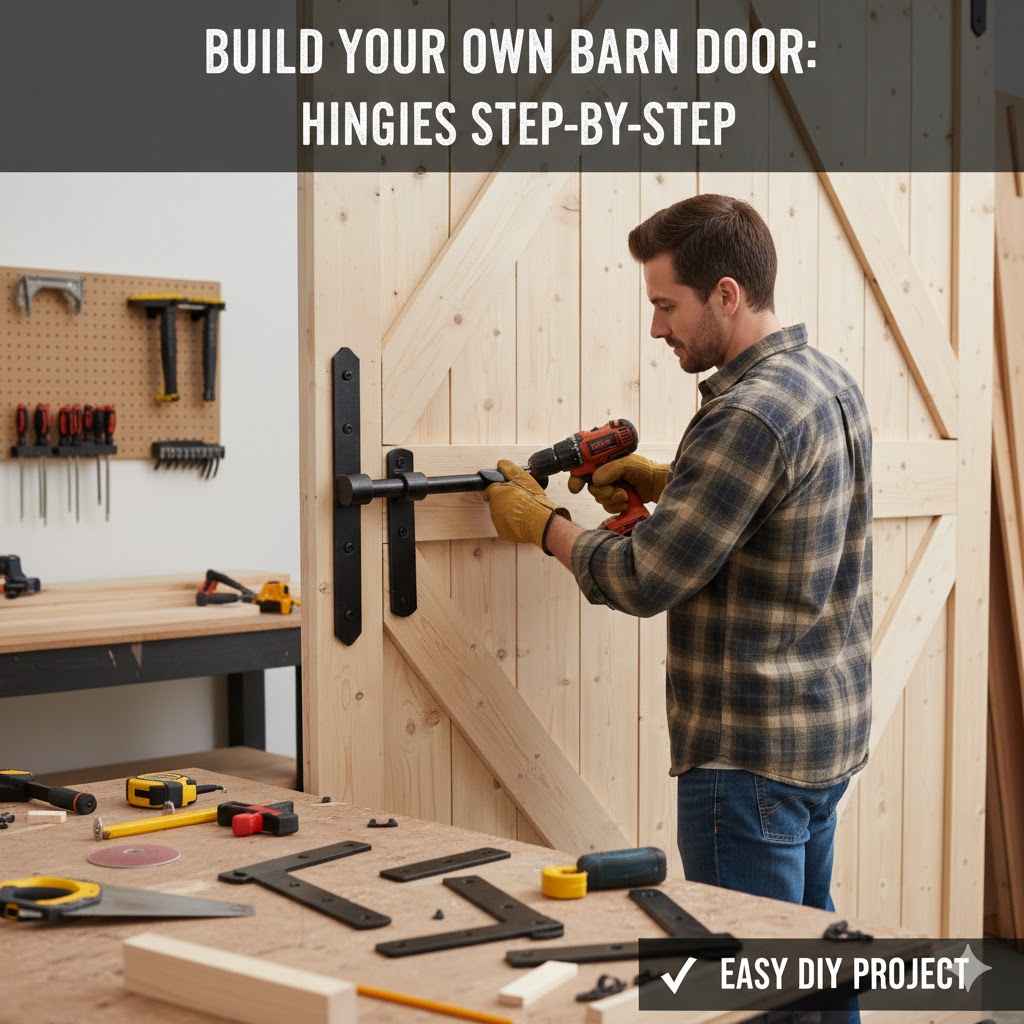
Most DIY barn doors use a rectangular frame with cross braces or solid panels inside. The most common design is the Z-brace style, which has horizontal boards, vertical boards, and one or two diagonal braces. This not only looks good but also adds strength.
Another simple design is the four-panel door, where the frame is divided into four equal rectangles. We will focus on the Z-brace design as it’s popular and strong.
- The Frame: This is the outer border of your door. It’s usually made from wider boards, like 1×6 or 1×8. The frame needs to be strong to support the rest of the door. It’s typically constructed with two vertical stiles and two horizontal rails.
- The Brace: This is the diagonal piece that adds rigidity to the door. It prevents the door from sagging over time. The brace runs from one side of the door to the other at an angle.
- The Panels: These are the boards that fill the inside of the frame. They can be made from narrower boards, like 1×4 or 1×6, depending on the overall size of your door and the look you want.
Measuring and Cutting Your Lumber
Accuracy here is super important. Measure twice, cut once! You’ll need to determine the size of your door based on the opening it needs to cover.
A good rule of thumb is to make the door about 2 inches wider and 1 inch taller than the opening. This ensures good coverage and allows for a bit of wiggle room.
For a Z-brace door, let’s say you want a door that is 36 inches wide and 84 inches tall. You’ll need:
- Two vertical stile boards, each 84 inches long.
- Two horizontal rail boards, each 33 inches long (this accounts for the width of the two stiles, so 36 inches total width minus the thickness of two 1.5-inch stiles equals 33 inches).
- One diagonal brace board. You’ll measure this piece after assembling the frame.
- Several horizontal panel boards, each 33 inches long (again, to fit between the stiles). You’ll need enough to fill the desired height.
Cut all your boards to the precise lengths. For the Z-brace, you will attach the horizontal rails between the stiles. Then, measure the distance for your diagonal brace and cut it to fit.
Make sure the ends of the brace are cut at an angle so they sit flush against the rails.
Assembling Your Barn Door
This is where your door starts to take shape. We will assemble the frame first, then add the brace, and finally attach the inner panels. Taking your time during assembly ensures a strong and beautiful final product.
Pre-drilling holes will be your best friend to prevent splitting the wood, especially when working near the ends of boards.
Constructing the Main Door Frame
Lay your two vertical stile boards parallel on a flat surface. Place your two horizontal rail boards between them, one at the top and one at the bottom. Make sure the ends of the rails are flush with the outer edges of the stiles.
This creates the basic rectangle of your door.
Before you screw them together, it’s good to use wood glue on the ends of the rails where they will meet the stiles. Then, pre-drill two pilot holes through the stile into the end of each rail. Drive 2-inch wood screws through these holes to secure the frame.
Make sure the frame is square by measuring diagonally from corner to corner; the two diagonal measurements should be equal.
Adding the Diagonal Brace
Now, position your cut diagonal brace board across the back of the frame. It should run from the bottom corner of one stile to the top corner of the other stile. Ensure it sits snugly against the horizontal rails.
The brace can run in either direction, but a common look is to have it go from the bottom left to the top right, or vice versa.
Apply wood glue to the ends of the brace where it meets the rails. Pre-drill pilot holes through the brace into the rails. Use 1 1/4-inch wood screws to attach the brace securely.
Again, check that the frame remains square after adding the brace. Some people like to add a second, shorter diagonal brace for extra strength or a different look.
Attaching the Inner Panels
Now it’s time to fill in the open spaces within your frame with the narrower boards. These are your panels. Lay them horizontally, side-by-side, between the stile boards.
Ensure they fit snugly but not so tight that they bow the stiles. You might need to trim the last panel slightly to make it fit perfectly.
Apply a thin bead of wood glue along the edges of each panel where they meet the stiles and rails. Pre-drill pilot holes through the stiles and rails into the ends of each panel board. Use 1 1/4-inch wood screws to attach the panels.
Space your screws every 12-18 inches along the stiles and rails for a secure hold. You should have a solid-looking door once all panels are attached.
Finishing and Installing Your Barn Door
With the door itself built, we move on to making it look great and then hanging it. The finishing touches make a huge difference in the final appearance. Installation is the final step to enjoy your handiwork.
This part requires attention to detail to ensure the door functions smoothly and safely.
Sanding and Finishing the Door
Once assembled, it’s time to sand your barn door. Start with a coarser grit sandpaper (around 80-100) to smooth out any rough edges or imperfections. Then, move to a medium grit (150) and finally a fine grit (220) for a super smooth finish.
Wipe away all the dust with a tack cloth or a slightly damp rag. This is crucial for a clean paint or stain job.
Apply your chosen finish. If you’re painting, apply a coat of primer first. Let it dry completely, then apply two coats of your paint color, allowing drying time between coats.
If you’re staining, apply the stain evenly with a brush or rag. Wipe off any excess stain after a few minutes, as per the product instructions. Once the stain is dry, apply 2-3 coats of a clear sealant like polyurethane for protection.
Lightly sand with very fine grit sandpaper (320) between coats of sealant for an extra smooth finish.
Installing the Barn Door Hardware
This is a critical part for the door to function. You’ll need a barn door hardware kit, which typically includes a track, rollers, and mounting hardware. Follow the manufacturer’s instructions carefully, as kits can vary.
The most important part is ensuring the track is perfectly level and securely mounted to your wall studs. Use a stud finder to locate the studs.
Measure and mark the location for your track. Typically, the track is mounted several inches above the top of the door. Pre-drill holes and use the provided lag bolts to attach the track securely to the wall studs.
Once the track is mounted, attach the rollers to the top of your door. You’ll likely need to pre-drill holes for the roller mounting screws. Finally, hang the door onto the track.
Hanging and Adjusting Your Barn Door
Carefully lift the door and slide the rollers onto the track. Ensure it moves smoothly along the track. Check that the door hangs straight using a level.
You may need to adjust the position of the rollers or the track slightly to get it perfectly plumb. Most kits come with stoppers to prevent the door from rolling off the track at either end.
Install these stoppers according to the hardware instructions. Test the door’s movement several times. Make sure it opens and closes without rubbing against the floor or frame.
If it does rub, you might need to adjust the height of the track or the roller position. A well-installed barn door should slide easily and look fantastic.
Frequently Asked Questions
Question: How wide should my barn door be compared to the doorway
Answer: It’s generally recommended that your barn door be about 2 inches wider and 1 inch taller than the actual doorway opening. This overlap helps cover the gap completely when the door is closed.
Question: Can I use any type of wood for a barn door
Answer: Yes, you can use various types of wood like pine, cedar, oak, or even reclaimed lumber. Pine is a popular choice for beginners because it’s affordable and easy to work with. Cedar offers natural resistance to pests and rot.
Question: What is the purpose of the diagonal brace in a barn door
Answer: The diagonal brace is crucial for adding structural integrity and preventing the door from sagging or warping over time. It provides essential support to the door frame.
Question: How do I ensure my barn door hardware is installed securely
Answer: Always mount the barn door track directly into wall studs using a stud finder. Use strong lag bolts as provided in your hardware kit. Properly securing the track is vital for the safe and smooth operation of the door.
Question: How can I achieve a smooth finish on my barn door
Answer: Thorough sanding is key. Start with a coarser grit sandpaper and gradually move to finer grits (up to 220). Always wipe away dust before applying any primer, paint, stain, or sealant for the best results.
Wrap Up
You’ve learned how to build a barn door with hinges step by step. From choosing wood to sanding and hanging, the process is manageable. Following these steps will result in a beautiful, functional barn door.
Enjoy your new DIY creation and the style it adds to your home.