How to Install Bifold Door Hardware the Easy Way
Installing bifold door hardware can seem like a big job if you haven’t done it before. Many people find it a little confusing to get everything lined up just right. But it doesn’t have to be hard!
This guide will show you how to install bifold door hardware the easy way. We’ll break it down into simple steps so you can get your doors looking great and working perfectly in no time.
Gathering Your Bifold Door Hardware and Tools
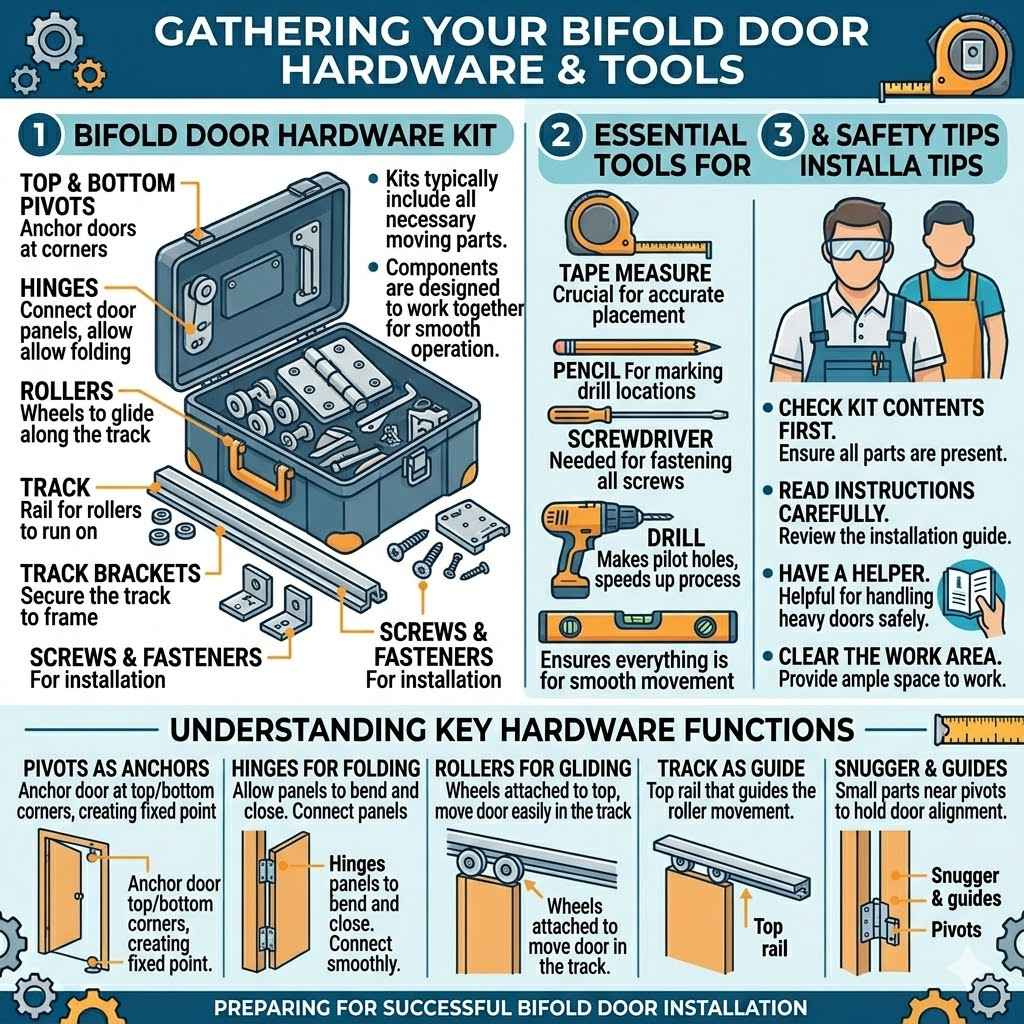
Before you start, make sure you have all the right parts and tools. Having everything ready makes the job go much smoother. You’ll need the bifold door hardware kit, which usually includes hinges, pivots, rollers, and a track.
You’ll also need basic tools like a tape measure, a pencil, a screwdriver, a drill with drill bits, and a level. It’s also handy to have safety glasses to protect your eyes.
What’s Inside a Bifold Door Hardware Kit
A typical bifold door hardware kit has several key components. These parts work together to allow the doors to fold and slide smoothly. You’ll find top and bottom pivots that anchor the doors.
There are also hinges that connect the door panels. Rollers, often attached to the top pivots, help the doors glide along the track. Some kits also include a track or rail for the rollers to run on, and screws to attach everything.
Understanding each piece helps a lot. The pivots are like the door’s feet, holding it in place at the top and bottom. The hinges are what allow the doors to bend and fold.
The rollers are the wheels that make movement easy. Without the right combination of these parts, your bifold doors won’t operate correctly.
Essential Tools for Installation
Having the correct tools makes a big difference. A tape measure is crucial for accurate placement. A pencil lets you mark where to drill.
A screwdriver, preferably with different bit types, is needed for fastening screws. A drill makes pilot holes and can speed up the process. A level ensures everything is straight, which is important for smooth operation.
Safety is also important. Always wear safety glasses when drilling or working with tools. If you’re working with heavy doors, it’s a good idea to have a helper.
This ensures you don’t strain yourself and that the doors are handled safely during the process.
Preparing Your Doorway and Doors
Proper preparation is key to a successful installation. This involves making sure your doorway is ready and your doors are prepped correctly. Taking the time here will save you a lot of frustration later on.
It ensures everything fits well and functions as it should.
Measuring and Marking the Doorway
Accurate measurements are super important. First, measure the height of your opening. You need to know this to set the height of your track.
Next, measure the width of the opening. This tells you how many bifold doors you’ll need and how they should be spaced. Use a tape measure and mark your lines clearly with a pencil.
A level is your best friend here. Make sure the lines you mark are perfectly straight. If your track isn’t level, the doors might bind or not close properly.
Double-check all your measurements before you start drilling. It’s much easier to fix a measurement error now than to fix a drilling error later.
Preparing the Bifold Doors Themselves
Your bifold doors might need some preparation before hardware can be attached. Check if there are pre-drilled holes for the hinges and pivots. If not, you’ll need to drill them yourself.
Follow the instructions that came with your hardware kit for precise placement. Often, the hinges go on the side of the door panel that will be the edge when folded.
The pivots usually attach to the top and bottom edges of the door panels. Make sure these are installed squarely. The hinges connect the individual door panels together.
Ensure they are aligned so the doors can fold easily without binding. Some door panels might have a groove on one edge for the roller to slide into.
Installing the Bifold Door Track and Pivots
This section covers the physical installation of the main hardware. Getting these parts right sets the foundation for your bifold doors to work smoothly. We’ll focus on placing the track and attaching the crucial pivot hardware.
Mounting the Top Track
The top track is where your doors will slide. It’s usually mounted to the header or top of the door frame. Use your measurements and level to mark the position for the track.
Then, use a drill to create pilot holes. Secure the track firmly using the screws provided in your kit. Ensure the track is straight and runs the full width of the opening.
Track installation is critical for smooth operation. If the track is crooked, the rollers will snag. This can cause the doors to stick or even fall off.
Take your time and use your level multiple times during this step. Make sure the screws are driven in tight so the track doesn’t move.
Attaching Top and Bottom Pivots
Pivots are essential for supporting your doors. The bottom pivots are typically installed on the floor or the bottom of the door frame. The top pivots are installed on the top of the door frame, corresponding to the bottom pivots.
You’ll need to align these carefully with the door panel positions.
Most hardware kits come with templates or clear instructions for pivot placement. It’s important that the top and bottom pivots for each door are perfectly aligned vertically. If they are off, the door will not hang straight or operate smoothly.
Drill pilot holes and secure the pivots with screws. Ensure they are flush with the surface they are mounted on.
Example Scenario for Pivot Alignment:
- Measure the exact width of your door opening.
- Divide this width by the number of panels to find the spacing for each door.
- Mark the center point for the bottom pivot on the floor or frame based on this spacing.
- Repeat this marking for the top pivot position.
- Ensure these marks are perfectly aligned vertically before drilling.
Hanging and Adjusting the Bifold Doors
Now that the track and pivots are in place, it’s time to hang the doors. This part involves carefully placing the doors onto the hardware and then making any necessary adjustments for them to function perfectly.
Hanging the Doors onto the Hardware
With the pivots installed, you can now hang the doors. This usually involves lifting each door panel and inserting its top pivot into the corresponding hole in the top track. The bottom pivot should naturally fall into its place on the floor or frame.
This can sometimes be a two-person job, especially for heavier doors. Make sure the roller on the top pivot engages with the track. Once the door is hanging, check that it moves freely along the track.
If it feels stiff, something may not be aligned correctly.
Adjusting for Proper Fit and Operation
Most bifold door hardware allows for adjustments. You can usually adjust the height of the door by turning a screw on the bottom pivot. This is useful if the door is dragging on the floor or if there’s too much space above it.
You can also often adjust the side-to-side position of the door. This helps ensure the panels are aligned correctly and that there are no gaps when the doors are closed. Look for adjustment screws on the hinges or pivots.
Small adjustments can make a big difference in how smoothly the doors operate.
Key Adjustments to Check:
- Height Adjustment: Ensure the door doesn’t drag on the floor. There should be a small gap, typically about a quarter-inch, for clearance.
- Plumbness: Use a level to check if the door is hanging straight up and down. Adjust if it’s leaning.
- Spacing Between Panels: Make sure the bifold doors fold neatly without binding or overlapping too much. Adjust hinge placement if needed.
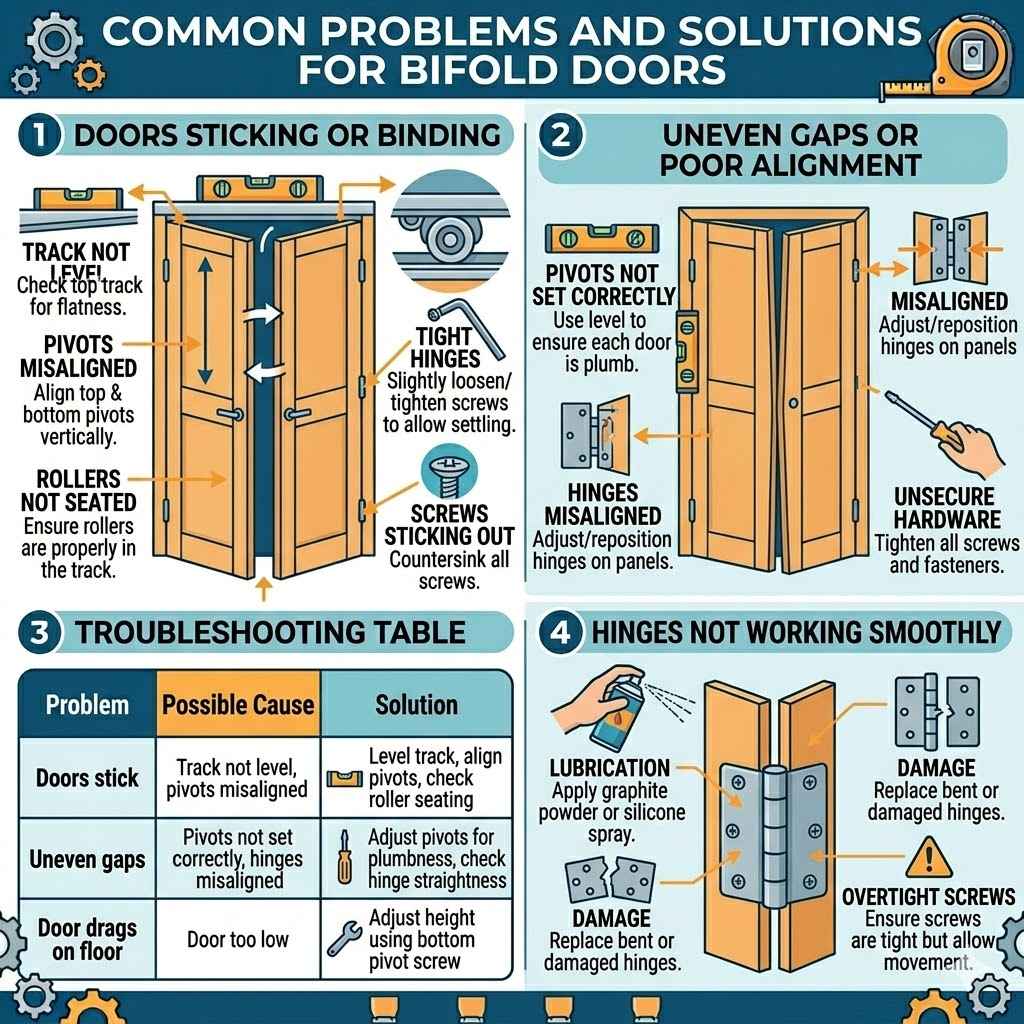
Common Problems and Solutions
Even with careful installation, you might run into a few snags. Knowing common issues and how to fix them will save you time and frustration. Most problems are simple to resolve with a few adjustments.
Doors Sticking or Binding
If your bifold doors stick or bind, it’s usually due to misalignment. Check that the top track is perfectly level. Also, ensure the top and bottom pivots are aligned vertically.
Sometimes, the hinges might be too tight, or a door panel might be warped.
Try slightly loosening the screws on the hinges or pivots and then retightening them. This can sometimes allow the door to settle into a better position. You can also check if the rollers are properly seated in the track.
Ensure no screws are sticking out that could catch on the track.
Uneven Gaps or Poor Alignment
Uneven gaps between door panels or with the frame often mean the pivots aren’t set correctly. Use your level to ensure each door is plumb. Adjust the pivots using their adjustment screws until the doors are straight and the gaps are even.
This might take a few tries.
For misalignment, check if the hinges connecting the panels are straight. Sometimes, the hinges themselves might need adjustment, or they may need to be repositioned slightly. Ensuring all hardware is installed securely and squarely is the best way to prevent these alignment issues from occurring in the first place.
Troubleshooting Table:
| Problem | Possible Cause | Solution |
|---|---|---|
| Doors stick | Track not level, pivots misaligned | Level track, align pivots, check roller seating |
| Uneven gaps | Pivots not set correctly, hinges misaligned | Adjust pivots for plumbness, check hinge straightness |
| Door drags on floor | Door too low | Adjust height using bottom pivot screw |
Hinges Not Working Smoothly
If hinges feel stiff, they might need lubrication. A bit of graphite powder or a silicone spray can help. Also, ensure the hinges are not bent or damaged.
If they are, you might need to replace them. Make sure the screws holding the hinges are tight but not so tight that they prevent movement.
Frequently Asked Questions
Question: How do I know which side of the door to put the hinges on?
Answer: Typically, hinges go on the side of the door panel that will be the edge when the door is folded. Check your specific hardware kit instructions, as they usually provide a diagram for correct placement.
Question: Can I install bifold door hardware by myself?
Answer: Yes, you can install bifold door hardware by yourself, but it can be easier with a helper, especially when lifting the doors. The steps are straightforward if you follow them carefully.
Question: What if my doors don’t fold completely flat?
Answer: This usually means the pivots or hinges are not aligned properly. Ensure your top track is level and that the top and bottom pivots are vertically aligned for each door panel. Minor adjustments can fix this.
Question: How much gap should there be between the bifold doors and the floor?
Answer: A small gap, generally about a quarter of an inch (around 6mm), is ideal. This prevents the doors from dragging and allows for minor floor variations or movement.
Question: My bifold door is squeaking. What should I do?
Answer: Squeaking often means the hardware needs lubrication. You can use graphite powder or a silicone-based lubricant on the hinges and rollers. Avoid oil-based lubricants, as they can attract dust.
Conclusion
You’ve learned how to install bifold door hardware the easy way. By following these steps, you can successfully hang your bifold doors. Remember to measure carefully, prepare your doors and frame, and make small adjustments.
Enjoy your new, smoothly operating bifold doors!