How to Remove Toilet Ring Stains Without Scratching Porcelain
Use a non-scratch sponge or wet pumice only on confirmed vitreous china. Start with a 1:1 vinegar-water soak for about 10 to 15 minutes if the label and surface allow it, then rinse well and switch to a toilet-safe cleaner that matches the stain. Avoid abrasive pads and dry scrubbing. Scratching the glaze makes the stain harder to remove and can make the bowl hold dirt longer. For porcelain and vitreous china compatibility, see CDC toilet cleaning guidance and Bob Vila’s toilet cleaning guide.
What causes toilet ring stains?


Toilet rings form at the waterline because that is where minerals, grime, and waste residue dry and collect. Brown rings often point to mixed buildup, while yellow rings often point to hard water or limescale. Hard water leaves dissolved minerals behind as water evaporates, which is why repeated buildup often follows the same band in the bowl; see Britannica on hard water and EPA drinking water basics. An old ring is harder to remove because layers have bonded to the glazed surface.
Why the stain sits at the waterline
The ring forms where water repeatedly rises, drains, and leaves residue behind. If the bowl is cleaned only occasionally, the same band of buildup returns in the same spot. That is why early cleaning matters, and Merry Maids recommends attacking toilet bowl rings early because removal gets easier.
Fresh grime, limescale, and mixed buildup
Fresh grime usually wipes easier and responds to a toilet brush plus cleaner. Hard-water limescale is mineral buildup, and yellow toilet stains can be caused by hard water and limescale; see Mr. Rooter on hard-water toilet stains. Mixed buildup needs a cleaner that can dissolve minerals first, then a light scrub.
When an old ring needs a different approach
If the stain has stayed for weeks, the surface may need more than brushing. Start with a commercial acid-based bowl cleaner that is labeled for toilet use, then escalate only if the bowl still feels smooth and the stain remains. Follow the product label’s directions for dwell time, ventilation, and rinsing. Rough or dull spots are a stop sign, not a signal to scrub harder.
What you’ll need
- Commercial acid-based bowl cleaner
- Gloves
- Toilet bowl brush or wand
- Green nylon-backed scrub sponge
- Pumice stone for vitreous china only
- Clean water for wetting the pumice stone
- Flush access for rinsing the bowl after cleaning
Which toilet-ring remover is safest for your bowl?
The safest choice depends on both the stain and the fixture finish. Porcelain, also called glazed vitreous china, can scratch if you use the wrong abrasive tool, and some colored or specialty finishes need extra caution. Start with the least abrasive method that can still break the ring, and match the cleaner to the label directions and the surface you are treating.
| Stain type | Bowl finish | Recommended tool | Scratch risk | Dwell time | When to stop and escalate |
|---|---|---|---|---|---|
| Fresh grime | Glazed porcelain / vitreous china | Acid cleaner + toilet brush | Low | 5 to 10 minutes, or label directions if shorter/longer | Stop if the glaze feels smooth but the ring stays; move to a nylon-backed sponge. Do not use a pumice stone on enamel, colored, or plastic fixtures. |
| Hard-water limescale | Glazed porcelain / vitreous china | Acid cleaner + soft brush | Low to moderate | 10 to 15 minutes, or label directions if shorter/longer | Stop if the stain lightens but does not release; consider a nylon-backed sponge. Do not use dry abrasive pads on porcelain or any coated surface. |
| Old waterline ring | Vitreous china only | Wet pumice stone | Moderate | Keep wet while scrubbing | Stop if the surface dulls, feels gritty, or the bowl is not vitreous china. Do not use on colored, enamel, or plastic fixtures. |
| Mixed ring | Glazed porcelain / vitreous china | Acid cleaner, then nylon-backed sponge | Moderate | 5 to 15 minutes total, following the label | Stop if cleaner and light scrubbing do not move the ring. Do not jump straight to pumice unless the bowl is wet vitreous china and the stain is old. |
| Mineral stain on non-porcelain or colored bowl | Colored ceramic, enamel, plastic, or unknown finish | Cleaner labeled safe for that finish; soft brush only | Higher if finish is unknown | Use only the label-recommended contact time | Do not use pumice, melamine foam, or abrasive pads unless the manufacturer specifically allows them. If the finish is unknown, test the gentlest option first on a hidden area. |
How do you remove a toilet ring without scratching porcelain?
Use cleaner first, then light mechanical help. On glazed porcelain, the goal is to dissolve or loosen the ring without scouring the finish. The safest sequence is cleaner, dwell time, light brushing, then a soft abrasive only if the surface still feels smooth and the product label allows it.
Step-by-step method
- Put on gloves and apply the acid-based bowl cleaner directly to the stain at the waterline.
- Let it dwell for the label time, usually 5 to 15 minutes, so the cleaner can break the ring.
- Scrub with a toilet brush or wand using light pressure.
- If the ring remains and the glaze still feels smooth, switch to a green nylon-backed scrub sponge.
- Flush to rinse away the cleaner, then inspect the bowl under good light.
- Repeat only if the surface still feels smooth and the stain is fading.
Say your ring is a thin brown band just above the waterline in a white bowl. A brush and acid cleaner may clear it in one pass because the stain has not fully bonded. A darker, older band may need two gentle cycles, but only if the porcelain still feels slick and intact.
If the stain sits below the waterline, drain the bowl enough to expose the ring before applying cleaner. A product that stays submerged often loses contact time, which means the stain can look unchanged even after scrubbing.
Cleaner dwell and rinse guidance
Follow the cleaner’s label for dwell time, ventilation, and whether the product should sit on a damp or dry surface. Many acid cleaners work best when they can stay in contact with the stain long enough to loosen minerals, but leaving any cleaner on longer than the label allows can increase surface risk. Rinse thoroughly before deciding whether to repeat.
What cleaner removes toilet bowl rings fastest?
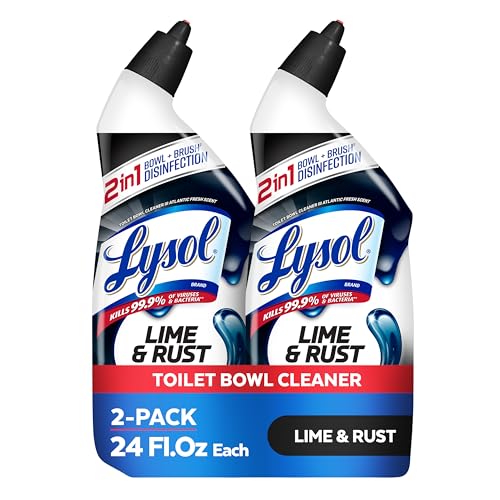
A commercial acid-based bowl cleaner is often a fast first step for many rings because it can help loosen mineral buildup and grime together. Choose a product labeled for toilet bowls and follow its directions rather than assuming all acid cleaners work the same way. Apply it directly to the stain, not just around the bowl, and let it sit before you scrub.
When a brush is enough
A toilet bowl brush or wand works best when the ring is fresh or light. It spreads cleaner across the stain and removes loosened residue without adding much scratch risk. Clean and store the brush separately so you are not putting residue back into the bowl the next time.
When a sponge makes sense
A green nylon-backed scrub sponge can help when the cleaner does most of the work but the ring still clings. It is more abrasive than a soft cloth, so use it only after the cleaner has had time to act and the label allows light scrubbing. If the surface starts to feel dull, stop.
Can you use a pumice stone on a porcelain toilet bowl?
Yes, but only on wet vitreous china and only for older stains. Pumice is best reserved for confirmed vitreous china that has stayed fully wet during scrubbing; using it dry or on the wrong finish can dull the glaze. Do not use it on colored, enamel, or plastic fixtures. Keep gloves on while you work. For a finish-specific overview, see Good Housekeeping’s toilet bowl cleaning guide.
How to use pumice safely
- Confirm that the bowl is vitreous china or glazed porcelain.
- Wet the pumice stone completely before contact with the bowl.
- Keep the stone wet while scrubbing the stain in short passes.
- Stop immediately if the finish dulls, scratches, or feels rough.
- Flush, then inspect before making another pass.
Suppose a 2-inch mineral ring has stayed in the bowl for months and a cleaner barely lightens it. A wet pumice stone can be the next step on vitreous china, but not on a colored toilet or a plastic fixture. The finish decides the tool, not the stain alone.
What should I do if the stain is actually limescale, not grime?
Use an acid cleaner first, because limescale is mineral buildup and usually responds better to acid than to plain scrubbing. Yellow toilet stains can be caused by hard water and limescale, and hard water leaves minerals behind as it evaporates. If the ring lightens but does not release, move to a nylon-backed sponge before considering pumice on approved surfaces only.
How to diagnose limescale quickly
Limescale often looks chalky, yellow, or crusted, especially where water sits longest. If the mark feels raised or rough but does not smear like grime, that is a clue it may be mineral scale. A cleaner designed for toilet bowls is usually more effective than soap alone, and This Old House’s toilet cleaning guidance also emphasizes starting with the least aggressive approach.
When to stop and escalate
Stop if the glaze looks dull, the surface feels gritty, or the ring does not change after two gentle passes. That is the point to pause and reassess the finish. More pressure can mark porcelain faster than it removes scale. If the bowl is not clearly vitreous china, do not move to pumice.
Common mistakes
The biggest errors are using too much abrasion too soon, skipping dwell time, and treating every ring like the same problem. Brown grime, yellow limescale, and mixed buildup do not respond the same way. Weekly cleaning matters because regular maintenance helps keep rings from returning, and it also reduces the need for stronger cleaners.
- Using a harsh pad first. Start with cleaner and a brush.
- Scrubbing before the cleaner has time to work. Dwell time matters.
- Using pumice on the wrong surface. Limit it to wet vitreous china only.
- Skipping gloves. Acid-based cleaners should be handled with protection.
- Letting the ring return. Weekly cleaning reduces repeat buildup.
A common first-timer mistake is attacking a yellow ring with the roughest pad in the house. That can leave faint scratch lines that hold dirt and make the next ring harder to remove. Another is stopping after a partial fade and then waiting a month; the stain often comes back stronger.
How do you prevent toilet rings from coming back?
Prevention is mostly routine. Keep the bowl from drying out with residue, use a toilet-safe cleaner on a regular schedule, and address hard-water buildup early before it becomes a crusted ring. For a broader maintenance plan, see The Spruce’s bathroom cleaning routine and hard-water stain removal tips.
Toilet ring stains checklist
- Brush the bowl once a week, including the waterline.
- Use a toilet cleaner that is labeled for regular maintenance.
- Rinse or flush after cleaning so residue does not dry in place.
- Check the waterline for early mineral haze before it becomes a ring.
- Wipe splashes and drips around the rim and seat area during bathroom cleaning.
Frequently asked questions
How do I remove a toilet ring stain without scratching the porcelain?
Start with gloves, an acid-based bowl cleaner, and a toilet brush. Let the cleaner sit for the label time, then scrub lightly and flush. If the ring remains, use a green nylon-backed scrub sponge only if the surface still feels smooth. Stop if the glaze dulls or feels rough.
Will vinegar or baking soda remove toilet stains?
They may help on light residue, but they are not the best first choice for stubborn rings. A commercial acid-based bowl cleaner is more direct for mineral buildup. If you try a vinegar-based soak, keep it brief and avoid mixing it with other cleaners. Then flush and inspect the glaze before adding abrasion.
What causes brown or yellow rings around the waterline in a toilet?
Brown rings usually involve mixed grime and mineral buildup. Yellow rings often point to hard water and limescale. The stain forms at the waterline because that is where residue dries and collects. If the same band keeps returning, weekly cleaning will help reduce it.
Is it safe to use Magic Eraser on a toilet bowl?
It can act like a mild abrasive, so treat it like a scrub pad rather than a soft cloth. Use caution on porcelain and avoid it on colored, enamel, or plastic surfaces unless the manufacturer says otherwise. If the bowl starts to dull, stop and switch back to cleaner only. For melamine foam abrasion concerns, see Consumer Reports on Magic Eraser use.
Sponsored / affiliate links. As an Amazon Associate I earn from qualifying purchases. I may earn additional commission from eligible campaigns.