What Blocks Microwave Radiation From Entering Your Home?
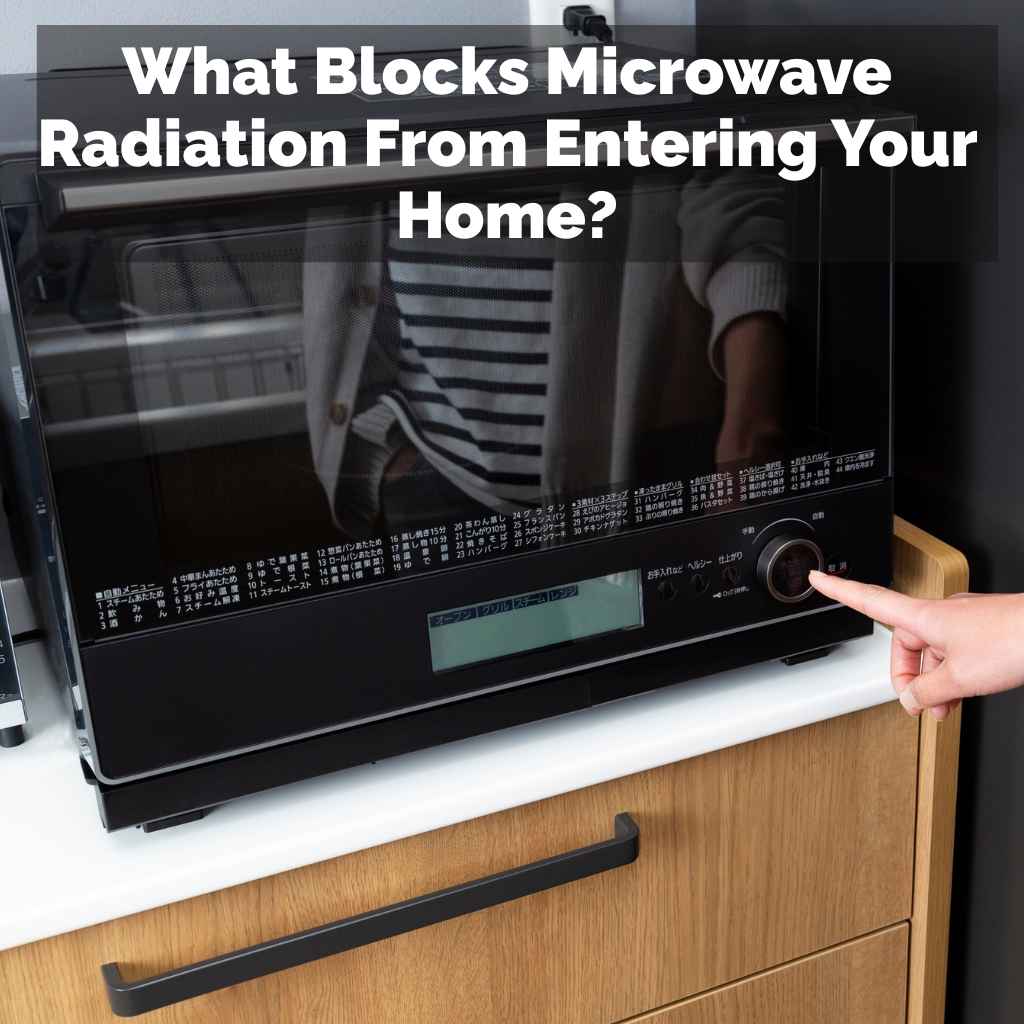
A Faraday cage of metal walls and fine metal mesh blocks microwave radiation, reflecting the waves back into the oven cavity instead of letting them escape into your home. The holes in that mesh are deliberately smaller than a microwave’s wavelength, which is why light passes through the door window but radiation doesn’t. This guide covers how that containment works, what to check if you suspect a leak, and general microwave safety in your home.
Microwave ovens are designed to contain microwave radiation inside. They use a metal box and a mesh screen on the door. These act as a Faraday cage, reflecting microwaves back inside.
Most radiation stays contained when the oven is in good working order and used correctly.
How Microwave Ovens Work and Contain Radiation
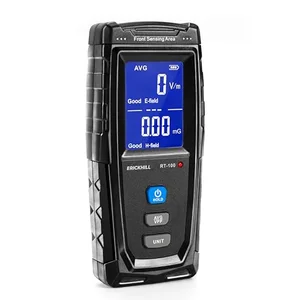
Our Pick: ERICKHILL Handheld EMF Meter – $39.99
|
Microwave Door Gasket Seal Replacement – $40.59
A worn or damaged door seal is what weakens the Faraday cage effect. Check on Amazon |
Faraday Copper Fabric RF Shielding Cloth – $22.99
The same Faraday-cage principle this guide explains, in wrappable fabric form. Check on Amazon |
RDINSCOS 3-in-1 EMF Detector – $29.69
A budget-friendly alternative meter for spot-checking leaks. Check on Amazon |
Microwave ovens use a special kind of energy. This energy is called microwave radiation. It’s like radio waves, but with a bit more power.
When you turn on your microwave, a part called a magnetron creates these waves. These waves bounce around inside the oven’s metal box.
The waves then make the water molecules in your food wiggle. This wiggling creates heat. That’s how your food cooks so fast.
The metal walls of the oven are key. They act like a mirror for these waves. They bounce the waves back towards the food.
This keeps the cooking energy focused inside.
Think of it like a laser pointer. The light stays in a beam. A microwave oven’s metal interior keeps the energy beam contained.
This is crucial for cooking efficiency. It’s also vital for safety. Without this containment, the waves would spread out everywhere.
They could potentially heat other things or just be wasted.
The Science of Containment: Faraday Cages and Your Microwave
The way a microwave oven stops radiation from escaping is quite clever. It’s based on a scientific principle. This principle is called a Faraday cage.
A Faraday cage is an enclosure made of a conductive material. This material can be metal mesh or solid metal sheets.
The metal cage blocks external electric fields. It also contains internal electromagnetic fields. In your microwave, the metal casing and the metal mesh on the door work together.
They form this Faraday cage. When the magnetron sends out microwaves, the waves hit the metal walls. They are reflected back into the oven cavity.
The small holes in the mesh on the door are important. They are much smaller than the wavelength of the microwaves. This is key.
Because the holes are smaller than the waves, the waves cannot pass through. They are effectively blocked. It’s like trying to push a large beach ball through a small keyhole.
It just won’t go.
This design ensures that almost all the microwave energy stays inside. It’s focused on heating your food. This is why it’s so important to keep your microwave in good condition.
Any damage to the metal casing or the door seal could compromise this containment. It could allow some radiation to leak out.
Personal Experience: That Annoying Door Seal
I remember one time when my microwave started acting up. It was making a weird buzzing noise. Plus, the food wasn’t heating evenly anymore.
I was getting pretty annoyed. I really relied on that microwave for quick lunches. I worried something was wrong.
Was it leaking radiation? That thought sent a little shiver down my spine. I peeked at the door.
I saw a small tear in the rubber seal around the edge. It wasn’t a big tear, but it was noticeable. I remember thinking, “Is that little bit of rubber really that important?”
I felt a mix of panic and frustration. I didn’t want to risk my health. But I also didn’t want to buy a new microwave if I didn’t have to.
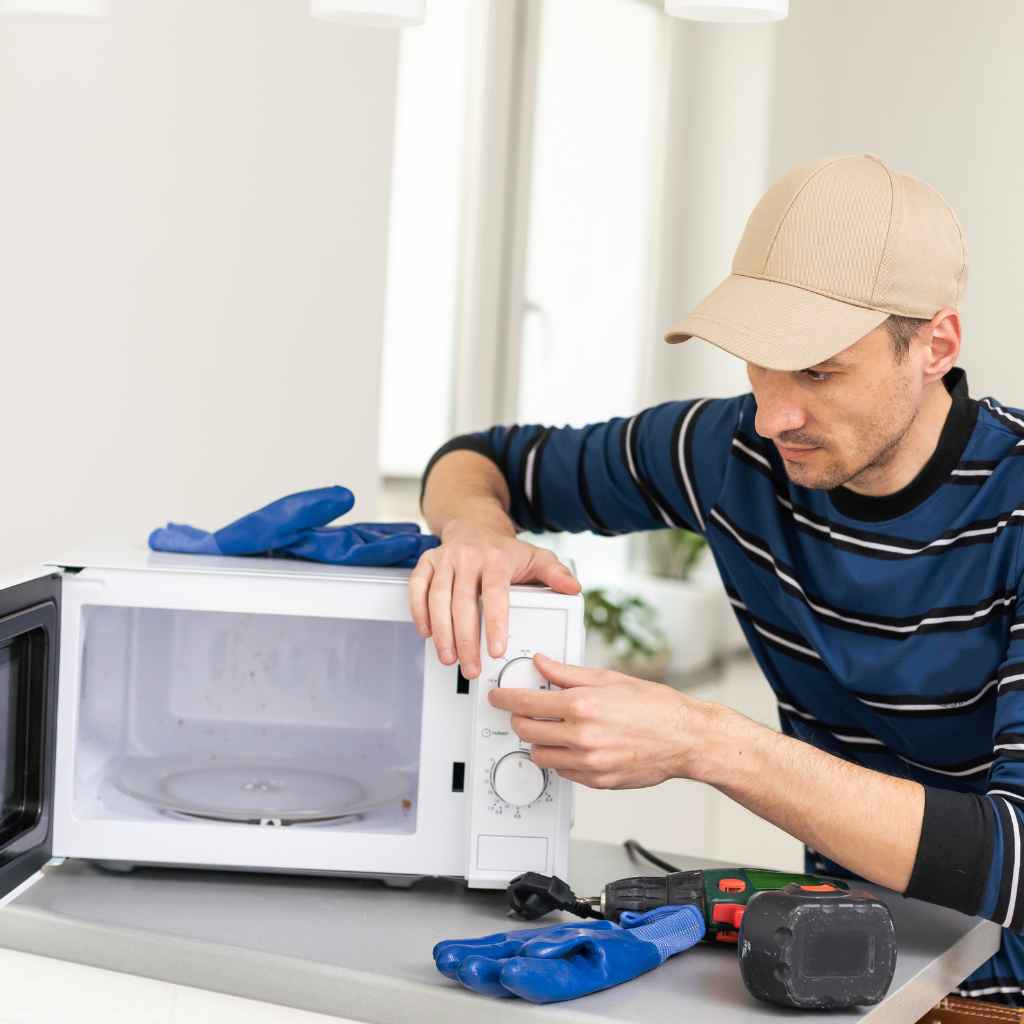
I called a repairman. He explained that even small damage to the door seal can be a problem. It can weaken the Faraday cage effect.
He said it’s like having a tiny hole in a balloon. It might not seem like much, but air still escapes. He fixed the seal for me.
The buzzing stopped, and my food heated up perfectly again. It was a good lesson. Those seals are more important than they look!
What Blocks Microwaves Effectively?
Metal Enclosures: The primary way microwaves are blocked is through metal. A continuous metal box acts as a Faraday cage. This reflects microwaves.
They bounce back inside.
Fine Metal Mesh: The mesh on microwave doors is crucial. The holes are smaller than the microwave wavelength. This prevents them from passing through.
Proper Sealing: The door gasket ensures a tight seal. It prevents any gaps. Gaps would allow microwaves to escape.
Distance: Microwaves weaken with distance. Standing far away reduces exposure. However, the oven’s design is the main safety feature.
Common Misconceptions About Microwave Radiation Blocking
There are many ideas out there about how to block microwave radiation. Some of them aren’t quite right. People often worry about specific materials.
They wonder if everyday things can stop these waves. Let’s clear up some of these common thoughts.
One common idea is that plastic wrap can block microwaves. This is not true. Microwave-safe plastic wrap is designed not to melt.
It doesn’t interfere with the cooking process. But it offers no protection against radiation. It’s permeable to microwaves.
It allows them to pass right through to the food.
Another thought is that aluminum foil can block microwaves. This is tricky. While aluminum is metal and can reflect microwaves, it’s not used in the same way as the oven’s interior.
Using large pieces of foil inside a microwave can actually be dangerous. It can cause arcing, which is like small electrical sparks. This can damage the oven.
It can also be a fire hazard. So, foil isn’t a safe or effective way to block microwaves in this context.
Some people believe that certain minerals or crystals can block radiation. While some materials might absorb or deflect small amounts of energy, they are not designed for the specific wavelengths and power of microwave ovens. They do not create a Faraday cage effect.
They don’t offer the same level of protection.
The most effective way to block microwave radiation is by using materials and designs that create a Faraday cage. This means solid metal or very fine metal mesh. These are the components that microwave manufacturers build into their ovens specifically for safety.
The Role of the Door Seal: More Than Just Keeping Food In
The door seal on your microwave is a really important part. It’s not just there to keep the food from falling out or spills from getting everywhere. Its main job is to maintain the integrity of the Faraday cage.
This seal needs to be airtight. It needs to be perfect to prevent any microwave leakage.
When the microwave door is closed, the seal presses against the oven frame. This creates a continuous barrier. This barrier stops the microwaves from escaping.
Even a tiny gap can be a weak point. If the seal is worn, cracked, or dirty, it might not make full contact. This is when microwaves could potentially leak out.
It’s like a tiny crack in a dam. Water can still get through.
Manufacturers spend a lot of time designing these seals. They use materials that can withstand heat and repeated use. They ensure they are durable.
However, like any part of an appliance, they can wear out over time. That’s why it’s a good idea to check your microwave door seal periodically. You want to make sure it looks intact.
You want to ensure it’s clean and makes good contact.
If you notice any damage, it’s wise to get it checked. A damaged seal is the most common reason for microwave radiation leakage. Fixing it promptly ensures your microwave continues to operate safely.
It keeps the contained energy where it belongs – inside.
Quick Scan: What Blocks Microwaves
- Solid Metal Walls: Yes, reflects waves.
- Metal Mesh Door: Yes, blocks waves if holes are small enough.
- Rubber Door Seal: Yes, ensures no gaps for waves to escape.
- Plastic Wrap: No, lets waves pass through.
- Aluminum Foil (unsupervised): Risky, can cause sparks, not a safe blocker.
- Wood/Glass: No, microwaves pass through easily.
Real-World Context: Microwave Ovens in American Homes
Microwave ovens are a staple in most American homes today. They are found in kitchens of all sizes. From small apartments to large family houses, they offer convenience.
People use them for reheating meals. They use them for defrosting food. They also use them for quick cooking.
This widespread use highlights their importance.
The design of these appliances has evolved over decades. Early models were quite basic. Modern microwaves have advanced safety features.
They meet strict government regulations. In the United States, the Food and Drug Administration (FDA) sets these standards. These rules ensure that microwaves emit very little radiation.
They ensure it’s well below levels that could cause harm.
The typical American kitchen has the microwave sitting on the counter. Some are built into cabinetry. Others are above the range.
Regardless of placement, the core safety mechanism remains the same. It’s the metal box and the shielded door. These are the components that contain the microwave energy.
Consider the habits around microwave use. People often stand right in front of it. They watch their food cook.
They open the door as soon as it beeps. These are normal behaviors. The appliance is designed with these habits in mind.
The safety measures are in place to protect users during these typical interactions. It’s a combination of engineering and user expectation.
What This Means for You: Normal Operation vs. Cause for Concern
For most people, using a microwave is perfectly safe. The way these ovens are built means they contain the radiation very effectively. The metal enclosure and the mesh door screen work together.
They form a barrier. This barrier keeps the microwaves inside, focused on heating your food. This is normal operation.
When should you start to worry? There are a few signs. One is if the door doesn’t close properly.
If it feels loose or doesn’t latch firmly, that’s a concern. The seal might be damaged. There could be a gap.
Another sign is any visible damage to the oven cavity. This could be dents or holes in the metal. Sparks or unusual noises during operation are also red flags.
These could indicate internal issues.
If you notice any of these problems, it’s best to stop using the microwave. You should get it inspected by a professional. Most of the time, minor issues like a worn door seal can be repaired.
This restores the oven’s safety. If the damage is more significant, it might be time to replace the appliance.
It’s also good to know that microwave radiation levels drop off very quickly with distance. So, while standing right next to a functioning microwave is generally fine, the further away you are, the less exposure you have. This is a simple principle of physics.
Simple Checks You Can Do
Door Integrity:
Close the door. Does it latch securely? Is the seal intact and free of tears?
Physical Damage:
Inspect the inside and outside of the oven. Look for any dents, holes, or corrosion.
Operation Sounds:
Listen for unusual buzzing, sparking, or loud grinding noises when in use.
Food Heating:
Does food heat evenly? Inconsistent heating can sometimes point to a door seal issue.
Quick Tips for Safe Microwave Use
Using your microwave safely is mostly about understanding how it works. It’s also about paying attention to its condition. Here are some simple tips to keep in mind.
Check the Door: Always make sure the microwave door closes properly. Look for any damage to the seal. Ensure there are no gaps.
If you see any issues, get it checked or consider replacement.
Use Microwave-Safe Cookware: Only use dishes and containers that are labeled as microwave-safe. Avoid metal, foil (unless specifically instructed for certain cooking functions), and dishes with metallic trim. These can cause sparks.
Don’t Overheat: Follow cooking times as recommended. Overheating food can sometimes lead to issues. It can also degrade the cookware.
Keep it Clean: Food splatters inside the microwave can cause uneven heating and even damage the interior over time. Keeping it clean helps it work efficiently and safely.
Avoid Standing Too Close for Too Long: While modern microwaves are very safe, it doesn’t hurt to maintain a little distance. This is especially true if you’re concerned or using an older model.
Don’t Operate Empty: Running a microwave with nothing inside can damage the magnetron. It’s the component that generates the microwaves.
These are simple steps. They help ensure your microwave continues to be a safe and convenient appliance in your kitchen.
Frequently Asked Questions About Microwave Radiation
Is microwave radiation harmful?
Microwave ovens are designed to contain almost all microwave radiation inside. When working correctly, the levels that might escape are very low. They are considered safe by health organizations like the FDA.
High levels of microwave radiation can be harmful, but standard microwave ovens do not produce these levels.
Can I stand in front of a microwave while it’s running?
Yes, it’s generally considered safe to stand in front of a microwave while it’s running. The oven’s metal casing and door mesh act as a Faraday cage. This blocks most of the radiation.
Exposure levels decrease rapidly with distance.
What should I do if my microwave door is damaged?
If your microwave door is damaged, especially the seal or the mesh, stop using it immediately. Contact a qualified appliance repair technician. A damaged door can allow microwave radiation to leak out, compromising safety.
It might be safer to replace the microwave if the damage is severe.
Does closing the microwave door completely matter?
Yes, closing the microwave door completely is very important. The door seal creates a tight closure. This is essential for the Faraday cage effect.
It prevents microwaves from escaping. A door that doesn’t close fully creates a gap for radiation leakage.
Are there “microwave blockers” I can buy for my home?
There are products marketed as “microwave blockers,” but most are ineffective. True blocking of microwave radiation relies on the principles of a Faraday cage. This involves metal enclosures or fine mesh.
These are built into the appliance itself. No external device can reliably block microwaves emitted from a properly functioning oven.
How do I know if my microwave is leaking radiation?
You might notice unusual noises like sparking or buzzing. Food might not heat evenly. A damaged door seal or visible damage to the oven’s metal casing are also indicators.
Specialized meters can detect leaks, but for most homeowners, visible damage or operational issues are the primary signs.
Conclusion: Peace of Mind Through Understanding
Understanding what blocks microwave radiation is key. It’s not about complex materials or gadgets. It’s about good engineering.
The metal box, the fine mesh on the door, and the tight seal all work together. They create a safe enclosure. This is the core of microwave oven safety.
By knowing how your microwave works, you can use it with confidence. Pay attention to its condition. Address any damage promptly.
This simple approach ensures your appliance continues to be a safe and helpful tool in your kitchen.
Sponsored / affiliate links. As an Amazon Associate I earn from qualifying purchases. I may earn additional commission from eligible campaigns.